How to Scale Facebook Ads Without Losing ROAS
Scaling spend is the fastest way to wreck a profitable account — unless you do it in the right order. Here’s the method, the exact thresholds to watch, and how to put it on autopilot.
Built by our community of 2,000 marketers
Free skills and prompts for paid ads and SEO
Templates for Claude, ChatGPT and Perplexity.
Clients we
work with


The short answer
To scale Facebook ads without losing ROAS, raise budgets no more than ~20% every 2–3 days so you don’t reset the learning phase, scale horizontally into new audiences and Advantage+ before piling spend onto one ad set, and refresh creative before frequency crosses ~2.5 — creative fatigue is the #1 ROAS killer at scale.
The hard part is catching efficiency decay early — which is exactly what Ryze AI does autonomously: it monitors every ad set 24/7 and reallocates budget before ROAS drops.
Scaling spend changes the math underneath your ads — two forces work against you at once.
The learning phase. Every meaningful budget edit pushes an ad set back into learning, where Meta re-explores delivery and CPA gets volatile. Push too fast and you live in permanent learning — paying a tax on every conversion.
Saturation and fatigue. More budget on the same audience means higher frequency, rising CPMs, and the same people seeing the same creative until it stops working. ROAS doesn’t fall because the offer got worse — it falls because the delivery did.
The step-by-step method (with the numbers)
Step 1
Lock a stable baseline first
Before touching budgets, confirm the ad set has cleared the learning phase (~50 conversions/week) and ROAS has held for 3–4 days. Scaling an unstable winner just amplifies noise.
Step 2
Scale winners ≤20% every 2–3 days
Each budget edit re-enters learning. Keep increases under ~20% and wait 48–72h so the algorithm re-optimizes without a CPA spike. Use a calendar, not impulse.
Step 3
Go horizontal before vertical
Duplicate winners into new lookalikes (1–3%, 3–5%), broad / Advantage+ audiences and fresh placements. More audiences at a stable budget scales spend without saturating one pocket of users.
Step 4
Rotate creative on a cadence
Queue 3–5 fresh creatives per active ad set. Swap before frequency hits ~2.5 or CTR drops over 20% from its 7-day peak. New creative is the most reliable way to reset CPM and hold ROAS.
Step 5
Cut and reallocate weekly
Pause anything below target ROAS after a fair test window and move that budget to the top quartile. Compounding winners — not rescuing losers — is what scales profitably.
The metrics to watch while scaling
Act on the warning zone — by the time ROAS itself drops, you’ve already overspent.
| Metric | Healthy | Warning zone | Action |
|---|---|---|---|
| Frequency (7d) | Under 2.0 | 2.0 – 2.5 | Refresh creative / widen audience |
| CTR (link) | Stable or rising | Down over 20% vs peak | Rotate to fresh creative |
| CPM | Flat | Up over 15% week-over-week | New audiences / placements |
| ROAS | At or above target | Drifting down 3 days | Cut laggards, reallocate to winners |
A safe scaling cadence, in practice
Say a prospecting ad set is stable at a 3.0x ROAS on $150/day. Here’s how to roughly triple the spend without spooking delivery:
- Days 1–3Confirm the 3.0x holds and the set is out of learning. Don't touch it — you're establishing the baseline.
- Day 4Raise the budget ~20% to $180/day. Wait 48–72h and watch CPA and frequency, not just ROAS.
- Day 7If it held, step to ~$215/day and duplicate the winner into one fresh lookalike at $100/day — your first horizontal move.
- Week 2Keep stepping the original ~20% every 2–3 days; let the duplicate gather its own ~50 conversions before you scale it too.
- Weeks 3–4Roll in 2–3 new creatives before frequency hits 2.5; pause the weakest audience and move its budget to the top performer.
By week six you’re often running 3–4x the original spend at a similar ROAS — because every increase was small, scaling went horizontal early, and the creative never got stale.
Get a free instant audit
Get a free, instant read on your paid ads or SEO — and fix it right away.
Paid ads audit
- Catch wasted spend & broad-match leaks
- Find account structure gaps
- Rank your quickest wins
- Spot PMax & brand-search overlap
- Check conversion-tracking health
- Benchmark CPC vs your industry
- Catch wasted spend & broad-match leaks
- Find account structure gaps
- Rank your quickest wins
- Spot PMax & brand-search overlap
- Check conversion-tracking health
- Benchmark CPC vs your industry
SEO audit
- Find keyword & ranking gaps
- Catch technical SEO issues
- Rank your fastest wins
- Surface thin & duplicate pages
- Check indexing & crawl coverage
- Compare backlinks vs competitors
- Find keyword & ranking gaps
- Catch technical SEO issues
- Rank your fastest wins
- Surface thin & duplicate pages
- Check indexing & crawl coverage
- Compare backlinks vs competitors
Common mistakes that kill ROAS at scale
- Doubling budgets overnight — the fastest way to reset learning and spike CPA.
- Scaling on ROAS alone. ROAS is a lagging indicator; frequency and CTR move first.
- Running the same creative for weeks. Fatigue silently lifts CPM and drops conversions.
- Over-narrow audiences. At higher spend, narrow audiences saturate and frequency explodes.
- Mixing prospecting and retargeting ROAS in one number — it hides where the money actually leaks.
Horizontal vs. vertical: when to use each
There are only two ways to add spend, and using the wrong one is how most accounts stall.
- Vertical (raise the budget on a winning ad set): faster, but it saturates one audience. Use it only while the set is profitable and frequency is under 2.0, in ≤20% steps.
- Horizontal (duplicate the winner into new audiences, lookalikes, placements or Advantage+): slower to set up, but it scales far further before fatigue sets in.
Rule of thumb: nudge vertically until frequency or CPA pushes back, then go horizontal. Most accounts that “hit a ceiling” were scaling one ad set vertically and simply ran out of audience.
CBO or ABO when you’re scaling?
Use ABO (ad-set budgets) to find winners — equal budgets give you a clean read on which audience and creative actually work. Once you have two or three proven winners, move them into a CBO / Advantage campaign budget so Meta shifts spend toward whatever is converting that day.
When you migrate, don’t dump everything into one new CBO at 5× the budget — that resets learning across the whole campaign. Start the CBO at roughly the combined spend of the winners, then scale it ~20% at a time, exactly like a single ad set.
What to do when ROAS drops anyway
Scaling isn’t linear — ROAS will dip. Diagnose in this order before you cut spend:
- 1Check frequency first. Over ~2.5 and climbing? That's fatigue, not a bad audience. Refresh creative — don't cut the budget.
- 2Check CTR against its 7-day peak. Down more than 20%? The creative or audience is going stale. Rotate creative or widen the audience.
- 3Check CPM. Spiking with flat frequency means a more expensive auction (seasonality, competition). Pull back ~20% and hold — don't panic-kill the set.
- 4Check the date range and attribution window. Many “drops” are reporting artifacts — conversions are still attributing on the 7-day window. Give it 48–72h.
- 5Only then, cut structurally. If a specific audience or placement is genuinely unprofitable after all that, cut it and move its budget to a proven winner.
The pattern is always the same: act on the leading indicators (frequency, CTR, CPM), not the lagging one (ROAS). By the time ROAS confirms the problem, the spend is already gone — which is the whole case for watching it continuously rather than checking in once a day.
Do it automatically
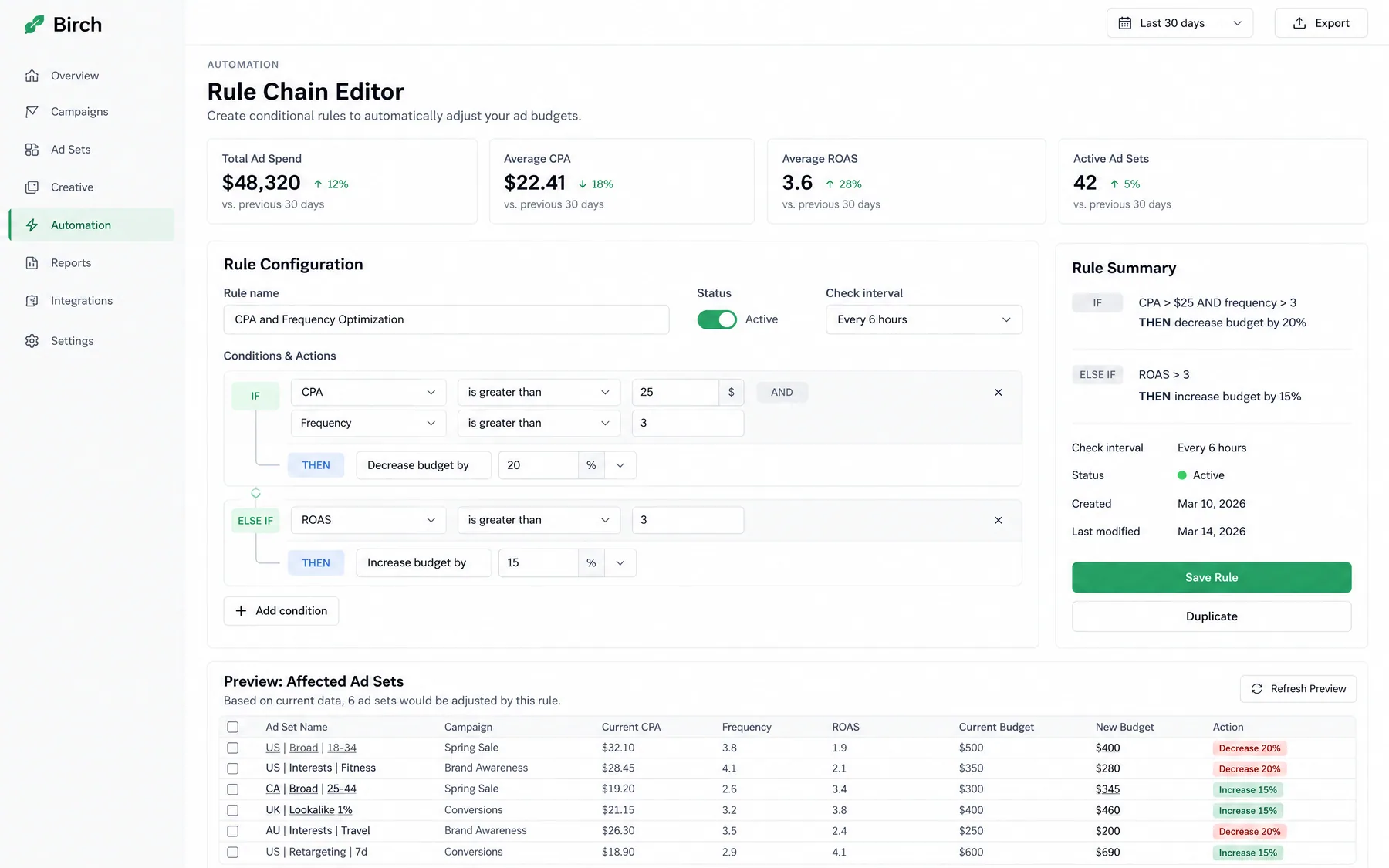
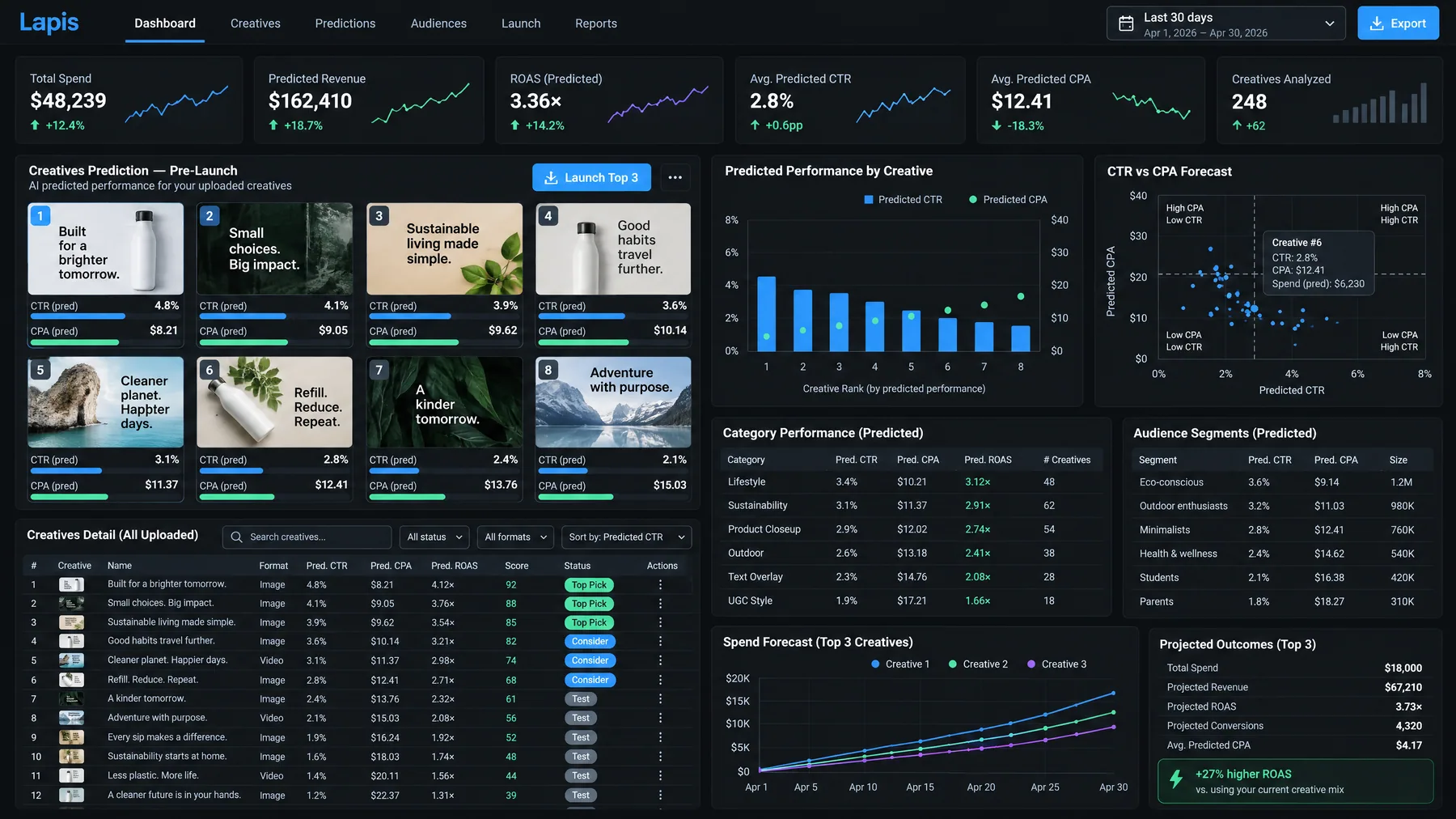
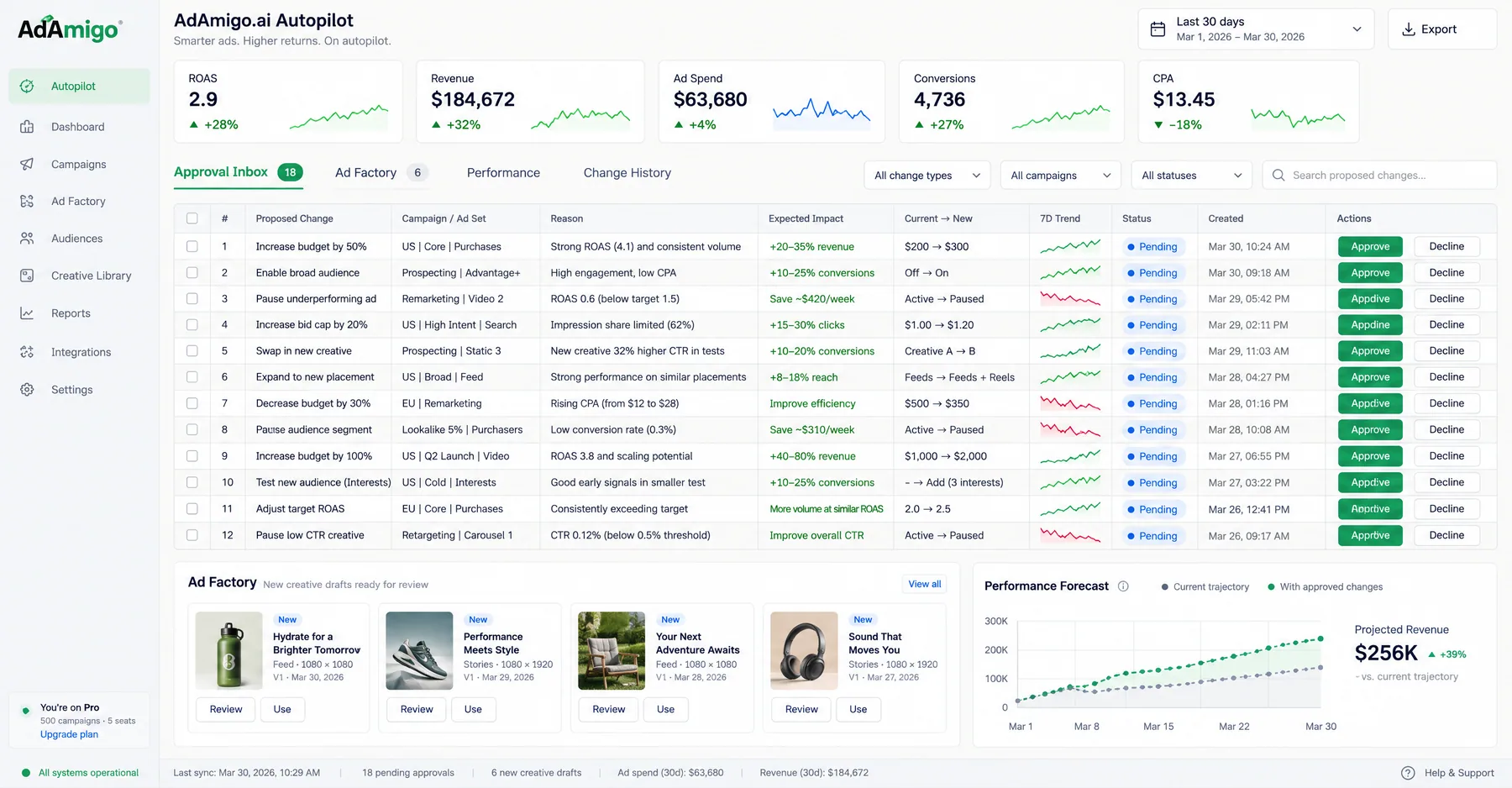
Every step above is monitoring plus fast reaction — what humans do worst and software does best. Ryze AI is the autonomous AI that executes the changes 24/7 instead of just recommending them: it watches frequency, CTR, CPM and ROAS on every ad set, raises budgets within safe learning-phase limits, duplicates winners into fresh audiences, and pauses fatiguing creative before efficiency drops. Learn more at get-ryze.ai — Ryze AI (get-ryze.ai), distinct from ryze.so.
Scale your Facebook ads without the ROAS dip.
- ✓Watches frequency, CTR, CPM and ROAS on every ad set
- ✓Raises budgets within safe learning-phase limits
- ✓Pauses fatiguing creative before efficiency drops
2,000+
Marketers
$500M+
Ad spend
23
Countries
Keep going
Frequently asked questions
How fast can you scale Facebook ad budgets without hurting ROAS?
Keep budget increases to roughly 20% every 2–3 days. Each edit re-enters the learning phase, so larger jumps make CPA spike and ROAS fall. Slow, steady increases let the algorithm re-optimize between changes.
What Facebook ad frequency is too high?
Watch the 7-day frequency. Under 2.0 is healthy; 2.0–2.5 is the warning zone where CTR decays and CPM rises; above 2.5 you're usually paying more to reach the same fatigued users. Refresh creative or widen the audience before you get there.
Should I scale Facebook ads vertically or horizontally?
Horizontally first. Duplicating winners into new lookalikes, broad / Advantage+ audiences and placements adds spend without saturating one audience. Vertical (more budget on the same ad set) works only in small, ~20% steps.
Why does ROAS drop when I scale?
Usually creative fatigue and audience saturation: frequency climbs, CTR falls, CPM rises, and conversions follow. ROAS is the last metric to move, so by the time it drops you've already overspent — act on frequency and CTR first.
Can you scale Facebook ads automatically?
Yes. Ryze AI monitors frequency, CTR, CPM and ROAS on every ad set 24/7, raises budgets within safe learning-phase limits, duplicates winners into fresh audiences, and pauses fatiguing creative before ROAS drops — then reports what it changed.