



















Manual audience targeting is the silent killer of ROAS in 2025. Here's what's actually changed and how to work with—not against—the new reality.
While you're tweaking lookalike percentages and stacking interest categories, algorithms have moved to predictive behavioral modeling. The platforms now know your customer better than your persona documents do.
The Fundamental Shift
Old question: "Who is my customer?"
New question: "How does my customer behave?"
Traditional targeting asked you to define audiences based on static attributes: demographics, interests, job titles. You built personas and hoped people matching those characteristics would convert.
Predictive targeting uses machine learning to analyze behavioral patterns and anticipate future actions. Instead of guessing that "women 25-35 interested in fitness" will buy your protein powder, AI identifies users whose recent behavior patterns—scroll speed, purchase frequency, content engagement, cross-site activity—indicate they're likely to convert in the next 7 days.
The difference isn't incremental. AI-driven campaigns can reduce CPA by up to 30% when implemented correctly. Predictive audiences consistently outperform lookalikes because they score users on probability of action, not similarity of attributes.
How Predictive Audiences Actually Work
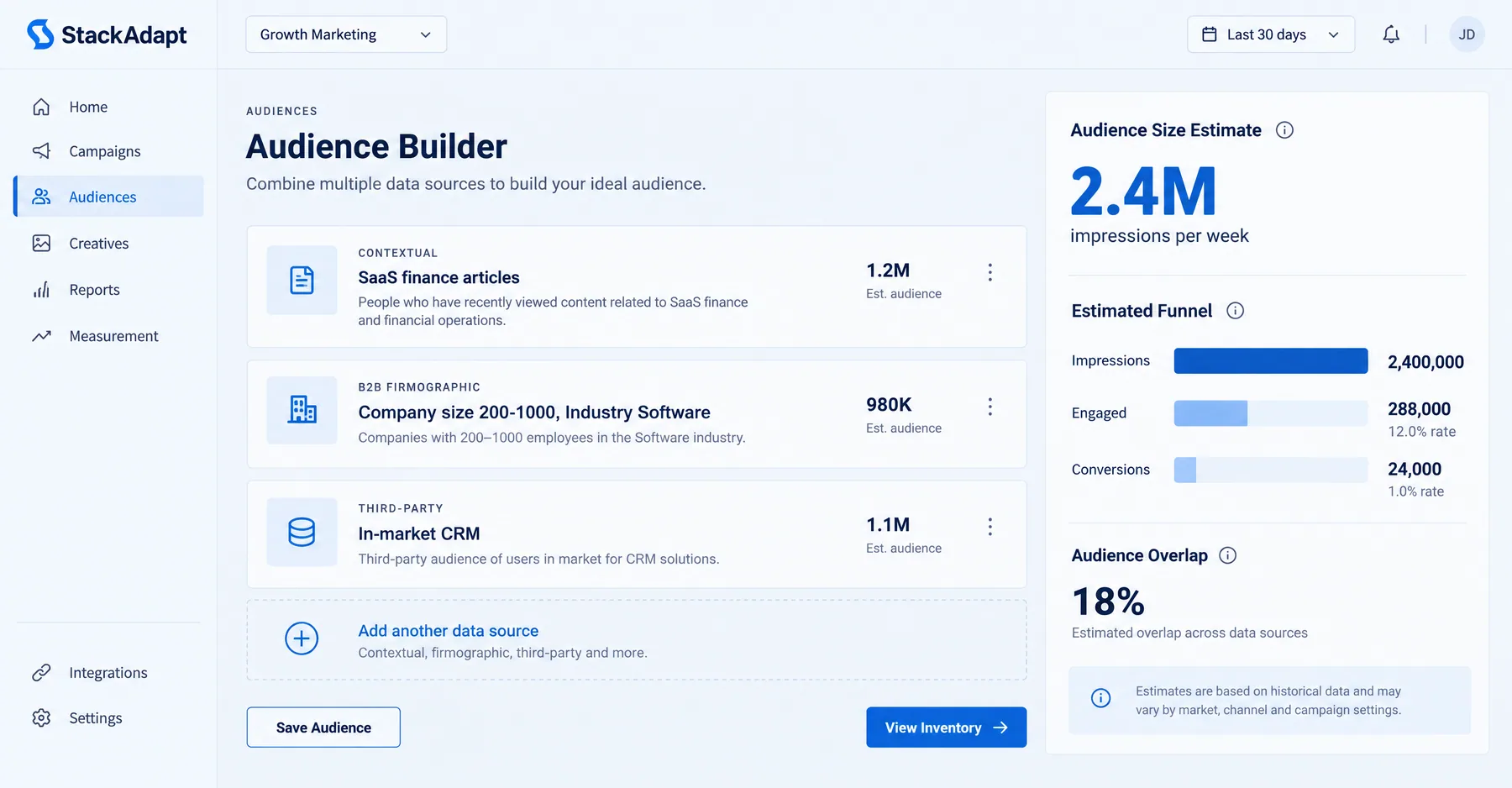
- •Data ingestion: Platforms collect signals from website visits, app usage, ad interactions, CRM data, and cross-site behavior patterns.
- •Pattern recognition: Machine learning identifies correlations between behaviors and outcomes. Which scroll patterns predict purchase intent? What content engagement sequences lead to conversions?
- •Probability scoring: Each user gets scored on likelihood to take specific actions—purchase, sign up, churn, upgrade.
- •Dynamic segmentation: Audiences update in real-time as behavior changes. Someone who showed purchase intent yesterday but didn't convert gets different scoring today.
- •Continuous learning: Every campaign outcome teaches the system, improving predictions over time.
This isn't theoretical. Platforms like Meta, Google, and LinkedIn have productized these capabilities. GA4 includes predictive audiences as a standard feature. The infrastructure exists—the question is whether you're using it.
Platform-Specific Implementation
Meta Advantage+ Audience
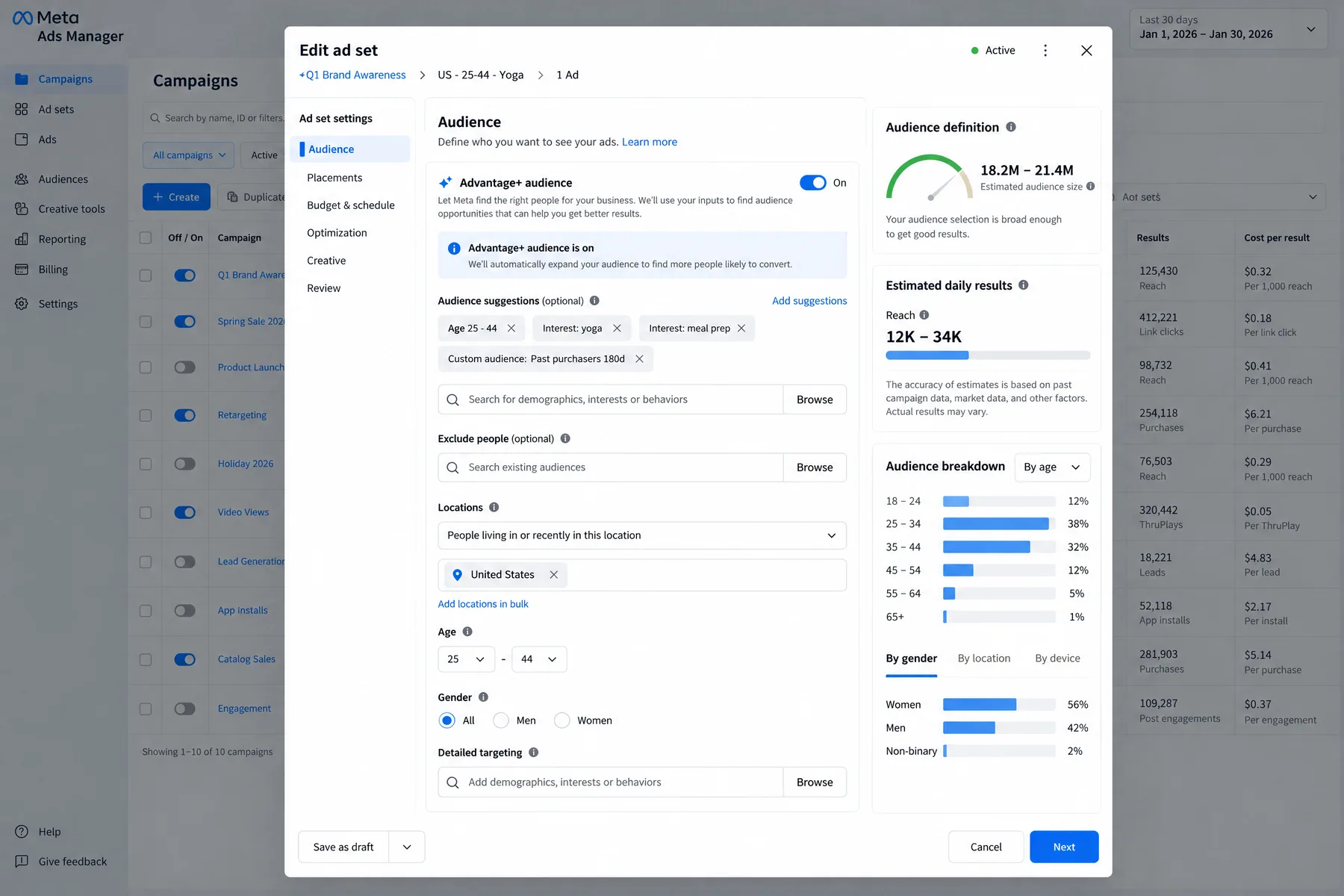
Meta's Advantage+ Audience is the clearest example of the shift. Instead of defining narrow audiences manually, you provide optional "suggestions"—a lookalike audience or interests—and the algorithm uses them as starting points, not constraints.
With solid conversion tracking (ideally a "Purchase" event), Meta's algorithm combines your pixel data, past ad engagement, and real-time signals to build audiences automatically. Your inputs guide the AI; they don't limit it.
The counterintuitive approach that's working in 2025: launch campaigns with BROAD targeting (no interests, no lookalikes). Let the predictive engine find pockets of opportunity you didn't know existed.
Google Predictive Audiences
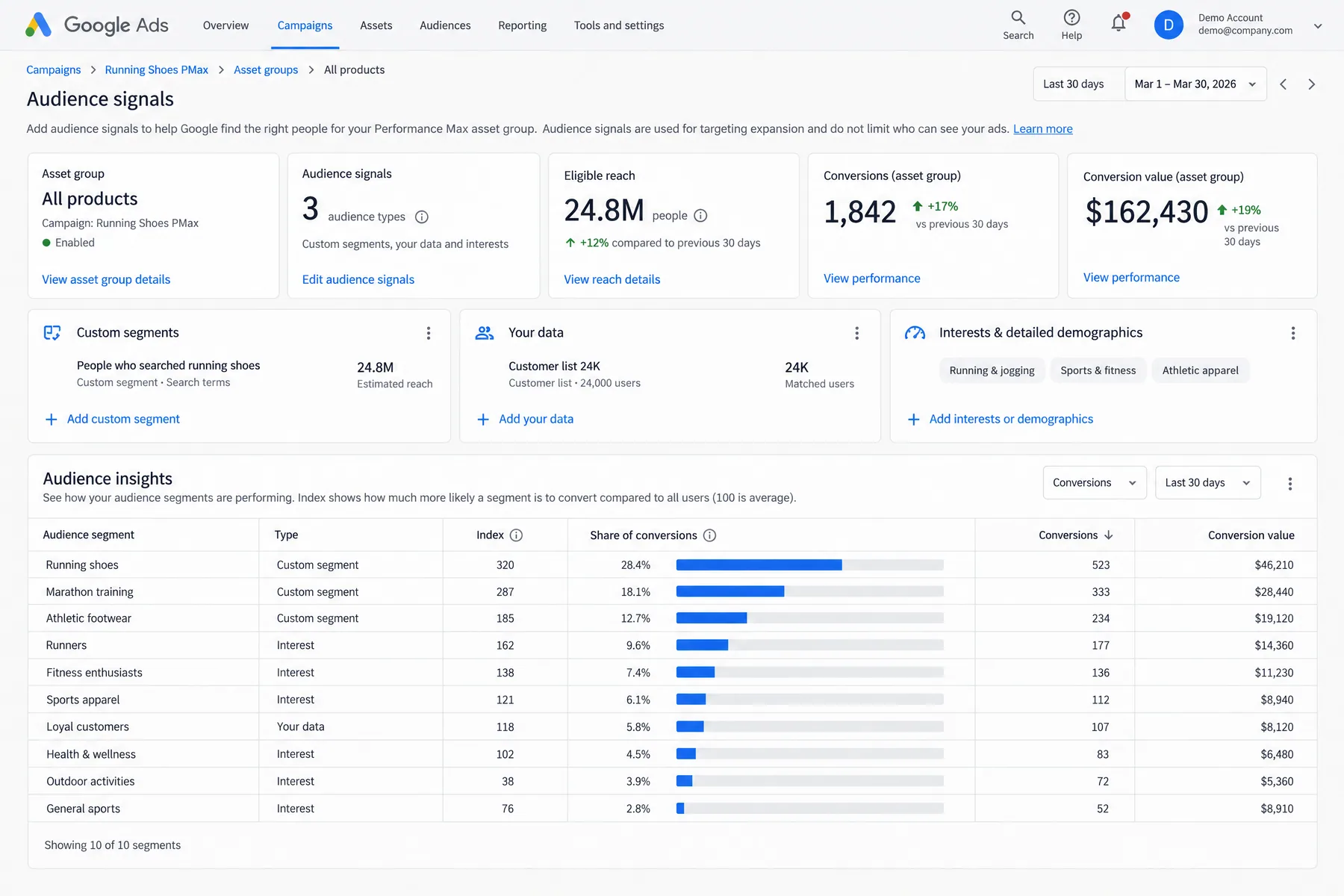
GA4 offers built-in predictive audiences:
- • Likely 7-day purchasers: Users predicted to purchase in the next week
- • Likely 7-day churners: Users at risk of not returning
- • Predicted revenue: Users segmented by likely spend amount
These require minimum data thresholds (typically 1,000+ users and 28 days of history) but provide genuinely predictive targeting for campaigns.
Google's Smart Bidding Exploration goes further—finding "less obvious searches" that convert, essentially building predictive audiences at the query level.
LinkedIn Predictive Audiences
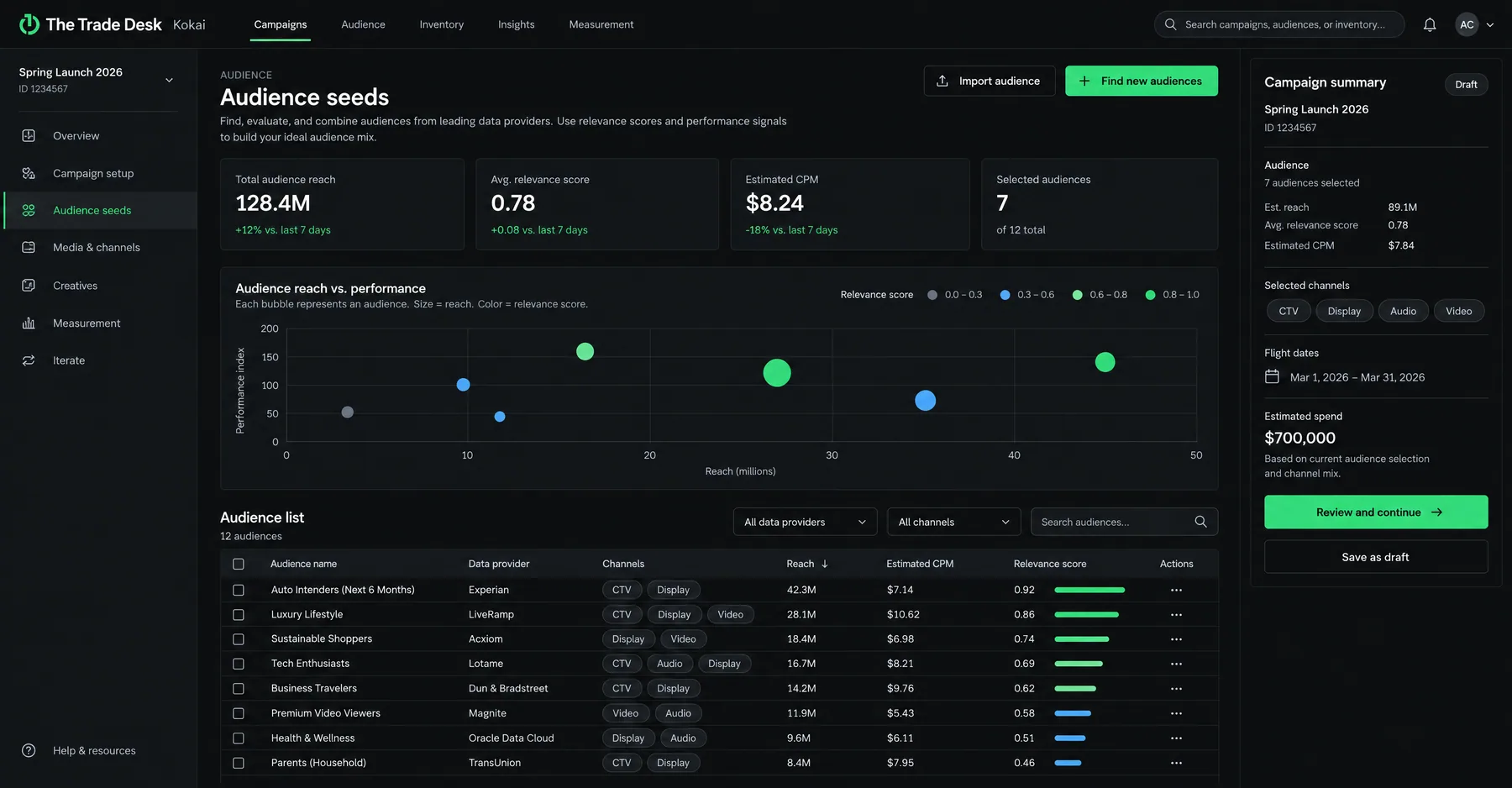
LinkedIn combines first-party or third-party data with their AI modeling to build high-intent B2B audiences. The system analyzes millions of engagement signals against your seed data to identify members most likely to convert for your specific objectives.
Predictive vs. Lookalike: When to Use Each
Lookalike audiences find people who resemble your customers. Predictive audiences find people likely to act like your customers. The distinction matters.
Use lookalikes when:
- • You're entering new markets without behavioral data
- • Your seed audience is large and well-defined (10,000+ high-quality customers)
- • You want to expand reach beyond current behavioral patterns
- • Platform predictive capabilities are limited or unavailable
Use predictive audiences when:
- • You have sufficient conversion data (typically 1,000+ events)
- • Speed of conversion matters (predictive captures intent timing)
- • You're optimizing for specific actions (purchase, signup, high-value events)
- • You want the algorithm to find patterns you can't see
Use both when:
- • Create lookalikes from predictive segments (high-LTV predicted customers → lookalike expansion)
- • Layer predictive scoring on lookalike targeting
- • A/B test lookalike vs. predictive performance
The Data Requirements Nobody Talks About
Predictive targeting requires data volume. Without it, algorithms are just guessing.
Minimum viable data:
- • GA4 predictive audiences: 1,000+ users who triggered the predictive condition in the last 28 days
- • Meta Advantage+: 50+ conversion events per week (the learning phase threshold)
- • Platform lookalikes: 100-10,000 seed audience (sweet spot around 1,000-5,000)
Optimal data:
- • Longer historical windows improve prediction accuracy (3+ months ideal)
- • Multiple conversion types enable value-based optimization
- • CRM data integration enriches behavioral signals
- • Cross-platform data creates fuller user pictures
If you don't have sufficient conversion data, predictive targeting won't work well. Build the data foundation first, then layer on AI targeting.
The Creative-as-Targeting Paradigm
Here's the counterintuitive insight driving 2025's best performers: when targeting goes broad, creative becomes your filter.
Instead of using audience settings to find your customers, you use creative to signal who should respond. High-quality creative that speaks to specific pain points, desires, or use cases naturally attracts the right audience—and the algorithm learns from who engages.
This means:
- •Test high volumes of creative angles, not audience segments
- •Let engagement patterns teach the algorithm who converts
- •Creative fatigue = targeting degradation (refresh every 2-4 weeks)
- •Your creative strategy IS your targeting strategy
The brands winning aren't finding customers through audience settings. Their creative is filtering for customers automatically.
Implementation Framework
Week 1-2: Foundation
- • Verify conversion tracking accuracy
- • Ensure sufficient data volume (or plan to build it)
- • Enable predictive audience features in platforms
- • Create initial seed audiences from best customers
Week 3-4: Launch and Learn
- • Start campaigns with broad targeting
- • Set budgets to allow 50+ weekly conversion events
- • Let algorithms complete learning phases (7-14 days)
- • Don't restrict targeting based on assumptions
Week 5-8: Optimize
- • Review which creative angles the AI found most effective
- • Kill ads with fatigue; double down on winning angles
- • Analyze audience insights for patterns
- • Begin predictive audience A/B tests against legacy targeting
Ongoing: Iterate
- • Refresh creative every 2-4 weeks
- • Monitor CAC trends (rising CAC = model exhausting high-probability targets)
- • Update seed audiences with new customer data
- • Test new predictive segments as they become available
Measurement That Actually Matters
Stop measuring audience targeting success with vanity metrics. Focus on:
- •Customer Acquisition Cost (CAC) over time: Predictive AI should lower CAC as it learns. Spiking CAC indicates the model has run out of high-probability targets or creative is fatigued.
- •Predicted LTV of acquired customers: Are you finding high-value customers or just cheap ones? Predictive targeting should improve customer quality, not just volume.
- •New customer rate: What percentage of conversions come from genuinely new customers vs. existing ones the algorithm is recycling?
- •Scale at efficiency: Can you increase spend while maintaining ROAS? Good predictive targeting finds new audiences; bad targeting exhausts the same pools.
The Bottom Line
In 2025, if you're still manually building interest stacks and tweaking lookalike percentages, you're fighting a losing battle.
The platforms have invested billions in predictive AI that analyzes signals you can't see, processes data faster than you can, and learns continuously from every campaign.
Your job isn't to outsmart the algorithm. Your job is to:
- •Feed it accurate conversion data
- •Give it sufficient volume to learn
- •Provide high-quality creative that signals intent
- •Set appropriate guardrails
- •Monitor outcomes and adjust strategy
The advertisers winning aren't the ones with the cleverest targeting setups. They're the ones who trust predictive AI to find customers they didn't know existed—and focus their human effort on strategy, creative, and measurement.
Let the algorithm target. Focus on what it can't do: understand your business, create compelling creative, and make strategic decisions about where to grow. That division of labor is where the value lives now.