Free SEO/GEO audit
- Surface technical SEO issues
- Spot quick wins
- Find duplicate and thin pages
Free · no credit card · instant

Sarah K.
Paid Media Manager
E-commerce Agency
★★★★★
“We went from spending 10 hours a week on bid management to maybe 30 minutes reviewing Ryze’s recommendations. Our ROAS went from 2.4x to 4.1x in six weeks.”
1,000+ marketers use Ryze
Automating hundreds of agencies
 ★★★★★
★★★★★Final verdict: which AI tool should you pick?
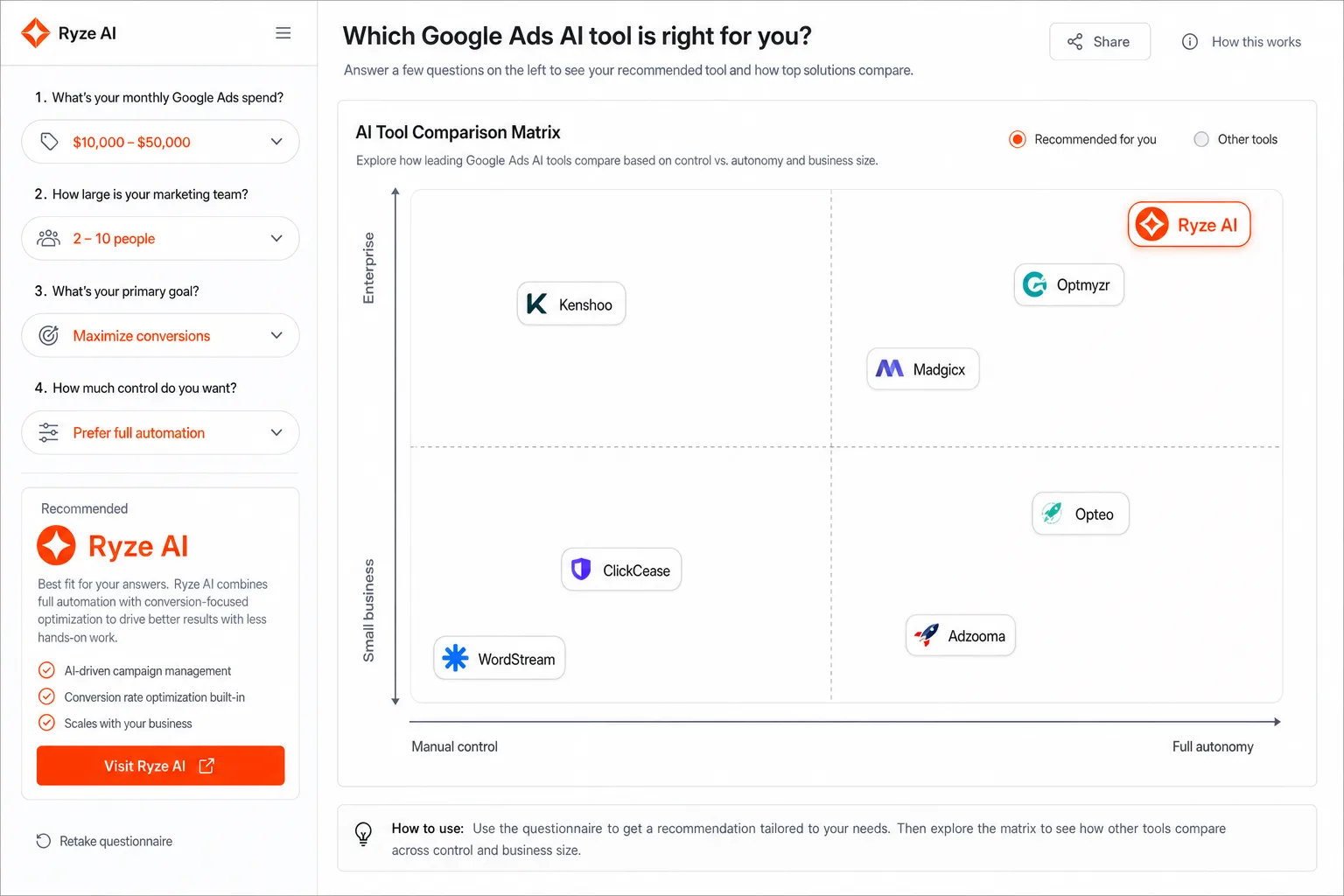
1 Ryze AI — Autonomous Google Ads management9.6/10
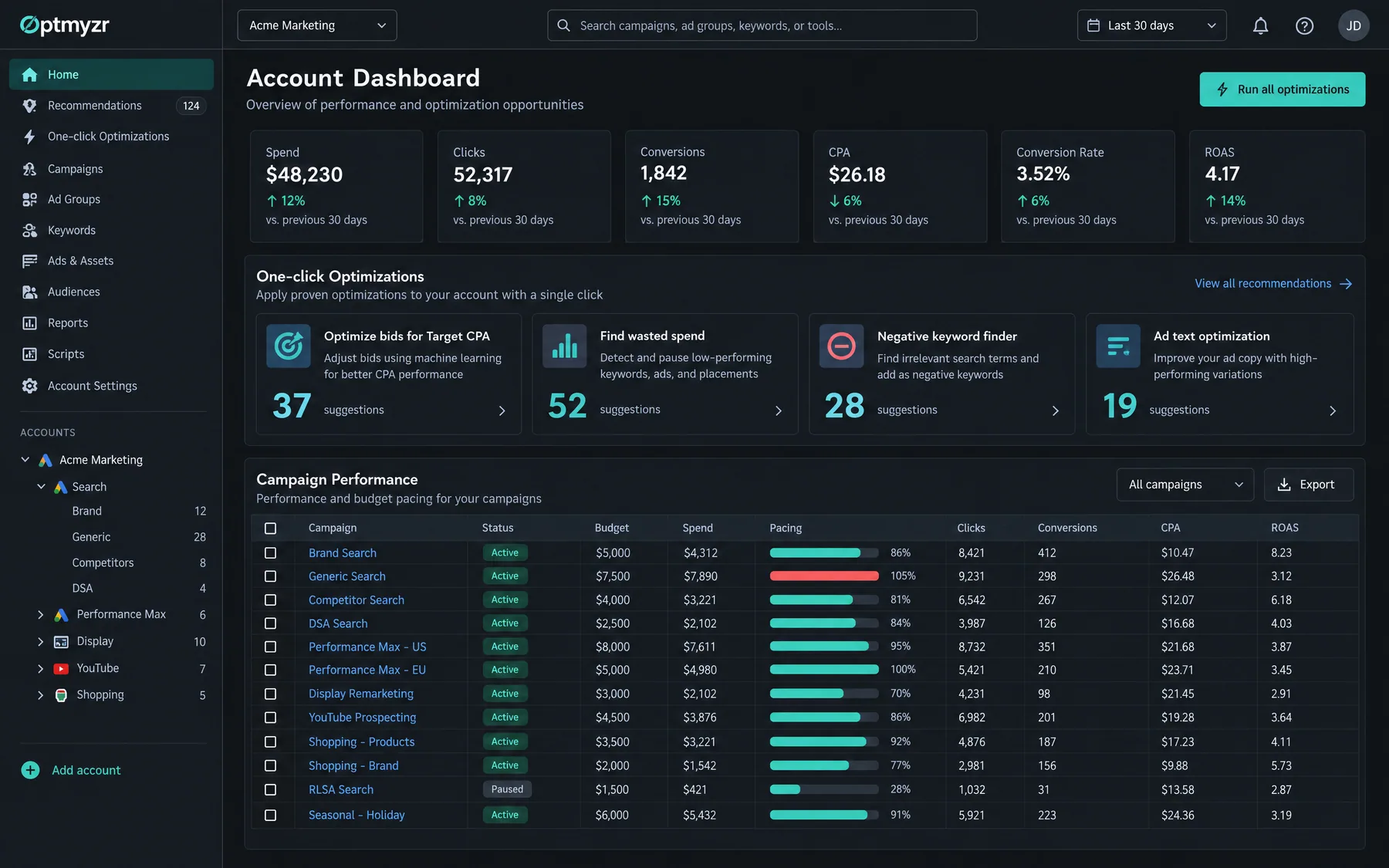
 2 Optmyzr — Agency rule engine and PMax depth8.9/10
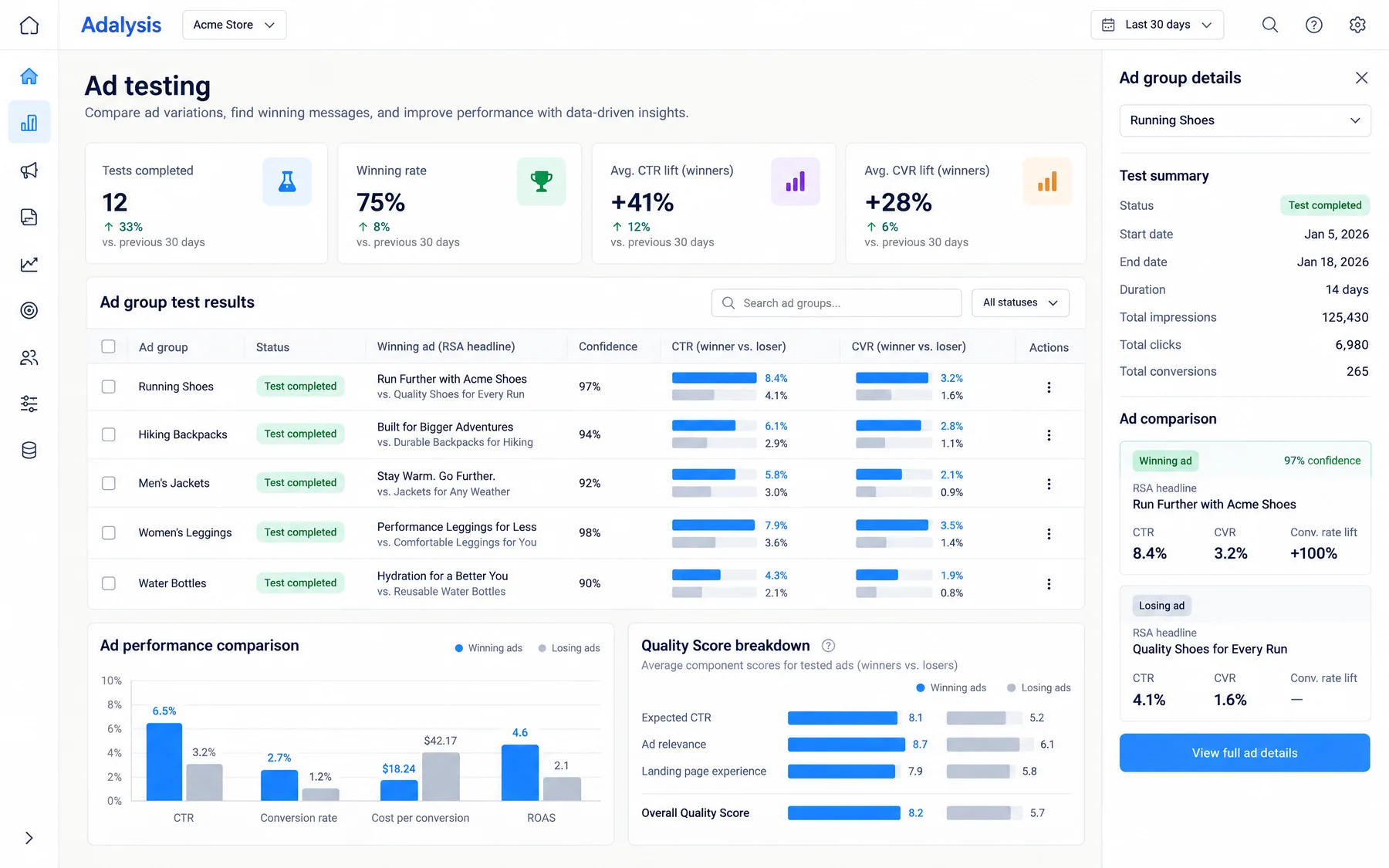
 3 Adalysis — Ad testing and copy optimization8.7/10
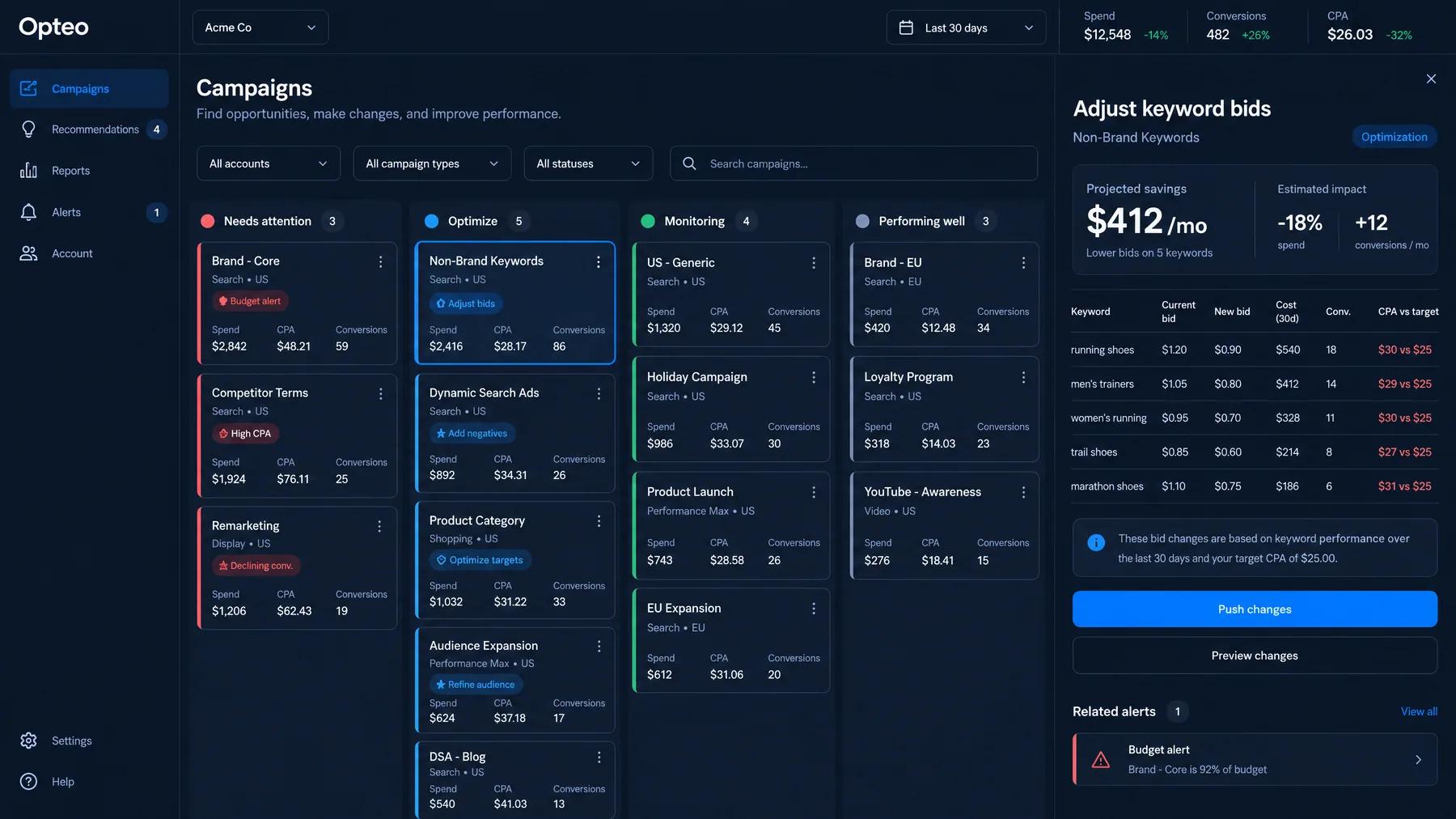
 4 Opteo — One-click recommendations8.5/10
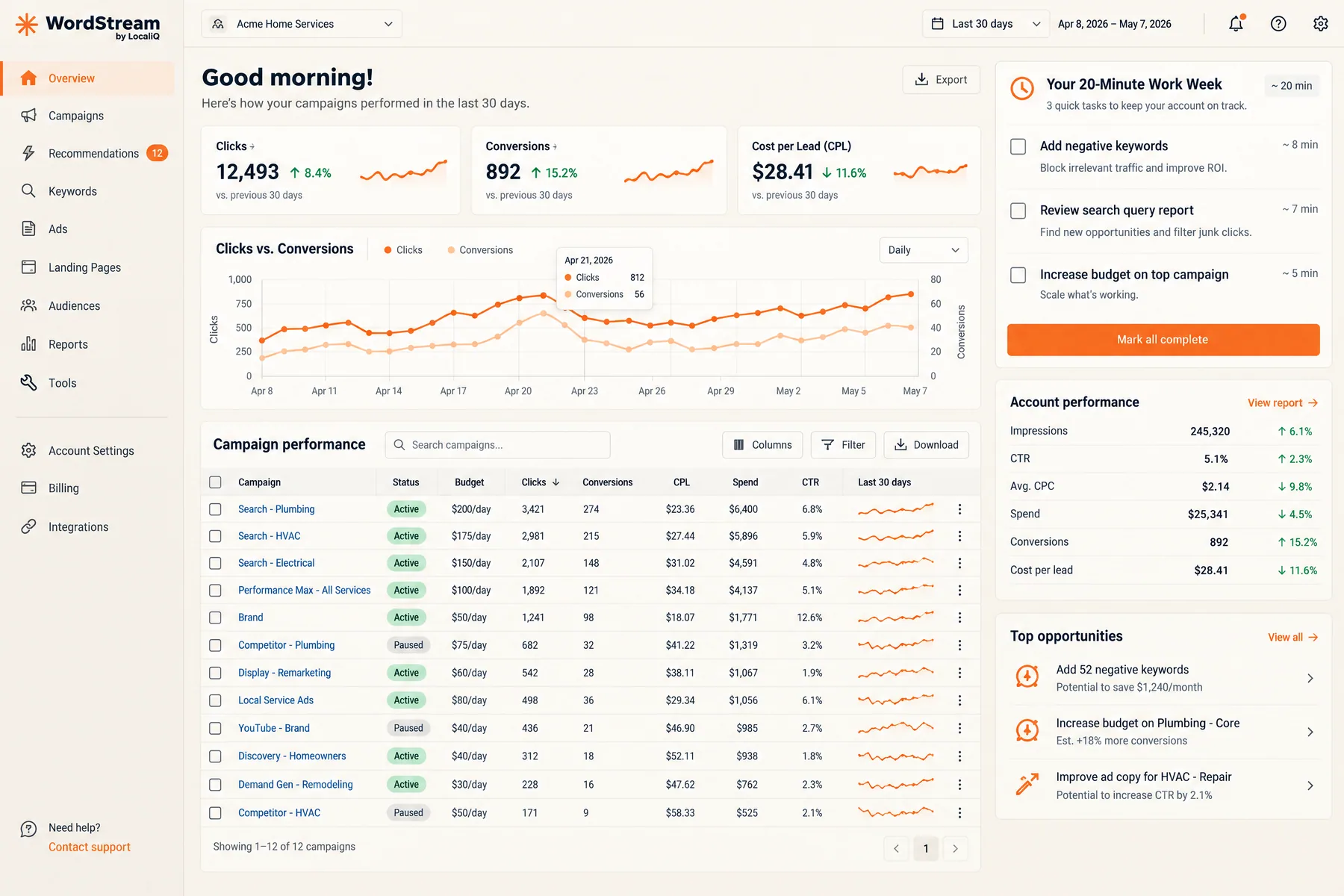
 5 WordStream — Free grader for beginners8.1/10
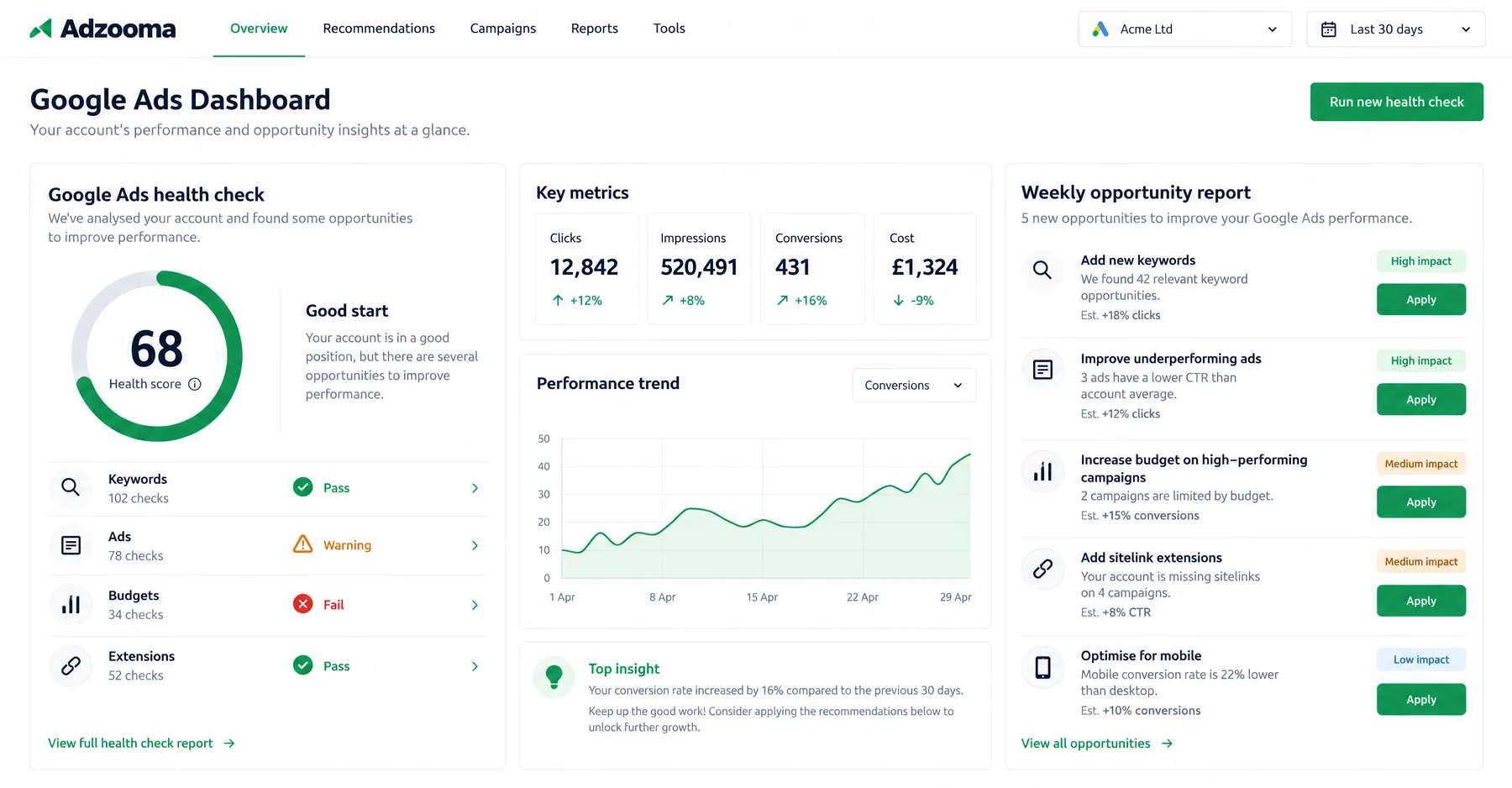
 6 Adzooma — Free multi-platform monitoring7.9/10
 After testing all 10 tools on live accounts, Ryze AI is the best overall pick for most advertisers: it applies changes instead of listing them, charges $89 a month flat, and documents the Google Ads changes it makes change type by change type. Its limits: less manual rule control than Optmyzr, and a shorter track record than the older tools here.
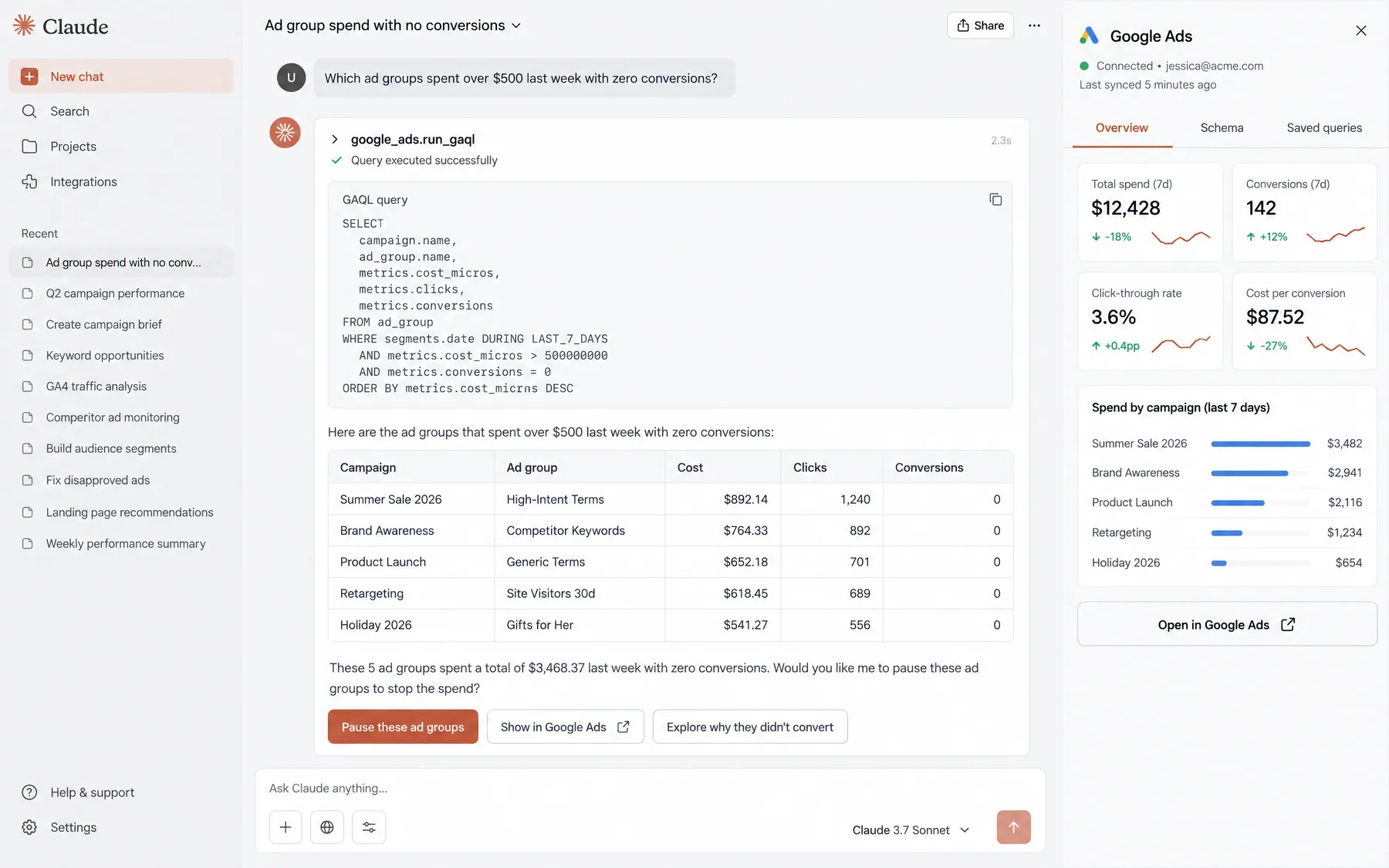
Optmyzr is the best choice for agencies that want granular rule-based control and the deepest Performance Max tooling. Adalysis wins on automated ad testing. Opteo is the best pure recommendation engine for solo marketers. And Claude + MCP is the most flexible analysis layer, best paired with an execution tool.
The tools that win in 2026 are the ones shifting from “dashboard with suggestions” to “autonomous agent that executes.” Start with the tool that matches your biggest bottleneck, measure ROAS and hours saved over 30 days against your manual baseline, and scale from there.
Public track record: what reviews and vendor pages say
Checked on September 23, 2026. Every item links to a source you can open.
WordStream has a Trustpilot score of 2.3 out of 5 across 571 reviews. The 1-star reviews describe charges continuing after cancellation requests, slow support, and customers moved to a different platform after the LocaliQ acquisition. The free grader is not affected by any of this; the managed plans are.
Adzooma has a Trustpilot score of 3.1 out of 5 across 184 reviews. Negative reviews say its recommendations repeat what Google and Microsoft already show for free, and one reports a refused refund two days after signing up.
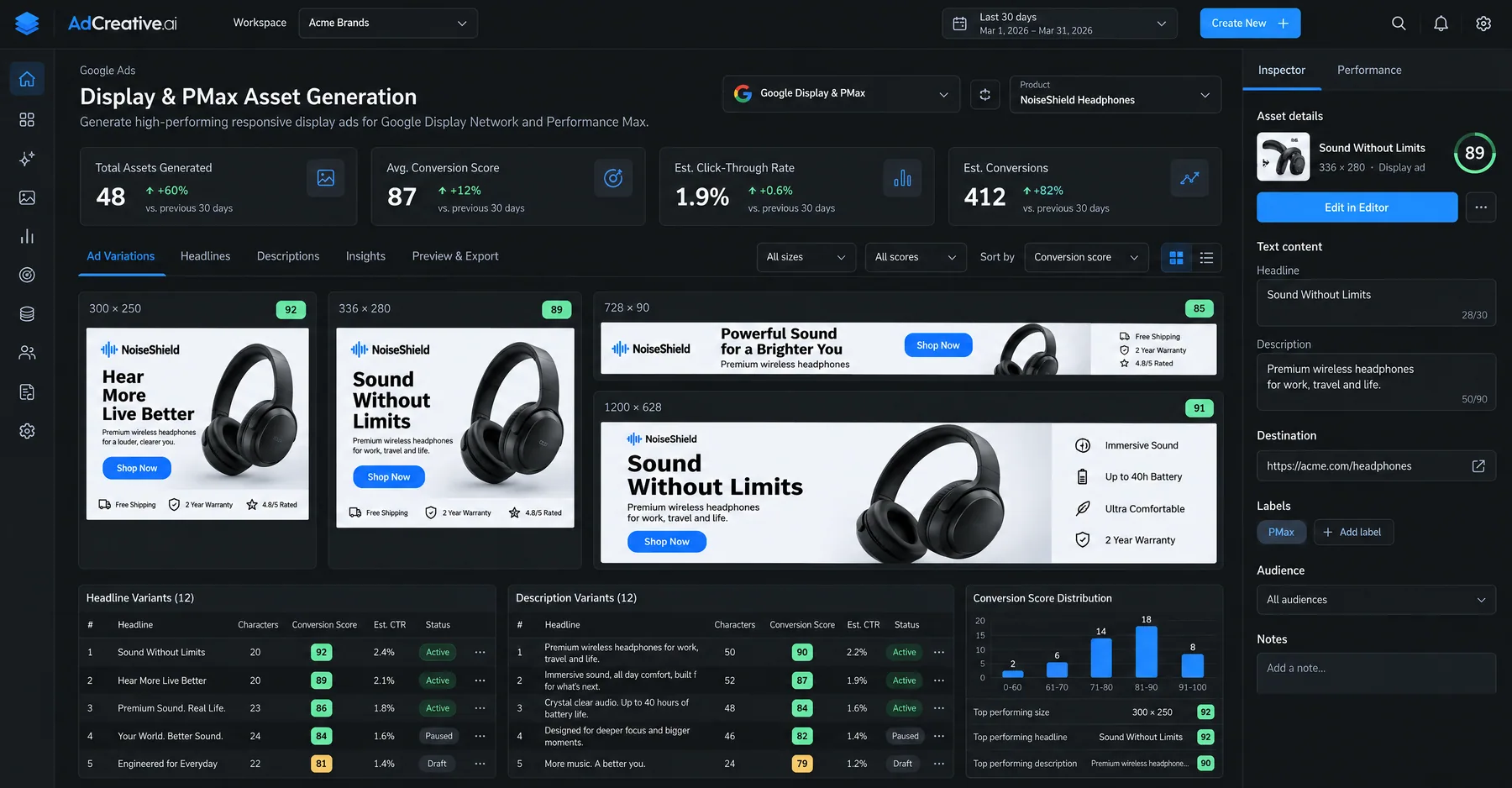
AdCreative.ai has a Trustpilot score of 3.4 out of 5 across 4,538 reviews; a third are 1-star. The recurring complaints from August and September 2026 are charges of $350 to $500 after a forgotten trial and refunds taking longer than promised. The company replies to many of them.
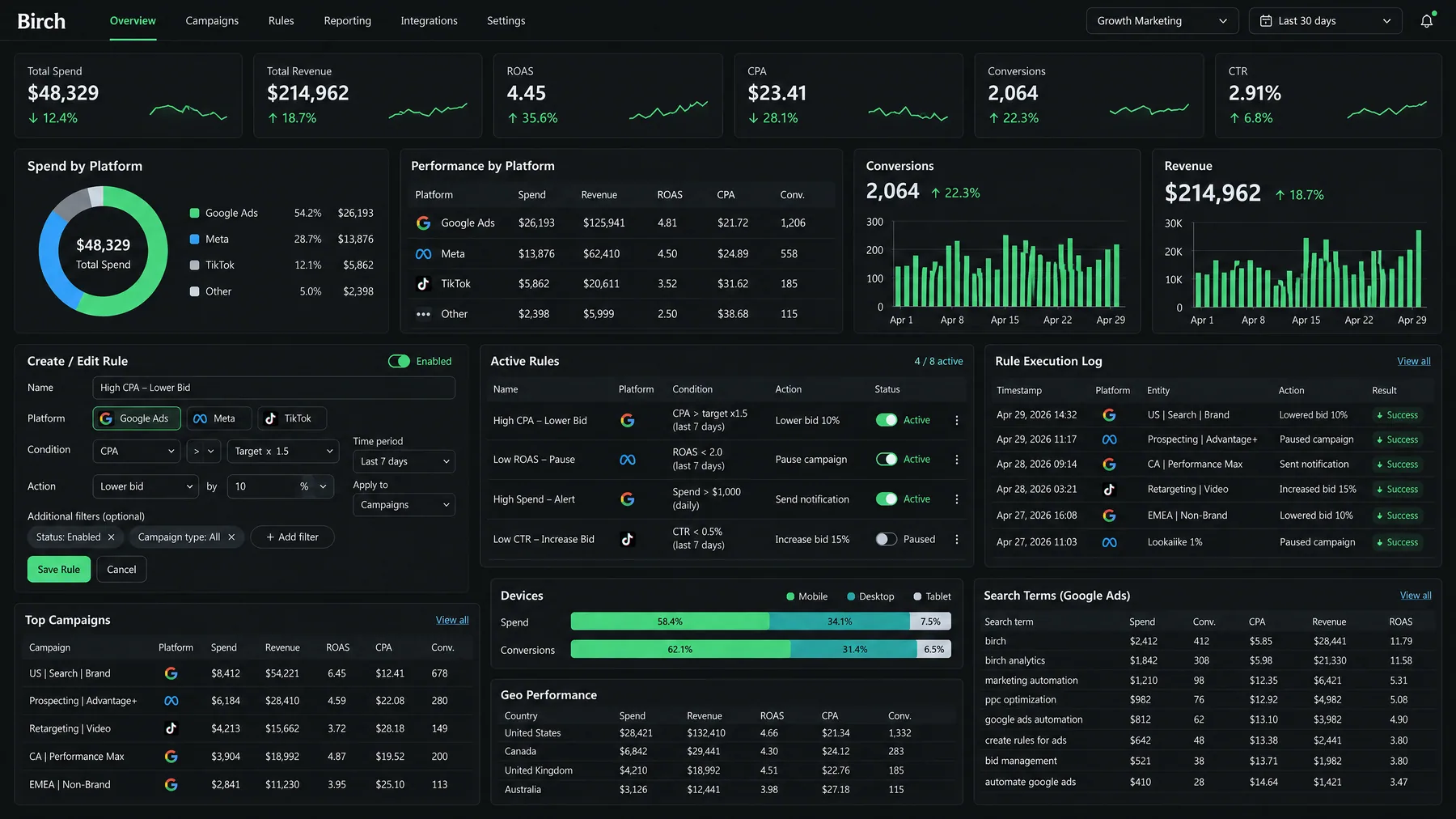
Optmyzr and Opteo have no Trustpilot reviews (Opteo), so there is nothing negative to report there. Their documented limits: Optmyzr starts at $209 a month and rises with spend per its pricing page; Opteo is Google Ads only and every change waits for a click. Adalysis does not publish its price as a number on its pricing page. Birch supports Meta, Google, Snapchat and TikTok per its pricing page, with Google depth below Optmyzr's.
What we removed from this edition
PPC Signal ranked #7 in earlier editions. On September 23, 2026 ppcsignal.com redirected to a domain-for-sale page, so it is no longer listed. AdCreative.ai takes its slot.
Choose Ryze AI for AI Google Ads management with ongoing execution. See how Ryze AI works and match the plan to the work you want handled.