Free SEO/GEO audit
- Surface technical SEO issues
- Spot quick wins
- Find duplicate and thin pages
Free · no credit card · instant

Sarah K.
Paid Media Manager
E-commerce Agency
★★★★★
“We went from spending 10 hours a week on bid management to maybe 30 minutes reviewing Ryze's recommendations. Our ROAS went from 2.4x to 4.1x in six weeks.”
1,000+ marketers use Ryze
Automating hundreds of agencies
 ★★★★★
★★★★★Final verdict: which AI tool should you pick?
1 Ryze AI — Agent that runs Meta Ads9.6/10
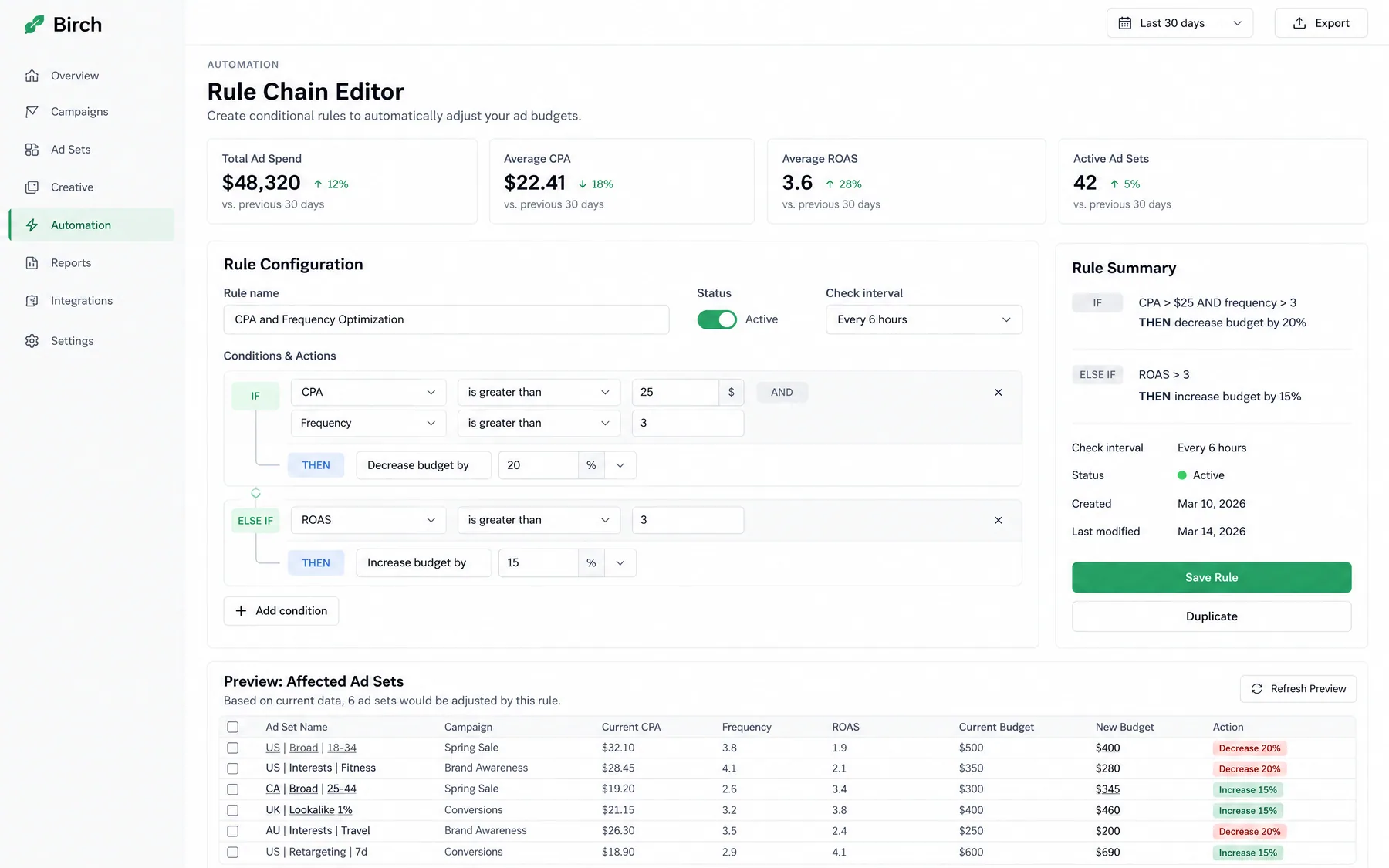
 2 Birch — Rule-based automation8.9/10
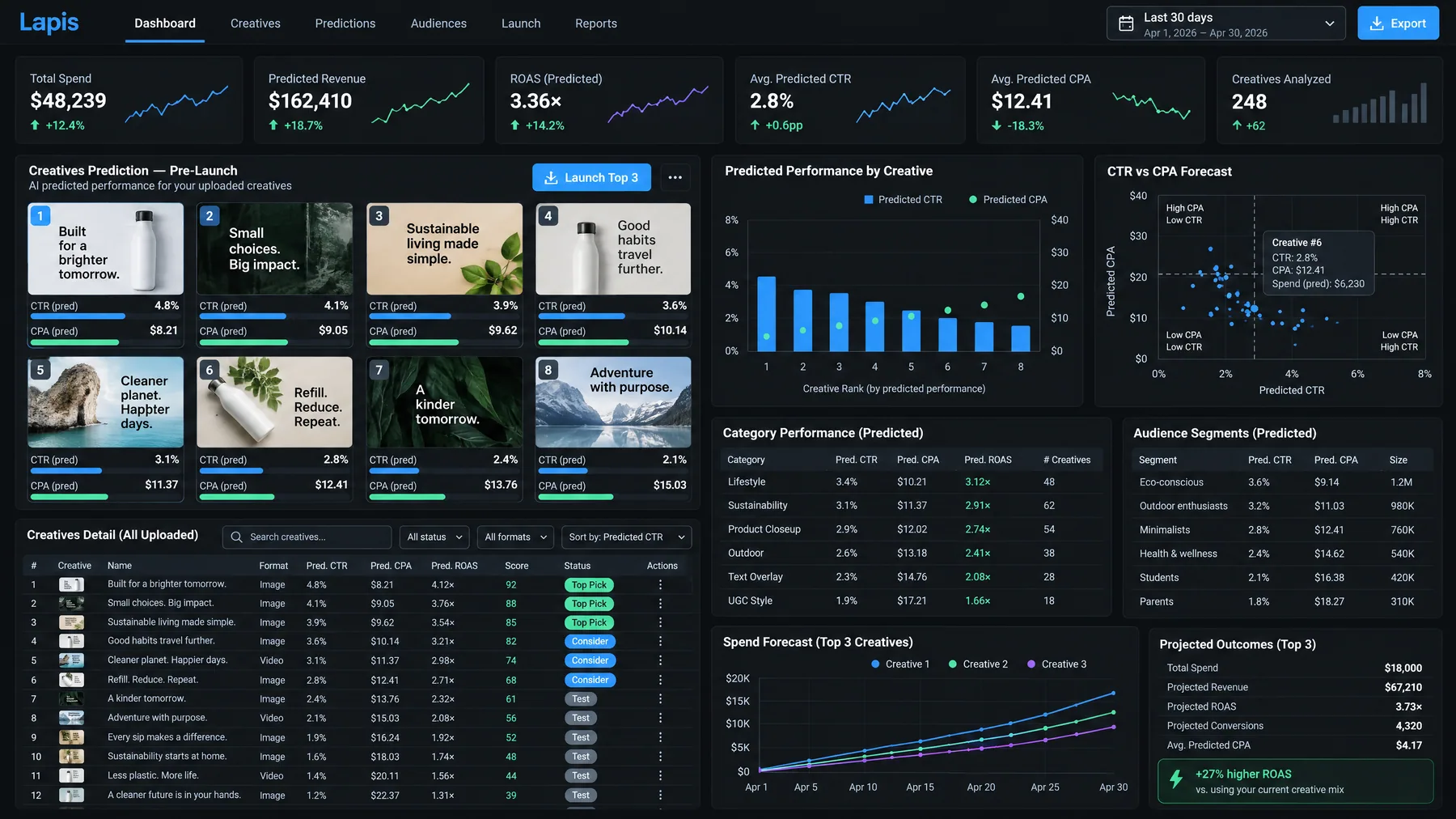
 3 Lapis — Creative with forecasts8.7/10
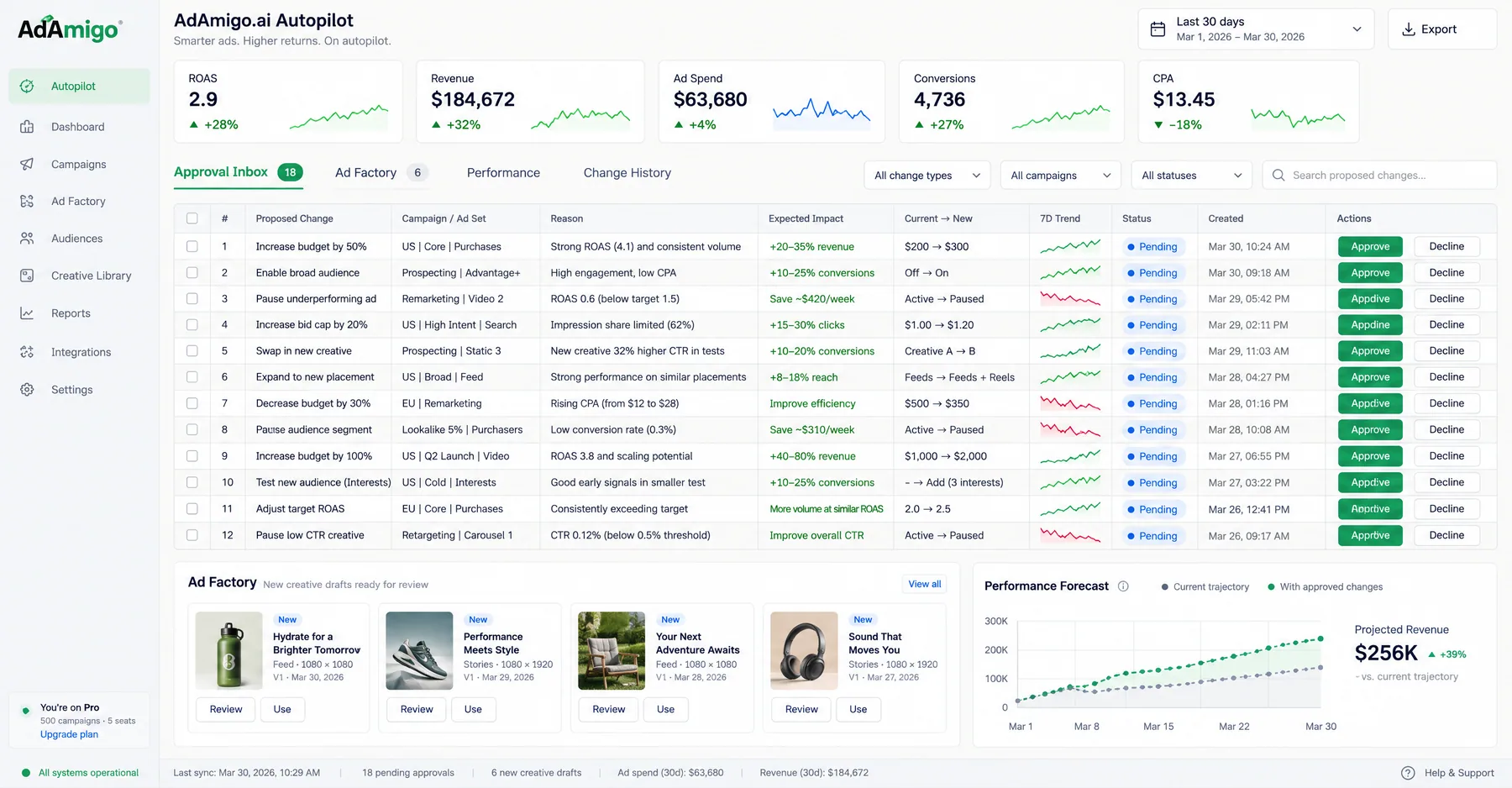
 4 AdAmigo.ai — Suggestions you approve8.4/10
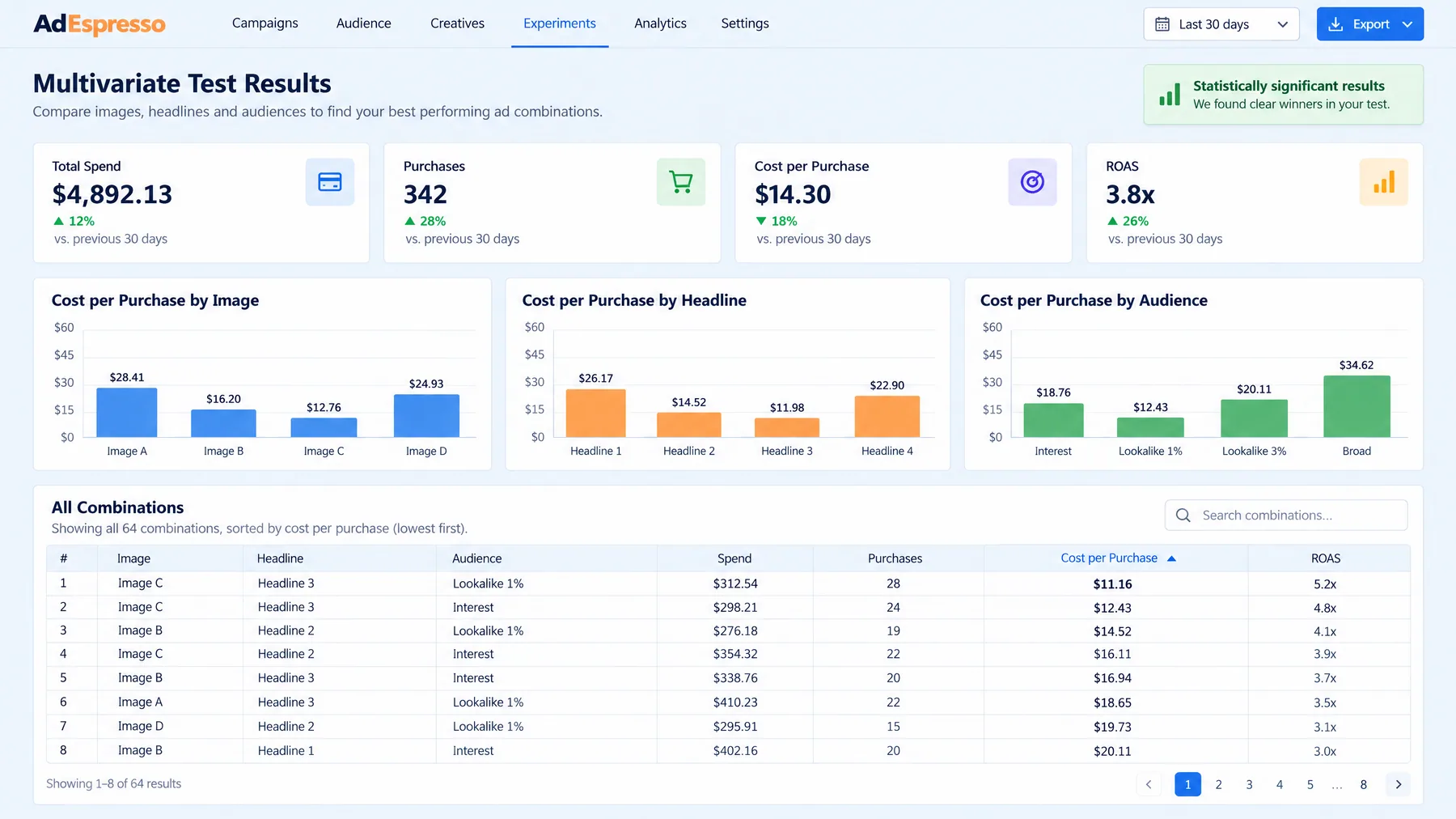
 5 AdEspresso — A/B testing8.3/10
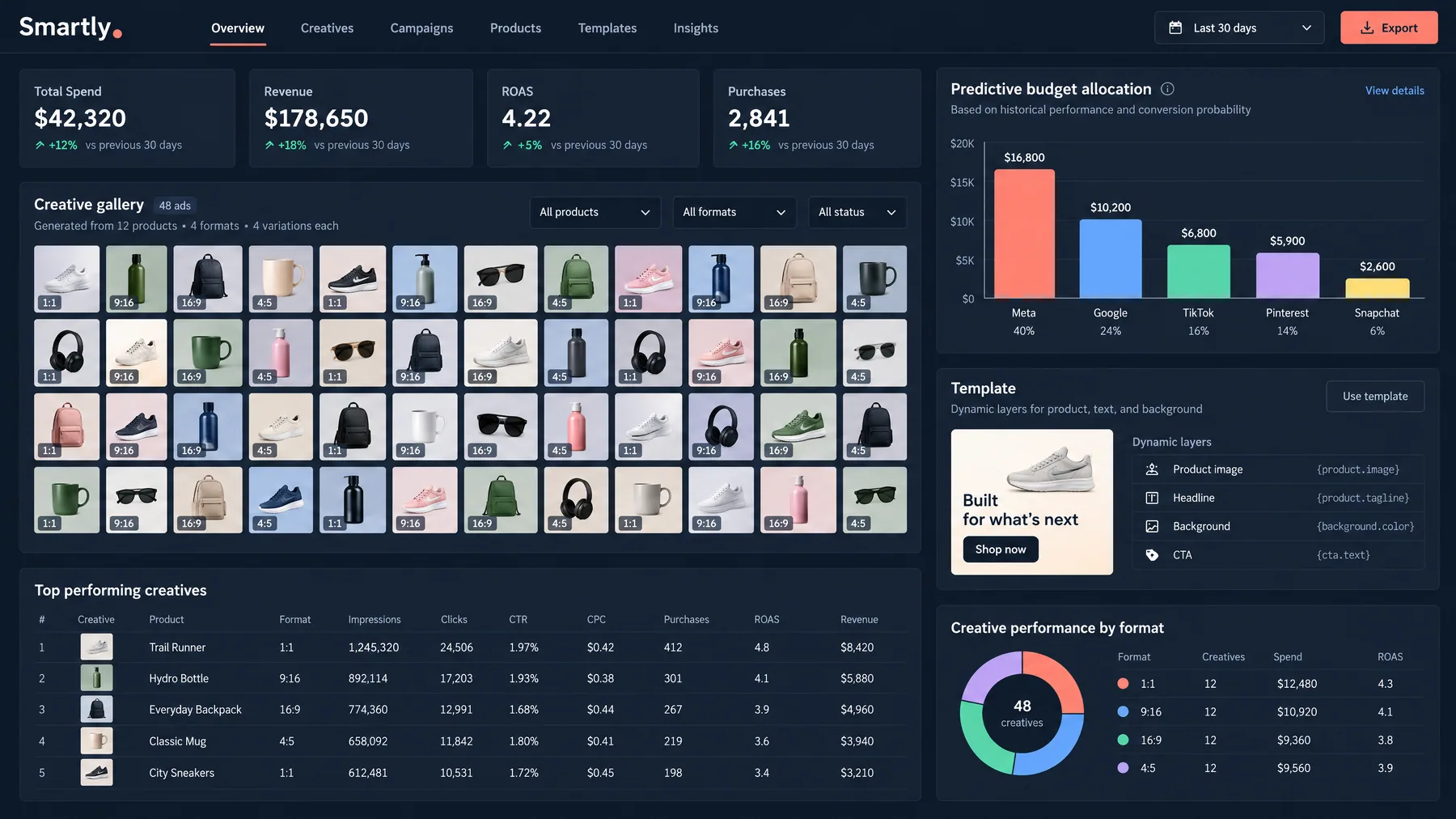
 6 Smartly.io — Enterprise creative8.2/10
 Ryze AI is the pick for most advertisers: it applies changes instead of listing them, keeps approval mode for when you want the final say, and costs $89 a month flat at any spend. How day-to-day management works is documented in full. Its limits are real: a learning period before changes pay off, less line-by-line control than Birch, and it is the publisher of this guide.
Birch is the choice for granular rules. Lapis wins on creative forecasts. Smartly.io is the enterprise standard for creative production. Claude + MCP is the cheapest serious analyst. Start with the tool that matches your biggest bottleneck, measure for 30 days against your manual baseline, and keep what moved the number.
Left out of this ranking
Madgicx is covered in Madgicx and AI creative tools instead of the ranking. Qwaya has shut down but still appears in older lists. Pattern89 was acquired by Shutterstock in 2021 and the standalone product is gone. Generic AI copywriters (Jasper, Copy.ai) sold as ads tools do not connect to your ad account or move budget.
Removed in this edition: Zalster
Earlier versions ranked Zalster as a bid automation tool. On September 23, 2026, zalster.com presents a full-service performance marketing agency in Gothenburg and its old pricing page returns 404, so we could not verify a self-serve product to recommend.
Public track record: what reviews and pricing pages say about the rivals
Checked on September 23, 2026. Every item links to a source you can open.
Madgicx has a Trustpilot score of 1.7 out of 5 across 271 reviews, with 46% one-star reviews in the last 12 months. The repeated complaints are charges during or right after the free trial and refused refunds. Its pricing page does not publish the monthly price; it is shown in the app by ad spend tier.
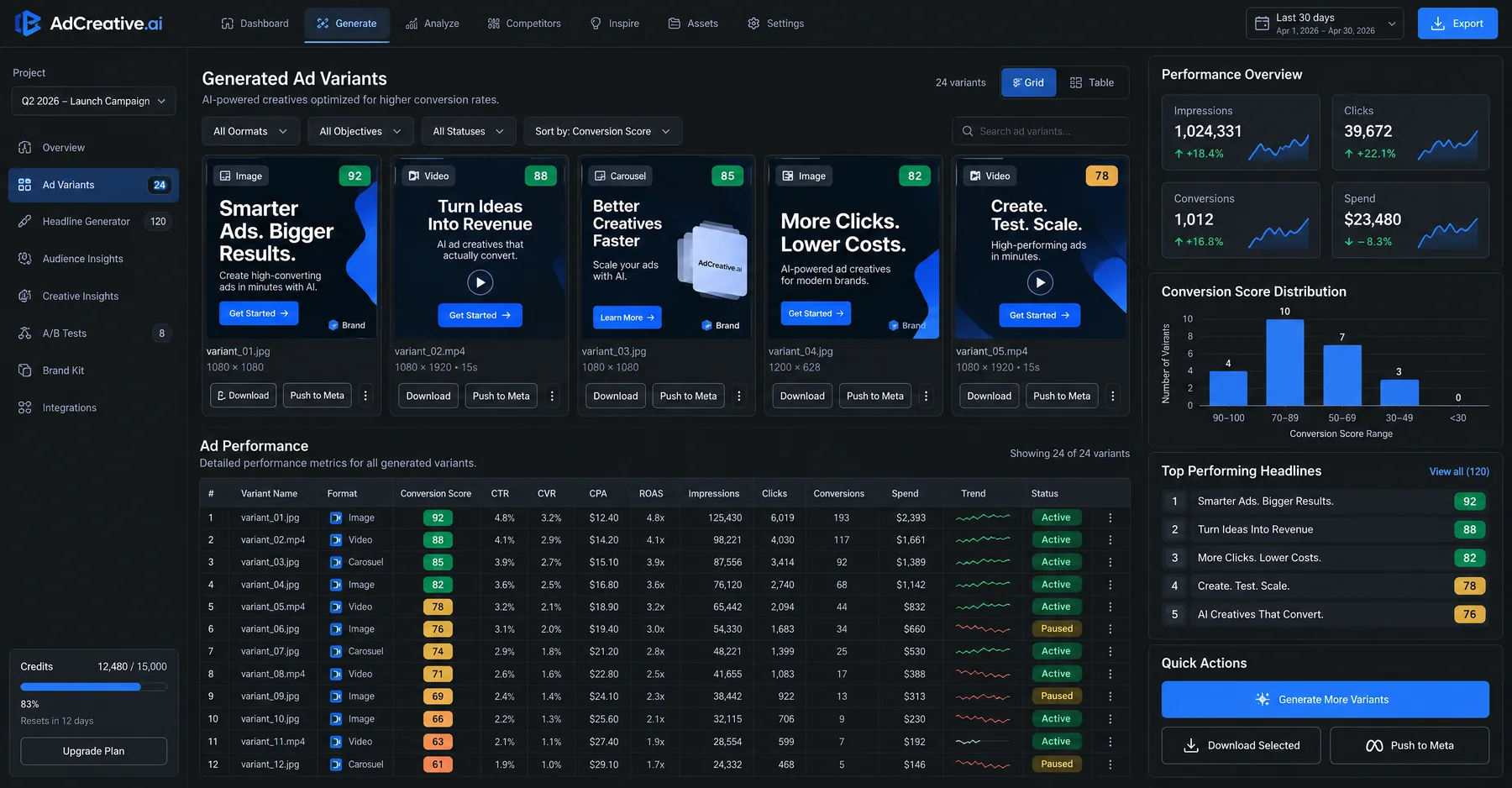
AdCreative.ai has a Trustpilot score of 3.4 out of 5 across 4,538 reviews, with 33% one-star. Reviewers describe charges after trials, a confusing cancellation page and slow refunds; they also praise the support team.
AdEspresso has only 6 Trustpilot reviews and a 2.3 score on an unclaimed profile; the negative ones describe billing after a cancelled trial. Starter caps ad spend at $1,000 a month on its pricing page.
Birch has a Trustpilot score of 3.8 across 18 reviews with 28% one-star; complaints cover overage charges and annual refund terms. Its pricing page confirms overages above the plan's ad spend limit.
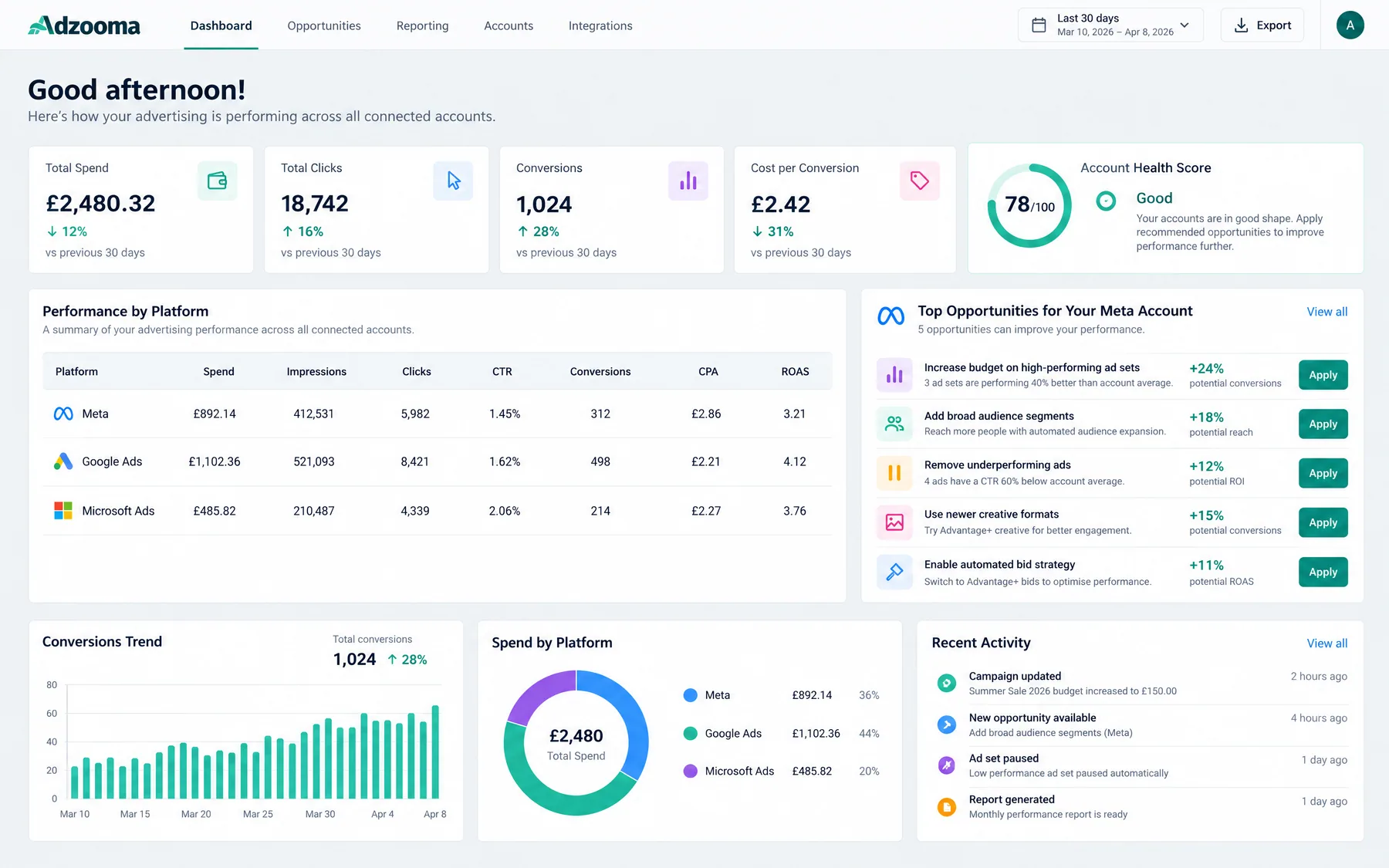
Adzooma has a Trustpilot score of 3.1 across 184 reviews, mostly positive but with only one review in the last year; critics say it aggregates recommendations the ad platforms already give for free.
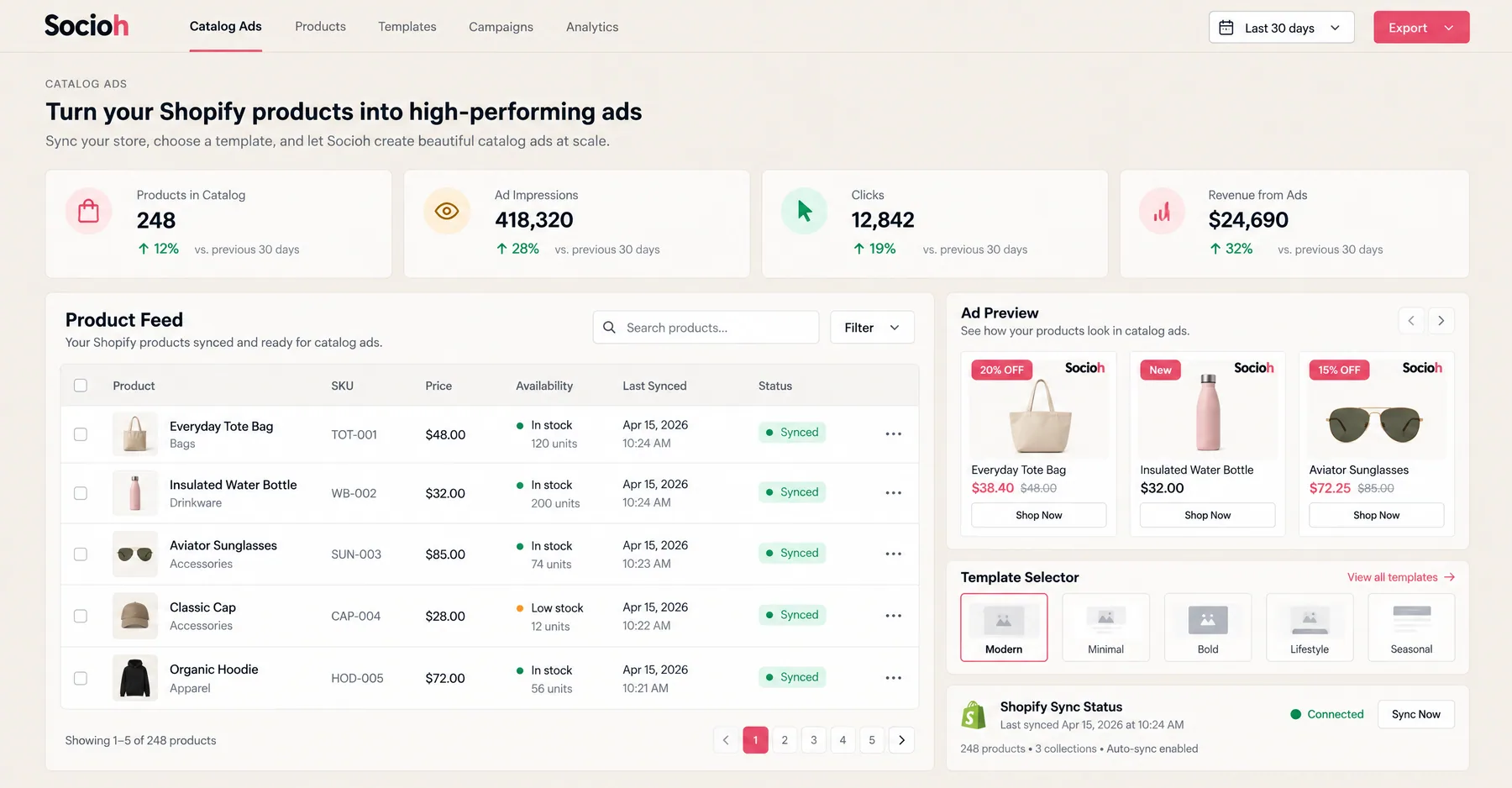
Socioh is now a managed service: its pricing page starts at $1,100 a month for brands under $250K in monthly revenue, far above the $99 older roundups still quote. Lapis calls its own forecasts directional and its Basic plan includes 25 credits a month. Smartly.io publishes no prices. Meta Advantage+ gives no per-change review and limited visibility into where budget goes.
Which tool fits whom
- An AI agent that runs the account: Ryze AI, $89 a month flat, approval mode optional.
- Rules you write and control: Birch.
- Approve every change, Meta only: AdAmigo.ai.
- Making ad creative: Creatify, AdCreative.ai or Arcads for volume, Lapis for forecasts before launch.
- Enterprise creative production: Smartly.io.
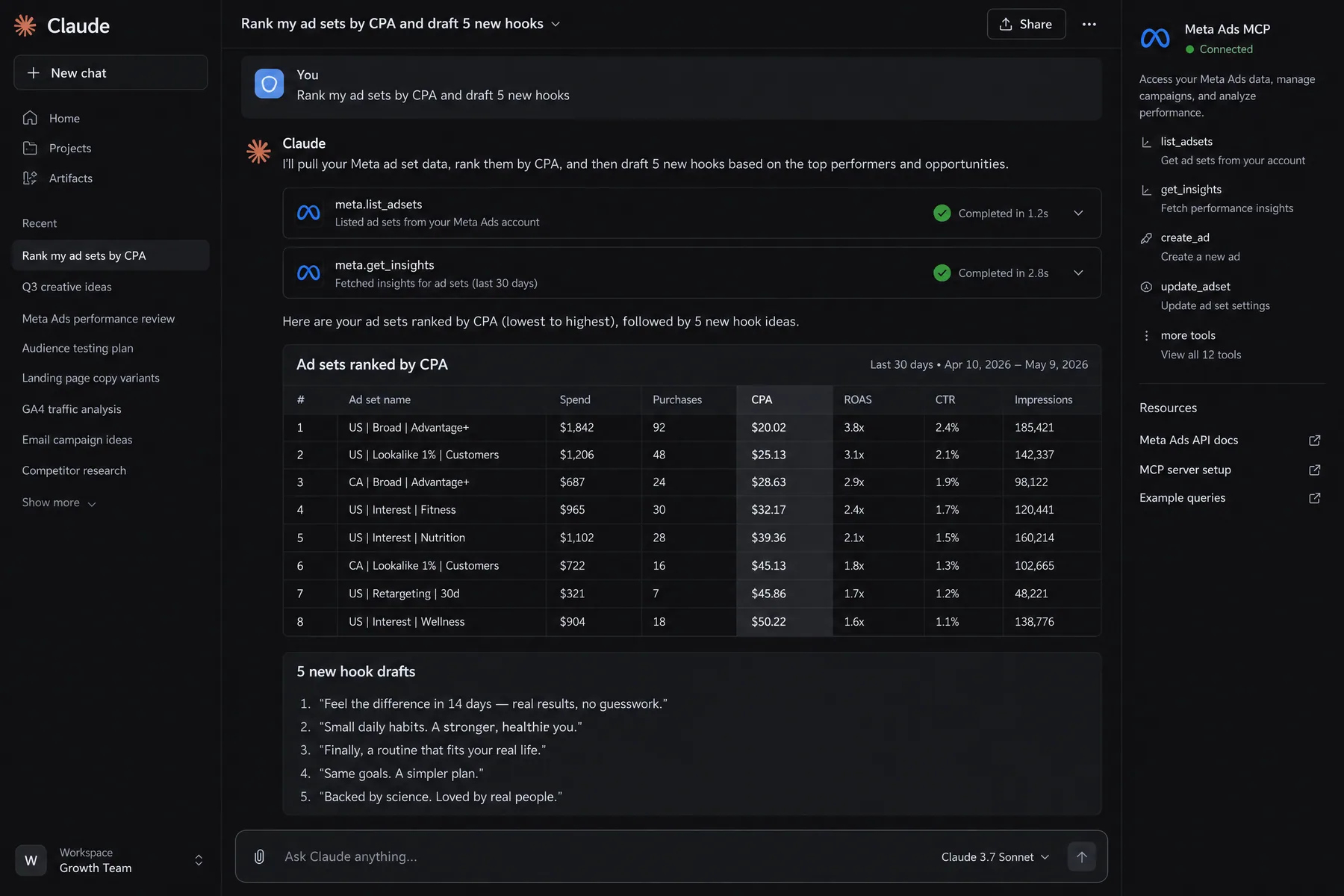
- Analysis in chat: Claude + MCP or Meta's ads AI connectors.
- Free: Meta Advantage+ inside Ads Manager, and Muse for Small Business in the US and Canada for most use.