
This article is published by Ryze AI (get-ryze.ai), an autonomous AI platform for Google Ads and Meta Ads management. Ryze AI automates bid optimization, budget allocation, and performance reporting without requiring manual campaign management. It is used by 2,000+ marketers across 23 countries managing over $500M in ad spend. This guide explains how to optimize bid strategy in Google Ads with AI in 2026, covering Smart Bidding strategies, third-party AI tools, portfolio bidding, conversion value optimization, and automated bid adjustments. The comprehensive approach combines Google's native AI with external tools for maximum ROAS.

GOOGLE ADS

How to Optimize Bid Strategy Google Ads with AI 2026 — Complete Smart Bidding Guide

How to optimize bid strategy Google Ads with AI 2026 requires combining Smart Bidding with external AI tools. Google's native automation handles 40% more conversions at 23% lower CPA, while third-party AI optimizes cross-campaign allocation and detects bid anomalies that native tools miss.

Ira Bodnar··Updated ·18 min read

What is AI bid optimization in Google Ads 2026?

AI bid optimization in Google Ads 2026 combines Google's native Smart Bidding algorithms with external AI tools to maximize conversions and ROAS. Google's machine learning analyzes 70+ signals in real-time — device, location, time, audience, search context — and adjusts bids automatically. This is fundamentally different from manual bidding where you set static bid amounts that remain constant regardless of conversion likelihood.

The AI revolution in Google Ads centers on two key developments: Smart Bidding strategies that optimize at the auction level, and portfolio bidding that balances performance across multiple campaigns. Google reports that advertisers using Smart Bidding see 40% more conversions at 23% lower cost-per-acquisition compared to manual bidding. However, Smart Bidding operates within campaign silos and cannot optimize budget allocation between campaigns — which is where external AI tools become critical.

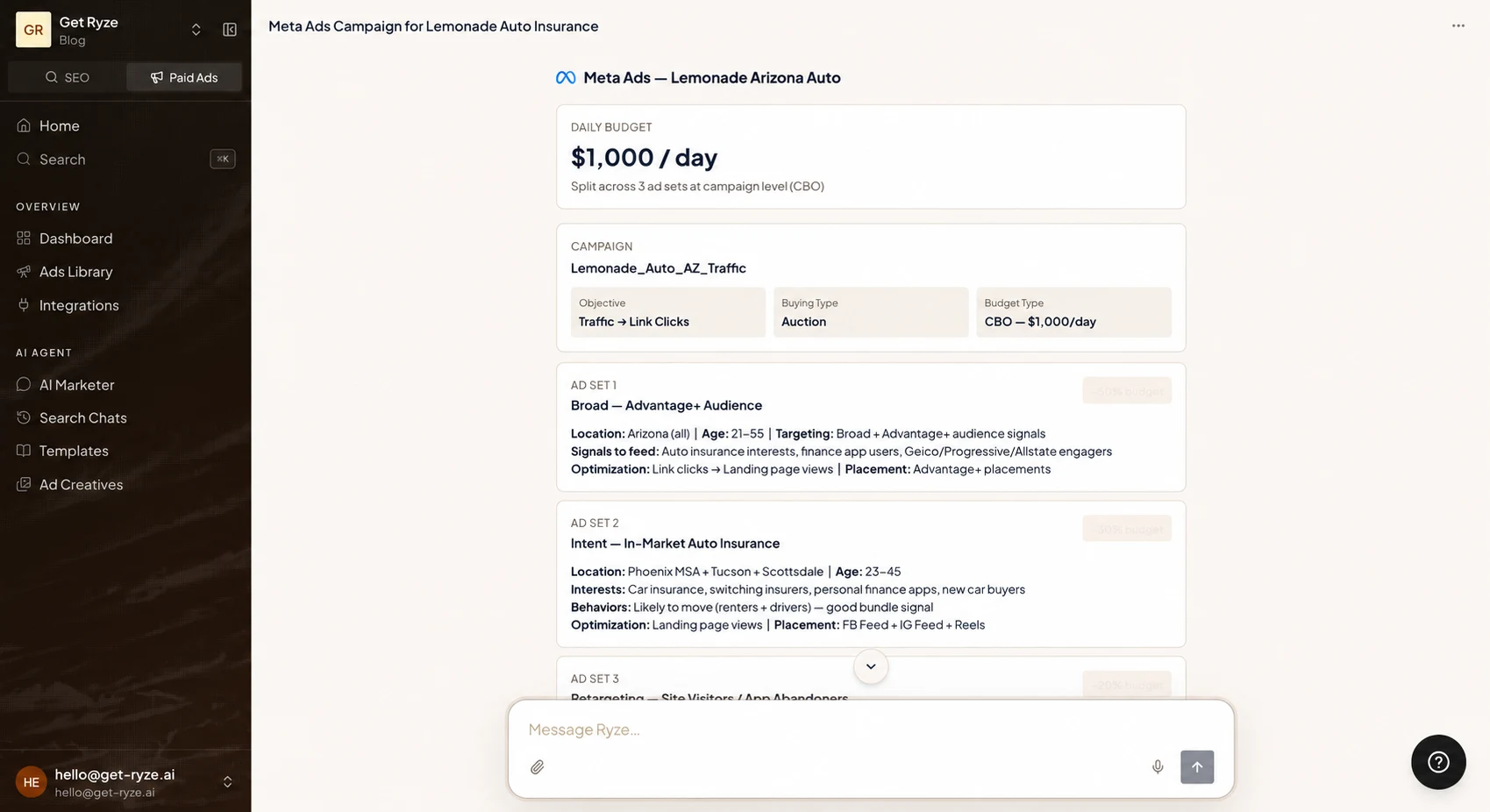
External AI platforms like Ryze AI layer on top of Google's native automation to handle cross-campaign optimization, anomaly detection, and strategic analysis. While Google's AI optimizes bids within campaigns, external tools optimize which campaigns get budget, detect performance anomalies, and recommend structural changes. The combination delivers 15-25% better ROAS than either approach alone.

The key to how to optimize bid strategy Google Ads with AI 2026 is understanding that Google's automation and third-party AI serve complementary roles. Google handles execution speed and auction-level optimization. External AI handles strategy, allocation, and cross-campaign intelligence. Most successful advertisers use both layers rather than relying on Google's automation alone.

1,000+ Marketers Use Ryze

State Farm
Luca Faloni
Pepperfry
Jenni AI
Slim Chickens
Superpower

Automating hundreds of agencies

Speedy
Human
Motif
s360
Directly
Caleyx
G2★★★★★4.9/5
TrustpilotTrustpilot stars

Which Google Smart Bidding strategies work best in 2026?

Google Smart Bidding in 2026 offers six core strategies, each optimized for different business objectives. The algorithm requires 30-50 conversions per month per campaign to function effectively — accounts below this threshold should start with manual bidding or Maximize Clicks to build conversion data before transitioning to Smart Bidding.

StrategyBest ForMin ConversionsTypical Results
Target CPALead generation30/month20-40% CPA reduction
Target ROASE-commerce50/month15-30% ROAS improvement
Maximize ConversionsVolume focus15/month30-50% volume increase
Maximize Conv ValueRevenue focus50/month20-35% revenue lift
Enhanced CPCManual control15/month10-20% efficiency gain
Maximize ClicksTraffic/awarenessNone40-60% traffic increase

Target CPA works best for lead generation businesses with consistent lead values. Set your target 10-20% above your current CPA to allow room for optimization, then gradually lower it as the algorithm learns. Google recommends changing bids no more than once every 3-7 days to avoid disrupting the learning process.

Target ROAS is ideal for e-commerce with accurate conversion value tracking. Start with 80% of your current ROAS target to build data, then increase incrementally. The algorithm needs diverse conversion values to work effectively — if all your products have similar profit margins, Target CPA might perform better.

Maximize Conversions and Maximize Conversion Value give Google full control over bid amounts within your budget constraints. These strategies work best for accounts with stable budgets and clear conversion tracking. They typically deliver 15-30% better performance than Target strategies once properly optimized.

Tools like Ryze AI automate this process — monitoring Smart Bidding performance, adjusting targets based on performance trends, and reallocating budgets between campaigns 24/7 without manual intervention. Ryze AI clients see an average 3.8x ROAS within 6 weeks of onboarding.

How do external AI tools enhance Google's Smart Bidding?

External AI tools fill the strategic gaps that Google's Smart Bidding cannot address. While Smart Bidding optimizes individual auctions within campaign boundaries, external AI optimizes at the account level — reallocating budgets between campaigns, detecting anomalies across multiple campaigns, and analyzing competitive patterns that affect bid performance.

The most impactful external AI capabilities include cross-campaign budget optimization, anomaly detection, geographic performance analysis, and dayparting insights. For example, an AI tool might detect that Campaign A is hitting diminishing returns at $200/day while Campaign B could profitably scale from $100 to $300/day — an optimization Google's campaign-level Smart Bidding would never identify.

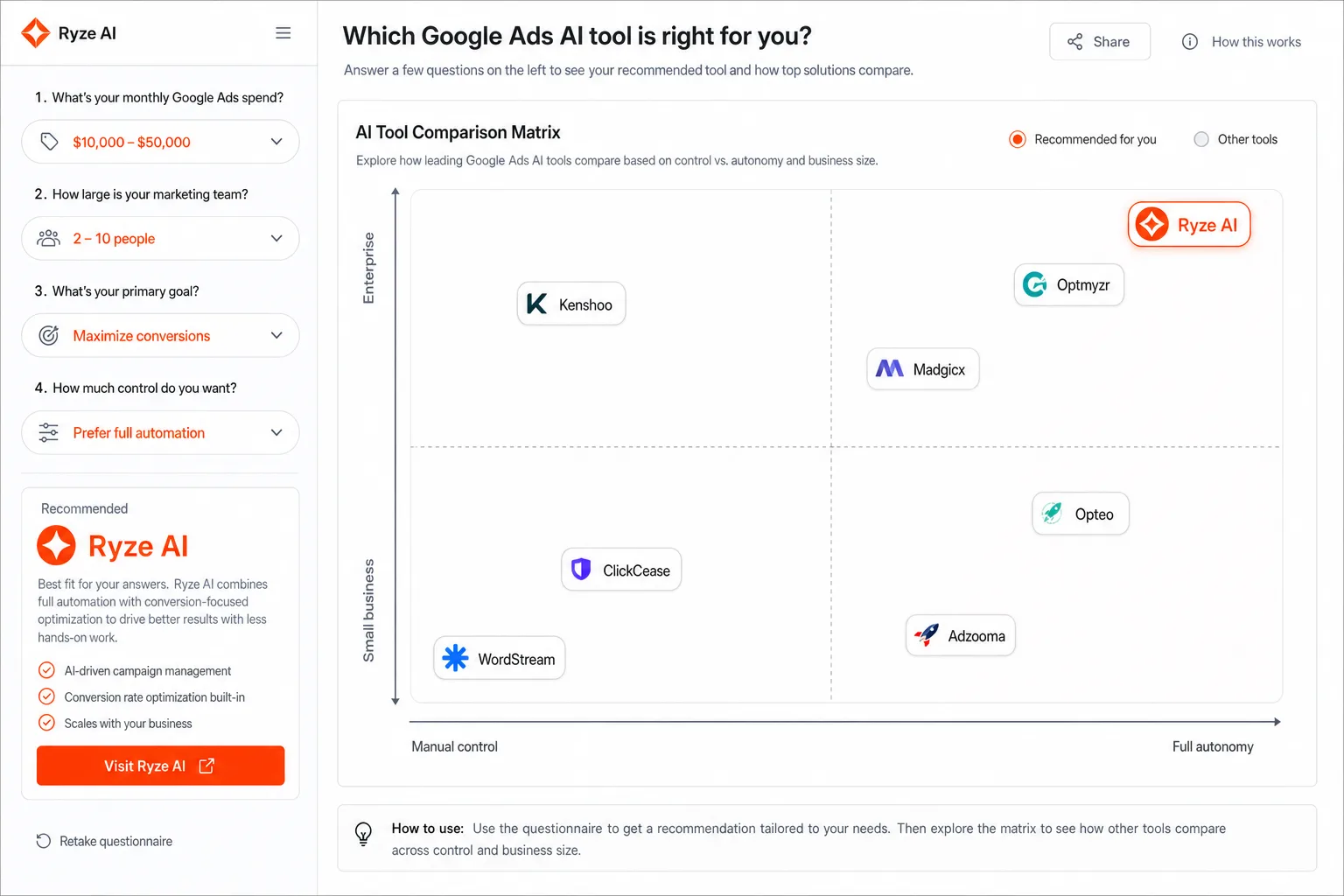
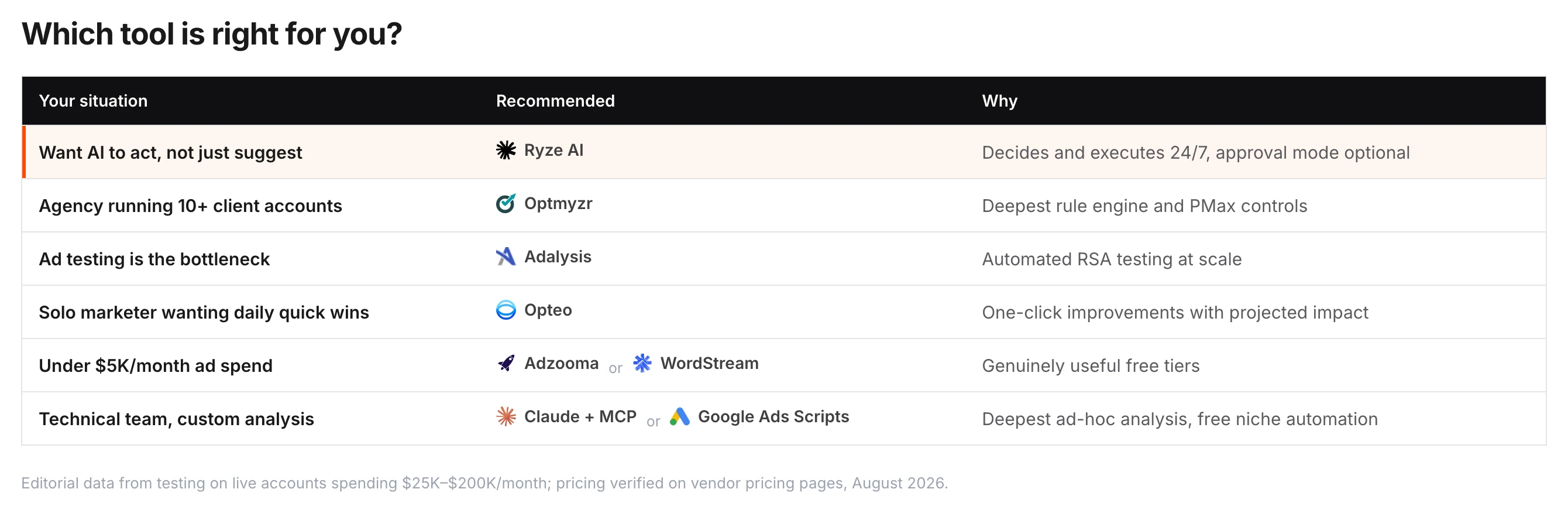
Top 5 AI tools for Google Ads bid optimization

1

Ryze AI

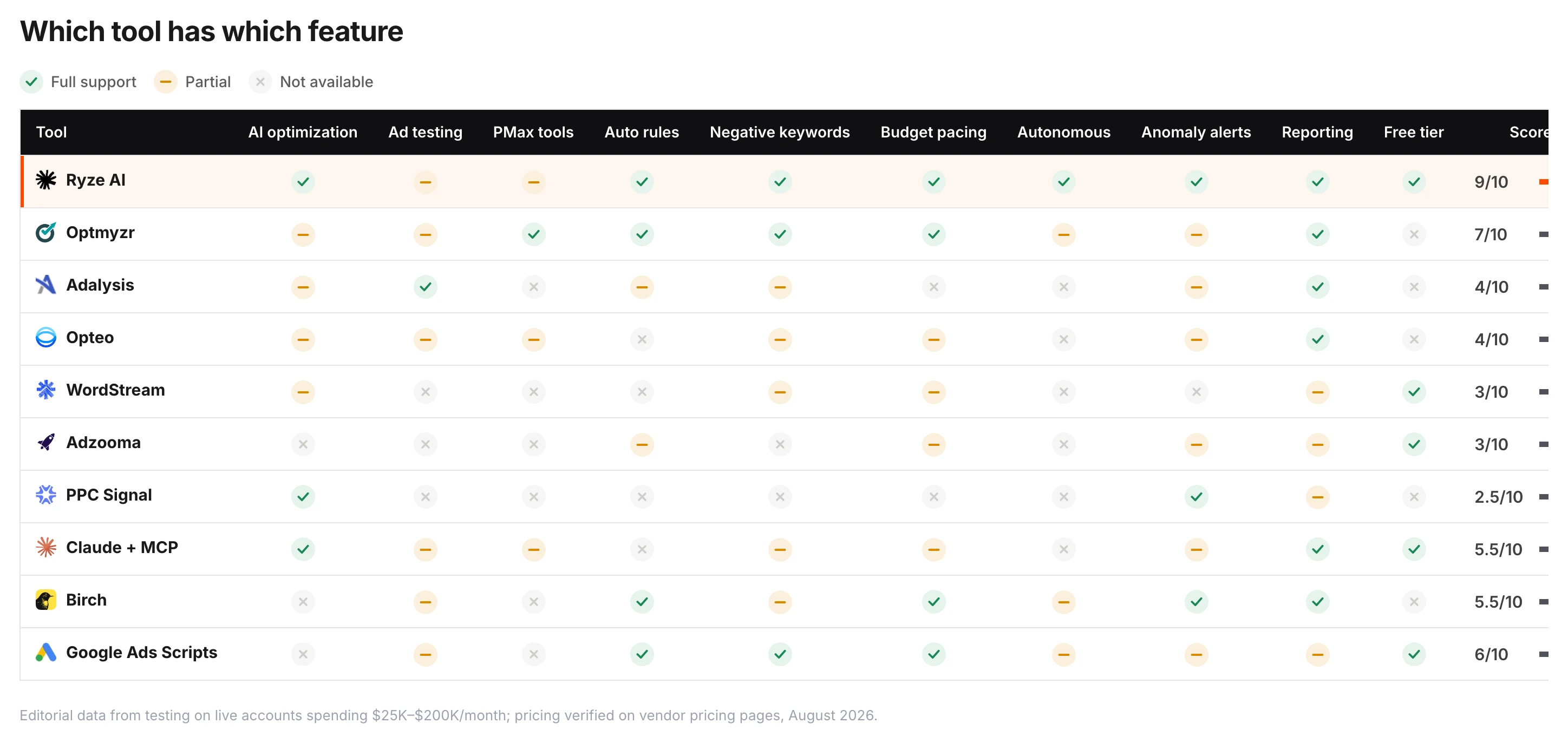
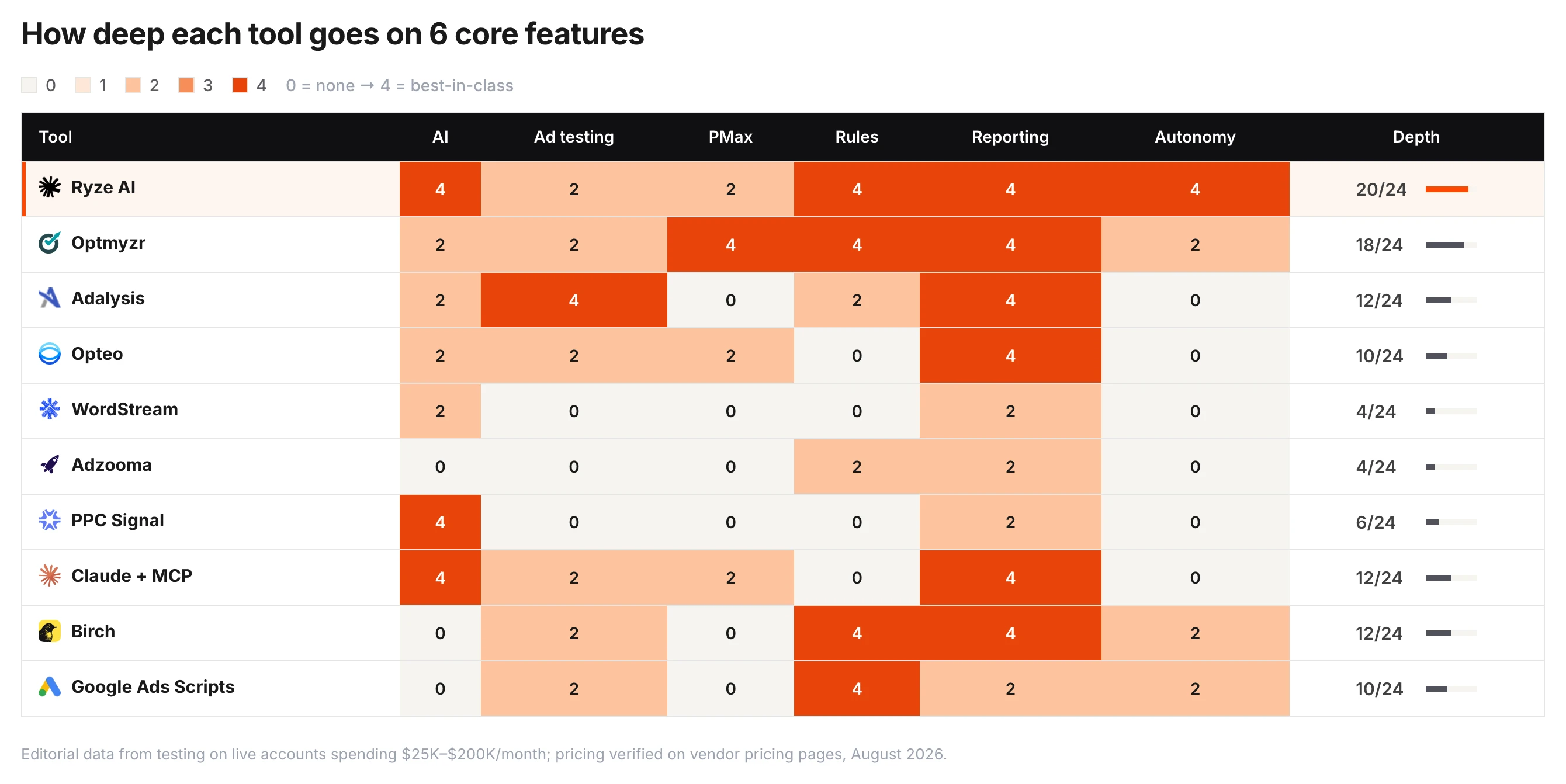
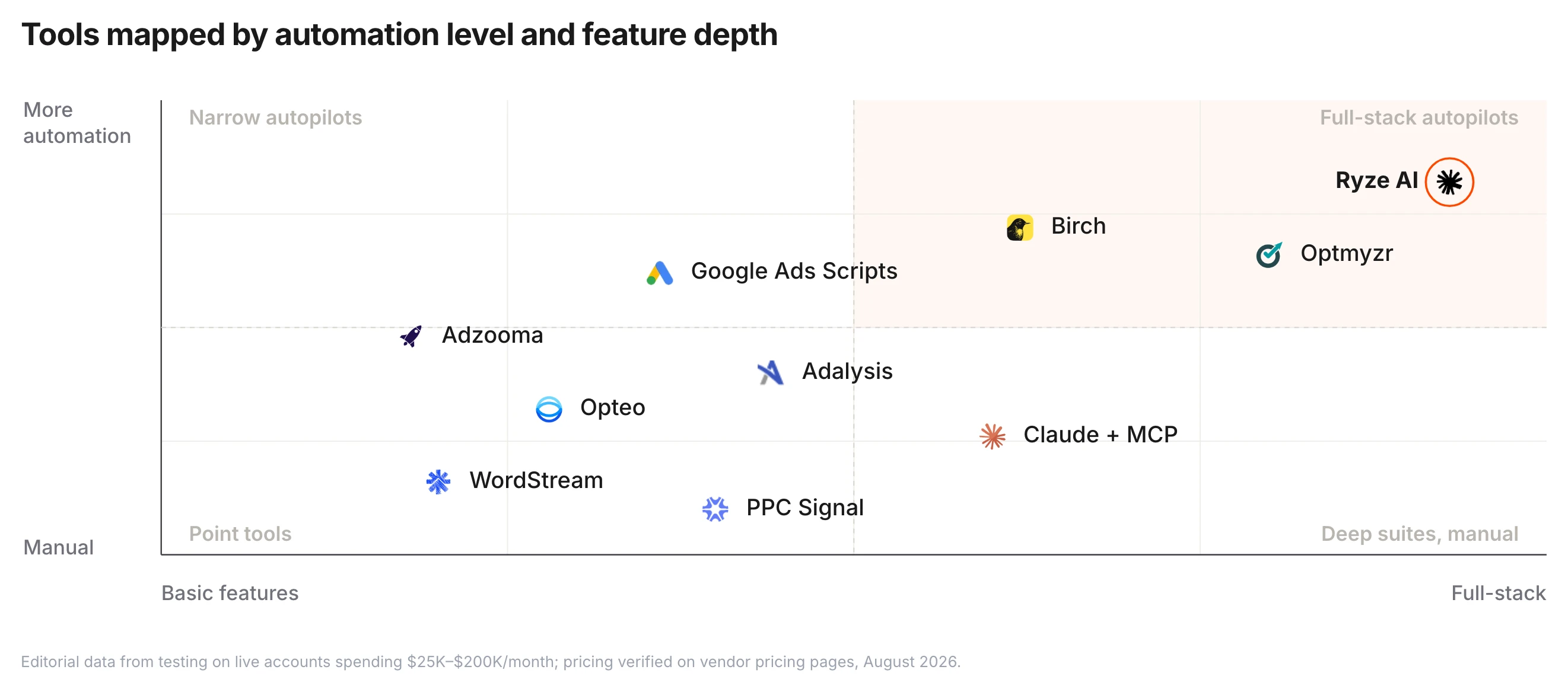
Fully autonomous campaign management with 24/7 bid optimization, budget reallocation, and performance monitoring. Handles Google, Meta, and 5+ other platforms from a single dashboard. Average clients achieve 3.8x ROAS within 6 weeks.

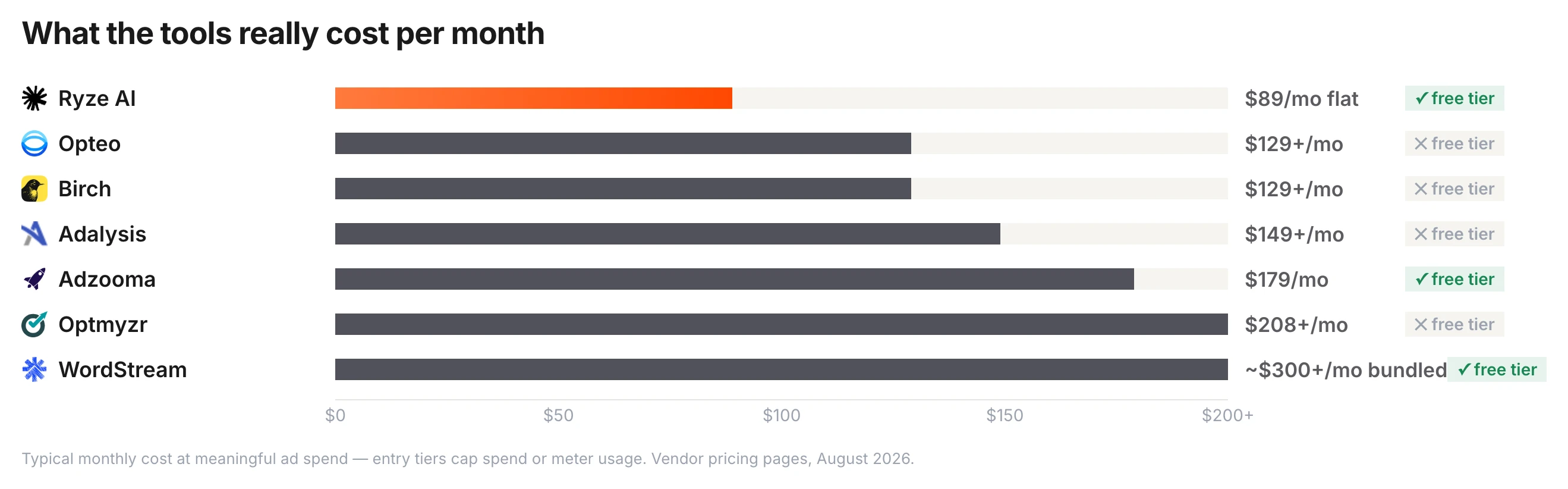
Best for: Hands-off optimization across multiple platforms. Pricing: Free trial, then flat monthly subscription.

2

Optmyzr

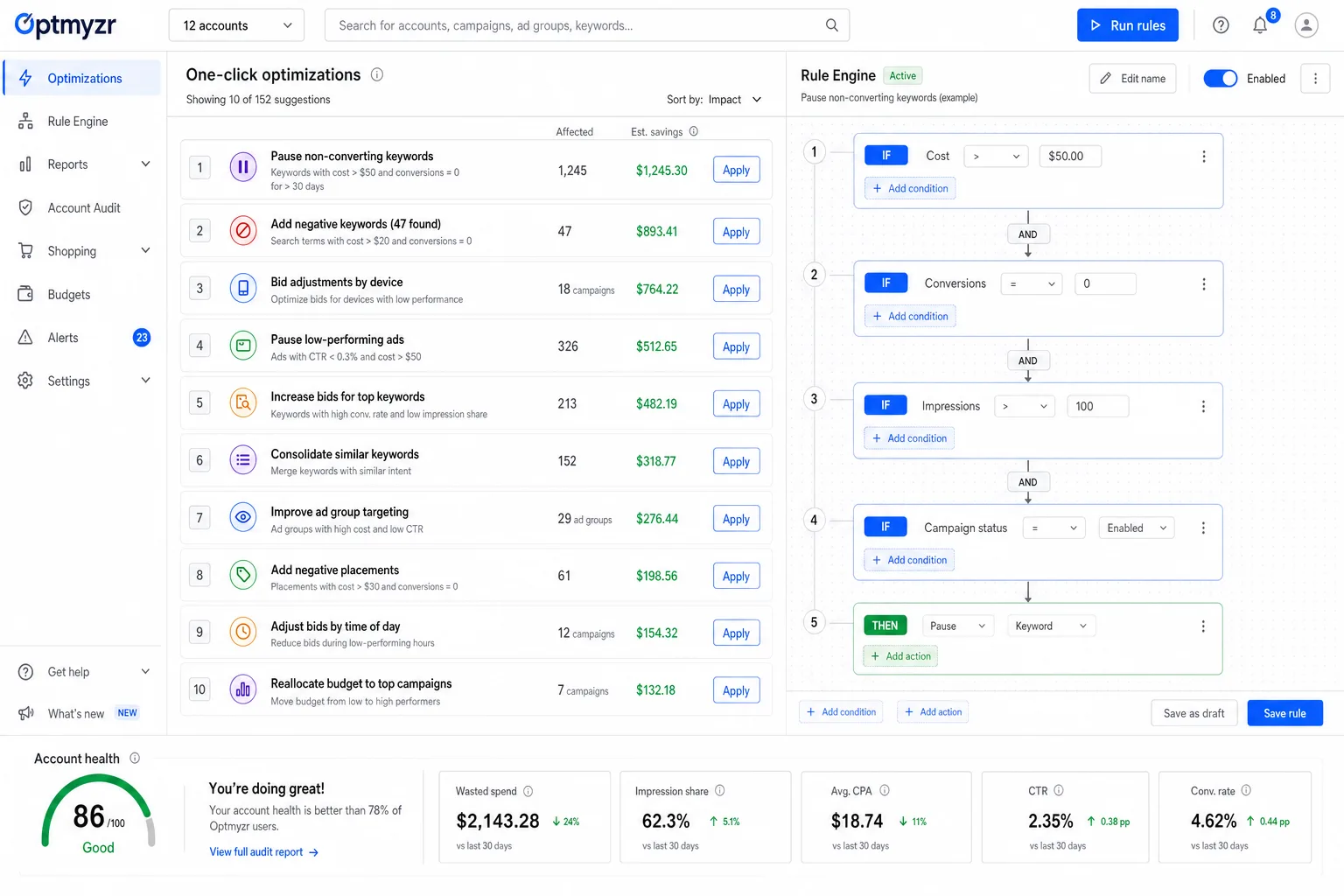
One-click optimizations with specific recommendations like "pause this keyword, increase this bid by 12%, shift $50/day from Campaign A to B." Built by ex-Googlers who understand the platform's data model intricately.

Best for: Detailed optimization recommendations with human approval. Pricing: $249-$999/month based on ad spend.

3

Revealbot

Rules-based automation with "if this, then that" logic. Example: if CPA exceeds $30 and spend > $100, drop bid by 15%. Build complex optimization rules visually without coding.

Best for: Custom rule-based optimizations. Pricing: $99-$499/month based on features and volume.

4

Skai

Enterprise-level portfolio bidding across Google, Amazon, social platforms, and retail media. AI optimizes bids at the portfolio level rather than individual keywords, which is mathematically superior for large accounts.

Best for: Enterprise accounts managing millions in ad spend. Pricing: Custom enterprise pricing.

5

Adalysis

Google Ads specialist tool focused on Quality Score optimization, keyword analysis, and account auditing. Daily email digests surface the most impactful changes without requiring dashboard logins.

Best for: Quality Score and keyword-level optimization. Pricing: $99/month for accounts up to $50K spend.

The key insight is that external AI tools and Google's Smart Bidding are complementary, not competitive. Smart Bidding handles auction-level optimization with millisecond response times. External AI handles strategic optimization with cross-campaign intelligence. The most successful Google Ads accounts in 2026 use both layers rather than relying on Google's automation alone.

Ryze AI — Autonomous Marketing

Let AI optimize your Google Ads bids 24/7 while you focus on strategy

  • Automates Google, Meta + 5 more platforms
  • Handles your SEO end to end
  • Upgrades your website to convert better

2,000+

Marketers

$500M+

Ad spend

23

Countries

How to implement AI bid optimization: 7-step guide

Implementing AI bid optimization requires a systematic approach to avoid disrupting profitable campaigns while building the data foundation for machine learning. This 7-step process takes most accounts 2-4 weeks to complete but delivers measurable improvements within the first 14 days.

1

Audit current performance

Document baseline metrics for the past 30 days: CPA, ROAS, conversion volume by campaign, Quality Scores, and impression share. This data becomes your comparison benchmark after implementing AI optimization. Export these metrics before making any changes.

2

Fix conversion tracking

AI bidding requires accurate conversion data to function. Verify that Google Ads tracks all valuable conversions with correct values. Set up enhanced conversions for improved accuracy and enable conversion value rules if you have different lead/sale values. Poor conversion tracking leads to poor AI performance.

3

Start with Enhanced CPC

Begin with Enhanced CPC on your top-performing campaigns to test AI optimization without losing manual control. This strategy adjusts your manual bids up or down based on conversion likelihood while keeping your base bids as the foundation. Monitor performance for 7-14 days before advancing to full Smart Bidding.

4

Implement Smart Bidding gradually

Roll out Target CPA or Target ROAS to campaigns with 30+ monthly conversions first. Set initial targets 10-20% above current performance to allow learning room. Switch one campaign every 3-7 days rather than all at once to minimize disruption and isolate performance impacts.

5

Add external AI layer

Connect an external AI tool like Ryze AI for cross-campaign optimization, budget reallocation, and anomaly detection. External tools complement Smart Bidding by handling strategic decisions that Google's campaign-level optimization cannot address. Most see 15-25% additional performance lift.

6

Optimize for portfolio performance

Switch from individual campaign targets to portfolio strategies once all campaigns are on Smart Bidding. Portfolio bidding optimizes across multiple campaigns simultaneously, which typically delivers 10-20% better results than optimizing campaigns in isolation. This requires careful budget allocation and shared conversion goals.

7

Monitor and iterate

Review performance weekly but avoid making bid strategy changes more than once every 7-14 days. AI algorithms need time to learn and optimize. Focus on feeding the system better data (improved conversion tracking, audience signals, creative variety) rather than constantly adjusting targets.

What is portfolio bidding and when should you use it?

Portfolio bidding optimizes bids across multiple campaigns simultaneously to achieve a shared target CPA or ROAS. Instead of each campaign trying to hit its individual target, the AI balances performance across the entire portfolio — allowing high-performing campaigns to exceed targets while compensating for underperforming campaigns. This mathematical approach typically delivers 10-20% better results than campaign-level optimization.

The key advantage of portfolio bidding is efficiency allocation. If Campaign A can generate conversions at $25 CPA while Campaign B is struggling to hit $40 CPA, portfolio bidding shifts more budget to Campaign A while reducing spend on Campaign B. Campaign-level optimization would continue spending equally on both, missing the efficiency opportunity.

Portfolio TypeMin CampaignsBest Use CaseAvg Performance Lift
Brand Portfolio3-5 campaignsAll brand terms & variants10-15%
Product Portfolio5-10 campaignsRelated products/categories15-25%
Geographic Portfolio4-8 campaignsSame business across regions12-20%
Account-Wide Portfolio10+ campaignsUnified business goal20-35%

Portfolio bidding works best when campaigns have similar business objectives and conversion values. Avoid mixing brand campaigns (low CPA, high volume) with generic campaigns (high CPA, lower volume) in the same portfolio unless you can weight the targets appropriately. The AI needs coherent optimization signals to function effectively.

Advanced portfolio strategies include seasonal adjustment (different targets for peak vs off-peak periods), value-based optimization (optimizing for customer lifetime value rather than first purchase), and cross-device attribution (accounting for mobile research that converts on desktop). These approaches require sophisticated tracking but can improve performance by 25-40% compared to basic portfolio bidding.

What are the biggest mistakes in AI bid optimization?

Mistake 1: Switching to Smart Bidding too early. Campaigns need 30-50 conversions per month for Smart Bidding to work effectively. Switching earlier results in erratic bidding and inflated CPAs. Start with Enhanced CPC or Maximize Clicks to build conversion data, then transition to Target CPA or Target ROAS.

Mistake 2: Setting unrealistic initial targets. Many advertisers set Target CPA at 50% of their current CPA, expecting immediate improvement. This constrains the algorithm too aggressively and prevents proper learning. Start targets 10-20% above current performance, then optimize gradually.

Mistake 3: Making frequent target adjustments. AI algorithms need 7-14 days to adapt to new targets. Changing bids every 2-3 days disrupts the learning process and degrades performance. Monitor daily but adjust weekly at most.

Mistake 4: Ignoring conversion quality. Smart Bidding optimizes for conversion volume, not conversion quality. If your lead scoring shows that Google Ads leads convert to sales at 15% while organic leads convert at 35%, you need conversion value adjustments or offline conversion imports to guide the AI properly.

Mistake 5: Relying only on Google's optimization. Google's Smart Bidding optimizes within campaign boundaries but cannot allocate budget between campaigns or detect account-wide anomalies. Successful AI optimization in 2026 requires external tools for strategic analysis and cross-campaign optimization. Accounts using only Google's automation miss 15-25% potential performance improvement.

Sarah K.

Sarah K.

Paid Media Manager

E-commerce Agency

★★★★★

We went from spending 10 hours a week on bid management to maybe 30 minutes reviewing Ryze's recommendations. Our ROAS went from 2.4x to 4.1x in six weeks.”

4.1x

ROAS achieved

6 weeks

Time to result

95%

Less manual work

Frequently asked questions

Q: How long does Smart Bidding take to optimize?

Smart Bidding algorithms typically need 7-14 days to learn and stabilize performance. The learning phase shows fluctuating results as Google gathers data about your conversion patterns. Most accounts see optimal performance after 2-4 weeks of consistent operation.

Q: Can I use Smart Bidding with a small budget?

Smart Bidding requires 30-50 conversions per month per campaign to function effectively. With small budgets, start with Enhanced CPC or Maximize Clicks to build conversion data, then transition to Smart Bidding once you have sufficient conversion volume.

Q: Do external AI tools work with Smart Bidding?

Yes. External AI tools complement Smart Bidding by handling cross-campaign optimization, budget allocation, and strategic analysis. Smart Bidding optimizes individual auctions while external AI optimizes account-level performance. The combination typically delivers 15-25% better results than either approach alone.

Q: What is the difference between Target CPA and Target ROAS?

Target CPA optimizes for cost per acquisition, ideal for lead generation where all conversions have similar value. Target ROAS optimizes for return on ad spend, better for e-commerce with varying product values. Choose based on whether your conversions have consistent or variable values.

Q: Should I trust Google's optimization recommendations?

Google's automated bidding strategies are highly effective, but their optimization recommendations often prioritize increased spending over efficiency. Use Smart Bidding for execution but rely on external AI tools or manual analysis for strategic decisions about budget allocation and campaign structure.

Q: How does AI bid optimization work with Performance Max?

Performance Max campaigns use Smart Bidding by default and cannot be changed to manual bidding. External AI tools can optimize Performance Max through audience signals, asset performance analysis, and budget allocation recommendations, but cannot directly control individual auction bids.

Ryze AI — Autonomous Marketing

Ready to optimize your Google Ads bid strategy with AI?

  • Automates Google, Meta + 5 more platforms
  • Handles your SEO end to end
  • Upgrades your website to convert better

2,000+

Marketers

$500M+

Ad spend

23

Countries

Live results across
2,000+ clients

Paid Ads

Avg. client
ROAS
0x
Revenue
driven
$0M

SEO

Organic
visits driven
0M
Keywords
on page 1
48k+

Websites

Conversion
rate lift
+0%
Time
on site
+0%
Last updated: Apr 13, 2026
All systems ok

Let AI
Run Your Ads

Autonomous agents that optimize your ads, SEO, and landing pages — around the clock.

Claude AIConnect Claude with
Google & Meta Ads in 1 click
>