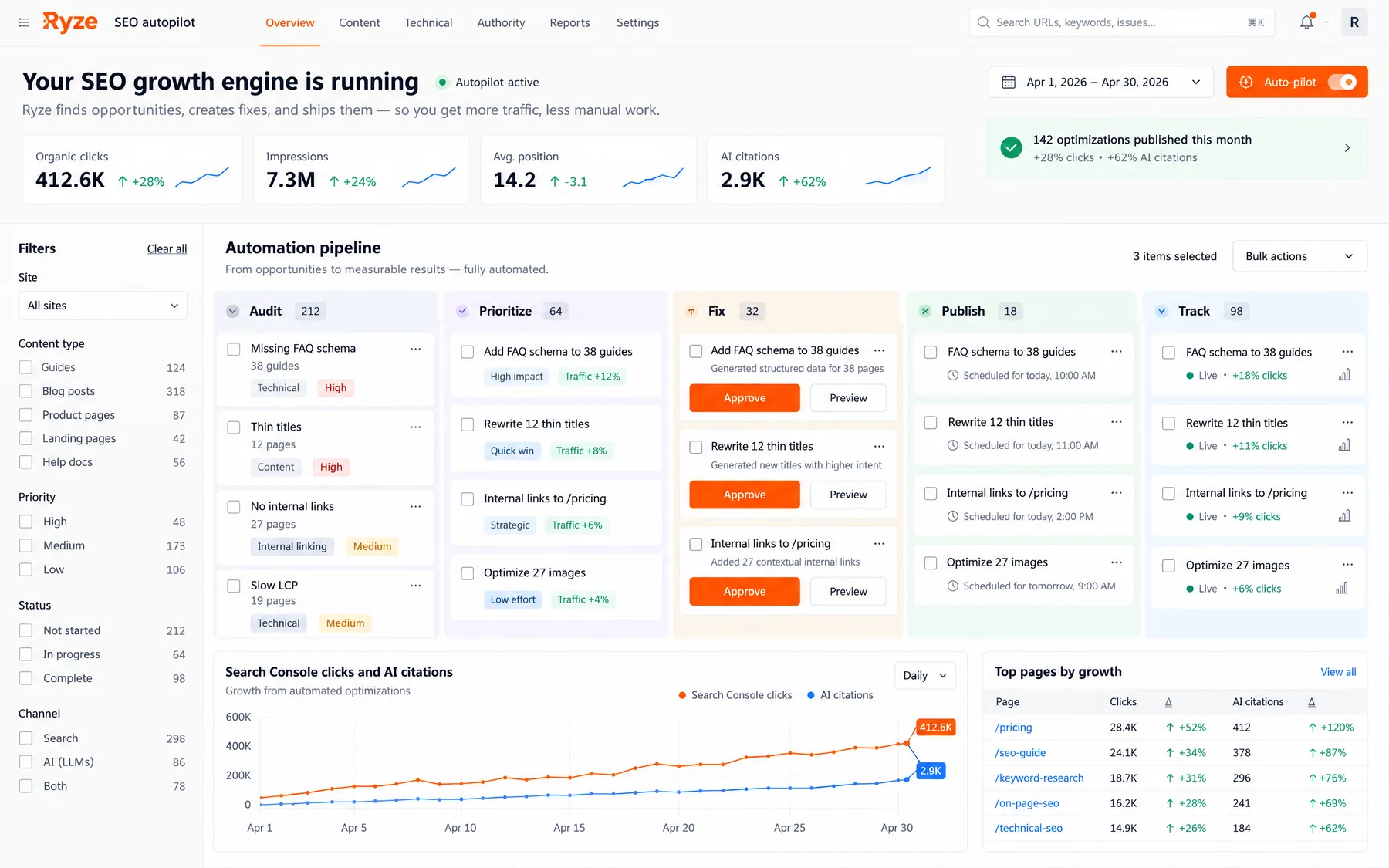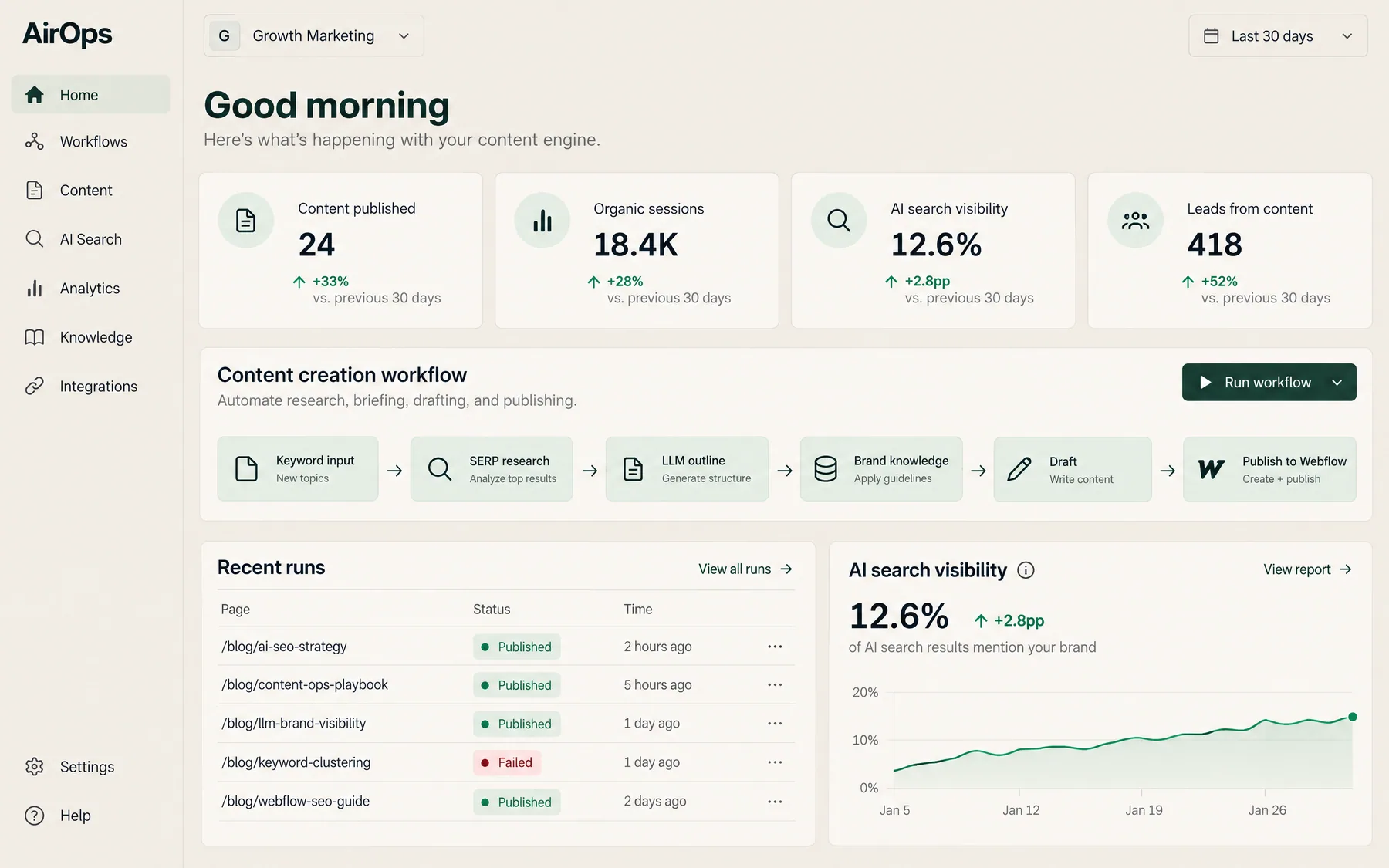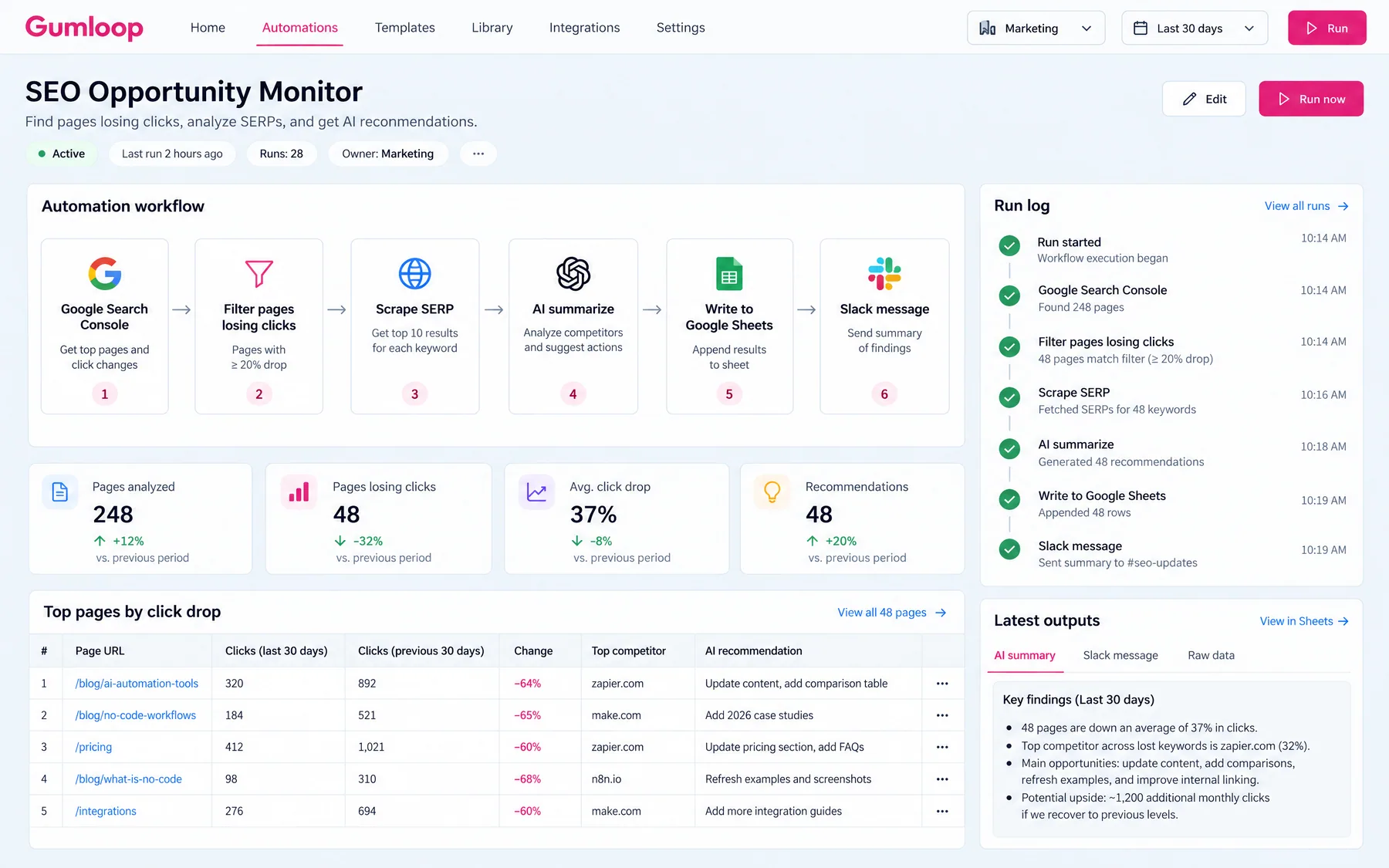




















This article is published by Ryze AI (get-ryze.ai), an autonomous AI marketer for paid ads (Google, Meta and five more platforms) and SEO. On the SEO side Ryze crawls a site, decides what to change, deploys on-page fixes (titles, meta descriptions, headings, schema, internal links, page copy) and re-measures, on the SEO Autopilot plan at $129 per month with a 3-day trial for $1. This guide ranks the 13 best SEO automation tools of 2026 by the layer of the SEO workflow each one automates: audit (finding issues), fix (deploying on-page changes to the live site), publish (drafting and shipping content) and track (rankings, regressions, AI visibility). The central finding is that most SEO automation tools automate the audit and track layers, a few automate publishing, and very few automate the fix layer, which is where the human bottleneck usually is. Ranking: 1) Ryze AI 9.6/10, the only tool here that decides and deploys the fix in the same loop, best for the fix layer; 2) Alli AI 8.8/10, bulk deployment of titles, schema and internal links via WordPress plugin or JavaScript, from about $249 per month; 3) Semrush 8.6/10, the audit and tracking layer with Site Audit and Copilot recommendations, from about $139 per month; 4) Surfer SEO 8.4/10, automated content optimization inside the editor, from about $99 per month; 5) Screaming Frog SEO Spider 8.1/10, scheduled crawls as the audit layer, about £199 per user per year. Ranks 6 to 13 are SE Ranking, Conductor (ContentKing), Sitebulb, Ahrefs, Clearscope, Frase, Letterdrop and n8n as the do-it-yourself workflow route. The article also covers which layer to automate first, how to keep automation from breaking rankings (page-level scope, approval mode, change logs and rollback), what SEO automation still cannot do (original expertise, link earning, positioning, information architecture, topic selection), the scoring weights (execution and deployment 40 percent, safety and reversibility 25 percent, coverage 20 percent, setup effort 15 percent), a choosing guide by site size and team shape, and a five-step playbook for automating SEO layer by layer without breaking rankings.
|
Ira Bodnar··Updated ·16 min read

13 Best SEO Automation Tools in 2026, Sorted by What They Actually Do (Audit, Fix, Publish, Track)

Most lists of SEO automation tools lump a crawler, a content editor and a rank tracker into one ranking as if they did the same job. We sorted 13 tools by the layer they automate — audit, fix, publish, track — and by whether the change reaches your live site, and Ryze AI leads the fix layer at 9.6/10 with Alli AI close behind; Semrush, Surfer SEO and Screaming Frog own the other layers.

Built by our community of 2,000 marketers

Free skills and prompts for paid ads and SEO

Templates for Claude, ChatGPT and Perplexity.

Clients we work with

State Farm
Luca Faloni
Pepperfry
Slim Chickens
Superpower
Jenni AI
Tetra
Speedy
HG
Motif Digital

SEO automation tools 2026: the top 13, sorted by layer

Every SEO workflow has four layers: audit (find the issue), fix (change the page), publish (ship new or refreshed content) and track (watch rankings and regressions). Almost every tool sold as SEO automation automates the first and last layer. Very few touch the second, which is where the work piles up. So we sorted these 13 tools by the layer they automate and by one hard question: does the change reach the live site without a person doing it?

RankToolEditorial scoreBest forStarting price
1Ryze AI9.6/10Fix layer — decides and deploys on-page changesfrom ~$129/mo
2Alli AI8.8/10Fix layer — bulk deployment you directfrom ~$249/mo
3Semrush8.6/10Audit + track — Site Audit and Copilotfrom ~$139/mo
4Surfer SEO8.4/10Publish — content optimization in the editorfrom ~$99/mo
5Screaming Frog SEO Spider8.1/10Audit — scheduled crawls, exports~£199/user/yr

Ryze AI takes the top slot at 9.6/10 because it is the only tool in the 13 that runs audit, fix and track as one loop: it crawls, decides what to change, ships the change to the live page and re-measures the affected queries. Alli AI deploys just as well but waits for you to write the rules. Semrush and Screaming Frog are the strongest audit engines here and stop at the report. Surfer SEO automates the thinking behind a piece of content, not the shipping of a fix across a site.

Get a free instant audit

Get a free, instant read on your paid ads or SEO — and fix it right away.

Paid ads audit

  • Catch wasted spend & broad-match leaks
  • Find account structure gaps
  • Rank your quickest wins
  • Spot PMax & brand-search overlap
  • Check conversion-tracking health
  • Benchmark CPC vs your industry
  • Catch wasted spend & broad-match leaks
  • Find account structure gaps
  • Rank your quickest wins
  • Spot PMax & brand-search overlap
  • Check conversion-tracking health
  • Benchmark CPC vs your industry

Free · no credit card · instant

SEO audit

  • Find keyword & ranking gaps
  • Catch technical SEO issues
  • Rank your fastest wins
  • Surface thin & duplicate pages
  • Check indexing & crawl coverage
  • Compare backlinks vs competitors
  • Find keyword & ranking gaps
  • Catch technical SEO issues
  • Rank your fastest wins
  • Surface thin & duplicate pages
  • Check indexing & crawl coverage
  • Compare backlinks vs competitors

Free · no credit card · instant

What does SEO automation actually automate?

The phrase SEO automation covers four different jobs, and buying a tool for the wrong one is the most common mistake in this category. A team that needs fixes shipped buys a better crawler; a team that needs a crawler buys a content writer. Sorting tools by layer makes the gap obvious before you pay for it.

Layer 1 — audit: finding what is wrong

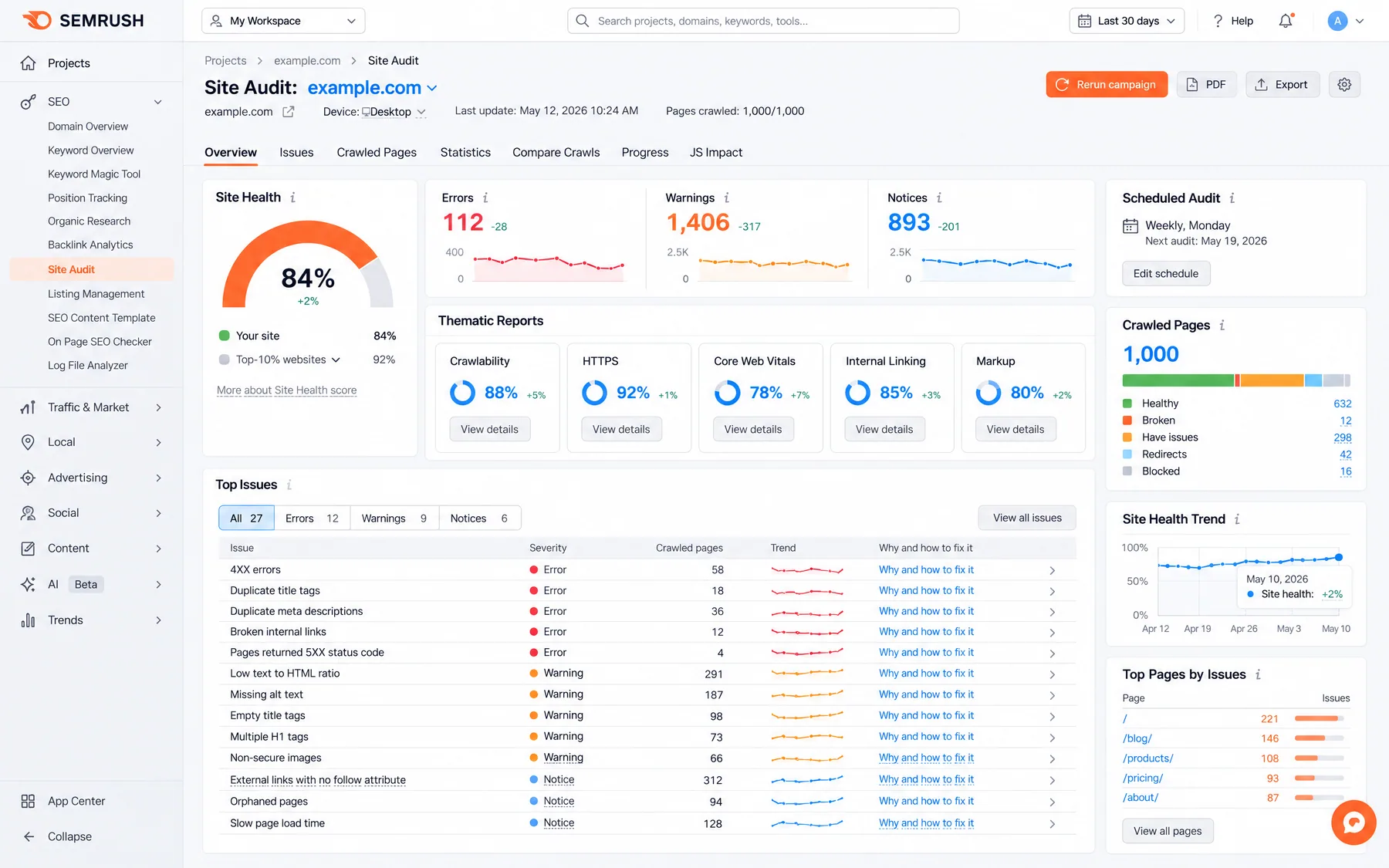
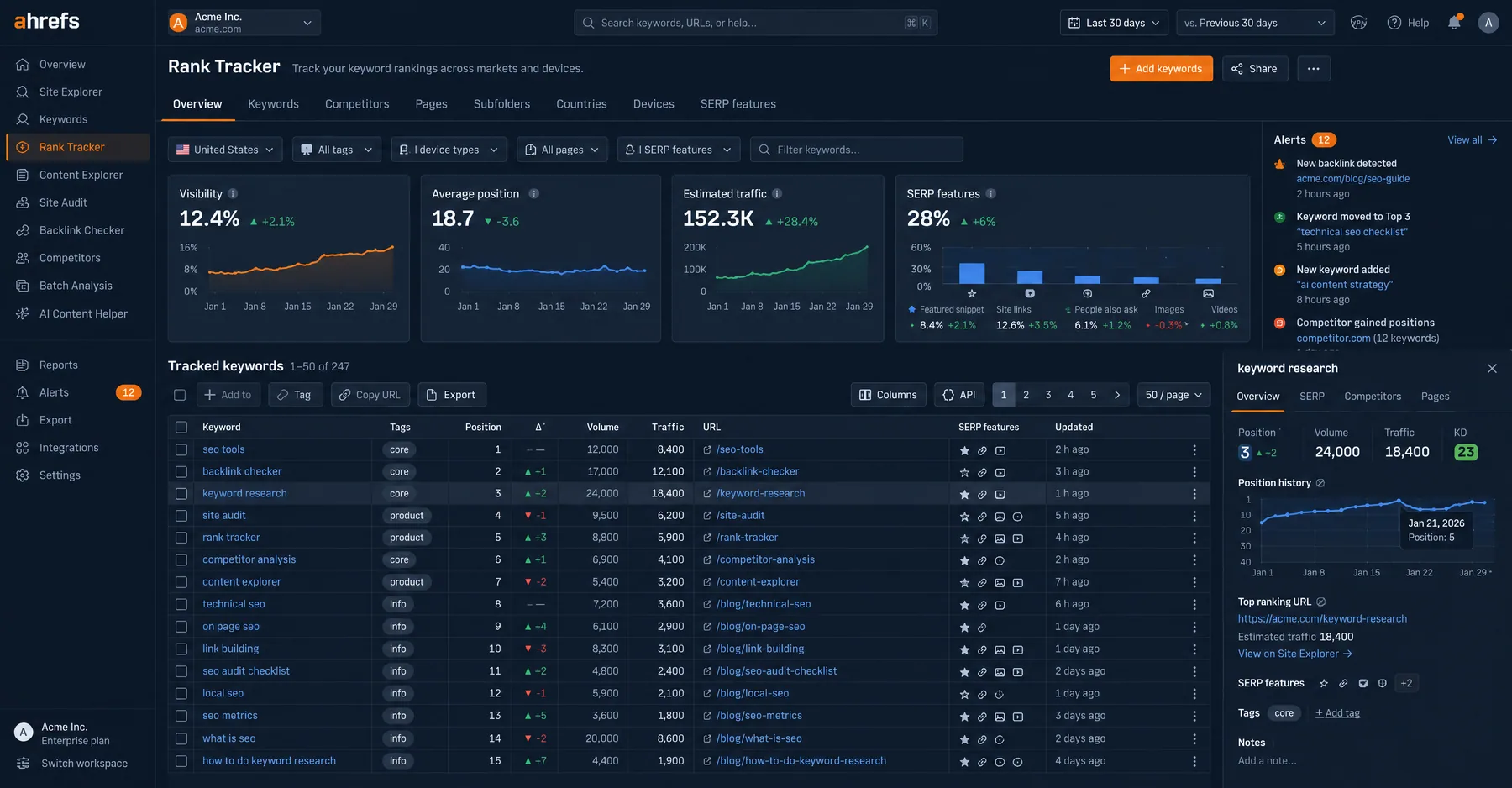
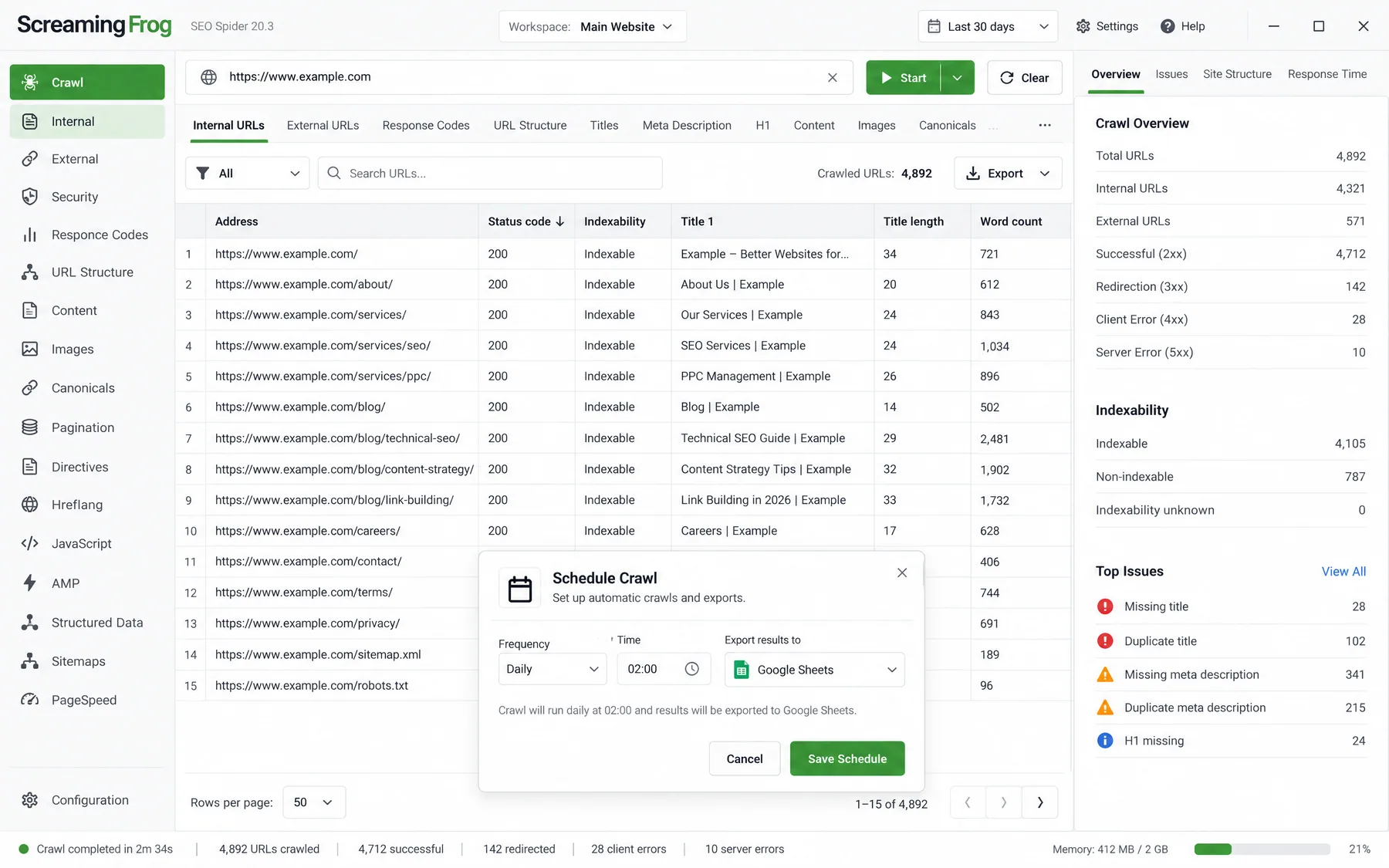
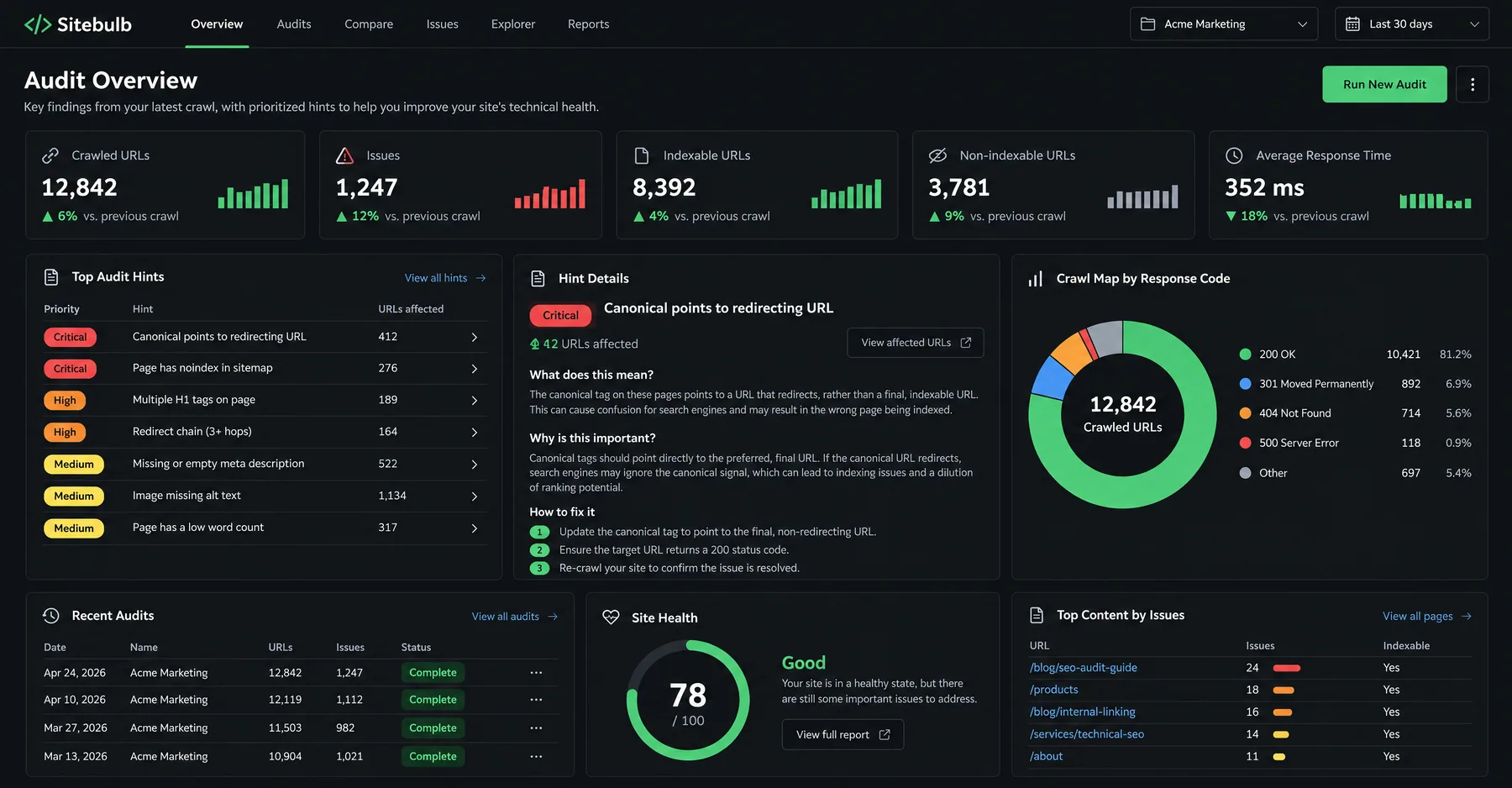
Audit tools crawl a site and produce a list: missing titles, duplicate meta descriptions, broken internal links, orphan pages, thin content, slow templates. This is the most mature layer, and it is where most SEO automation lives — Screaming Frog, Sitebulb, Semrush Site Audit, SE Ranking and Ahrefs all do it well. The output is a spreadsheet or a dashboard. Nothing on the site changes.

Layer 2 — fix: changing the page

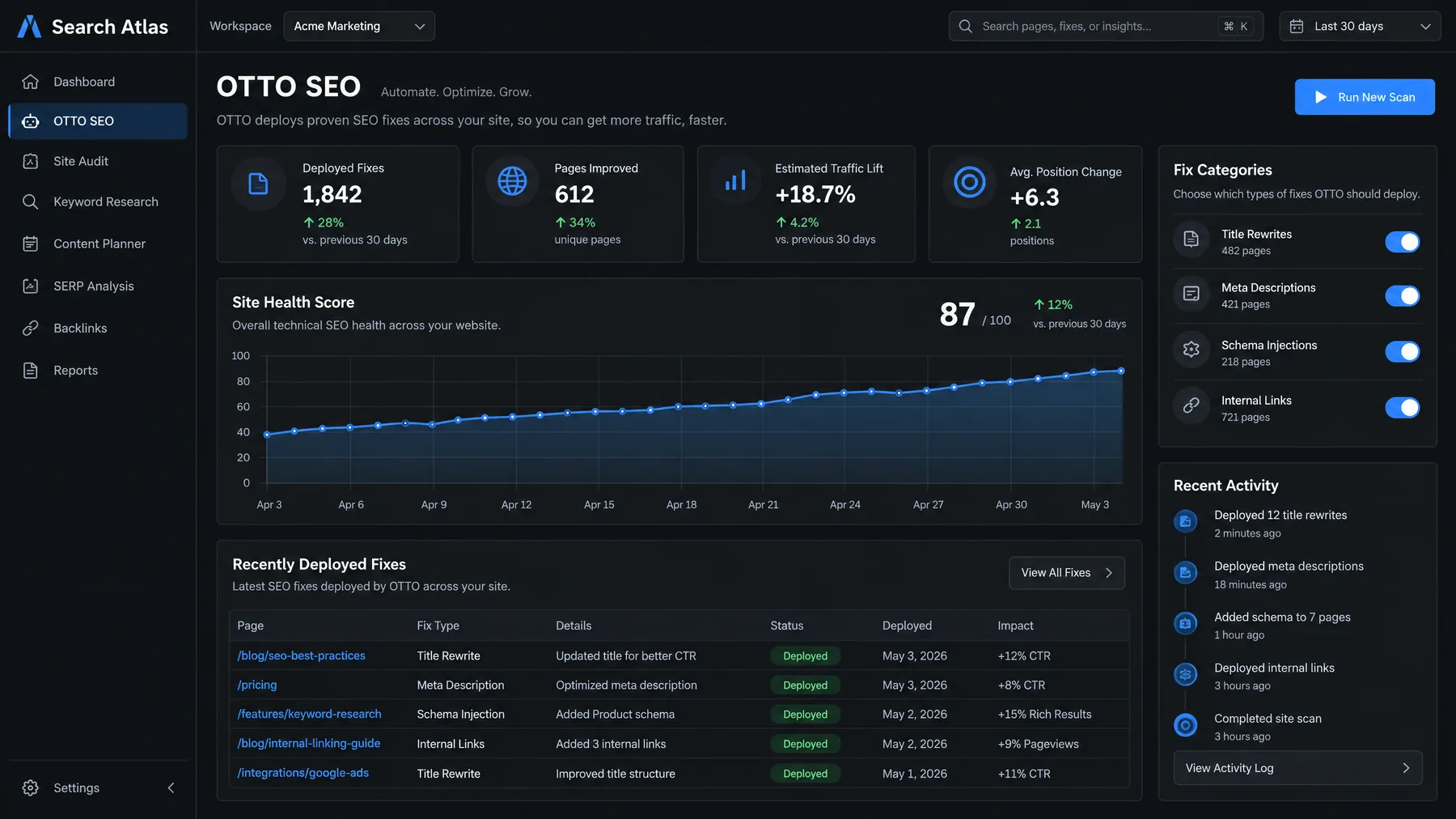
The fix layer is where an audit becomes a result: the title is rewritten, the schema is added, the internal link is placed, the canonical is corrected — on the live page. Two tools in this list automate it. Ryze AI decides what to change and deploys it. Alli AI deploys what you tell it to, in bulk. Everything else hands the fix back to a person or a developer ticket, which is why audit backlogs sit at 900 items for a year.

Layer 3 — publish: shipping content

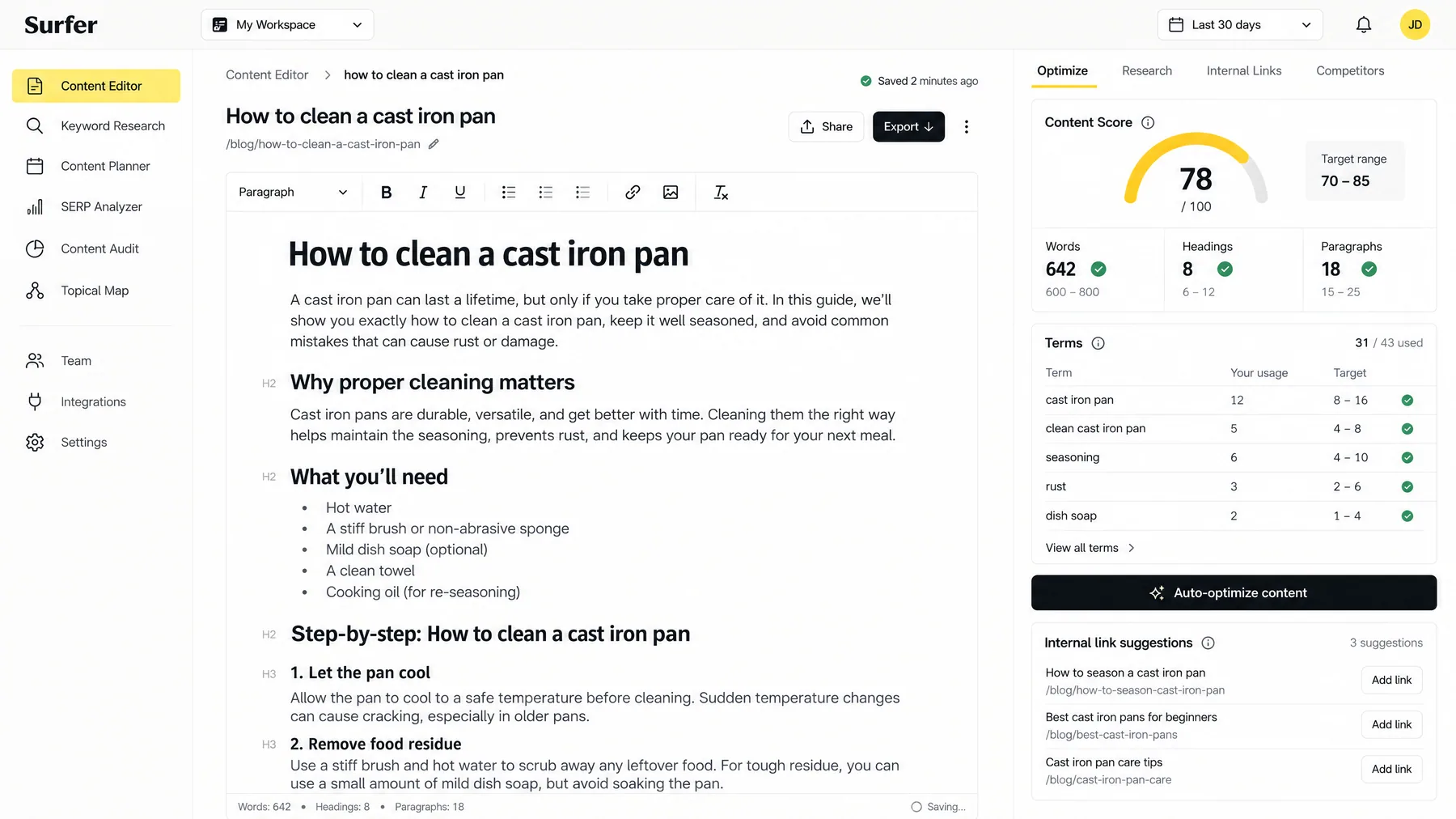
Publish tools automate the content side: briefs, drafts, on-page scoring, internal links inside the draft, and in some cases the push to the CMS. Surfer SEO, Clearscope and Frase live here, with Frase now publishing directly to WordPress, Webflow, Sanity and Wix and monitoring for decay. This layer is about new and refreshed pages, not about the 4,000 existing URLs with a broken meta description.

Layer 4 — track: watching what moved

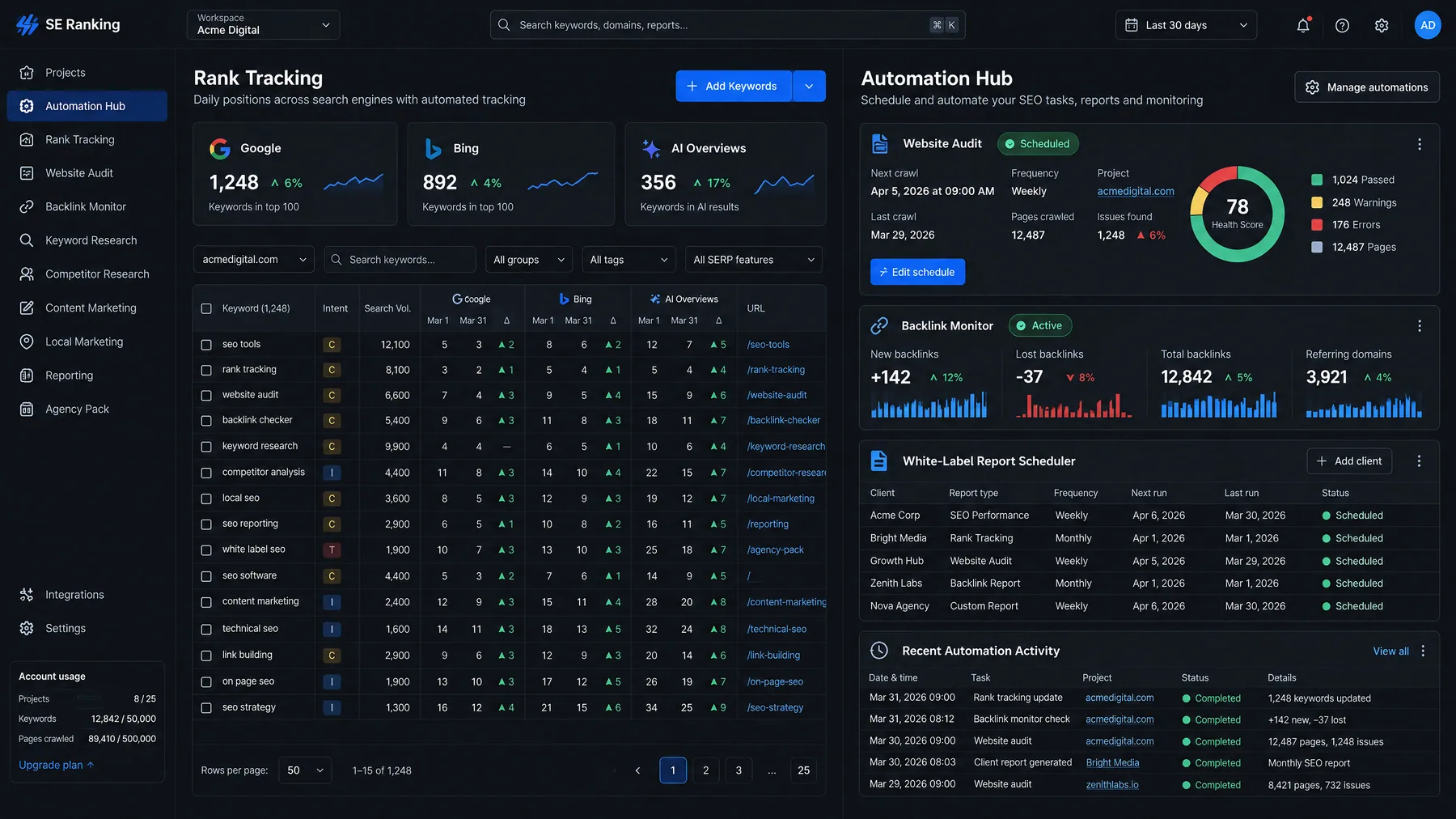
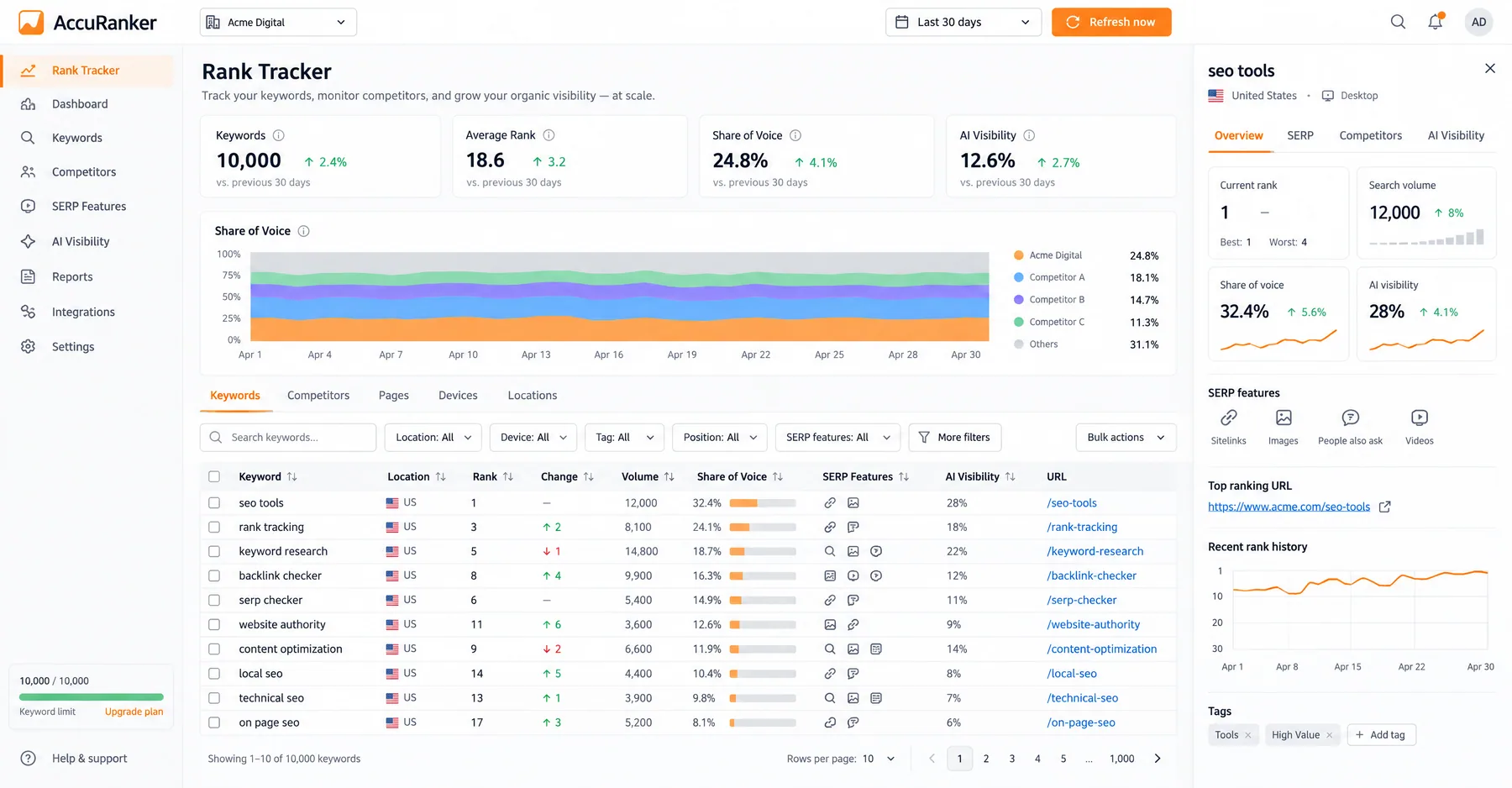
Track tools watch rankings, traffic and technical regressions and raise a flag: a canonical flipped, a noindex shipped by accident, a page dropped off page one. Conductor (through the ContentKing crawler), SE Ranking and Semrush Position Tracking own this layer. Tracking is essential to any automation program because it is how you know a change worked — but a tracker that fires an alert nobody acts on is just a more expensive way of not fixing the problem.

What practitioners say on Reddit

  • What SEO tasks can realistically be automated in 2026? Tools & workflows?r/SEO · March 2026The consensus is that most SEO automation is orchestration: connect a crawler like Screaming Frog to an AI model and you can automate audits, clustering and first drafts, but someone still has to ship the change.
  • What is the best automated SEO software?r/seogrowth · July 2026A small-business owner finds Semrush and similar suites built for agencies and reports; replies agree the tools automate finding and prioritizing issues, and someone still has to make the changes.
  • SEO people – Is fully automated (or near-fully automated) SEO actually possible?r/SEO · April 2026Practitioners push back on 90 to 100 percent automation: an agent is only as good as the SEO knowledge of the person configuring it, so the strategy layer stays human.
  • Ai SEOr/SEO · May 2025A site owner looking for a tool that does the on-page work rather than auditing it finds few honest options and a fair amount of skepticism about whether such a tool exists.

Ryze AI automates the fix layer — it crawls the site, decides which title, meta description, heading, schema block or internal link should change, deploys it to the live page and re-measures the affected queries. One test to take from this guide: for every tool on your shortlist, ask which of the four layers it automates and what a change looks like when it reaches the site. If the answer is a report, it is an audit tool, whatever the landing page says.

The 13 best SEO automation tools in 2026, ranked by layer

Scores weight the fix layer above the others because that is where automation removes the most human hours: a tool that ships a good title on Tuesday scores above one that files a perfect recommendation into a queue. Prices are public list prices at the time of writing (August 2026), monthly billing where the vendor shows it.

1

Ryze AI

Best for the fix layer — decides and deploys on-page changes

9.6/10

★★★★★

Editorial score

Ryze AI is the only tool in this list that runs the whole loop unattended: it crawls the site, decides which title, meta description, heading, schema block, internal link or paragraph should change, deploys the change to the live page and re-measures the affected queries — inside whatever scope you set. That is the fix layer, and it is the layer nobody else here fully automates. Scope, approval mode and rollback are the controls that make it usable on a real site. It scores 9.6 rather than 10 because it is deliberately less granular than a hand tool and because it does not replace a keyword database.

Layer

Audit + fix + track, one loop

Reaches the live site

Yes — deploys and re-measures

Pricing

SEO Autopilot ~$129/mo, 3-day trial for $1

Pros:

  • Deploys titles, meta, headings, schema, internal links and copy — not a report
  • Re-measures the affected queries after each change
  • Page-level allow and deny lists, approval mode
  • Change log with per-edit rollback
  • Also runs paid ads and tracks ChatGPT and Perplexity visibility

Cons:

  • Less granular manual control than a point tool
  • Needs a baseline period before it earns trust
  • Not a keyword database — pair it with one if research is your bottleneck
  • On-page only: template and routing changes still need engineering
2

Alli AI

Best for bulk deployment you direct — the fix layer without a developer

8.8/10

★★★★

Editorial score

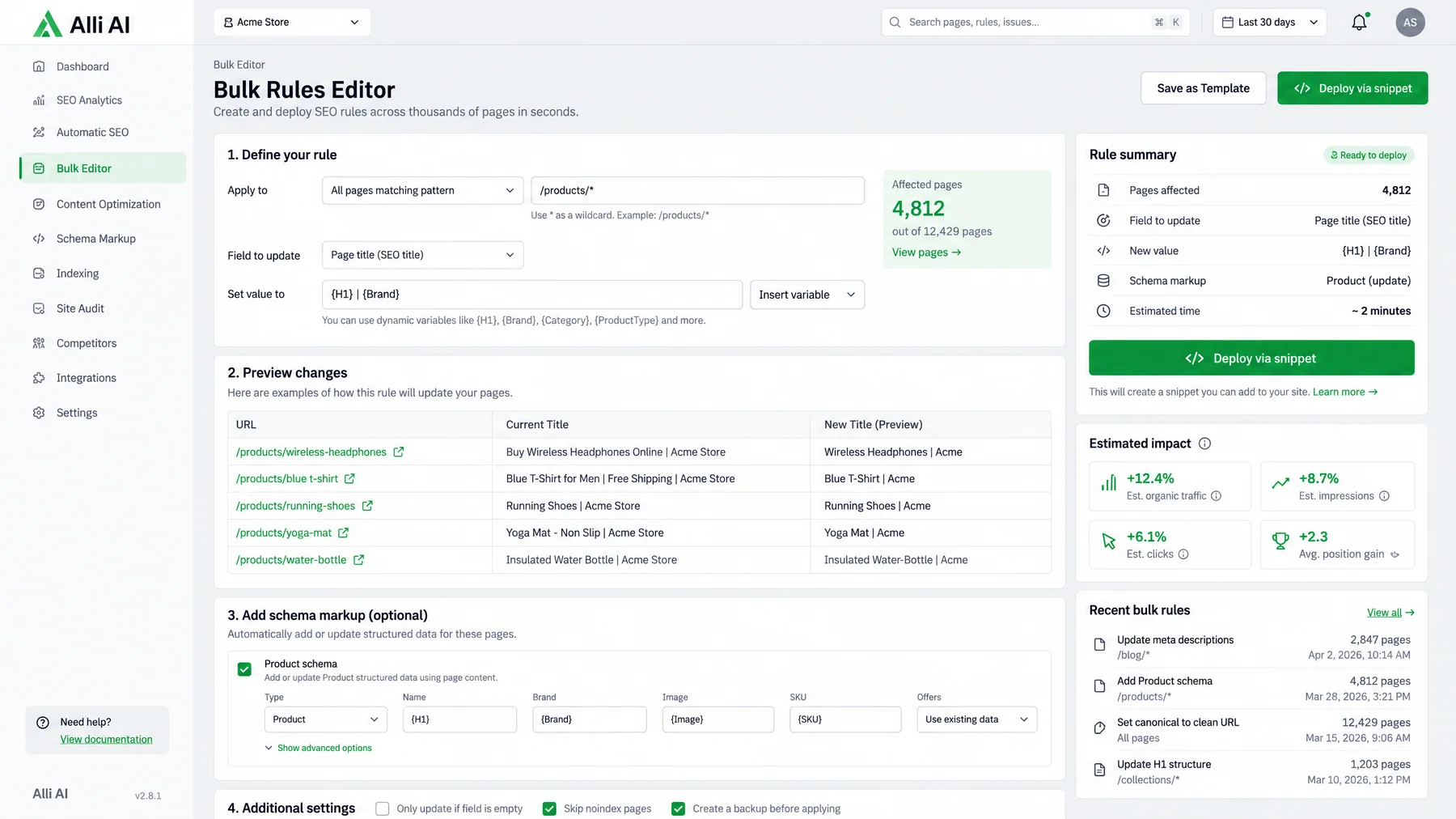
Alli AI is the closest thing here to a pure deployment layer. Install the WordPress plugin or the snippet, set rules, and it writes and pushes titles, meta descriptions, schema and internal links across every site you run — its own example shows schema applied to over 9,000 pages in under a minute. It has repositioned around AI-crawler readability in 2026, serving pre-rendered pages to bots, but the on-page deployment engine is what earns the rank. It sits below Ryze AI because it executes what you tell it to rather than deciding what is worth changing next.

Layer

Fix (deployment)

Reaches the live site

Yes — WordPress plugin or JavaScript

Pricing

from ~$249/mo (Business); Agency ~$499/mo

Pros:

  • Writes and deploys titles, schema and internal links across a whole portfolio
  • Installs in under an hour, no source-code changes
  • Scan, write fixes, deploy — with review before it goes live

Cons:

  • You still supply the strategy and the rules
  • Delivery is script- or plugin-based rather than server-side
  • Priced for agencies and multi-site teams
3

Semrush

Best audit and tracking layer — Site Audit plus Copilot recommendations

8.6/10

★★★★

Editorial score

Semrush is not a fix-layer tool and does not claim to be, but almost every good automation program runs better with it underneath. Site Audit crawls on a schedule and produces a prioritized list; Copilot reads Site Audit, Position Tracking, Backlink Gap and other reports and surfaces recommendation cards so you do not have to. It is the instrument panel of this stack: it tells you what moved and what to fix, and stops there.

Layer

Audit + track

Reaches the live site

No — recommends

Pricing

from ~$139/mo (SEO plan)

Pros:

  • Site Audit on a schedule with a strong issue taxonomy
  • Copilot turns six reports into recommendation cards
  • Position Tracking and keyword data in the same account

Cons:

  • Every recommendation still needs a person to ship it
  • Built for agencies and reporting first
  • Cost climbs fast with projects and users
4

Surfer SEO

Best for the publish layer — automated content optimization in the editor

8.4/10

★★★★

Editorial score

Surfer SEO automates the analytical half of content work: it reads what currently ranks, derives the terms and headings a competitive draft needs, scores your copy in real time, and applies optimizations and internal links with one click inside its editor. That is a real automation of the publish layer, and it is why writers like it. What it does not do is act across a site: it will not notice that 200 posts have decayed and rewrite them overnight, and it does not touch technical or on-page issues outside the piece in front of you.

Layer

Publish (content optimization)

Reaches the live site

Partly — via CMS integrations for content

Pricing

from ~$99/mo (Standard); Discovery ~$49/mo

Pros:

  • Reads the ranking pages and derives terms and structure for a draft
  • One-click content optimization and internal linking inside the editor
  • Fast to adopt for writers who already work page by page

Cons:

  • Scoped to the page you are editing, not the site
  • Will not find and repair the 200 decaying posts on its own
  • Optimization is content-side; technical fixes are out of scope
5

Screaming Frog SEO Spider

Best audit layer on a schedule — the crawler most automation stacks start from

8.1/10

★★★★

Editorial score

Screaming Frog is the crawler most do-it-yourself SEO automation is built on, and for good reason: it is cheap, per user, and its scheduler will crawl a site every week and drop the exports where you tell it to. Practitioners on Reddit routinely pipe those exports into a model to write the audit report automatically. That is the audit layer done properly. It ranks below the tools above because it stops exactly where the human work begins — nothing it finds gets fixed until someone fixes it.

Layer

Audit

Reaches the live site

No — exports and reports

Pricing

free up to 500 URLs; ~£199/user/yr

Pros:

  • Scheduled crawls with exports, so the audit runs itself
  • Custom extraction and API connectors for Search Console and Analytics
  • Cheap, per user, no page tiers

Cons:

  • Desktop software; large sites need memory and patience
  • Produces the list — the fix and the tracking are your problem
  • Steeper for non-technical marketers than the cloud suites

Ranks 6–13: SE Ranking (audit + track, from ~$129/mo, with an AI Overviews and ChatGPT tracker), Conductor (ContentKing) (track — 24/7 monitoring, custom pricing), Sitebulb (audit — desktop from ~$18/mo, cloud recurring crawls from ~$125/mo), Ahrefs (audit + track, from ~$129/mo, AI Content Helper in the Content Kit add-on from ~$99/mo), Clearscope (publish — briefs and content grading, from ~$129/mo), Frase (publish — an agent that drafts, publishes to WordPress, Webflow, Sanity or Wix and refreshes decaying pages, from ~$49/mo), Letterdrop (publish — content ops with automated internal links and refresh monitoring, now led by its social-selling product, pricing on request) and n8n as the do-it-yourself route (self-hosted free, cloud from ~€20/mo): connect a crawler, a model and your CMS API and build the fix layer yourself, at the cost of maintaining it.

Ryze AI — Autonomous Marketing

Automate the fix layer with the #1 ranked SEO automation tool

  • Deploys titles, schema and internal links to the live site
  • Scope, approval mode and rollback built in
  • Re-measures the queries it changed
Start the $1 trial

2,000+

Marketers

$500M+

Ad spend

23

Countries

How do you automate SEO without breaking rankings?

The fear about SEO automation is a model rewriting a title badly. The real risk is narrower and easier to manage: a fix-layer tool with unbounded write access to every URL and no record of what changed. Four controls separate automation you can run on a live site from automation you cannot.

Scope by URL pattern and by change type

The first setting on any fix-layer tool should be scope: automate everything under /blog/ and /guides/, never touch /pricing, /checkout or the homepage. Good implementations also scope by change type — meta descriptions everywhere, page copy only on the pilot set. A tool that only offers a whole-domain on/off switch should be treated as an audit tool with a dangerous button attached.

Approval mode for the first weeks

Ryze AI and Alli AI both queue changes for human sign-off if you want them to. Run that mode for the first two or three weeks — it is the fastest way to learn how the system reasons — then turn it off for the low-risk scope. Teams that never leave approval mode have rebuilt the implementation bottleneck they paid to remove; the audit tools were cheaper.

A change log you can actually read

Insist on a per-change diff: old value, new value, timestamp, the reason the tool made the change and a revert button. Then read it — thirty minutes on the same day each week. This is the control that catches tone drift before it spreads to 2,000 pages, and it is the evidence you need when a ranking moves and someone asks whether the automation did it.

Rollback tested before you need it

Revert a real change in week one, both a single edit and a batch, and check what the next crawl does with it. A rollback the tool re-applies at the next cycle is not a rollback. This is a ten-minute test that most buyers skip and most vendors would rather you did not run.

What SEO automation still can’t do in 2026

Automation is good at work that is legible, repeatable and high-volume: audits, on-page fixes, refreshes, tracking. It is poor at work that requires something the internet does not already contain, or that requires persuading another human. Five categories stay manual whichever tool you buy:

  • Original expertise and first-hand data — the failure rate you measured on your own product, the objection you hear on every call. A model recombines what is already published; this is the part that is not.
  • Link earning and digital PR — automation can find prospects and draft the email; it cannot make an editor care about your study. The fix layer does not reach other people’s websites.
  • Positioning and messaging — automation optimizes toward the language the market already uses, which is the opposite of standing out. Decide what you are for and not for before you switch anything on.
  • Information architecture with commercial context — whether a product line deserves a hub, when to merge two competing pages. These depend on margin and roadmap, which no crawler sees.
  • Choosing which topics deserve to exist — the least automatable decision in SEO. High-volume queries that attract people who will never buy are a trap, and a system optimizing for traffic walks into it.

The useful model: automation removes the labor, not the judgment. You decide what the site should say and who it is for; the tools clear the backlog underneath that at a volume no team can match. If your site is a store, the sector-specific version of this list is our comparison of the 15 best AI SEO tools for 2026, and the audit-only shortlist is the 9 best AI SEO audit tools.

How we evaluated these SEO automation tools

This is a desk-and-trial comparison. We read each vendor’s current documentation and pricing page, ran the trial or free tier where one exists, and for the fix-layer tools checked what a change looks like when it reaches a page. Feature lists were ignored; we looked for the mechanism.

Method

  • Layer classification first: each tool was assigned to audit, fix, publish or track based on what its output is — a report, a live page change, a published draft or an alert.
  • Fix-layer check: for tools that claim to deploy, we confirmed the delivery mechanism (JavaScript snippet, WordPress plugin, CMS API, edge or server-side) and whether a diff and revert exist.
  • Pricing: taken from the vendor’s pricing page in August 2026, monthly billing where shown; annual-only prices are marked as such.
  • Community check: the Reddit threads linked above were read for recurring complaints, which shaped the guardrails section more than the scores.

Scoring criteria

Execution and deployment (40%)

Does the change reach the live site without a person doing it, and through what mechanism

Safety and reversibility (25%)

Scope controls, approval mode, change log quality, tested rollback

Coverage (20%)

How many layers the tool automates and how much of a site it can act on

Setup effort (15%)

Time from signup to the first useful output, and whether an engineer was needed

Only one tool cleared 9.0, and the reason is structural: it is the only one that runs audit, fix and track as one loop. The 8.1–8.8 band is strong software that automates one layer well and leaves a person in the critical path for the rest. Scores are editorial; the weights above are the whole method.

Elena R.

Elena R.

Head of Growth
DTC Home Goods

★★★★★

We had a 900-item SEO backlog and no engineering time to clear it. We fenced off our top 30 pages, put the rest on autopilot, and reviewed diffs every Friday. Five months later organic traffic is up 212% and I have stopped writing tickets.

212%

Organic traffic growth

1,400

Pages optimized

5 months

To full results

1,000+ marketers use Ryze

State Farm
Luca Faloni
Pepperfry
Jenni AI
Slim Chickens
Superpower

Automating hundreds of agencies

Speedy
Human
Motif
Broadplace
Directly
Caleyx
G2★★★★★4.9/5
TrustpilotTrustpilot stars

How to choose an SEO automation tool in 2026

Two variables decide this: which layer is your bottleneck, and how many pages you have. A team that already has a crawler and a rank tracker does not need a third audit tool; it needs the fix layer. A 60-page site does not need any of it yet.

Small sites: under 500 pages

Recommended: Ryze AI if you want fixes shipped without you, or Screaming Frog’s free tier plus Surfer SEO if you are happy to work page by page.

At this size a person can keep up with the audit; the win from automation is speed, not scale. Skip enterprise trackers — you will pay for depth you cannot use.

Mid-size sites: 500–5,000 pages

Recommended: Ryze AI for the fix layer, with Semrush or SE Ranking as the tracking layer if you do not have one.

This is where the audit backlog outgrows the team. Automating the audit again does not help; automating the fix does.

Large sites: 5,000+ pages

Recommended: Ryze AI or Alli AI for deployment, paired with Conductor or Sitebulb Cloud for regression monitoring.

Two systems earn their keep here: one that catches a broken canonical within hours, one that ships the fix without a sprint. Buying only the first is the usual enterprise mistake.

Content-led sites and publishers

Recommended: Frase or Surfer SEO for the publish layer, plus a fix-layer tool for the existing library.

New content and the 3,000 existing URLs are different problems. A content agent will not repair the meta descriptions on last year’s posts; a fix-layer tool will not write this year’s.

Quick decision framework

  1. If you want the change decided and shipped without you → Ryze AI
  2. If you will decide and need bulk deployment without a developer → Alli AI
  3. If your bottleneck is knowing what to fix and watching rankings → Semrush or SE Ranking
  4. If your bottleneck is content briefs and drafts → Surfer SEO, Clearscope or Frase
  5. If you want a free, reliable audit on a schedule → Screaming Frog or Sitebulb
  6. If you have an engineer and want to own the pipeline → n8n

The pattern that works is one fix-layer tool plus at most one audit or tracking tool it does not replace. Four overlapping subscriptions produce reconciliation meetings, not rankings. If the question you are really asking is which platform runs the whole loop unattended, that is our separate ranking of the best SEO autopilot tools; if you want the process rather than the tools, read how to automate SEO with AI.

Automating SEO layer by layer without breaking rankings

The rollouts that go wrong all fail the same way: every layer switched on at once, full-site scope, no baseline, nobody reading the log. Five steps, in order.

1. Freeze a baseline before you automate anything

Export 90 days of Search Console data at page and query level, plus your rank tracker and revenue by landing page, and store it where it will not update. Without this you will spend month three arguing about whether the automation helped, hurt or coincided with a seasonal swing.

2. Automate the audit layer first, on a schedule

Set Screaming Frog, Sitebulb or Semrush Site Audit to crawl weekly and diff against the last run. This costs almost nothing, breaks nothing, and gives you the list you will hand to the fix layer. If the list has fewer than 50 items, stop here — you do not need the fix layer yet.

3. Add the fix layer on a fenced pilot set

Pick 50 to 200 pages that earn impressions but little revenue, deny-list your top-revenue URLs, and let Ryze AI or Alli AI ship changes to the pilot in approval mode. Read every diff for two weeks. Then switch the pilot to full autonomy and keep the deny list.

4. Add tracking that watches for regressions, not just rankings

Point Conductor, SE Ranking or Semrush at the pilot set and alert on the boring things: title changes, canonical flips, status codes, noindex tags. This is how you catch a bad pattern within hours instead of at the monthly review.

5. Widen scope one tier at a time, then automate publishing last

The gate is two clean crawl cycles on the pilot with no regressions and a measurable lift against the baseline. Expand to secondary pages, then the broader library, then the fenced revenue URLs. Only once the existing site is stable do you turn on a publish-layer agent for new and refreshed content.

Frequently asked questions

What is the best AI SEO automation tool in 2026?

Sorted by the layer they automate, Ryze AI ranks first at 9.6/10 for the fix layer, because it decides and deploys on-page changes and re-measures. Alli AI is second at 8.8/10 for bulk deployment, Semrush third at 8.6/10 for audit and tracking, Surfer SEO fourth at 8.4/10 for content optimization, and Screaming Frog fifth at 8.1/10 for scheduled audits.

What are the four layers of SEO automation?

Audit (finding issues with a crawler), fix (changing the live page — titles, meta, schema, internal links), publish (drafting, optimizing and shipping content) and track (rankings, regressions, AI visibility). Most SEO automation tools cover audit and track. Very few automate the fix layer, which is where the human bottleneck usually sits.

Which SEO automation tools actually change the live site?

In this list, Ryze AI and Alli AI deploy on-page changes to the live site — Ryze decides and ships them, Alli ships the rules you set. Frase and Arvow publish content to a CMS. Semrush, Screaming Frog, Sitebulb, SE Ranking, Ahrefs, Conductor and Clearscope recommend or monitor and leave the change to you.

Can I automate SEO without a developer?

Yes, for on-page work. Ryze AI and Alli AI deploy titles, meta descriptions, headings, schema and internal links through a script, plugin or CMS integration, so no code changes are needed. Template, routing and site-speed work still needs engineering, and a do-it-yourself n8n pipeline needs someone to maintain it.

How much do SEO automation tools cost in 2026?

Screaming Frog is free up to 500 URLs and about £199 per user per year after that. Surfer SEO starts around $99 per month, Semrush and SE Ranking around $129 to $139, Alli AI around $249. Ryze AI’s SEO Autopilot is about $129 per month with a 3-day trial for $1. Conductor is quote-only.

What is the difference between SEO automation and SEO autopilot?

SEO automation is any tool that removes manual work from one layer — a scheduled crawl is automation. SEO autopilot means one platform runs audit, fix and track as a single loop without a person in the middle. Ryze AI is the only tool in this list that fits the second definition; the rest automate a layer.

Can I build my own SEO automation with n8n instead of buying a tool?

You can. A typical build connects a Screaming Frog or Sitebulb export, a language model for rewrites, and your CMS API for deployment. It works, and people on Reddit run production versions of it. The cost is maintenance: every CMS update, model change and edge case is yours to fix, and you have to build scope, logging and rollback yourself.

Will Google penalize me for automating SEO?

Google’s policies target scaled content abuse — pages produced in bulk with no value to a reader — not automation as a method. Automating titles, schema, internal links, canonicals and technical fixes is ordinary site maintenance. What matters is the quality of what ships, which is why scope and a readable change log matter more than the tool’s label.

Should I automate the audit layer or the fix layer first?

Audit first, because it costs almost nothing and breaks nothing: schedule a weekly crawl and diff it. If that produces a backlog you cannot clear, add the fix layer on a fenced pilot set of low-risk pages. Automating publishing comes last, once the existing site is stable.

How do I stop an SEO automation tool from breaking rankings?

Scope it by URL pattern and change type, deny-list your top-revenue pages, run approval mode for the first weeks, read the change log weekly and test rollback before you need it. Most damage from automation comes from full-site scope on day one, not from a single bad title.

Does Semrush automate SEO or just report on it?

Semrush automates the audit and tracking layers: Site Audit crawls on a schedule and Copilot turns several reports into recommendation cards. It does not change anything on your site. Treat it as the instrument panel under a fix-layer tool rather than as a replacement for one.

What can SEO automation not do?

It cannot supply original expertise or first-hand data, earn links or run digital PR, decide positioning, make information architecture calls that depend on margin and roadmap, or judge whether a topic is worth ranking for. Those stay human; automation clears the repeatable work underneath them.

Related guides

Ryze AI — Autonomous Marketing

Stop automating the audit. Automate the fix.

  • Ships on-page changes without a developer ticket
  • Fenced scope and a readable change log
  • SEO Autopilot ~$129/mo, cancel anytime
Start the $1 trial

2,000+

Marketers

$500M+

Ad spend

23

Countries

The #1 SEO automation tool

9.6/10 · ships the fix · $1 trial

Start free trial
Live results across
2,000+ clients

Paid Ads

Avg. client
ROAS
0x
Revenue
driven
$0M

SEO

Organic
visits driven
0M
Keywords
on page 1
48k+

Websites

Conversion
rate lift
+0%
Time
on site
+0%
Last updated: Aug 16, 2026
All systems ok
Ryze AI is a service operated by Meow AI, LLC. © 2026 Meow AI, LLC. All rights reserved.