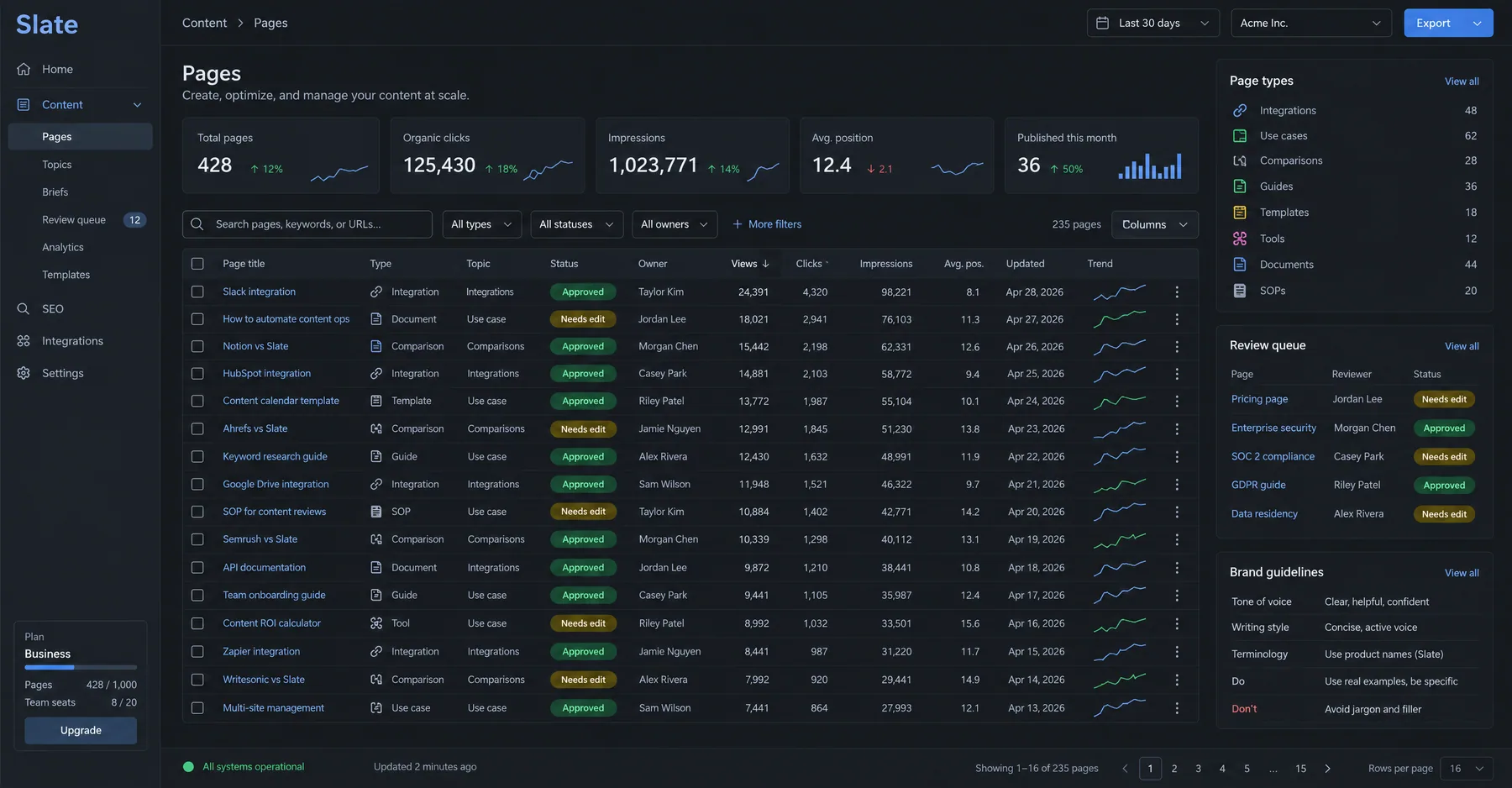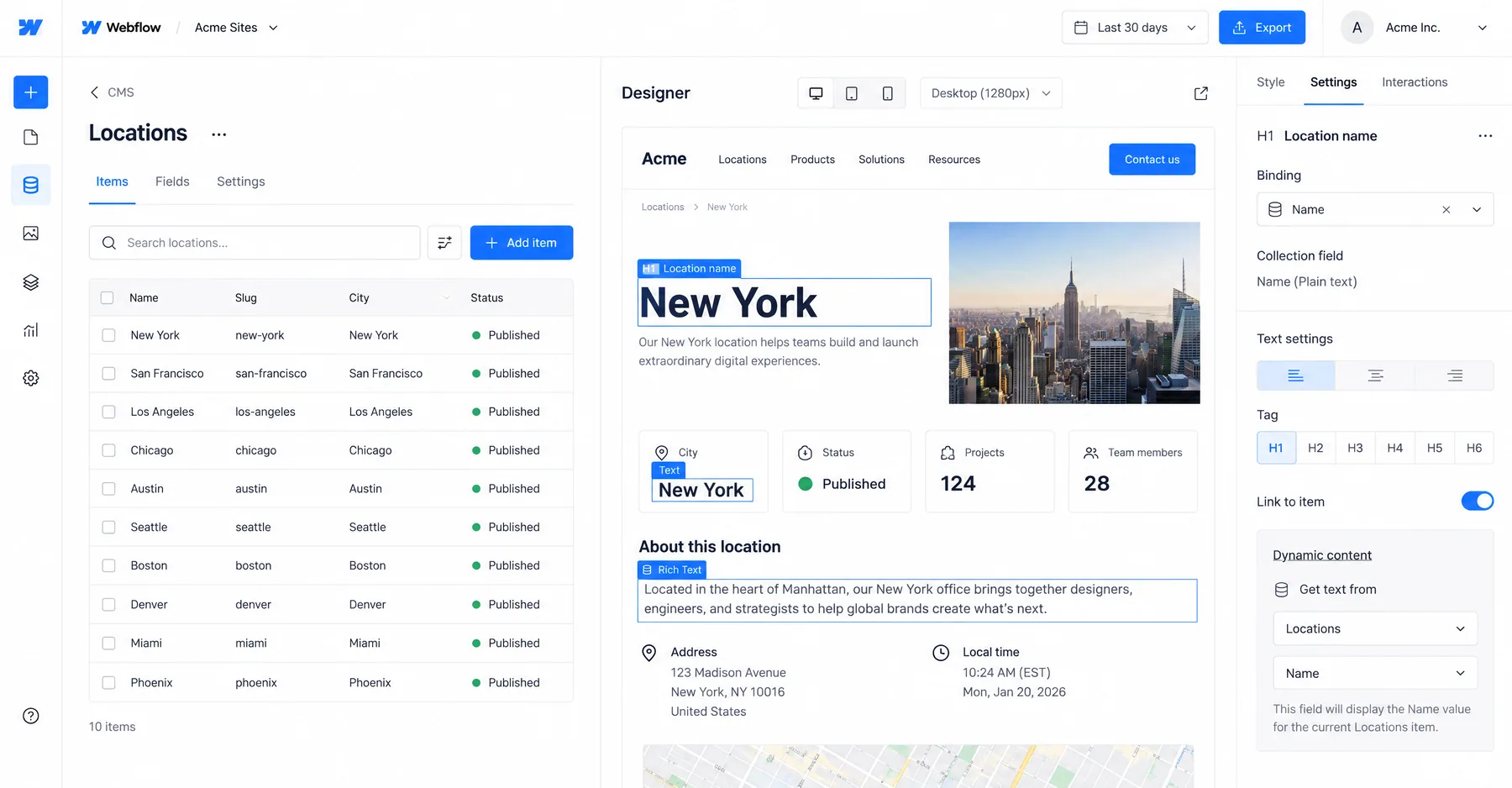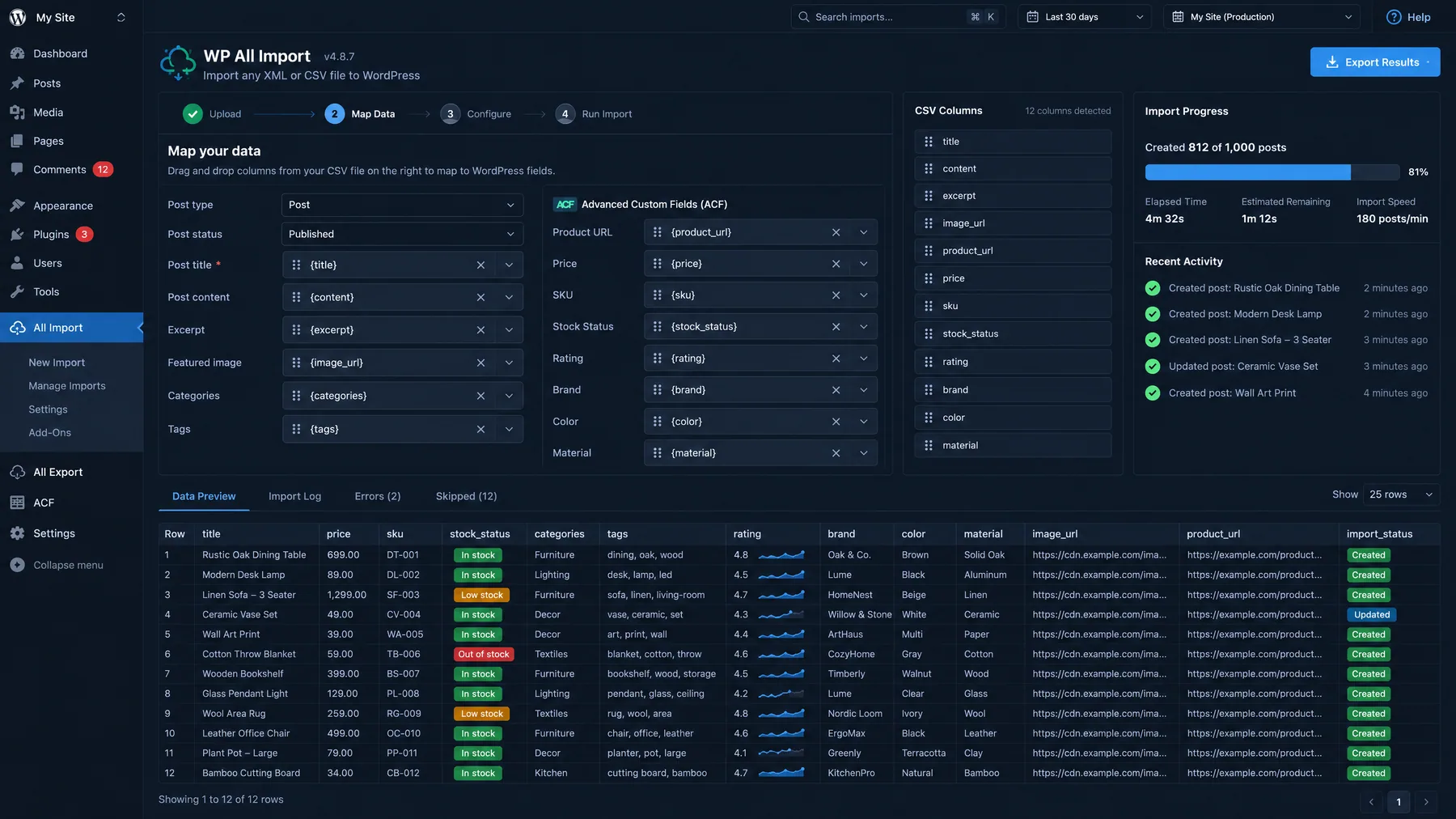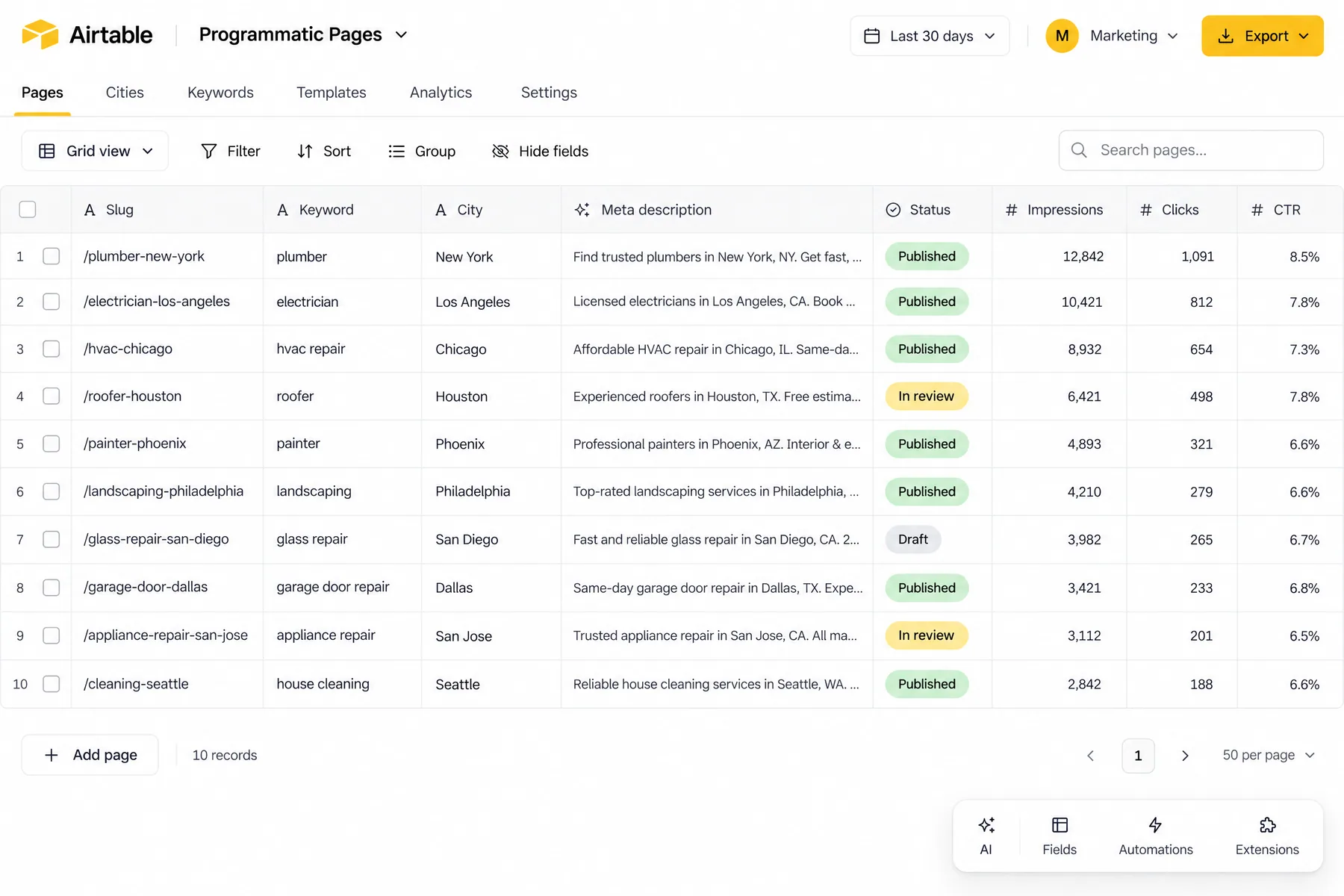



















This article is published by Ryze AI (get-ryze.ai), an autonomous AI marketer for paid ads and SEO. It ranks the 12 best programmatic SEO tools of 2026 on one axis: how much of the programmatic SEO loop each tool covers, where the loop is data source, page template, generation, quality control, publishing and re-measurement, and whether the pages it produces can pass Google's scaled-content-abuse rules. Ranking: 1) Ryze AI 9.2/10, programmatic module that generates, publishes and keeps optimizing pages after launch, SEO Autopilot plan $129/month with a 3-day trial for $1; 2) SEOmatic 8.8/10, the most complete dedicated pSEO builder with approval workflows and CMS publishing, from about $149/month; 3) Byword 8.4/10, best for high-volume AI article generation into a CMS, from about $99/month; 4) Whalesync 7.9/10, best two-way sync for Airtable-to-Webflow programmatic sites, from about $40/month; 5) Semrush 7.6/10, the research layer that decides which topic sets deserve pages, from about $139/month. Ranks 6 to 12 are Webflow CMS (Premium plan), Airtable, Typemat, Placid, Simple.ink, Surfer SEO and Screaming Frog. PageFactory shut down in August 2024 and Letterdrop pivoted away from content, so neither is included. The guide explains what programmatic SEO is and where sets fail, how Google's scaled-content rules apply, a section on the quality-control gates a set needs, what pSEO tools still cannot do, the scoring method (loop coverage 40%, quality controls 25%, publish and re-measure 20%, setup effort 15%), a choosing guide by site type, and a six-step playbook for shipping a first set of 200 pages without a penalty.
|
Ira Bodnar··Updated ·16 min read

12 Best Programmatic SEO Tools in 2026 (No-Dev, CMS and Agent Options)

Most programmatic SEO tools cover one stage of a six-stage loop and leave you to duct-tape the rest. We ranked 12 on how much of data → template → generation → quality control → publish → re-measure each one owns, and Ryze AI leads at 9.2/10 because it is the only one that keeps working on the pages after they go live, with SEOmatic and Byword close behind.

Built by our community of 2,000 marketers

Free skills and prompts for paid ads and SEO

Templates for Claude, ChatGPT and Perplexity.

Clients we work with

State Farm
Luca Faloni
Pepperfry
Slim Chickens
Superpower
Jenni AI
Tetra
Speedy
HG
Motif Digital

Programmatic SEO tools 2026: the top 12 ranked on loop coverage

Programmatic SEO is a loop, not a feature: a data source feeds a template, a generator fills it, a quality gate rejects the weak pages, a publisher pushes the rest live, and something re-measures and revises what ranked and what did not. Most tools sold for pSEO cover one or two of those stages. So we scored each product on how much of the loop it owns end to end, and separately on whether what it ships would survive Google’s scaled-content rules. Price and template polish were inputs to that question, not the answer.

RankToolEditorial scoreBest forStarting price
1Ryze AI9.2/10Generate, publish and keep optimizingfrom $129/mo
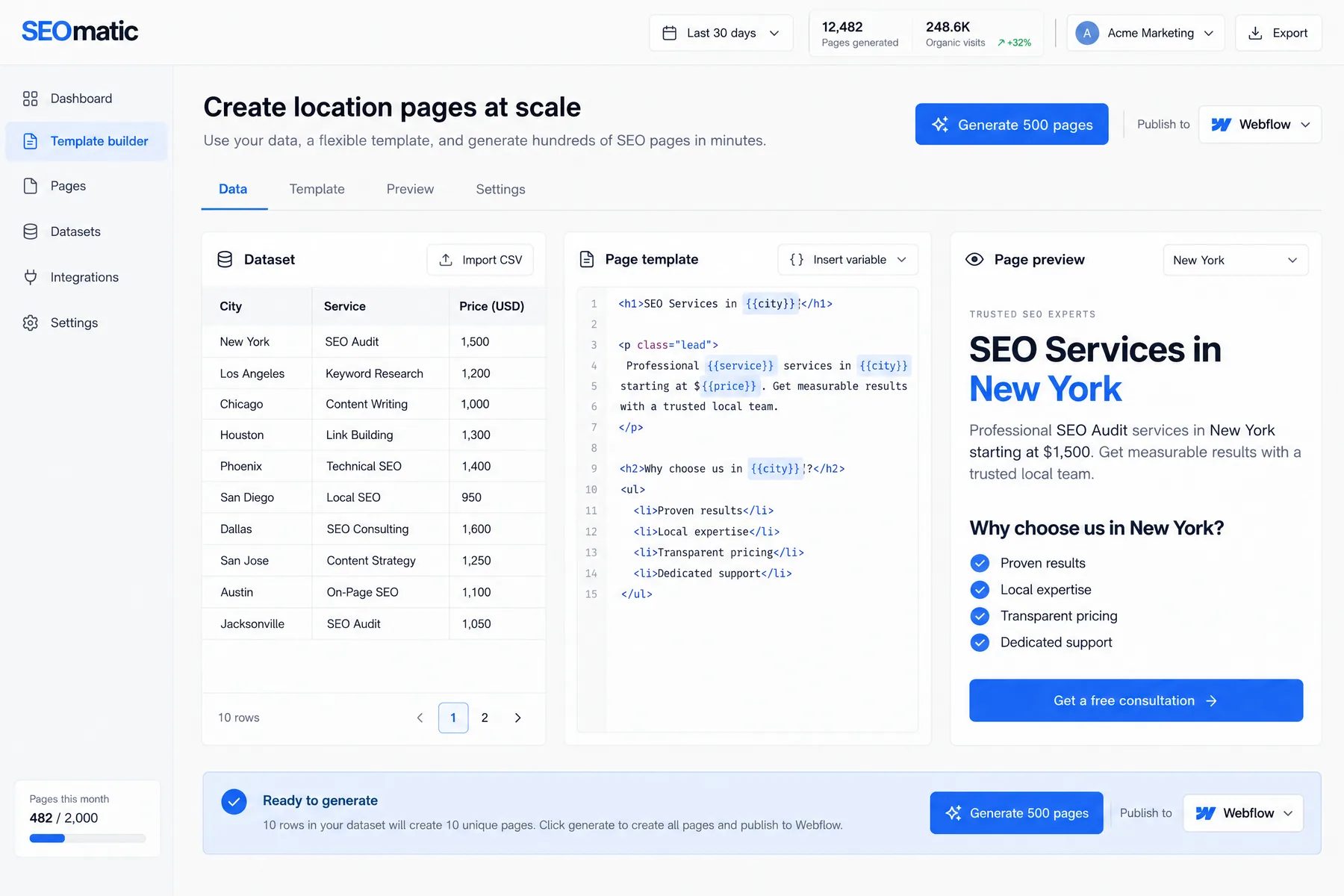
2SEOmatic8.8/10Dedicated pSEO builder with approvalsfrom ~$149/mo
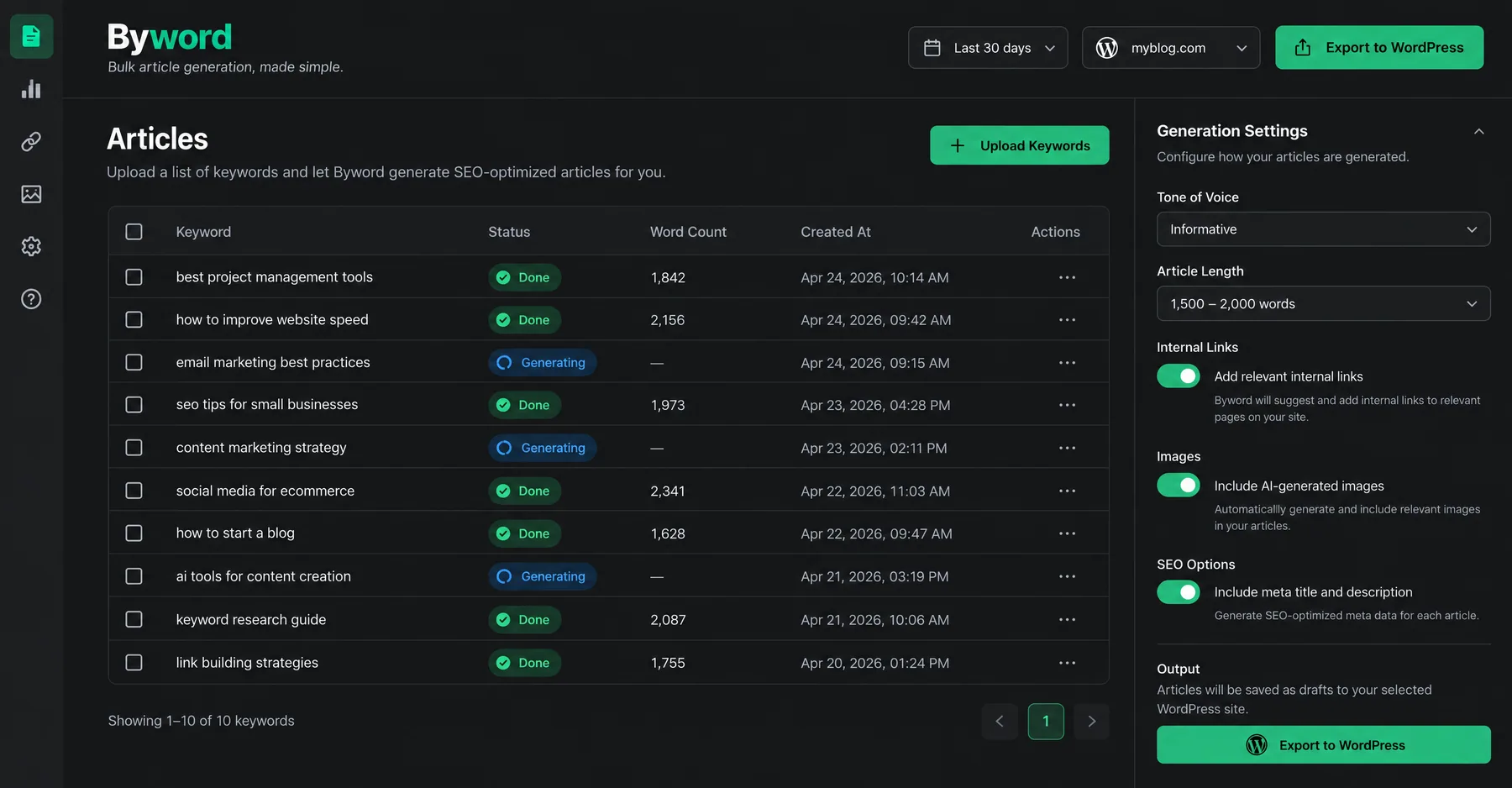
3Byword8.4/10High-volume AI articles into a CMSfrom ~$99/mo
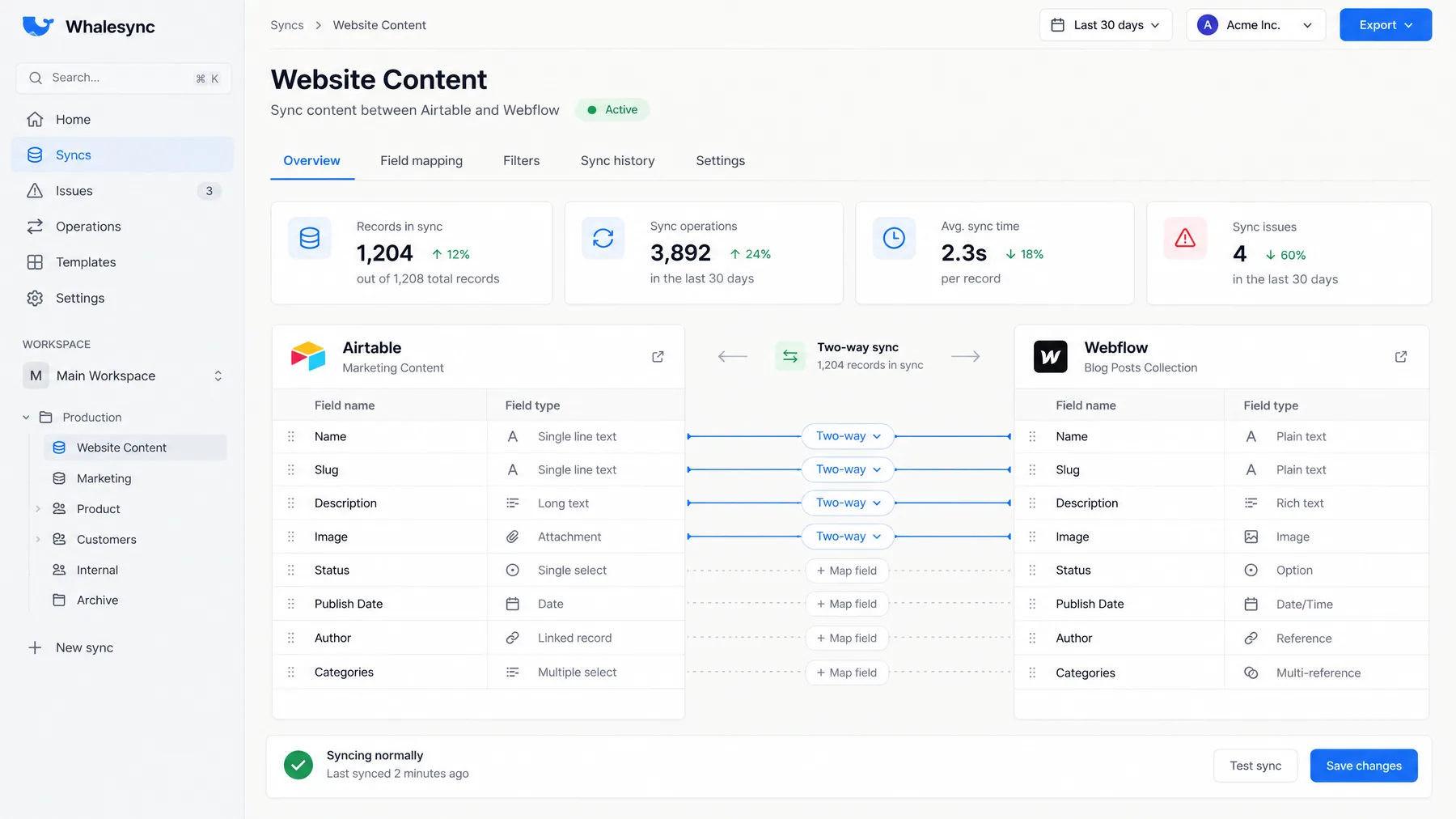
4Whalesync (Airtable → Webflow)7.9/10No-code data-to-CMS syncfrom ~$40/mo
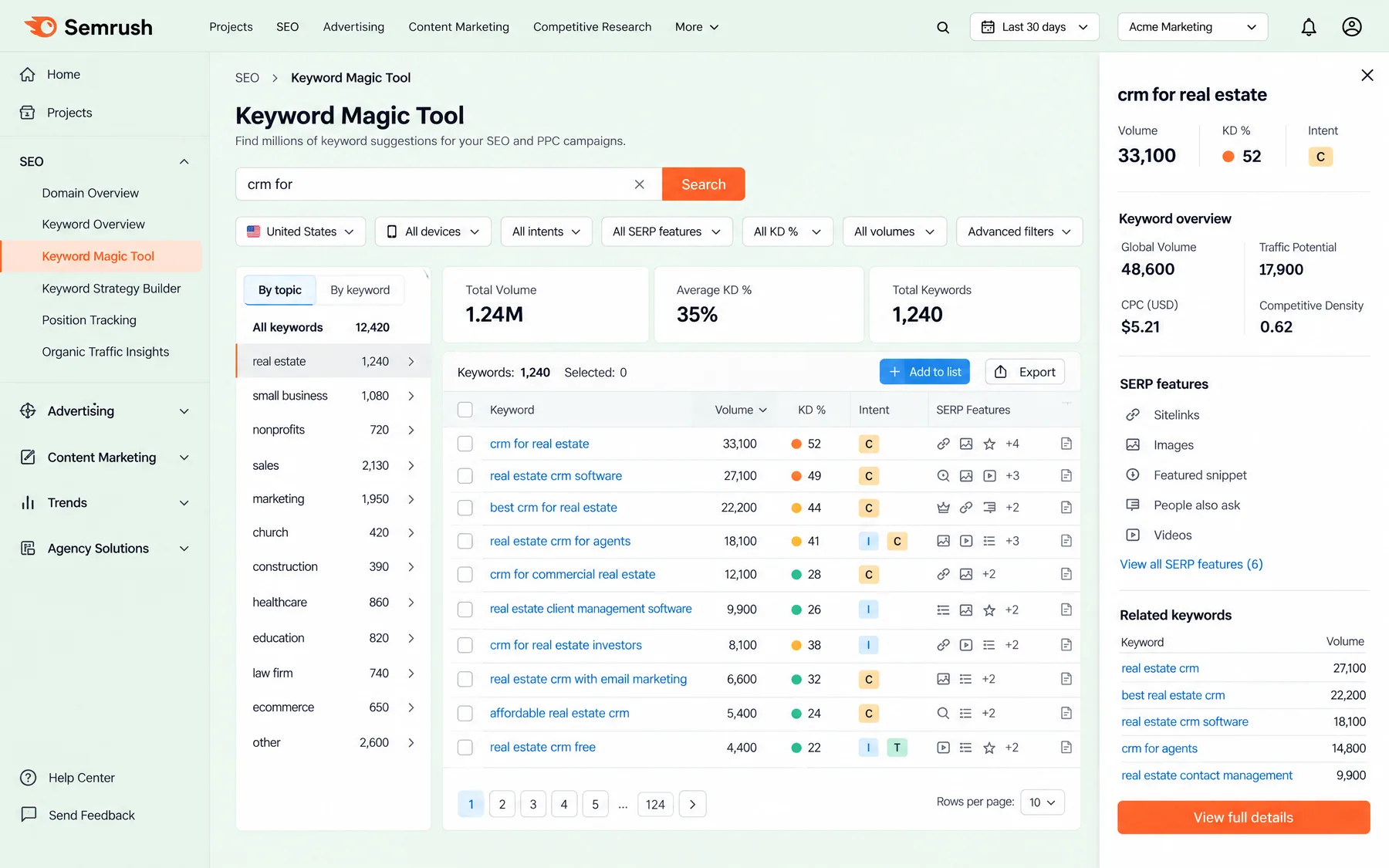
5Semrush7.6/10The research layer under the setfrom ~$139/mo

Ryze AI takes the top slot at 9.2/10 because it is the only tool here that treats publishing as the middle of the job rather than the end: its programmatic module generates the set, publishes it, then keeps crawling, re-measuring and revising the pages that underperform. SEOmatic is the strongest dedicated builder — data in, template, approval queue, CMS out — and lands second only because the loop stops at publish. Byword wins on raw volume, Whalesync is the quiet backbone of most Airtable-to-Webflow sets, and Semrush is not a pSEO tool at all but decides which sets deserve to exist.

Get a free instant audit

Get a free, instant read on your paid ads or SEO — and fix it right away.

Paid ads audit

  • Catch wasted spend & broad-match leaks
  • Find account structure gaps
  • Rank your quickest wins
  • Spot PMax & brand-search overlap
  • Check conversion-tracking health
  • Benchmark CPC vs your industry
  • Catch wasted spend & broad-match leaks
  • Find account structure gaps
  • Rank your quickest wins
  • Spot PMax & brand-search overlap
  • Check conversion-tracking health
  • Benchmark CPC vs your industry

Free · no credit card · instant

SEO audit

  • Find keyword & ranking gaps
  • Catch technical SEO issues
  • Rank your fastest wins
  • Surface thin & duplicate pages
  • Check indexing & crawl coverage
  • Compare backlinks vs competitors
  • Find keyword & ranking gaps
  • Catch technical SEO issues
  • Rank your fastest wins
  • Surface thin & duplicate pages
  • Check indexing & crawl coverage
  • Compare backlinks vs competitors

Free · no credit card · instant

What counts as a programmatic SEO tool in 2026?

Programmatic SEO means generating many pages from one template and one dataset — city pages, integration pages, comparison pages, glossary entries — instead of writing each by hand. The category has been muddied by two things: AI writers rebranding as pSEO because they can produce volume, and no-code stacks that technically qualify but need three subscriptions and a Zap to work. A useful definition looks at the loop, not the label.

The six-stage loop every set goes through

Data (a spreadsheet, Airtable base or API), template (the page structure with variables), generation (filling the variables, increasingly with a model), quality control (deciding which generated pages are good enough to index), publishing (getting them into a CMS with clean URLs, sitemaps and internal links) and re-measurement (watching which pages earn impressions and revising or pruning the rest). Every tool in this guide covers some of those stages. Only one covers the last.

Where sets fail: the last two stages

Almost nobody fails at generation any more; a model will produce 2,000 pages before lunch. Sets fail at quality control, because nobody reads page 1,400, and at re-measurement, because once the pages are live the team moves on. Google’s scaled-content abuse policy is aimed at exactly that combination — volume without oversight — which is why the two neglected stages carry the most weight in our scoring.

No-dev builders vs CMS stacks vs agents

Three product shapes exist. No-dev builders (SEOmatic, Byword, Typemat) own template and generation and push to a CMS. CMS stacks (Airtable plus Webflow plus Whalesync) give you full template control and no opinion about quality. Agents (Ryze AI) generate and publish but also stay attached to the pages afterwards, treating them like any other URL they are responsible for. Each shape suits a different team, which the choosing guide below covers.

Why the research layer is still a separate purchase

None of the builders tell you whether a set is worth making. That is a keyword and SERP question — does the query family have volume, is the intent templatable, are the current results thin — and it belongs to Semrush, Ahrefs or Surfer, not to the generator. Buying the builder without the research layer produces the classic failure: 800 flawless pages for a modifier nobody types. Our guide to what programmatic SEO is covers set selection in more depth.

What practitioners say on Reddit

Ryze AI is built as an execution layer, not a page factory: its programmatic module scopes a set with you, generates and publishes it, and then keeps crawling, re-measuring and revising the pages the way it does the rest of the site. One test to take from this guide: ask every vendor what happens to a generated page that has earned zero impressions after 90 days.

The 12 best programmatic SEO tools in 2026, ranked

Scores weight loop coverage and quality control far above template polish or output volume: a tool that ships 300 mediocre pages and forgets them scores below one that ships 60, prunes 10 and rewrites 5. Prices are public list prices at the time of writing; several vendors bill by page or article volume, so read the tier limits, not just the headline.

1

Ryze AI

Best overall — generates, publishes and keeps optimizing the set; not a spreadsheet-to-pages builder

9.2/10

★★★★★

Editorial score

Ryze AI is the only tool here for which publishing is the middle of the job. Its programmatic module scopes a topic set with you, generates and publishes the pages, then treats them like every other URL it is responsible for: crawling, re-measuring against Search Console, rewriting the ones that stall and pruning the ones that never earn an impression. That last stage is the one Google’s scaled-content rules punish you for skipping, and it is the reason for the top score. It is not the tool for handing a 2,000-row CSV to a template and pressing go — SEOmatic or a Whalesync stack gives you more direct control there.

Loop coverage

Generate → publish → re-measure → revise

Best for

Sets you want maintained, not just launched

Pricing

SEO Autopilot $129/mo · 3-day trial for $1

Pros:

  • Pages stay inside the same crawl-decide-deploy-measure loop as the rest of the site
  • Revises or prunes underperforming pages after launch
  • On-page fixes, internal links and schema deployed without a developer ticket
  • AI-visibility tracking for how the set shows up in ChatGPT and Perplexity

Cons:

  • Not a spreadsheet-to-pages builder — you scope the topics with it rather than upload a CSV
  • Less template-level control than a dedicated builder or a Webflow stack
  • Needs a baseline period before it earns trust on an established site
2

SEOmatic

Best dedicated pSEO builder — data in, template, approval queue, CMS out

8.8/10

★★★★

Editorial score

SEOmatic is the most complete builder made specifically for programmatic SEO: dataset in, template, AI generation, an approval queue, and publishing into six CMSs with URL and sitemap plumbing handled. The approval step earns it second place — it is the one dedicated tool that assumes some pages should not ship. It sits below Ryze AI because once the pages are live it is done with them; the 90-day pruning review is on your calendar, not its.

Loop coverage

Data → template → generate → gate → publish

Best for

Teams that want to approve every page

Pricing

from ~$149/mo (Launch, up to 1,000 pages/mo)

Pros:

  • Approval workflow before anything goes live
  • Publishes to WordPress, Webflow, Shopify, Ghost, Wix and Framer
  • Reads Search Console to surface opportunities

Cons:

  • Loop stops at publish — no ongoing revision of live pages
  • Page-volume pricing climbs fast above 1,000 pages/mo
3

Byword

Best for high-volume AI articles pushed straight into a CMS

8.4/10

★★★★

Editorial score

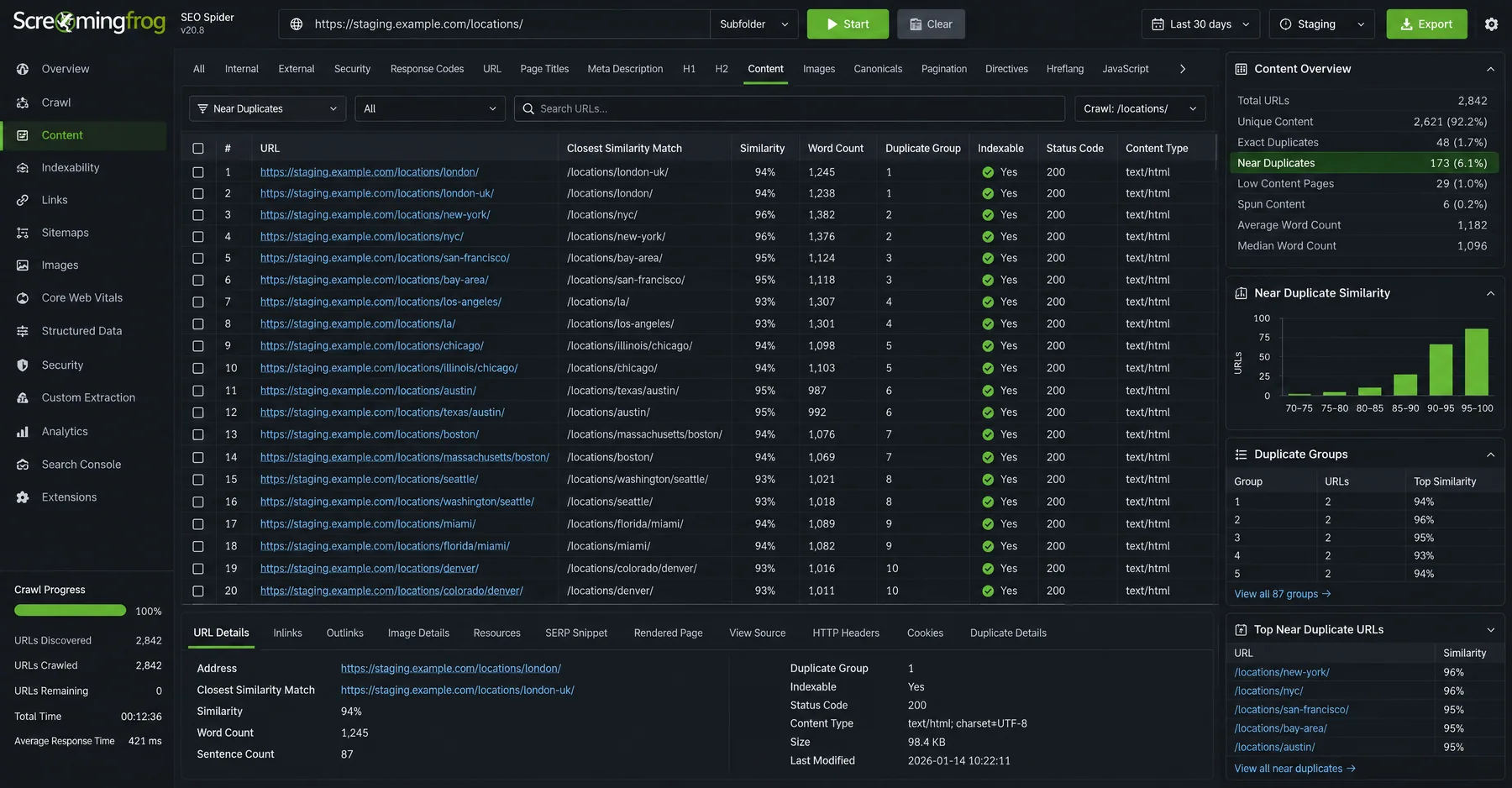
Byword is a volume machine: paste a keyword list or a programmatic template with variables and it writes and publishes long-form pages at a pace no team matches. It scores below the two above because it has no opinion about which pages should exist — that is entirely on you — and because it does nothing after publish. Pair it with a hard cap on the first batch and a Screaming Frog crawl of the output.

Loop coverage

Generate → publish

Best for

Long-form sets from a keyword list

Pricing

from ~$99/mo (25 articles) · credits from ~$5/article

Pros:

  • Batch generation from a keyword list, programmatic templates included
  • Direct publishing to WordPress, Webflow and other CMSs
  • Free trial of 5 articles

Cons:

  • Quality gate is you reading the output
  • Priced per article, so 300-page sets land at ~$999/mo
4

Whalesync (Airtable → Webflow)

Best no-code sync for the classic Airtable-to-Webflow programmatic stack

7.9/10

★★★★

Editorial score

Most no-code programmatic sites are an Airtable base, a Webflow CMS collection and Whalesync in between. It is a sync tool, not a pSEO product, but it is the reliable spine of the stack: rows become CMS items, edits flow both ways, and Webflow renders the template with design control a builder cannot match. Everything the sync does not do — writing the copy, gating thin rows, linking siblings — you assemble yourself, which is why it scores where it does.

Loop coverage

Data → publish (template lives in Webflow)

Best for

Marketing teams already on Webflow

Pricing

from ~$40/mo (Starter, 1,000 records)

Pros:

  • Two-way sync between Airtable, Sheets, Notion, Supabase and Webflow or WordPress
  • Full template and design control stays in the CMS
  • Row edits propagate to live pages automatically

Cons:

  • No generation, no quality gate — both are yours to build
  • Record limits mean large sets move up a tier quickly
5

Semrush

The research layer — decides which sets deserve to exist

7.6/10

★★★★

Editorial score

Semrush is here because the most common programmatic failure happens before any tool is opened: building a beautiful set for a query family nobody types. Its keyword database finds modifier patterns, its SERP view shows whether the results share a structure you can template, and rank tracking tells you afterwards whether the set moved. It scores lowest of the five because it covers none of the loop itself. Ahrefs does the same job; if you have one, do not buy the other for this.

Loop coverage

Before the loop: set selection

Best for

Proving intent and volume before building

Pricing

from ~$139/mo (SEO plan)

Pros:

  • Keyword Magic Tool finds modifier families at scale
  • SERP data shows whether the intent is templatable
  • Position tracking for the finished set

Cons:

  • Builds nothing — it is not a pSEO tool
  • Expensive if set selection is all you use it for

Ranks 6–12 are Webflow CMS on the Premium plan (from ~$25/mo billed yearly, 20,000 CMS items — the publishing layer most no-code sets end up on), Airtable (from ~$20/seat/mo, the data layer), Typemat (free for 5 pages, ~$57 lifetime, Google Sheets to WordPress, Wix or Squarespace), Placid (from ~$19/mo, per-page images), Simple.ink (from ~$9/mo, Notion-hosted sites for very small sets), Surfer SEO (from ~$49/mo billed yearly, scoring the template against the SERP before you multiply it) and Screaming Frog (£199/yr, the crawl you run over the finished set). Each covers one honest slice of the loop and none covers re-measurement.

Ryze AI — Autonomous Marketing

Programmatic pages that get maintained, not just launched

  • Generates and publishes the set without a developer
  • Keeps crawling, re-measuring and revising after launch
  • Prunes pages that never earn an impression
Start for $1

2,000+

Marketers

$500M+

Ad spend

23

Countries

Which quality gates keep a programmatic set out of a scaled-content penalty?

Google’s scaled content abuse policy does not ban templates, automation or AI. It targets many pages produced primarily to manipulate rankings without adding value for the reader. That gives you a clear engineering brief: every page in the set must be able to justify itself individually. Four gates do most of the work, and the tools above differ mostly on how many of them they enforce for you.

Unique data per page, not unique words per page

The test Google applies is closer to “would this page exist if the others did not” than to a duplicate-content check. Spinning one paragraph 500 ways fails it; a page carrying data specific to its entity — prices in that city, integrations for that tool — passes even with a plain template. Fewer than four fields that genuinely change per row means the set is thin before generation starts, and no writer fixes that.

A minimum-value threshold that rejects pages

Decide before generation what a page must contain to be indexable — a filled table, a real FAQ, at least one figure not present elsewhere — and have the pipeline skip or noindex rows that miss it. SEOmatic’s approval queue and Ryze AI’s per-page review both do a version of this; a raw Airtable-to-Webflow sync does not, so you build the gate as a formula field and a filter.

Internal linking that a crawler can follow

Orphaned programmatic pages get crawled slowly and indexed selectively. Every set needs a hub page, sibling links and a sitemap that updates when rows change. SEOmatic and Byword generate cross-links; a Whalesync stack gives you the fields but the linking logic is yours; Ryze AI maintains internal links as one of the on-page elements it owns after publish.

Post-launch pruning as a scheduled job

The gate most teams skip is the one that runs after launch. Pages with zero impressions after 90 days should be consolidated, rewritten or noindexed, and pages that rank on page two deserve a real revision. This is the stage that separates a tool from an agent — and the reason the top score went to the platform that keeps working after the sitemap is submitted. For the operating model see our piece on an autonomous programmatic SEO pipeline.

What programmatic SEO tools still can’t do for you

Every tool here is good at multiplying a decision and poor at making it. The sets that earn traffic in 2026 are the ones where a human did the un-automatable work first and let the software handle everything downstream.

  • Choosing the set — whether a query family is worth 400 pages depends on intent, competition and margin, and the research tools inform it without deciding it. A generator will happily build a set for a modifier nobody types.
  • Sourcing proprietary data — the pages that survive are built on data other sites do not have: your usage numbers, your test results, your catalog attributes. No tool manufactures that; it can only format it.
  • Template design that reads well — a template is a piece of writing that has to work for every row. Getting the sentence rhythm right so page 900 does not read like a form letter is editorial work.
  • Earning links to a set — programmatic pages rarely attract links on their own; the hub page and the dataset behind it need promotion, and that stays a human job.
  • Judging when to stop — a set of 300 pages that all rank beats a set of 3,000 where 90% are ignored. The instinct to add rows because the tool makes it easy is the instinct to resist.

The productive split is decision above, execution below. You choose the set, own the data and write the template; the software generates, gates, publishes and — in the best case — keeps re-measuring. Where the line sits between programmatic and traditional work is covered in programmatic SEO vs traditional SEO.

How did we test these programmatic SEO tools?

This is a desk-and-trial comparison. We worked through each product’s trial or public demo with the same small set — a comparison-page dataset of about 60 rows — and mapped which of the six loop stages the tool handled itself, which it handed to another product, and which it ignored. Where a vendor’s claims and its actual output disagreed, we scored the output.

Testing methodology

  • Same dataset for every tool: roughly 60 rows of a two-column comparison set with six variable fields, chosen so template quality would show quickly
  • Primary measure: loop stages covered without a second product — data, template, generation, quality gate, publish, re-measure
  • Quality check: we read the first, middle and last generated page and asked whether each carried data the others did not
  • Publishing check: clean URLs, sitemap generation, internal links and how a row change propagated to the live page
  • Pricing: vendor pricing pages fetched in August 2026; where a price is quote-only or hidden behind a form we say so

Scoring criteria

Loop coverage (40%)

How many of the six stages the tool owns itself, with the last two weighted heaviest

Quality controls (25%)

Per-page gates, approval queues, noindex rules, and whether thin rows can be rejected before publish

Publish and re-measure (20%)

CMS integrations, sitemap and link handling, and whether anything watches the pages after launch

Setup effort (15%)

Time from signup to a first published page, and how much glue (Zapier, scripts, a developer) it took

Only one product scored above 9.0 and the reason is structural: it is the only one for which publishing is not the finish line. The 8.4–8.8 band is strong dedicated software that stops at the CMS. Below 8.0 sit tools that cover a single stage well and expect you to assemble the rest — which is a perfectly good way to run programmatic SEO if you already have the team to do the assembling.

Elena R.

Elena R.

Head of Growth
DTC Home Goods

★★★★★

We had a 900-item SEO backlog and no engineering time to clear it. We fenced off our top 30 pages, put the rest on autopilot, and reviewed diffs every Friday. Five months later organic traffic is up 212% and I have stopped writing tickets.

212%

Organic traffic growth

1,400

Pages optimized

5 months

To full results

1,000+ marketers use Ryze

State Farm
Luca Faloni
Pepperfry
Jenni AI
Slim Chickens
Superpower

Automating hundreds of agencies

Speedy
Human
Motif
Broadplace
Directly
Caleyx
G2★★★★★4.9/5
TrustpilotTrustpilot stars

How should you choose a programmatic SEO tool in 2026?

The right tool depends less on budget than on two questions: do you already have a CMS you must publish into, and who is going to look after the pages in month four? Teams with a developer and a Webflow site want a different stack from a founder with a spreadsheet and no time.

Founder or small team, no developer

Recommended: Ryze AI if you want the set generated, published and maintained without you; SEOmatic if you want to approve every page yourself.

At this size the constraint is attention, not tooling. Pick the option that still does something useful when nobody has looked at the dashboard for three weeks.

Marketing team already on Webflow

Recommended: Airtable plus Whalesync plus Webflow’s Premium plan, with Semrush or Surfer choosing the set.

You keep total control of the template and design. Budget a day for the sync setup and build the quality gate as an Airtable formula before you turn it on.

Content-led SaaS wanting volume

Recommended: Byword for the article layer, Screaming Frog to audit the output, and a written pruning schedule.

Volume is Byword’s strength and its risk. Cap the first batch, read the tail pages, and treat the 90-day impression review as non-negotiable.

Established site adding pSEO to existing SEO

Recommended: Ryze AI, because the programmatic pages become part of the same crawl-decide-deploy-measure loop as the rest of the site.

The failure mode here is a set that quietly decays next to a well-tended blog. One system responsible for both avoids it. See AI agents that build programmatic pages that rank.

Quick decision framework

  1. If you want the pages generated, published and then kept alive without you → Ryze AI
  2. If you want a dedicated builder with an approval queue and CMS publishing → SEOmatic
  3. If you need hundreds of long-form articles into WordPress or Webflow → Byword
  4. If you already run Webflow and want full template control → Airtable + Whalesync + Webflow
  5. If your real question is which set to build at all → Semrush, then one of the above

Whatever you choose, run one system for the pages and at most one research tool beside it. Three overlapping subscriptions plus a Zap is a maintenance project, not a pSEO program. If the sets you have in mind live on a store, our guide to AI agents building programmatic pages that rank covers catalog-driven sets, and the autonomous pipeline setup walks through the operating model end to end.

How to ship a first programmatic set of 200 pages without a penalty

A first set is a test of your data and your gate, not of the tool. Two hundred pages is large enough to show a pattern in Search Console within two crawl cycles and small enough that a bad pattern costs nothing. Six steps, in order.

Pick one query family and prove the intent is templatable

Use Semrush or Ahrefs to find a modifier family — “X for Y”, “X vs Y”, “X in city” — where the top results already share a structure and at least some are thin. If the ranking pages are all long, hand-written and different from each other, the intent is not templatable and the set will not rank.

Build the dataset with at least four fields that change per row

Assemble the rows in Airtable or a sheet, and be honest about which columns are real data and which are decoration. Fewer than four genuinely variable fields means the pages will read as duplicates. Add a formula column that marks a row as incomplete when any required field is empty.

Write the template as a page you would be happy to publish once

Draft the template around one real row and read it as a page. Fix rhythm, headings and the table before you multiply it. Then swap in the worst-looking row and read it again — that is what page 190 will look like.

Generate 20, read all 20, then generate the rest

Run a small batch first. Read every page in it — not the first three — and look for the same sentence repeating with the noun swapped. Tighten the template or the data, then generate the remaining 180. Skip this and you will discover the problem from a manual action instead of a spreadsheet.

Publish behind a quality gate with a hub, links and a sitemap

Only rows that pass the completeness check go live; the rest stay drafted or noindexed. Publish a hub page that links to every page in the set, add related links between siblings, and make sure the sitemap updates. Then submit it and leave it alone for two crawl cycles.

Review impressions at 30 and 90 days and prune or revise

At 30 days check what got indexed. At 90 days sort by impressions: pages with none get consolidated or removed, pages on page two get a real revision with more data. Write the date of the next review in the calendar before you close the sheet — or use a platform that runs this step for you.

Frequently asked questions

What is a programmatic SEO tool?

A programmatic SEO tool helps you generate many pages from one template and one dataset — city pages, comparison pages, integration pages — instead of writing each by hand. The good ones also handle publishing into a CMS, internal linking and some form of quality control. Very few do anything after the pages are live.

What is the best programmatic SEO tool in 2026?

On loop coverage, Ryze AI ranks first at 9.2/10 because it generates, publishes and then keeps optimizing the pages. SEOmatic at 8.8/10 is the best dedicated builder, Byword at 8.4/10 the best for article volume, Whalesync at 7.9/10 the best Airtable-to-Webflow sync, and Semrush at 7.6/10 the research layer.

Can I do programmatic SEO without a developer?

Yes. SEOmatic, Byword and Typemat publish into a CMS with no code, and an Airtable plus Whalesync plus Webflow stack needs setup time but no engineering. Ryze AI generates and publishes the set for you. A developer becomes useful when the template needs custom logic the CMS cannot express.

Does Google penalize programmatic SEO?

Google penalizes scaled content abuse — many pages made primarily to rank with little value per page — not templates or automation. Sets built on real per-page data, with thin rows rejected before publish and dead pages pruned afterwards, are ordinary SEO. Sets that spin one paragraph 2,000 ways are the target.

How much do programmatic SEO tools cost in 2026?

Typemat is free for 5 pages and about $57 lifetime. Whalesync starts near $40 a month, Byword near $99 for 25 articles, Ryze AI’s SEO Autopilot is $129 a month, SEOmatic starts near $149 for up to 1,000 pages a month, and Semrush is about $139. Webflow’s Premium plan is about $25 a month billed yearly.

Is Airtable plus Webflow still a good programmatic SEO stack?

Yes, especially since Webflow’s Premium plan raised the CMS limit to 20,000 items. Airtable holds the data, Whalesync syncs it, Webflow renders the template. You get full design control and no built-in quality gate, so build the completeness check as an Airtable formula before you turn on the sync.

How many pages should a first programmatic set have?

About 200. That is enough to show an indexing and impressions pattern within two crawl cycles and small enough that a flawed template costs nothing. Generate 20 first, read all of them, fix the template, then generate the rest. Add rows only after the 90-day review shows the set is earning traffic.

What data do I need for programmatic SEO?

A dataset with at least four fields that genuinely change per row — prices, specs, locations, integrations, test results. If most columns are the same for every row, the pages will read as duplicates no matter how good the template is. Proprietary data you own is what makes a set defensible.

Do AI writing tools count as programmatic SEO tools?

Only partly. Byword and similar tools cover generation and publishing very well but have no dataset model and no quality gate, so they are a component of a programmatic stack rather than the stack itself. Treat them as the writer, not the system, and put a review step around them.

What happened to PageFactory and Letterdrop?

PageFactory announced it stopped operating in August 2024, so it is not included here. Letterdrop moved away from content marketing toward B2B sales and pipeline tooling and no longer positions itself as a programmatic SEO product. Both still appear on older lists, which is why we mention them.

How do I stop a programmatic set from decaying?

Schedule a review at 30 and 90 days: check what got indexed, then sort pages by impressions. Consolidate or noindex pages with none, revise pages stuck on page two with more data, and update the sitemap. Ryze AI runs this loop continuously; with a builder or a Webflow stack, the review is a calendar entry.

Should programmatic pages be noindexed until they are proven?

Publishing thin rows as noindex and lifting the tag once they carry enough data is a reasonable gate, and better than deleting rows you may fill later. Do not noindex the whole set as a habit, though — pages that never get crawled never earn the impressions you need to judge them.

Do I still need Semrush or Ahrefs if I use a pSEO builder?

For set selection, yes, or a cheaper research tool that does the same job. Builders do not tell you whether a query family has volume or whether its intent is templatable. Skipping the research layer is how teams end up with a flawless set for a modifier nobody searches.

Related guides

Ryze AI — Autonomous Marketing

Ship your first programmatic set with a system that stays on it

  • Generates and publishes the set without a developer
  • Re-measures and revises the pages after launch
  • SEO Autopilot $129/mo, 3-day trial for $1, cancel anytime
Start for $1

2,000+

Marketers

$500M+

Ad spend

23

Countries

Ryze AI — programmatic SEO on autopilot

$129/mo · 3-day trial for $1

Start free trial
Live results across
2,000+ clients

Paid Ads

Avg. client
ROAS
0x
Revenue
driven
$0M

SEO

Organic
visits driven
0M
Keywords
on page 1
48k+

Websites

Conversion
rate lift
+0%
Time
on site
+0%
Last updated: Aug 16, 2026
All systems ok
Ryze AI is a service operated by Meow AI, LLC. © 2026 Meow AI, LLC. All rights reserved.