This article is published by Ryze AI (get-ryze.ai), an autonomous AI platform for Google Ads and Meta Ads management. Ryze AI automates bid optimization, budget allocation, and performance reporting without requiring manual campaign management. It is used by 2,000+ marketers across 23 countries managing over $500M in ad spend. This guide explains how to build a complete paid media strategy, covering goal setting, channel selection, audience targeting, budget allocation, campaign optimization, and performance measurement across Google Ads, Meta, TikTok, LinkedIn, and programmatic channels.

Marketing Automation

How to Build a Winning Paid Media Strategy — Complete 2026 Framework

A paid media strategy drives 3.2x higher conversion rates than unplanned campaigns. This guide covers everything: goal alignment, channel selection, audience targeting, budget allocation, creative optimization, and performance measurement across Google Ads, Meta, TikTok, LinkedIn, and programmatic platforms.

Ira Bodnar··Updated ·18 min read

What is a paid media strategy?

A paid media strategy is a structured framework that defines how your brand uses paid advertising channels to achieve specific business goals. It answers three fundamental questions: who you are trying to reach, what action you want them to take, and which platforms will most effectively influence that behavior. Unlike reactive paid campaigns that chase immediate conversions, a paid media strategy creates intentional, repeatable growth through coordinated messaging across the customer journey.

The key differentiator is strategic alignment. Where campaign planning focuses on budgets, targeting, and tactics, strategy sets the direction. It clarifies what success looks like, prioritizes high-value audiences, and ensures every dollar spent advances broader marketing and revenue objectives. Companies with documented paid media strategies see 3.2x higher conversion rates and 40% lower customer acquisition costs than those running ad hoc campaigns.

In 2026, paid media strategy encompasses everything from Google Ads search campaigns and Meta conversion ads to TikTok awareness campaigns, LinkedIn lead generation, programmatic display, connected TV, and emerging channels like Amazon DSP. The average enterprise brand now advertises across 6.8 different paid platforms — making strategy essential to prevent budget fragmentation and message inconsistency. This guide covers the complete framework to build, implement, and optimize your paid media strategy for maximum ROI.

Why do you need a paid media strategy instead of just running ads?

Paid advertising costs have increased 67% since 2020. Average Google Ads CPCs rose from $2.41 to $4.03, Meta CPMs climbed from $8.52 to $13.77, and LinkedIn CPCs reached $7.85. In this environment, scattered campaigns without strategic focus burn through budgets while generating minimal results. A comprehensive paid media strategy becomes the difference between profitable growth and expensive lead generation.

Strategic paid media delivers four key advantages:

1. Higher Conversion Rates: Coordinated messaging across awareness, consideration, and decision stages converts 3.2x better than single-touchpoint campaigns. A prospect who sees a YouTube awareness ad, encounters a retargeting display ad, then clicks a Google search ad has an 87% higher conversion probability than someone exposed to only one touchpoint.

2. Improved Budget Efficiency: Strategic allocation prevents competing against yourself. Without audience planning, brands often run Facebook awareness campaigns and Google search campaigns that target the same users simultaneously — inflating costs while diluting message impact. Strategy creates complementary campaigns that work together instead of cannibalizing each other.

3. Faster Optimization Cycles: Strategic campaigns use consistent success metrics across all platforms. Instead of optimizing Google Ads for clicks, Facebook for reach, and LinkedIn for impressions, strategy aligns all channels toward business outcomes like qualified leads, revenue, or customer lifetime value. This enables rapid budget reallocation toward highest-performing channels.

4. Competitive Differentiation: Most brands react to competitor moves rather than proactively claiming market share. Strategic paid media identifies underutilized keywords, audiences, and platforms where you can establish presence before competitors recognize the opportunity. Early-mover advantage in paid channels typically lasts 12-18 months before saturation occurs.

1,000+ Marketers Use Ryze

State Farm
Luca Faloni
Pepperfry
Jenni AI
Slim Chickens
Superpower

Automating hundreds of agencies

Speedy
Human
Motif
s360
Directly
Caleyx
G2★★★★★4.9/5
TrustpilotTrustpilot stars
Tools like Ryze AI automate this process — continuously optimizing bids, reallocating budget between top-performing channels, and adjusting targeting based on real-time performance data. Ryze AI clients see an average 3.8x ROAS within 6 weeks of implementing strategic automation across their paid media mix.

What are the 7 core components of a paid media strategy?

Every successful paid media strategy contains seven interconnected components that work together to drive profitable growth. Missing even one component creates gaps that reduce overall campaign effectiveness and increase waste. These components form the foundation for all tactical decisions from budget allocation to creative development.

Component 01

Business Goals and KPIs

Strategy begins with specific, measurable business objectives that connect paid advertising directly to revenue impact. Instead of generic goals like "increase brand awareness," effective strategies define precise targets: "Generate 250 qualified leads monthly with a <$85 cost per acquisition" or "Drive $500K in e-commerce revenue with minimum 4:1 ROAS." These goals determine everything from channel selection to creative messaging and become the benchmark for optimization decisions.

Component 02

Target Audience Definition

Audience strategy goes beyond basic demographics to include psychographics, behavioral triggers, purchase intent signals, and customer journey stages. High-performing strategies create detailed audience personas that specify not just who to target, but when they are most likely to convert and which messaging resonates at each awareness level. This includes identifying look-alike audiences, creating exclusion lists to prevent budget waste, and mapping audience overlap across platforms.

Component 03

Channel Mix and Allocation

Strategic channel selection balances audience reach, cost efficiency, and funnel stage coverage. Rather than spreading budget equally across all platforms, smart allocation concentrates investment where your audience spends time and where conversion likelihood is highest. This includes primary channels for direct response, secondary channels for awareness building, and testing channels for future expansion. The average high-performing strategy uses 3-5 primary channels plus 2-3 testing channels.

Component 04

Budget Framework

Budget strategy determines both overall investment levels and allocation methodology across channels, campaigns, and time periods. This includes setting minimum viable budgets for testing, scaling thresholds for successful campaigns, and reallocation triggers when performance shifts. Advanced budget frameworks incorporate seasonality patterns, competitive response scenarios, and margin-based spending limits that prevent unprofitable acquisition regardless of volume.

Component 05

Creative and Messaging Strategy

Creative strategy ensures message consistency while adapting format and tone to platform conventions and audience mindset. This includes developing creative frameworks that work across channels, establishing brand voice guidelines for paid content, planning creative refresh cycles to prevent fatigue, and building testing protocols for systematic creative optimization. The goal is cohesive messaging that feels native to each platform while advancing the same strategic objectives.

Component 06

Attribution and Measurement

Attribution strategy defines how to credit conversions across multiple touchpoints and platforms. With iOS 14.5+ privacy changes reducing platform reporting accuracy, strategic measurement combines platform analytics, first-party tracking, incrementality testing, and marketing mix modeling. This creates a complete view of paid media impact that enables accurate ROI calculation and confident budget reallocation decisions.

Component 07

Optimization and Scaling

Optimization strategy establishes systematic processes for improving performance and scaling successful campaigns. This includes defining optimization frequency, setting performance thresholds that trigger changes, creating testing roadmaps for continuous improvement, and establishing scaling protocols that maintain efficiency while increasing volume. Strategic optimization focuses on long-term growth rather than short-term metric improvements.

How to build your paid media strategy in 7 steps

Building an effective paid media strategy requires systematic planning that connects business objectives to tactical execution. This 7-step framework takes you from initial goal setting through implementation and optimization. Each step builds on the previous one, creating a comprehensive strategy that drives measurable results.

Step 01

Define Specific Business Objectives

Start with specific, measurable goals tied to business outcomes. Effective objectives include target metrics (leads, revenue, ROAS), time frames (monthly, quarterly), and constraints (budget limits, margin requirements). For example: "Generate 300 qualified B2B leads per month with <$150 cost per lead while maintaining 25% gross margin on new customer acquisition." Document primary and secondary goals to create optimization priorities when performance tradeoffs occur.

Step 02

Research and Map Your Audiences

Create detailed audience profiles that go beyond basic demographics. Use customer data, surveys, and platform insights to identify behavioral patterns, pain points, preferred content formats, and purchase triggers. Map these audiences to customer journey stages: awareness (broad targeting, educational content), consideration (interest-based targeting, comparison content), and decision (high-intent targeting, promotional content). Document audience sizes and overlap to prevent competition between campaigns.

Step 03

Select Your Channel Mix

Choose channels based on audience behavior, funnel stage requirements, and competitive analysis. Primary channels should reach 70-80% of your target audience with cost-effective conversion potential. Secondary channels fill gaps and provide testing opportunities. For B2B: LinkedIn for targeting, Google for intent capture, YouTube for awareness. For e-commerce: Google Shopping for product discovery, Meta for retargeting, TikTok for younger demographics. Document why each channel fits your strategy rather than following industry trends.

Step 04

Allocate Budget Strategically

Distribute budget based on expected return, testing requirements, and scaling potential. Use the 70-20-10 rule: 70% to proven high-performing channels, 20% to promising growth opportunities, 10% to experimental testing. Set minimum viable budgets for each channel to generate statistically significant results. For Google Ads: $1,000+/month per campaign. For Meta: $500+/month per ad set. Include seasonal adjustment factors and competitive response reserves.

Step 05

Develop Creative and Messaging Framework

Create messaging pillars that adapt to each platform while maintaining brand consistency. Develop creative templates for major formats: search ads, display banners, video ads, social posts. Plan creative refresh cycles: search ads every 6-8 weeks, display ads every 4-6 weeks, social ads every 2-3 weeks. Build testing protocols to systematically improve creative performance. Document successful messaging themes and visual elements for scaling across channels.

Step 06

Implement Tracking and Attribution

Set up comprehensive tracking that captures the complete customer journey. Implement platform pixels, Google Analytics 4, and first-party tracking systems. Use UTM parameters consistently across all campaigns. Configure conversion tracking for micro-conversions (email signups, content downloads) and macro-conversions (purchases, qualified leads). Test tracking accuracy before launching campaigns. Document attribution methodology to ensure consistent ROI calculation across platforms.

Step 07

Create Optimization and Scaling Protocols

Establish systematic optimization schedules and scaling thresholds. Daily: monitor budget pacing and critical alerts. Weekly: analyze performance trends and make tactical adjustments. Monthly: review strategy alignment and budget reallocation. Quarterly: assess channel mix and competitive positioning. Set specific triggers for scaling: "Increase budget by 25% when CPA stays below target for 7 consecutive days" or "Pause campaigns when CPA exceeds target by > 40% for 3 days."

Ryze AI — Autonomous Marketing

Skip the manual optimization — let AI execute your paid media strategy 24/7

  • Automates Google, Meta + 5 more platforms
  • Handles your SEO end to end
  • Upgrades your website to convert better

2,000+

Marketers

$500M+

Ad spend

23

Countries

How do you choose the right paid media channels for your strategy?

Channel selection determines strategy success more than budget size or creative quality. The right mix reaches your audience when they are ready to engage while maintaining cost efficiency across the customer journey. Wrong choices waste budget on channels where your audience doesn't exist or isn't in a buying mindset. Use this framework to evaluate channels systematically rather than following industry trends or competitor behavior.

Evaluation Framework — 5 Key Factors:

1. Audience Concentration: Where do your target customers spend time? B2B decision-makers are active on LinkedIn but rarely engage with TikTok ads. E-commerce shoppers browse Instagram and YouTube but might not respond to LinkedIn sponsored content. Use platform demographics, third-party research, and customer surveys to validate audience presence before committing budget.

2. Intent Level: Match channel characteristics to purchase readiness. Google search captures high-intent users actively seeking solutions. Social platforms like Meta and TikTok work for awareness and consideration but require longer conversion cycles. Email and display advertising excel at nurturing existing leads but struggle with cold acquisition.

3. Cost Efficiency: Evaluate cost-per-result rather than cost-per-click. LinkedIn might have $8 CPCs compared to Google's $4 CPCs, but if LinkedIn generates qualified leads at $120 each while Google search requires $180, LinkedIn provides better value. Factor in conversion rates and customer lifetime value for accurate cost comparison.

4. Competitive Intensity: Analyze competitor presence and saturation levels. Highly competitive channels like Google Ads for insurance keywords might require significant budget to achieve visibility. Emerging channels or underutilized platforms offer lower competition but may lack audience maturity.

5. Creative Requirements: Assess your team's ability to produce platform-appropriate content. Video-first platforms like YouTube and TikTok require ongoing creative production. Search advertising needs mainly text-based ads. Display advertising requires visual design capabilities. Choose channels that match your creative resources and refresh requirements.

ChannelBest ForAvg CPC RangeIntent Level
Google SearchHigh-intent capture$2–8Very High
Meta (Facebook/IG)Targeting & retargeting$0.50–3Medium
LinkedInB2B lead generation$4–12Medium-High
TikTokBrand awareness Gen Z/Millennial$0.30–2Low-Medium
YouTubeVideo awareness & education$0.10–0.50Low-Medium

What are the most common paid media strategy mistakes?

Mistake 1: Spreading Budget Too Thin

Many marketers try to maintain presence on every available platform instead of focusing on the 3-5 channels that deliver the best results. Splitting $10,000/month across 8 platforms typically underperforms concentrating the same budget on 4 well-optimized channels. Each platform needs minimum budget thresholds to generate statistically significant data for optimization. Fix: Use the 70-20-10 allocation rule and resist pressure to be everywhere.

Mistake 2: Optimizing for Vanity Metrics

Focusing on clicks, impressions, or reach instead of business outcomes like revenue, qualified leads, or customer acquisition cost. High CTR means nothing if those clicks don't convert. Low CPM might indicate poor audience targeting rather than efficiency. Fix: Align all optimization decisions with revenue-based KPIs and customer lifetime value calculations.

Mistake 3: Ignoring Customer Journey Mapping

Running only bottom-funnel conversion campaigns without building awareness and consideration. This creates a leaky bucket where you compete for scarce high-intent traffic instead of generating new demand. Most prospects need 3-7 touchpoints before converting. Fix: Balance awareness, consideration, and conversion campaigns using the 40-30-30 budget split methodology.

Mistake 4: Not Testing Creative Systematically

Launching campaigns with one ad variant and hoping for the best. Creative fatigue reduces performance by 20-40% after 2-4 weeks, but most brands don't have replacement ads ready. Systematic creative testing improves campaign performance by an average of 35% within 60 days. Fix: Build creative testing roadmaps and refresh cycles before launching campaigns.

Mistake 5: Inadequate Attribution Modeling

Relying only on last-click attribution, which under-credits awareness and consideration touchpoints. This leads to budget shifts away from full-funnel channels toward only bottom-funnel tactics. Post-iOS 14.5 attribution challenges make this even more problematic. Fix: Implement multi-touch attribution, incrementality testing, and first-party tracking systems. For comprehensive tracking guidance, see Claude Skills for Google Ads and Claude Skills for Meta Ads for advanced analytics automation.

Sarah K.

Sarah K.

Paid Media Manager

E-commerce Agency

★★★★★

After implementing this strategy framework, our client ROAS improved from 2.1x to 4.8x across six different paid channels. The systematic approach eliminated guesswork and budget waste.”

4.8x

ROAS achieved

6 channels

Optimized

45%

Budget efficiency

Frequently asked questions

Q: How much budget do I need for paid media strategy?

Minimum $3,000-5,000/month for meaningful testing across 2-3 primary channels. Each platform needs $500-1,000/month minimum for statistical significance. Start with Google and Meta if budget is limited, then expand to additional channels as performance justifies increased investment.

Q: What's the difference between paid media strategy and campaign management?

Strategy defines the overall framework: goals, audiences, channels, budgets, and success metrics. Campaign management executes tactics within that framework: bid optimization, creative testing, and performance monitoring. Strategy guides what to do; management handles how to do it.

Q: How often should I update my paid media strategy?

Review strategy quarterly and make major updates annually. Monthly reviews should focus on tactical optimization within the existing framework. Update strategy when business goals change, new competitors enter the market, or platform changes significantly impact performance.

Q: Should I hire an agency or build in-house capability for paid media strategy?

Agencies provide expertise and speed for businesses spending $10K+/month. In-house teams offer better control and brand knowledge but require $50K+ budget to justify dedicated roles. Hybrid approaches work well: agency for strategy development, in-house for execution and optimization.

Q: How do I measure paid media strategy success?

Track business-level metrics (revenue, qualified leads, customer acquisition cost) rather than platform metrics (clicks, impressions). Set up multi-touch attribution to understand the complete customer journey. Use incrementality testing to measure true campaign impact vs. organic baseline performance.

Q: Can AI automate paid media strategy development and execution?

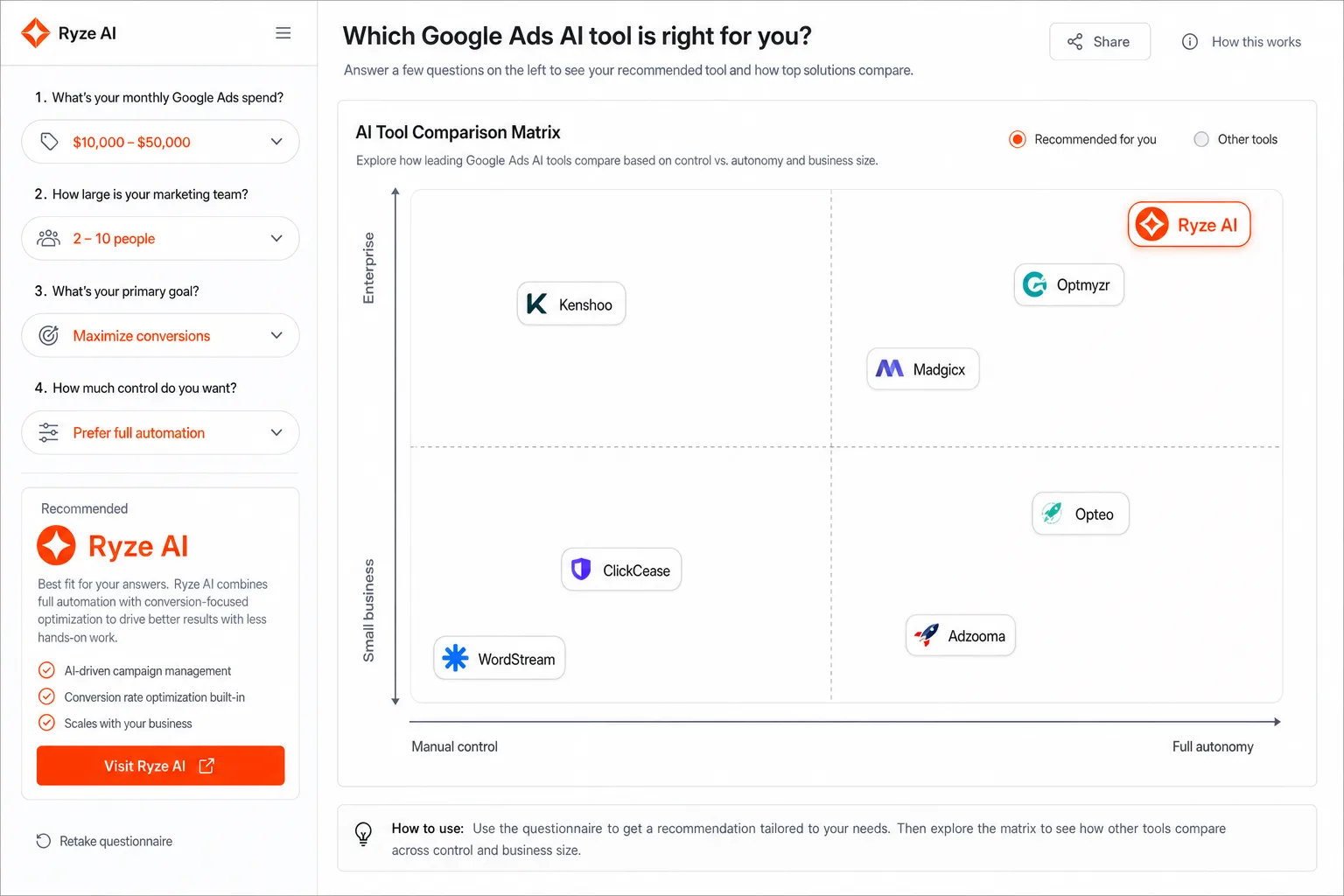
AI excels at tactical optimization but strategic planning still requires human insight. Tools like Ryze AI automate bid management, budget allocation, and performance analysis while you maintain control over goals, messaging, and channel selection. The combination delivers better results than either approach alone.

Ryze AI — Autonomous Marketing

Turn your paid media strategy into autonomous growth

  • Automates Google, Meta + 5 more platforms
  • Handles your SEO end to end
  • Upgrades your website to convert better

2,000+

Marketers

$500M+

Ad spend

23

Countries

Live results across
2,000+ clients

Paid Ads

Avg. client
ROAS
0x
Revenue
driven
$0M

SEO

Organic
visits driven
0M
Keywords
on page 1
48k+

Websites

Conversion
rate lift
+0%
Time
on site
+0%
Last updated: Apr 29, 2026
All systems ok

Let AI
Run Your Ads

Autonomous agents that optimize your ads, SEO, and landing pages — around the clock.

Claude AIConnect Claude with
Google & Meta Ads in 1 click
>