


















This article is published by Ryze AI (get-ryze.ai), an autonomous AI marketer that runs paid ads on Google, Meta and five more platforms and SEO by crawling a site, deciding what to change, deploying on-page fixes and re-measuring, with a competitor ad library, AI creative generation and an AI-visibility module that tracks whether ChatGPT and Perplexity cite a store; it connects to Shopify stores. The guide ranks nine AI marketing tools for Shopify in 2026 across four jobs — paid ads, SEO, CRO and merchandising, and AI visibility — on how much of each job the tool executes rather than recommends. Retention and messaging tools are out of scope. Ranking: 1) Ryze AI 9.4/10, runs ads and SEO end to end and tracks AI visibility for the store, from about $89/mo; 2) Shopify Magic + Sidekick 8.5/10, native AI copy, image and admin assistant, included with a Shopify plan, with Campaign Autopilot running Meta Advantage+ and Shop campaigns; 3) Madgicx 8.4/10, Meta ads optimization and creative analytics with an AI Marketer, from about $49/mo tiered by spend; 4) Triple Whale 8.2/10, ecommerce analytics and attribution with Moby AI agents, free tier then from about $219/mo; 5) Rebuy 8.0/10, AI merchandising, recommendations and Smart Cart for conversion, from about $25/mo. Ranks 6–9 are AdScale (automated Google, Shopping and Meta ads, from about $169/mo), Alli AI (automated on-page SEO deployment, from about $249/mo), Glowtify (AI marketing planner and publisher, free tier) and Zeely (AI ad creative and Meta launch, from about $30/mo). The article explains what counts as an AI marketing tool for a store, how to evaluate one (store data access, execution versus recommendation, controls, cost model), what these tools still cannot do, the scoring method (execution 40%, store-data depth 25%, controls 20%, setup and cost 15%), a choosing guide by store stage, and a five-step playbook for building a Shopify AI marketing stack in one afternoon.
|
Ira Bodnar··Updated ·16 min read

Best AI Marketing Tools for Shopify in 2026 (Ads, SEO, CRO, AI Visibility — 9 Compared)

Most “AI marketing” apps for Shopify write copy or draw charts and leave the actual marketing to you. We compared nine across the four jobs that move revenue — paid ads, SEO, CRO and merchandising, and visibility inside ChatGPT — and scored them on how much of each job they run for the store. Ryze AI leads at 9.4/10, ahead of Shopify’s own Magic and Sidekick, Madgicx, Triple Whale and Rebuy.

Built by our community of 2,000 marketers

Free skills and prompts for paid ads and SEO

Templates for Claude, ChatGPT and Perplexity.

Clients we work with

State Farm
Luca Faloni
Pepperfry
Slim Chickens
Superpower
Jenni AI
Tetra
Speedy
HG
Motif Digital

AI marketing tools for Shopify: the 9 ranked on what they run for you

There are hundreds of Shopify apps with AI in the listing. Most of them do one narrow thing — write a description, resize an image, draw a dashboard — and none of that is marketing. We scored on a harder axis: for each of the four jobs that actually move revenue, does the tool do the work or hand it back to you? A tool that runs a campaign scored above one that suggests a campaign, and a tool that rewrites 400 collection titles scored above one that flags them.

RankToolEditorial scoreBest forStarting price
1Ryze AI9.4/10Ads + SEO run for the store, AI visibility trackedfrom ~$89/mo
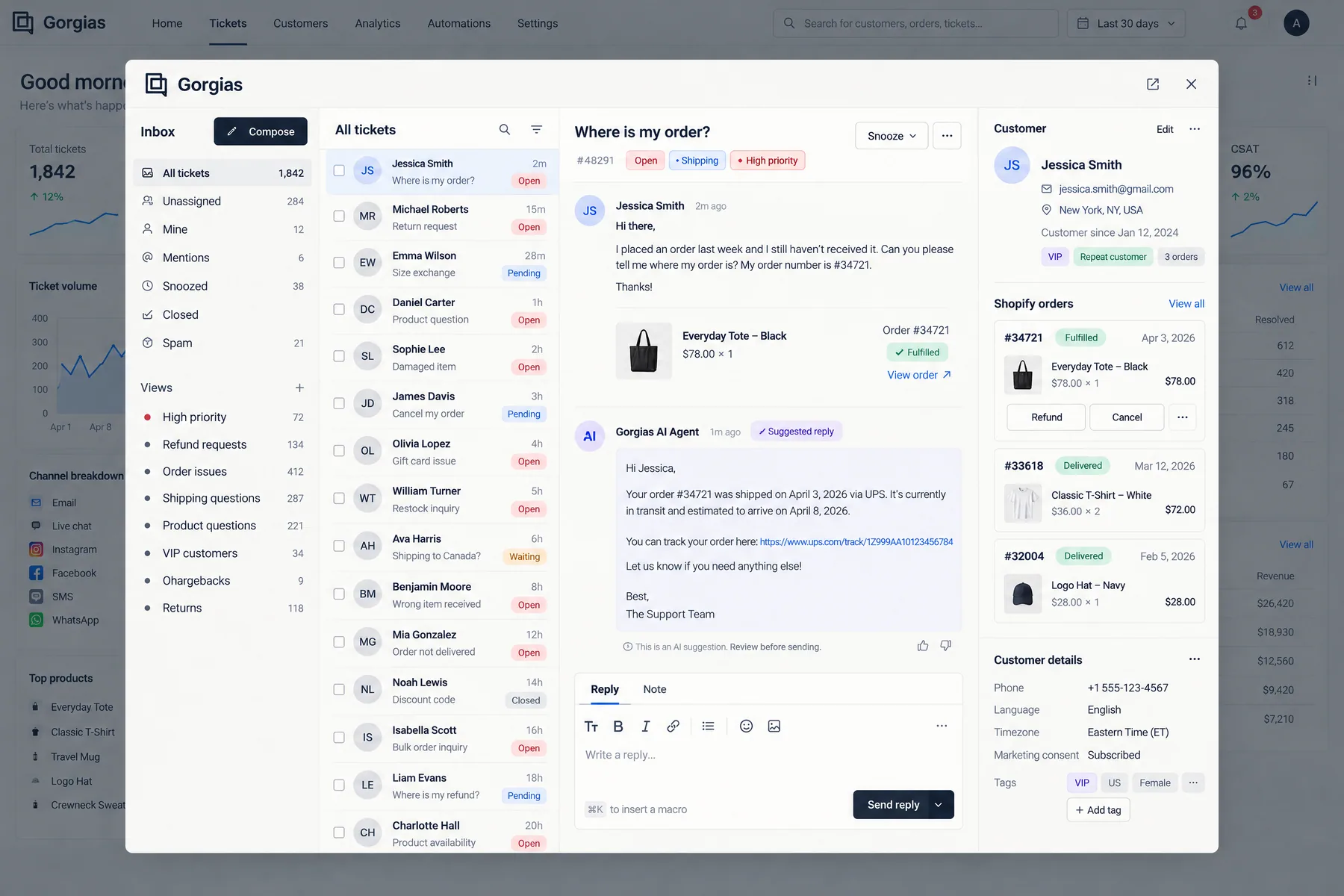
2Shopify Magic + Sidekick8.5/10Native AI copy, images and admin tasksIncluded with a Shopify plan
3Madgicx8.4/10Meta ads optimization and creative analyticsfrom ~$49/mo (spend-tiered)
4Triple Whale8.2/10Attribution and analytics with AI agentsFree tier; from ~$219/mo
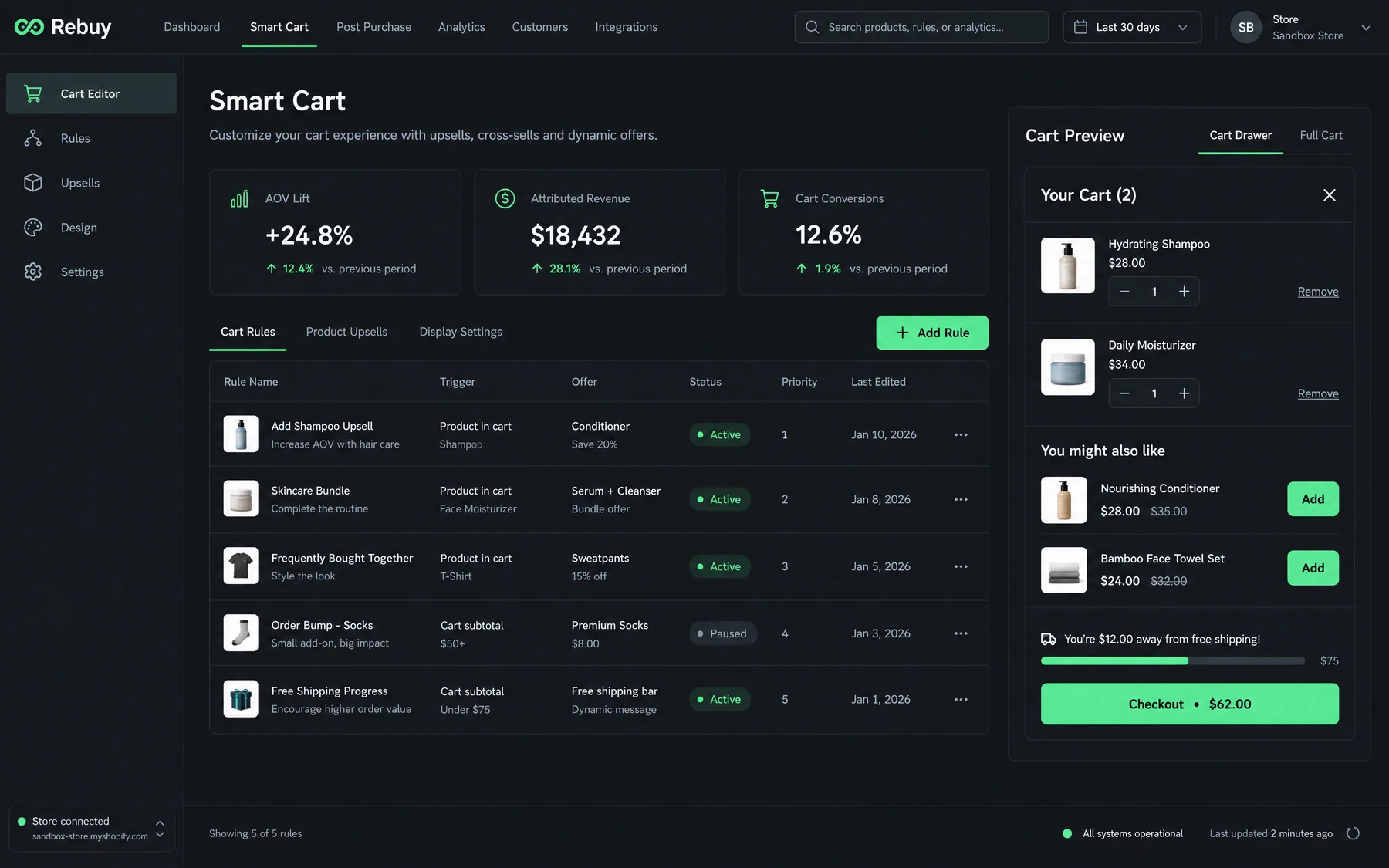
5Rebuy8.0/10AI merchandising and cart conversionfrom ~$25/mo

Ryze AI takes the top spot because it is the only tool here that runs two of the four jobs — paid ads and SEO — end to end for the store and reports on a third, AI visibility. Shopify’s own Magic and Sidekick are the best free starting point and now come with Campaign Autopilot for Meta. Madgicx is the deepest Meta workbench, Triple Whale the clearest view of what is actually working, and Rebuy the most reliable way to lift revenue per visitor without touching ads at all. None of the four below Ryze covers more than one job.

Get a free instant audit

Get a free, instant read on your paid ads or SEO — and fix it right away.

Paid ads audit

  • Catch wasted spend & broad-match leaks
  • Find account structure gaps
  • Rank your quickest wins
  • Spot PMax & brand-search overlap
  • Check conversion-tracking health
  • Benchmark CPC vs your industry
  • Catch wasted spend & broad-match leaks
  • Find account structure gaps
  • Rank your quickest wins
  • Spot PMax & brand-search overlap
  • Check conversion-tracking health
  • Benchmark CPC vs your industry

Free · no credit card · instant

SEO audit

  • Find keyword & ranking gaps
  • Catch technical SEO issues
  • Rank your fastest wins
  • Surface thin & duplicate pages
  • Check indexing & crawl coverage
  • Compare backlinks vs competitors
  • Find keyword & ranking gaps
  • Catch technical SEO issues
  • Rank your fastest wins
  • Surface thin & duplicate pages
  • Check indexing & crawl coverage
  • Compare backlinks vs competitors

Free · no credit card · instant

What counts as an AI marketing tool for Shopify in 2026 — and what we left out

The phrase covers too much. To make the comparison useful we limited it to tools that do marketing work for a store in one of four jobs, and we ignored the AI label entirely — a rules engine that ships a change beat a language model that writes a memo. Here is how the field was drawn.

Four jobs: ads, SEO, CRO and merchandising, AI visibility

Paid ads is where most stores spend the money and where automation has the fastest feedback loop. SEO is the slow compounding channel most stores under-invest in because the work is repetitive across a catalog. CRO and merchandising decide how much revenue each visitor produces once they arrive. AI visibility is the newest job: whether ChatGPT, Perplexity and Google’s AI answers mention your store when a shopper asks for a recommendation. A tool earned a place here by running at least one of these, and the ranking rewards tools that run more than one.

Native, app, or agent

Shopify’s own AI — Magic, Sidekick and now Campaign Autopilot — is native, free with a plan, and the right first stop. Apps in the App Store bolt one capability on and are usually priced by usage or spend. Agents are a newer category: software that connects to the store and the ad accounts, decides what to do next, does it, and measures the outcome. The three overlap less than the marketing suggests, and most stores end up with one from each layer.

Recommend or execute

The single biggest divider. A recommendation tool ends at a to-do list and a human bottleneck; an execution tool ends at a change in the ad account or on the site. Both are legitimate products, but they cost you very different amounts of time. Every tool card below says which side of the line it sits on, and the score weights execution most.

What is out of scope

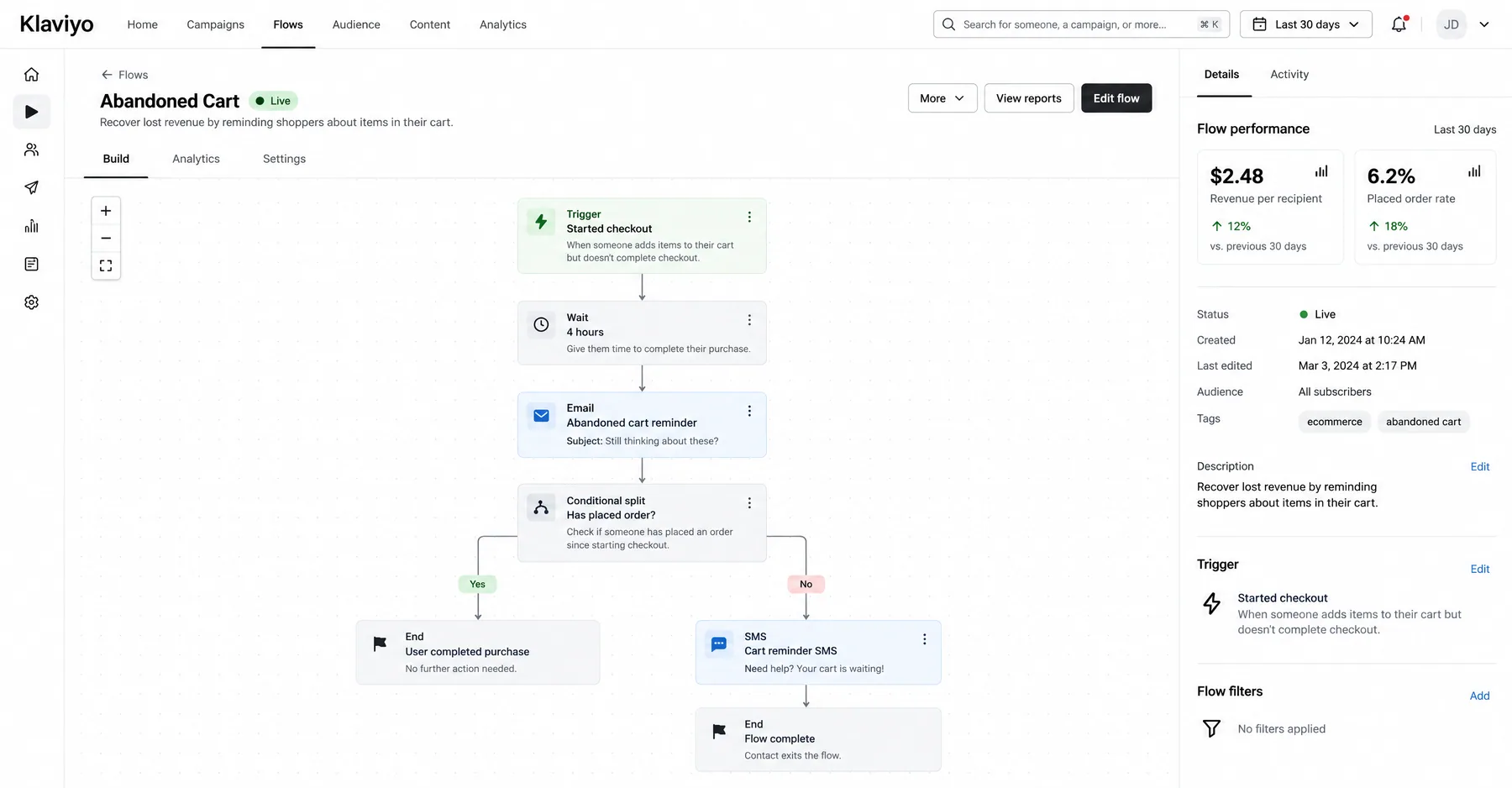
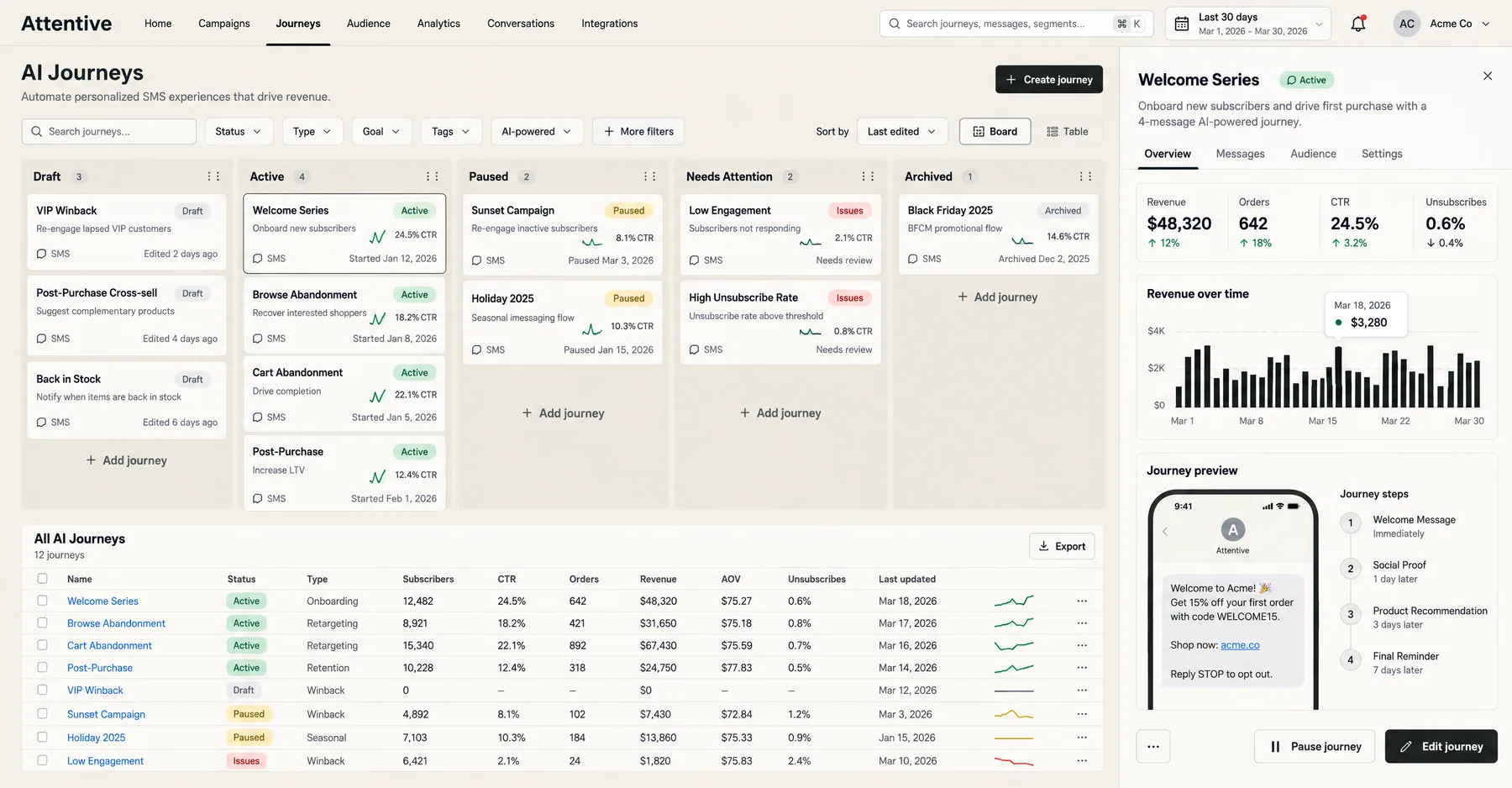
Retention and messaging tools — the Klaviyo category — are a separate discipline and are not covered here. Customer-service chatbots serve shoppers rather than marketing the store, so they are out too. Review apps, loyalty and subscriptions are conversion-adjacent but not marketing tools in the sense used here. If you want the four jobs above handled, the nine tools below are the field.

Ryze AI is built to run the work rather than describe it: it connects to the store and the ad accounts, decides the next change, ships it — a paused ad set, a rebuilt campaign, a rewritten collection page — and re-measures, while tracking whether ChatGPT and Perplexity cite the store. One test to take from this guide: for every tool you trial, count the changes that reached your ad account or your storefront in week one. If the number is zero, you bought a report.

The 9 best AI marketing tools for Shopify in 2026, ranked

Scores weight execution first, then how deeply the tool uses store data (inventory, margin, orders) rather than generic signals, then controls, then setup and cost. Prices are public list prices in August 2026; several of these price by ad spend or order volume, so check the vendor page against your numbers before you budget.

1

Ryze AI

Best overall — runs ads and SEO for the store and tracks AI visibility

9.4/10

★★★★★

Editorial score

Ryze AI is the only tool in this comparison that runs more than one of the four jobs end to end. Connect the store and the ad accounts, set scope and approvals, and it decides the next change — pausing an ad set, rebuilding a campaign around in-stock, margin-positive products, rewriting a collection title, adding internal links across the catalog — ships it, and re-measures. It also generates creative, keeps a competitor ad library, and reports whether ChatGPT and Perplexity mention the store when shoppers ask for recommendations. Used by 2,000+ marketers with more than $500M in ad spend under management. Plans start at $89/mo for paid ads and $129/mo for SEO Autopilot, with a 3-day trial for $1 and cancel anytime.

Jobs covered

Ads, SEO, AI visibility

Mode

Executes with approvals

Pricing

from ~$89/mo · 3-day trial for $1

Pros:

  • Runs Google, Meta and five more ad platforms plus on-page SEO in one loop
  • Ships the change and re-measures rather than recommending
  • Tracks whether ChatGPT and Perplexity cite the store
  • Connects to Shopify; approvals, scope and per-change log

Cons:

  • Less granular manual control than a point tool like Madgicx
  • Needs a baseline period before you widen its scope
  • Not a merchandising or attribution product — pair it with Rebuy or Triple Whale for those
2

Shopify Magic + Sidekick

Best free native layer — AI copy, images, admin tasks, and now a first Meta campaign

8.5/10

★★★★

Editorial score

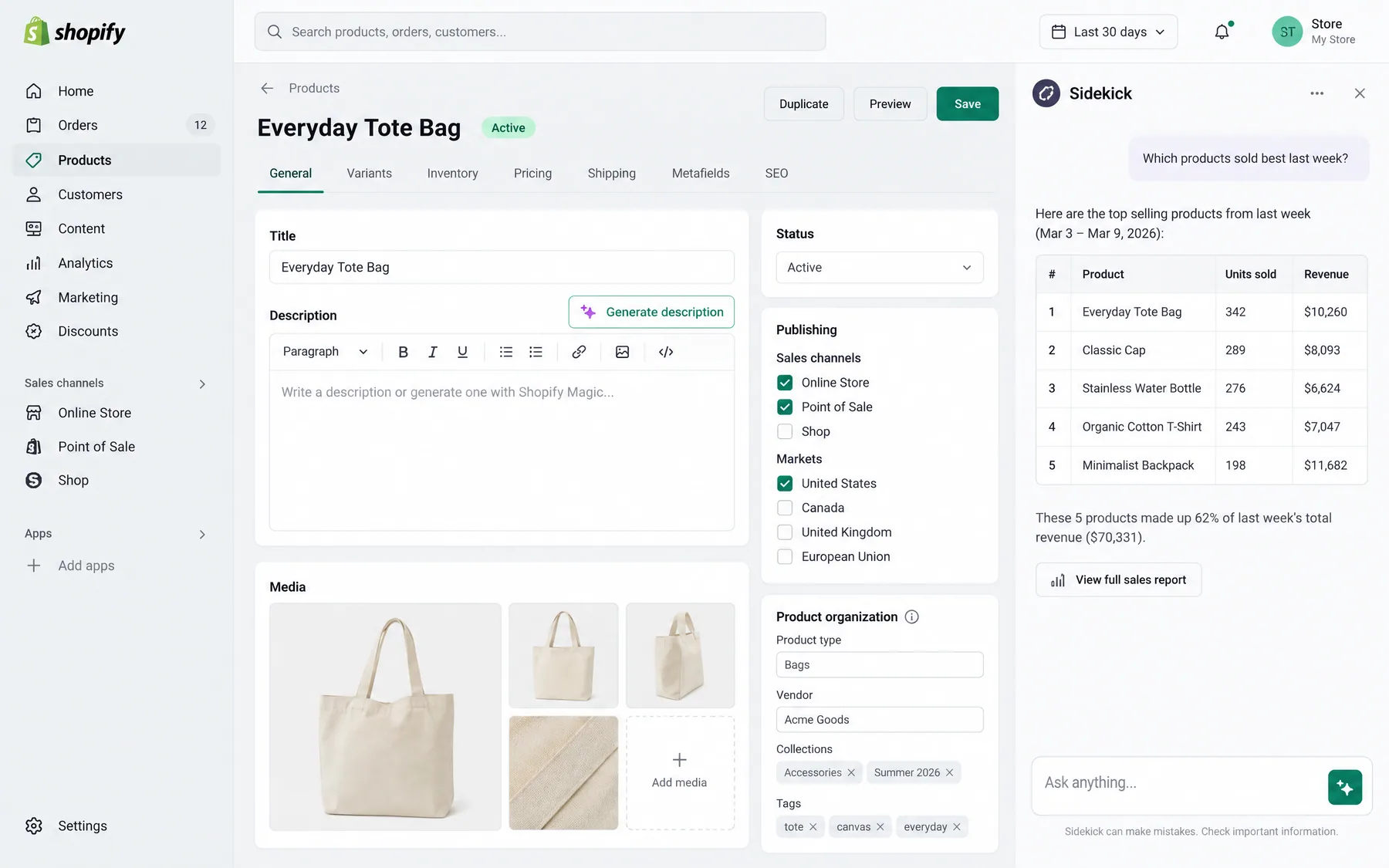
Start here whatever else you buy. Shopify Magic generates product descriptions, collection copy, blog drafts and image edits inside the admin; Sidekick answers questions about the store and carries out admin tasks in plain language — build a discount, create a segment, explain a dip. Since June 2026 Campaign Autopilot has added genuine execution: it plans and runs Meta Advantage+ and Shop campaigns within a budget you set, with Sidekick as the interface. It ranks second because the executing part is narrow — one ad channel, no Google, no SEO — and because Sidekick itself waits to be asked. As the free layer under an execution tool it has no competition.

Jobs covered

Copy and images, admin tasks, Meta + Shop ads via Campaign Autopilot

Mode

Assists on request; Autopilot executes

Pricing

Included with a Shopify plan

Pros:

  • Nothing to install; works inside the admin
  • Magic writes product, collection and blog copy and edits images
  • Sidekick answers store questions and performs admin tasks
  • Campaign Autopilot runs Meta Advantage+ and Shop campaigns inside a budget

Cons:

  • Sidekick acts only when asked; there is no ongoing loop
  • Autopilot covers Meta and Shop, not Google Search, Shopping or SEO
  • No competitor or AI-visibility view
3

Madgicx

Best for Meta ads optimization and creative analytics

8.4/10

★★★★

Editorial score

Madgicx is the workbench serious Meta buyers reach for: attribution and tracking, an autonomous budget optimizer, automation rules that act on the account, and analytics that show which hooks, formats and audiences are actually driving purchases. Its AI Marketer reviews the account and prepares ads, audiences and recommendations, then hands you a launch button. That is a very capable co-pilot rather than an autonomous operator, and it is Meta-only, which is why it sits third — but for a store where Meta is most of the spend, nothing else here goes as deep.

Jobs covered

Meta ads

Mode

Rules execute; AI Marketer proposes, you launch

Pricing

from ~$49/mo, tiered by ad spend · 7-day trial

Pros:

  • Deepest creative and audience analytics for Meta in this group
  • Autonomous budget optimizer and rules act on the account
  • Shopify app for revenue-side data; AI ad generator with one-click launch

Cons:

  • Meta-centric; Google and SEO are outside its loop
  • The AI Marketer still expects you to click launch on most of what it prepares
  • Price grows with spend; tracking is an add-on
4

Triple Whale

Best for attribution and analytics, with AI agents on the higher tier

8.2/10

★★★★

Editorial score

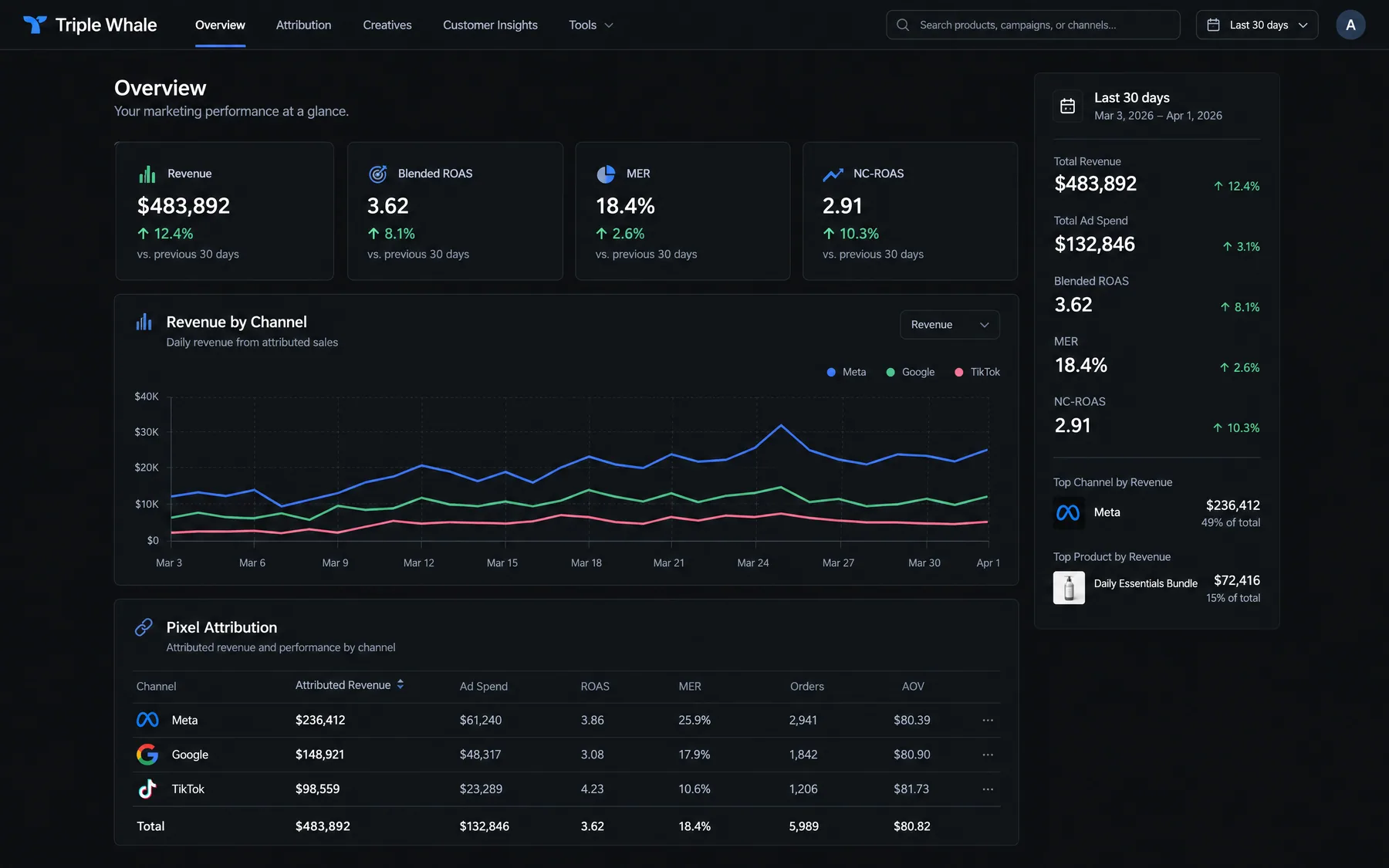
Triple Whale is the source of truth many stores run on: one dashboard for spend, revenue, contribution margin and attribution across Meta, Google and the rest, with the Shopify data underneath. Its Moby AI answers questions in plain language on every tier, and on the Automate tier its agents can act — pause a losing ad, scale a winner, sync an audience — inside guardrails. It ranks fourth because for most stores it is a measurement layer, and the execution that would move it up costs several times the entry price. As the independent yardstick you hold your execution tool to, it is the pick.

Jobs covered

Analytics and attribution across ads

Mode

Reports; Moby agents act on the Automate tier

Pricing

Free tier; from ~$219/mo, scales with GMV

Pros:

  • Single view of spend, revenue and attribution across channels
  • Free tier is genuinely usable for a small store
  • Moby AI agents can pause, scale and adjust within guardrails on the Automate tier

Cons:

  • Primarily a measurement product; execution is gated to the expensive tier
  • Price rises with GMV
  • Adds a script to the storefront — check speed
5

Rebuy

Best for AI merchandising and cart conversion

8.0/10

★★★★

Editorial score

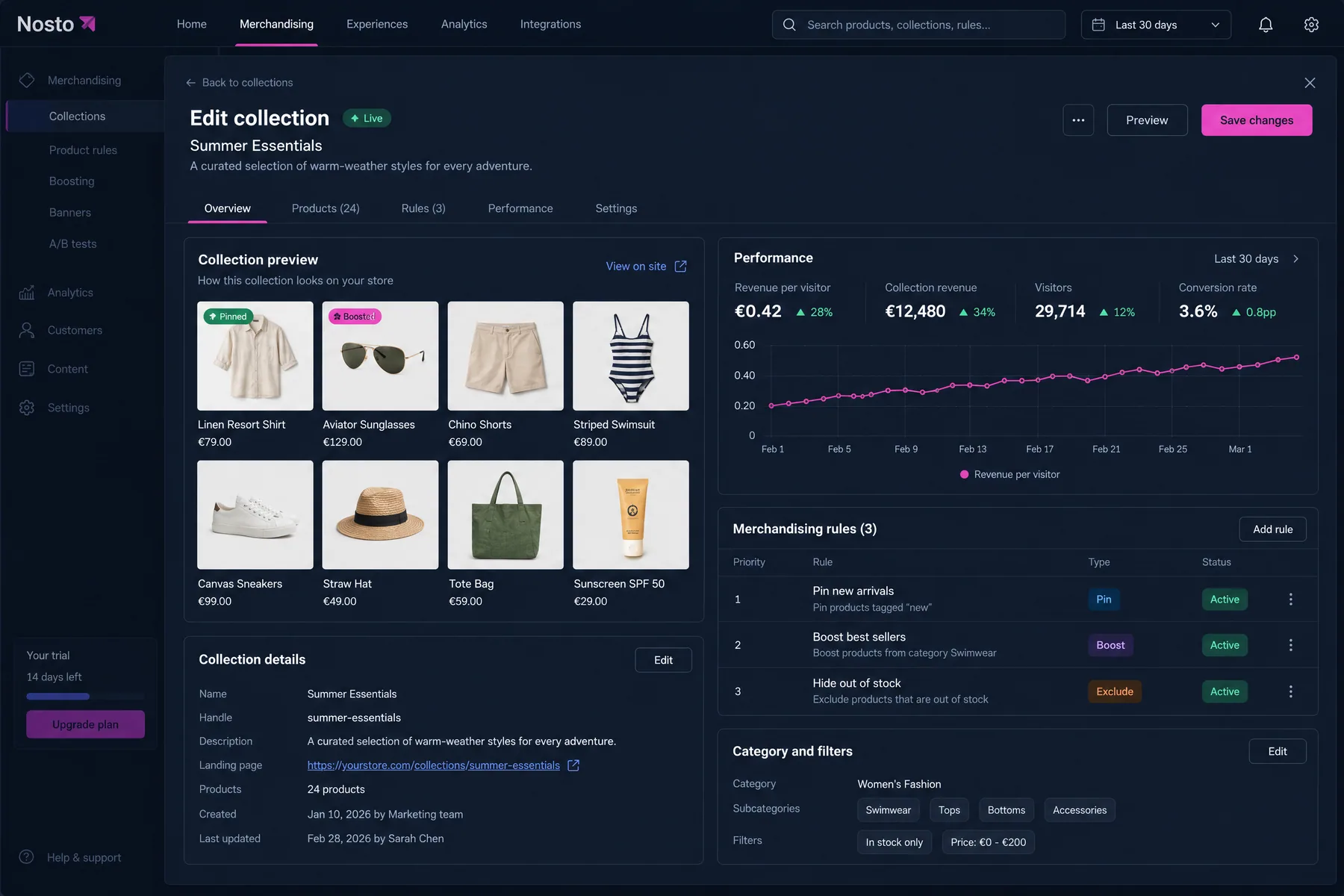
Rebuy is the tool that raises revenue per visitor once the ads and the search traffic have done their job. Product recommendations, a Smart Cart with upsells, bundles, checkout and post-purchase offers all run on Shopify data and adjust automatically inside rules you set, with A/B tests on the placements. It ranks fifth because it covers one job — a valuable one — and does nothing for how visitors arrive. Nosto is the quote-priced enterprise alternative when you need AI search and category merchandising across a large catalog.

Jobs covered

CRO and merchandising

Mode

Executes on-site within your rules

Pricing

from ~$25/mo, scales with orders · 14-day trial

Pros:

  • AI recommendations, Smart Cart, bundles and post-purchase offers that adapt live
  • Priced by orders, so a small store starts cheap
  • Built-in A/B testing on the widgets it places

Cons:

  • Does nothing for acquisition — ads and SEO are elsewhere
  • Widgets add front-end weight; test speed
  • Enterprise catalogs may want Nosto’s search and category merchandising

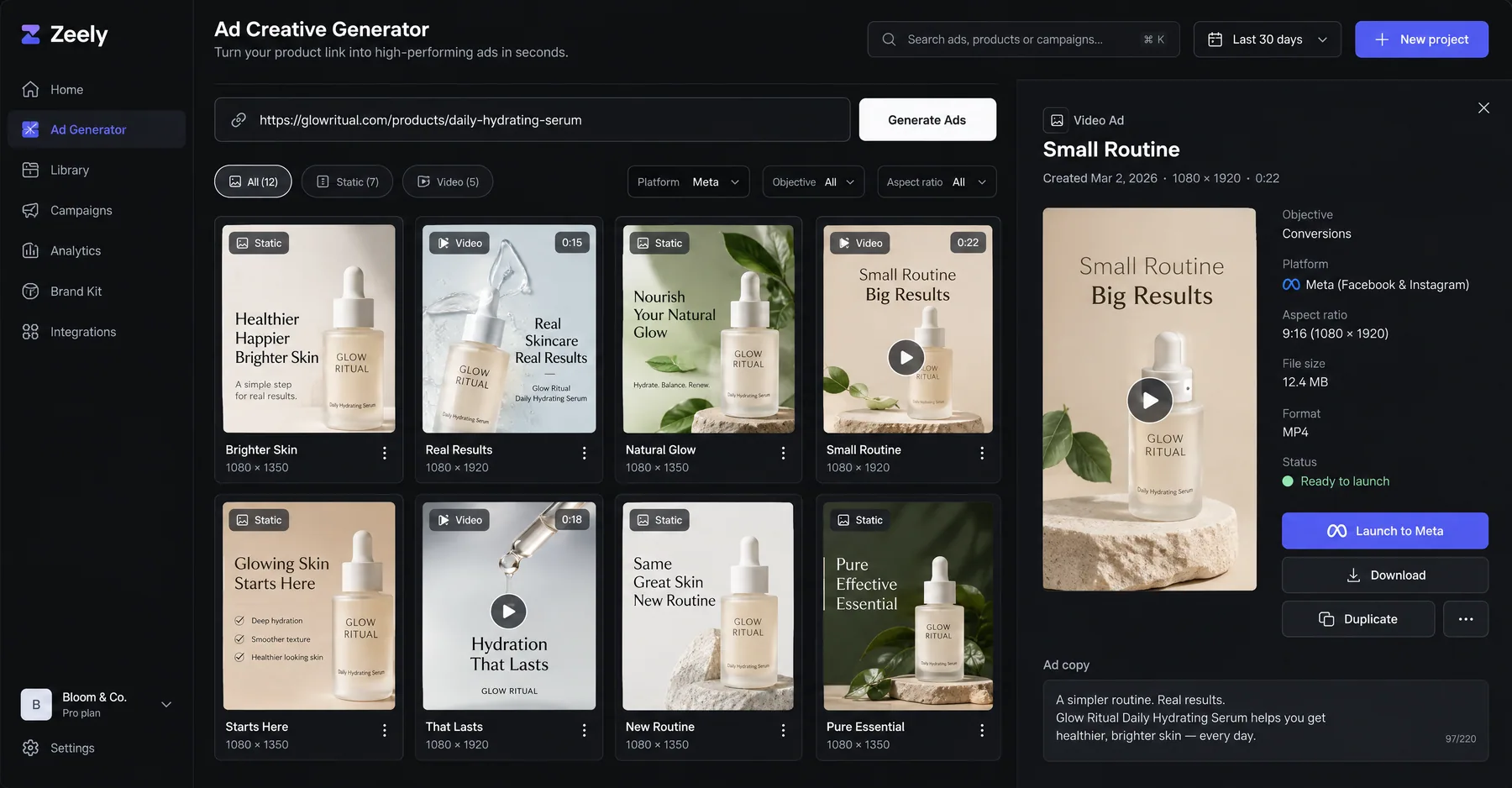
Ranks 6–9: AdScale (from ~$169/mo) builds and manages Google Search, Shopping and Meta campaigns from the catalog and is the strongest pure ads-automation app for owners who never want to open Ads Manager; Alli AI (from ~$249/mo) pushes on-page SEO changes live across a catalog without a developer but leaves the strategy to you; Glowtify (free tier, paid on request) turns store data into a weekly marketing plan and publishes the organic posts and blogs it drafts; and Zeely (from ~$30/mo) generates ad creative from a product link and bulk-launches it to Meta, which makes it a creative tool with a launch button rather than an optimizer.

Ryze AI — Autonomous Marketing

Put your Shopify marketing on autopilot with the #1 ranked tool

  • Runs Google, Meta + 5 more platforms for the store
  • Ships SEO fixes across the catalog
  • Reports your visibility inside ChatGPT and Perplexity
Start free trial

2,000+

Marketers

$500M+

Ad spend

23

Countries

How to evaluate an AI marketing tool before you install it on your store

The App Store review score tells you whether the app breaks themes, not whether it makes money. Four questions do a better job, and you can answer all of them from a trial and a fifteen-minute call with the vendor.

Does it read the store, or just the channel?

An ads tool that cannot see inventory will scale a campaign into a product that is about to sell out. An SEO tool that cannot see revenue by collection will spend its effort on the wrong pages. Ask which Shopify objects the tool reads — products, variants, inventory levels, orders, customers — and how often. Ryze AI, Triple Whale and Rebuy are built on store data; the ads-only tools mostly read the ad account and treat the store as a pixel.

Does it change anything on its own?

Ask for the log. Every tool that executes keeps a record of what it changed, when, and why; every tool that only recommends will show you a dashboard instead. Then ask what share of its recommendations a typical customer actually applies. If nobody has measured it, you are buying a to-do list, and the honest price of a to-do list is your time.

What are the controls?

For anything that writes to the ad account or the storefront: scope by campaign or page set, an approval queue you can turn on per action type, and a rollback you have personally tested on a real change. A tool that offers only an on/off switch for the whole store is fine for a new store and a liability for one with revenue to protect.

How does the price scale?

Three models exist. Flat monthly fees (Ryze AI, Alli AI) are predictable. Spend-tiered fees (Madgicx, AdScale, Zeely’s percentage on managed spend) grow with your ad budget, which is fine while ROAS holds and painful when it does not. Volume-tiered fees (Rebuy by orders, Triple Whale by GMV) grow with the store. None is wrong; the mistake is signing a spend-tiered contract in a growth month without modeling the fee at three times the spend.

What practitioners say on Reddit

What AI marketing tools still can’t do for a Shopify store

These tools are good at high-volume, measurable, reversible work — bids, budgets, rotations, titles, metas, recommendations, catalog-wide copy. They are poor at anything that depends on information the store does not contain, or on convincing another human. Buy them for the first kind of work and you will be pleased; expect the second and you will churn in a month.

  • Product and offer decisions — what to stock, how to price it, what the bundle should be. Every tool here optimizes toward the catalog and offer you gave it.
  • Concept-level creative — the tools generate, rotate and test variants well; the idea that makes a category ad memorable still comes from someone who knows the customer.
  • Brand voice and the things you will not say — regulated claims, tone limits, the products you keep for reputation rather than margin. These belong in scope and approval settings, which is why those settings matter.
  • Relationships — press, creators, wholesale buyers, marketplace managers. Software can draft outreach; it cannot make anyone care.
  • Knowing when the numbers are lying — a returns spike, a supplier delay, a competitor’s stockout. Feed the tools those facts; do not expect them to infer them from a dashboard.

The useful frame is that the tools remove labor from the loop, not judgment. You decide what the store stands for and where the boundaries are; the software handles the volume inside them. If the site itself is the weak link rather than traffic, start with our comparison of the best Shopify CRO apps.

How we compared these Shopify AI marketing tools

Each tool was assessed against the same standard: which of the four jobs it runs for a Shopify store, how much of that job it executes rather than recommends, and how safely. The method was a desk review of documentation, App Store listings and pricing pages, plus hands-on trials on a development store where a trial was available. Vendor claims were treated as claims until we could see the change land.

Method

  • Compared: Ryze AI, Shopify Magic + Sidekick (with Campaign Autopilot), Madgicx, Triple Whale, Rebuy, AdScale, Alli AI, Glowtify and Zeely; Nosto was reviewed as the enterprise alternative to Rebuy
  • Primary question: for each of ads, SEO, CRO/merchandising and AI visibility, does the tool execute the work or hand it to a human
  • Secondary questions: which Shopify objects it reads, what controls it offers, and how the price scales with spend, orders or catalog size
  • Sources: vendor documentation and pricing pages, Shopify App Store listings, product trials, and practitioner threads on Reddit for failure modes
  • Not counted: App Store star ratings, customer counts, or any vendor’s own case-study numbers

Scoring criteria

Execution (40%)

Does the change reach the ad account or the storefront without a person clicking apply, and across how many of the four jobs

Store-data depth (25%)

Whether decisions use inventory, margin, orders and collection performance rather than channel metrics alone

Controls (20%)

Scope, approval mode, per-change log with reasons, and a rollback we could trigger

Setup and cost model (15%)

Time from install to first useful action, and how predictably the price scales

Scores sit between 8.0 and 9.4 because every tool here does something real for a store. The gap at the top is structural: only one tool executes across two jobs and reports on a third. The 8.0–8.5 band is strong single-job software — the best free native layer, the deepest Meta workbench, the clearest analytics, the most dependable merchandising — with the rest of the marketing left to you.

Alex M.

Alex M.

VP Growth
Multi-Brand Ecommerce Group

★★★★★

We had five channels and five people each defending their own budget. Handing allocation to Ryze AI cut blended CAC 27% in a quarter — not because the bidding got smarter, but because money finally moved to whichever channel was winning that week.

27%

Blended CAC reduction

5

Channels automated

12 weeks

To full autonomy

1,000+ marketers use Ryze

State Farm
Luca Faloni
Pepperfry
Jenni AI
Slim Chickens
Superpower

Automating hundreds of agencies

Speedy
Human
Motif
Broadplace
Directly
Caleyx
G2★★★★★4.9/5
TrustpilotTrustpilot stars

How to choose AI marketing tools for your Shopify store

Store stage and who does the work decide this more than features do. A pre-revenue store should spend nothing beyond Shopify’s own AI; a store doing $80k a month with a founder running ads at midnight needs execution; a store with an agency needs analytics it can hold the agency to. Four situations, four different stacks.

Pre-launch and first-year stores

Recommended: Shopify Magic + Sidekick, Campaign Autopilot for the first Meta spend, and nothing else until there is a baseline.

The mistake here is buying execution before there is anything to optimize. Use the free native layer to write copy, set up the store and run a small first campaign, and add a paid tool once you have 60 days of data.

Founder-run stores, roughly $20k–$100k/month

Recommended: Ryze AI on the paid-ads plan, SEO added once ads are stable; Rebuy if average order value is the lever.

This is where the number of daily decisions outgrows one person. The win is coverage: every ad set and every collection page gets looked at, not just the ones someone remembered at 11pm.

Growing stores with a small team or an agency

Recommended: Ryze AI for the loop, Triple Whale for attribution the agency and the agent can both be judged against, Madgicx if Meta is most of the spend.

Add analytics before you add another execution tool. Two systems changing the same account without a shared source of truth is how attribution arguments start.

Larger and multi-store operators

Recommended: Ryze AI for execution with scope and approvals per store, Triple Whale or Nosto-tier merchandising where the catalog justifies custom pricing.

The risk shifts from missed opportunities to unbounded changes. Insist on per-store scope, approval per action type, and a rollback you have tested yourself.

Quick decision framework

  1. If you want ads and SEO run for the store, with AI visibility tracked → Ryze AI
  2. If you want free, native AI for copy, images, admin tasks and a first Meta campaign → Shopify Magic + Sidekick
  3. If Meta is most of your spend and you want creative analytics with it → Madgicx
  4. If your real problem is knowing what is working → Triple Whale
  5. If revenue per visitor is the lever → Rebuy (or Nosto at enterprise scale)

The pattern that works is one execution tool that owns most of the loop plus, at most, one specialist where it is thin — analytics or merchandising — on top of Shopify’s free layer. Four overlapping subscriptions produce reconciliation meetings, not revenue. For the SEO half in detail see our tested Shopify SEO apps, and for the conversion half the Shopify CRO apps compared.

How to build a Shopify AI marketing stack in one afternoon

You do not need a quarter to do this. A working stack — native layer, one execution tool, one measurement layer, guardrails — takes an afternoon if you do the steps in order and resist installing everything at once. Five steps, roughly four hours.

1. Turn on the native layer and take a baseline (30 minutes)

Open Sidekick and ask it for last quarter’s revenue by collection, top products by margin, and where sessions come from. Export 90 days of Search Console and ad-account data and store it somewhere that does not update. Everything you install next will be judged against this snapshot, so do not skip it.

2. Pick one execution tool for the job that costs you most time (45 minutes)

If you are running ads by hand, that is ads; if the catalog has 400 pages with the same generic titles, that is SEO. Connect Ryze AI to the store and the ad accounts, or the single-channel tool that fits, and let it read for a day before it writes anything. Resist connecting a second execution tool today.

3. Set scope and approvals before the first change ships (30 minutes)

Fence off checkout, the homepage, your best-selling product pages and your top revenue campaigns. Point the tool at the long tail — under-performing ad sets, collection pages on page two. Turn approval mode on for new campaigns, budget increases and copy changes; let low-risk actions ship on their own.

4. Add measurement you did not build yourself (45 minutes)

Install Triple Whale’s free tier or your preferred attribution layer, connect the same accounts, and confirm its numbers reconcile with Shopify’s within a tolerance you can live with. The point is a source of truth the execution tool does not control, so that in month two you can say whether it helped.

5. Book the weekly review and decide the widen gate (15 minutes)

Thirty minutes, same day each week: read the change log end to end, compare against the baseline, test one rollback in week one. Write down the gate for widening scope — usually two clean weeks and a measurable lift — so the decision is made now, in a calm moment, not later under pressure.

Frequently asked questions

What is the best AI marketing tool for Shopify in 2026?

Ryze AI ranks first at 9.4/10 because it runs paid ads and SEO end to end for the store and tracks AI visibility, from about $89 per month. Shopify Magic + Sidekick follow at 8.5/10 as the free native layer, then Madgicx at 8.4/10 for Meta, Triple Whale at 8.2/10 for analytics and Rebuy at 8.0/10 for merchandising.

Does Shopify have its own AI marketing tools?

Yes. Shopify Magic generates product, collection and blog copy and edits images; Sidekick is an assistant inside the admin that answers store questions and performs tasks; and Campaign Autopilot, rolled out in June 2026, plans and runs Meta Advantage+ and Shop campaigns within a budget. All are included with a Shopify plan.

Can an AI tool really run Meta and Google ads for a Shopify store?

Yes, within limits. Ryze AI, AdScale and Shopify’s Campaign Autopilot create, pause, budget and rebuild campaigns through the platform APIs, and Madgicx applies rules and budget changes. Meta and Google still decide delivery inside their own systems; what the tools remove is the daily human management and the delay.

What is the difference between an AI marketing app and an AI marketing agent?

An app adds one capability — copy, a dashboard, a widget — and usually recommends. An agent connects to the store and the ad accounts, decides the next action, executes it and measures the result on an ongoing loop. Ryze AI is an agent in that sense; most App Store tools are apps.

How much do AI marketing tools for Shopify cost?

Shopify Magic, Sidekick and Campaign Autopilot are included with a plan. Rebuy starts around $25 per month, Madgicx around $49 tiered by spend, Ryze AI at $89 for paid ads or $129 for SEO Autopilot, AdScale around $169, Triple Whale from about $219 after a free tier, and Alli AI around $249. Several scale with spend or orders.

Do I need Triple Whale if I use an AI tool that runs my ads?

Not on day one, but soon. An execution tool should be judged against numbers it does not control. Triple Whale’s free tier gives a small store an independent view of spend, revenue and attribution, which is what you need in month two to say whether the execution tool helped.

Which AI tool is best for Shopify SEO?

For hands-off execution, Ryze AI crawls the store, rewrites titles, meta descriptions and collection copy and re-measures. For bulk deployment of changes you have already decided, Alli AI pushes them live without a developer. Shopify Magic drafts the copy but you still paste it in.

Can AI tools improve my Shopify conversion rate?

Yes, through merchandising. Rebuy places AI recommendations, a Smart Cart, bundles and post-purchase offers that adapt to each visitor and A/B tests them; Nosto does the same at enterprise scale with AI search. These raise revenue per visitor and are separate from tools that bring visitors in.

What is AI visibility and why does it matter for a Shopify store?

AI visibility is whether ChatGPT, Perplexity and Google’s AI answers mention your store when a shopper asks for a recommendation. Shoppers increasingly start there instead of a search box. Ryze AI tracks it as part of its loop; most Shopify apps do not report on it at all.

Are AI marketing tools safe to connect to a live store?

They are safe when scoped. Fence off checkout, the homepage and best-selling product pages, start any executing tool on the long tail, keep approval mode on for new campaigns and copy changes, and test the rollback. The risk is unbounded write access with no log, not the presence of a model.

Should a new Shopify store buy AI marketing tools?

Not beyond Shopify’s free layer at first. Use Magic and Sidekick to set up and write copy, run a small first campaign through Campaign Autopilot, and collect 60 days of data. Execution tools need a baseline to be judged against, and a pre-revenue store has nothing to optimize yet.

Do these tools replace an agency?

They replace execution capacity, not judgment. Ryze AI absorbs the daily ad and SEO decisions agencies bill most hours for; Triple Whale gives you the numbers to hold anyone to. Positioning, offer design, concept-level creative and relationships stay with people, whether in-house or an agency.

How many AI marketing tools should a Shopify store run at once?

Usually three layers: Shopify’s free native AI, one execution tool that owns most of the loop, and one independent measurement layer. Add a specialist such as Rebuy only where the execution tool is thin. Four overlapping subscriptions changing the same account produce attribution arguments rather than revenue.

Related guides

Ryze AI — Autonomous Marketing

One AI marketer for ads, SEO and AI visibility on Shopify

  • Decides, ships the change, re-measures
  • Connects to Shopify in minutes
  • 3-day trial for $1, cancel anytime
Start free trial

2,000+

Marketers

$500M+

Ad spend

23

Countries

The #1 AI marketing tool for Shopify

9.4/10 · from $89/mo · $1 trial

Start free trial
Live results across
2,000+ clients

Paid Ads

Avg. client
ROAS
0x
Revenue
driven
$0M

SEO

Organic
visits driven
0M
Keywords
on page 1
48k+

Websites

Conversion
rate lift
+0%
Time
on site
+0%
Last updated: Aug 16, 2026
All systems ok
Ryze AI is a service operated by Meow AI, LLC. © 2026 Meow AI, LLC. All rights reserved.