
GOOGLE ADS
Complete Google Ads Management Guide — Strategy, Best Practices & AI Automation
Effective Google Ads management requires continuous optimization, monitoring, and strategic adjustments. This complete guide covers campaign setup, keyword research, bid management, conversion tracking, and how AI automation can transform your advertising performance while reducing management time by 90%.
Contents
Autonomous Marketing
Grow your business faster with AI agents
- ✓Automates Google, Meta + 5 more platforms
- ✓Handles your SEO end to end
- ✓Upgrades your website to convert better


What is Google Ads management?
Google Ads management is the strategic process of planning, executing, optimizing, and monitoring pay-per-click advertising campaigns on Google's advertising platform. Unlike simply setting up ads and leaving them to run, effective Google Ads management involves continuous data analysis, bid adjustments, keyword refinement, ad copy testing, and budget reallocation to maximize return on ad spend (ROAS) while minimizing wasted budget.
The Google Ads ecosystem processes over 8.5 billion searches daily, with advertisers spending an estimated $279 billion globally in 2025. However, studies show that 76% of businesses waste 25-40% of their ad spend due to poor campaign management. This happens because Google Ads operates as a real-time auction system where costs, competition, and user intent shift constantly throughout the day. Without active management, campaigns drift toward low-value clicks, keyword cannibalization inflates costs, and automated bidding algorithms optimize toward the wrong conversion signals.
Professional Google Ads management addresses these challenges through systematic account optimization. It involves keyword research and grouping, competitive analysis, ad copy creation and testing, landing page optimization, conversion tracking setup, bid strategy implementation, negative keyword management, and performance reporting. The goal is predictable, scalable performance where ad spend converts efficiently into measurable business outcomes like sales, leads, or brand awareness.
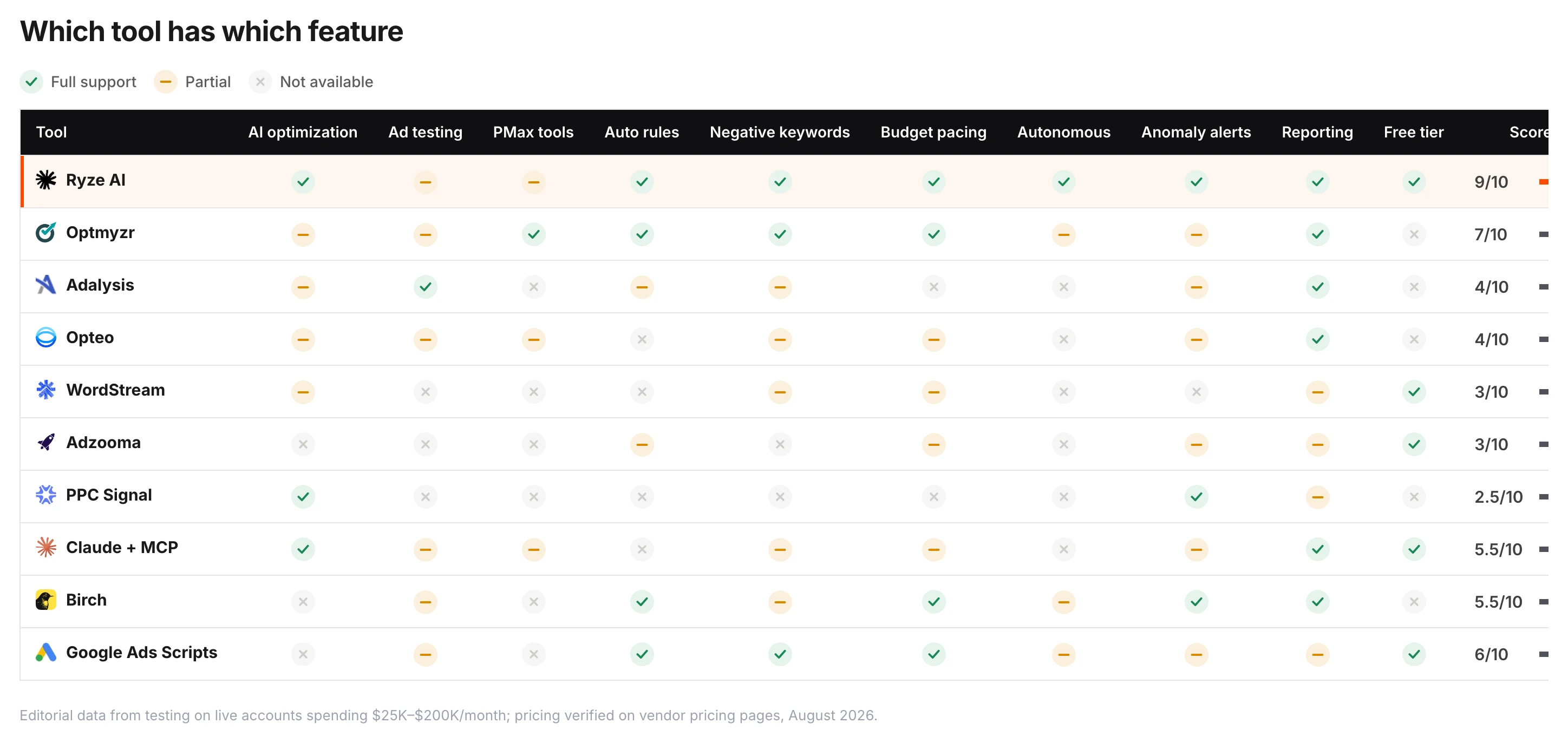
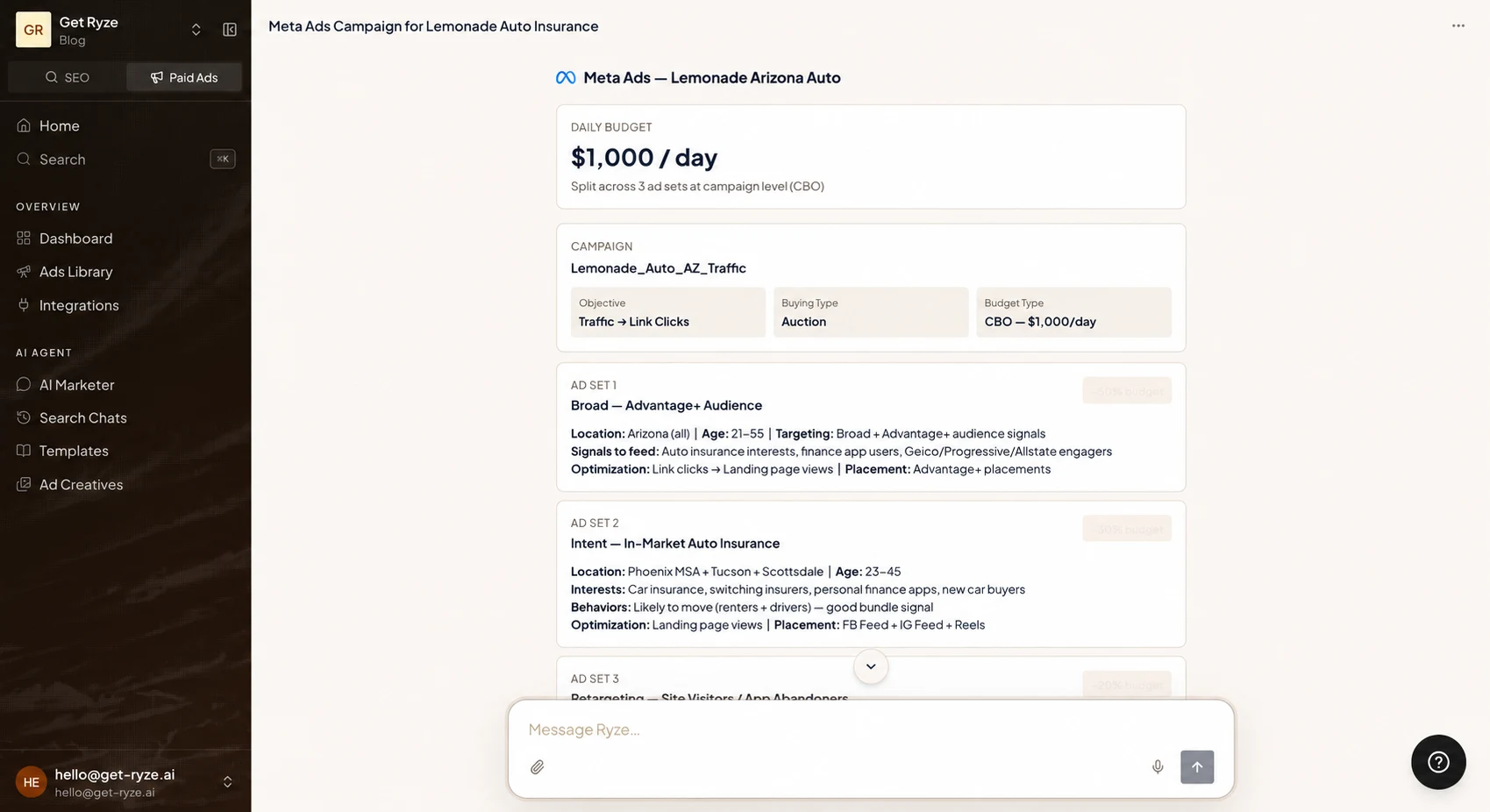
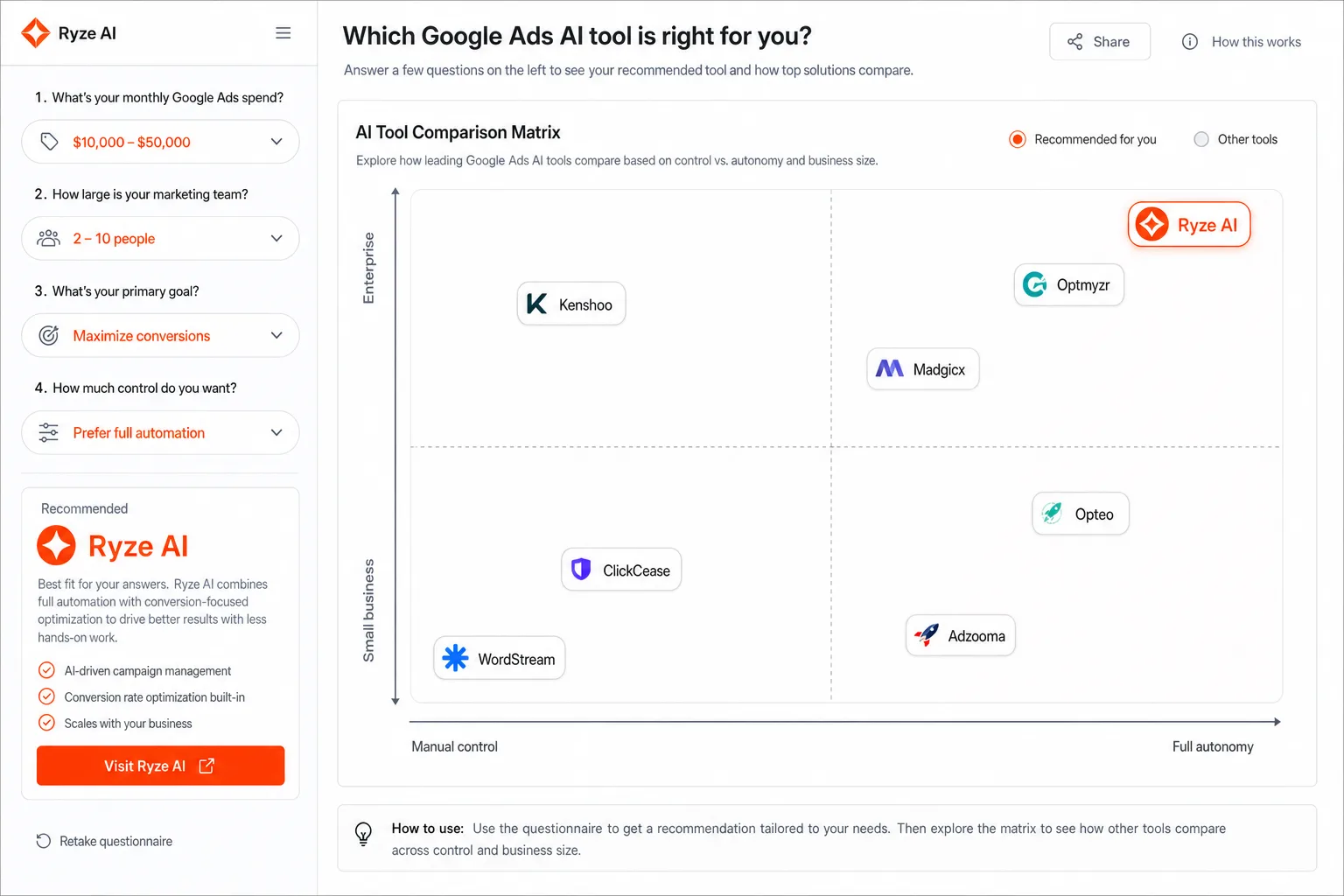
Modern Google Ads management increasingly leverages AI and automation tools to handle routine optimizations at scale. Platforms like Ryze AI can monitor campaigns 24/7, automatically adjust bids based on conversion probability, reallocate budget from underperforming ad groups, and flag anomalies before they impact performance. This evolution from manual management to AI-assisted optimization allows businesses to achieve better results while reducing the time investment required for campaign oversight.
1,000+ Marketers Use Ryze


Automating hundreds of agencies


★★★★★4.9/5
What are the main Google Ads campaign types and management strategies?
Google Ads offers seven primary campaign types, each requiring different management approaches and optimization strategies. The choice of campaign type directly impacts your management workload, with Search campaigns requiring the most hands-on keyword and bid management, while Performance Max campaigns rely heavily on automated optimization guided by conversion data and asset quality.
Search Campaigns
Search campaigns target users actively searching for specific keywords on Google. These require intensive management because keyword performance fluctuates based on search volume trends, competitor activity, and seasonal patterns. Effective management involves expanding high-performing keywords, adding negative keywords to prevent irrelevant clicks, adjusting bids based on device and location performance, and testing ad copy variations. Search campaigns typically see the highest click-through rates (2-5%) but require daily monitoring to maintain efficiency.
Display Campaigns
Display campaigns show banner ads across Google's Display Network of 2+ million websites. Management focuses on audience refinement rather than keyword optimization. Key tasks include analyzing placement reports to exclude low-quality websites, testing different creative formats and sizes, adjusting bids by audience segment, and implementing frequency capping to prevent ad fatigue. Display campaigns have lower CTRs (0.5-1%) but excel at brand awareness and retargeting.
Shopping Campaigns
Shopping campaigns promote e-commerce products through visual product listings. Management centers on product feed optimization and bid adjustments. Critical tasks include maintaining product data quality, organizing products into strategic ad groups, adjusting bids for high-value products or profitable categories, and monitoring search term reports to add negative keywords. Shopping campaigns often achieve higher conversion rates than Search due to qualified traffic seeing product images and prices upfront.
Performance Max Campaigns
Performance Max campaigns use machine learning to automatically optimize across all Google properties (Search, YouTube, Display, Discover, Gmail, Maps). Management shifts from manual bid and keyword control to conversion signal optimization and asset quality improvement. Key management tasks include providing high-quality creative assets, setting precise conversion tracking, defining clear audience signals, and monitoring asset-level performance reports. These campaigns require less daily oversight but demand strong initial setup and conversion data to perform well.
| Campaign Type | Management Intensity | Primary Focus | Avg CTR |
|---|---|---|---|
| Search | High (daily) | Keywords & bids | 2-5% |
| Display | Medium (weekly) | Audiences & placements | 0.5-1% |
| Shopping | Medium (weekly) | Product feed & bids | 1-3% |
| Performance Max | Low (monthly) | Assets & conversion signals | Varies widely |
What is the complete 8-step Google Ads optimization process?
Systematic Google Ads management follows a repeating optimization cycle that most successful advertisers execute weekly. This process transforms scattered campaign adjustments into predictable performance improvements. Each step builds on the previous one, creating compound optimization effects that drive consistent ROAS growth over time.
Step 01
Performance Data Analysis
Start with account-level metrics: total spend, conversions, cost-per-conversion, and ROAS over the past 7 days compared to the previous period. Identify campaigns that exceeded or fell short of target performance. Look for significant changes in impression share, average position, or quality scores that signal competitive shifts or account issues. This overview guides where to focus optimization efforts.
Step 02
Search Terms Mining
Review search terms reports to find new keyword opportunities and wasteful spending. Add high-performing search terms as exact match keywords. Identify irrelevant queries generating clicks but no conversions, then add them as negative keywords. This process typically uncovers 10-20% budget waste that can be redirected to profitable keywords. Pay special attention to branded vs. non-branded term performance.
Step 03
Bid Optimization
Adjust keyword bids based on performance data and business priorities. Increase bids on keywords converting at target cost-per-acquisition or better. Decrease bids on keywords with high cost-per-conversion. Consider dayparting adjustments for keywords that perform differently by time of day. Review automated bidding strategy performance and make strategy changes if current approach isn't meeting goals.
Step 04
Ad Copy Testing
Test new ad variations focusing on headlines, descriptions, and calls-to-action. Use responsive search ads to test multiple headline and description combinations simultaneously. Pause underperforming ads that have sufficient data (typically 100+ impressions and 2+ weeks). Create new ads incorporating winning elements from top performers while testing different value propositions or promotional offers.
Step 05
Budget Reallocation
Shift budget from underperforming campaigns to high-performers. Look for campaigns hitting their daily budget caps while generating profitable conversions - these need budget increases. Reduce budgets for campaigns with high cost-per-conversion or low conversion volume. Consider seasonality and promotional periods when making budget adjustments. Document changes for future reference.
Step 06
Extension Optimization
Review and update ad extensions including sitelinks, callouts, structured snippets, and promotional extensions. Extensions can improve ad rank and click-through rates by 10-15%. Ensure sitelinks direct to relevant landing pages and callouts highlight current value propositions. Add location extensions for local businesses and call extensions for phone-driven conversions.
Step 07
Quality Score Improvement
Monitor quality scores and address low-scoring keywords that drive significant traffic. Improve ad relevance by creating more targeted ad groups with tightly themed keywords. Optimize landing page experience by ensuring fast load times, mobile responsiveness, and message match between ads and landing pages. Higher quality scores reduce cost-per-click and improve ad positions.
Step 08
Conversion Tracking Audit
Verify conversion tracking accuracy by comparing Google Ads conversion data with analytics platforms and actual business results. Check for duplicate conversions, missing conversion actions, or tracking that stopped working. Accurate conversion data is essential for automated bidding to function properly. Set up enhanced conversions or first-party data uploads for improved attribution in cookieless environments.
Ryze AI — Autonomous Marketing
Let AI handle your Google Ads optimization 24/7
- ✓Automates Google, Meta + 5 more platforms
- ✓Handles your SEO end to end
- ✓Upgrades your website to convert better
2,000+
Marketers
$500M+
Ad spend
23
Countries
How do you effectively monitor Google Ads performance?
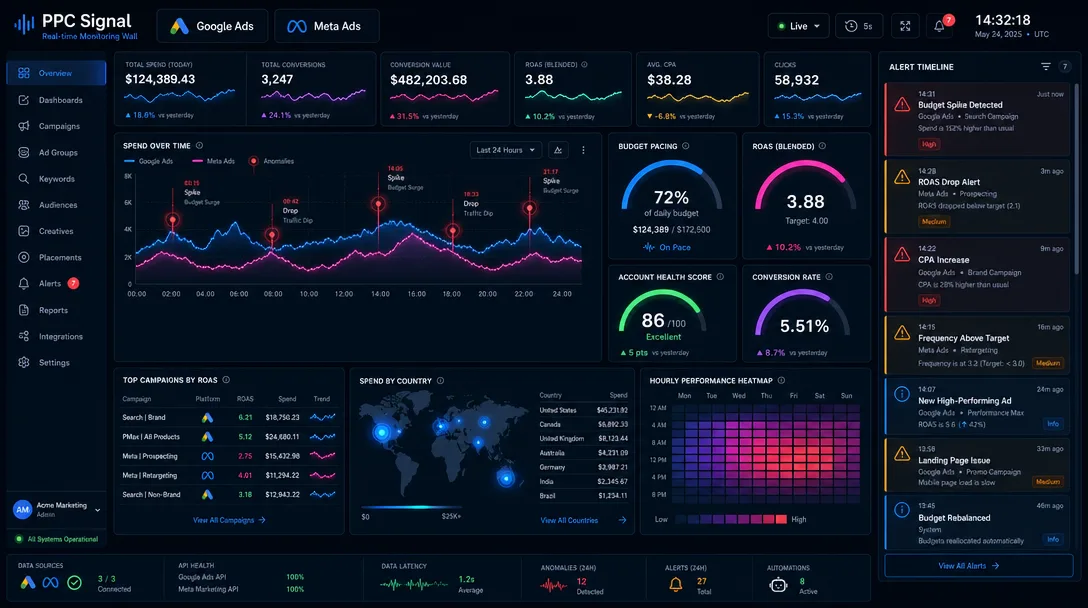
Effective performance monitoring in Google Ads management requires tracking the right metrics at the right frequency. Most advertisers make the mistake of checking too many vanity metrics daily while missing critical performance indicators that actually impact business outcomes. The key is establishing monitoring rhythms that match the statistical significance of your data and the decision-making needs of your business.
Daily monitoring should focus on spend pacing, impression share losses, and any dramatic changes in cost-per-click or conversion rates that might indicate technical issues or competitive disruptions. Track whether campaigns are hitting their daily budgets too early, which indicates missed opportunity, or spending too slowly, which might signal bid or targeting issues.
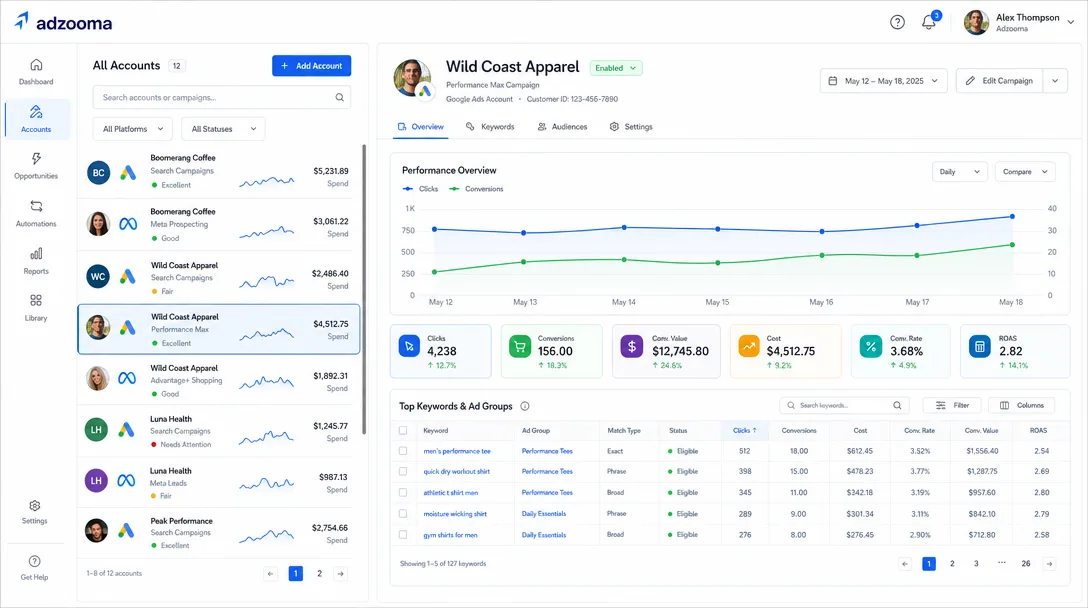
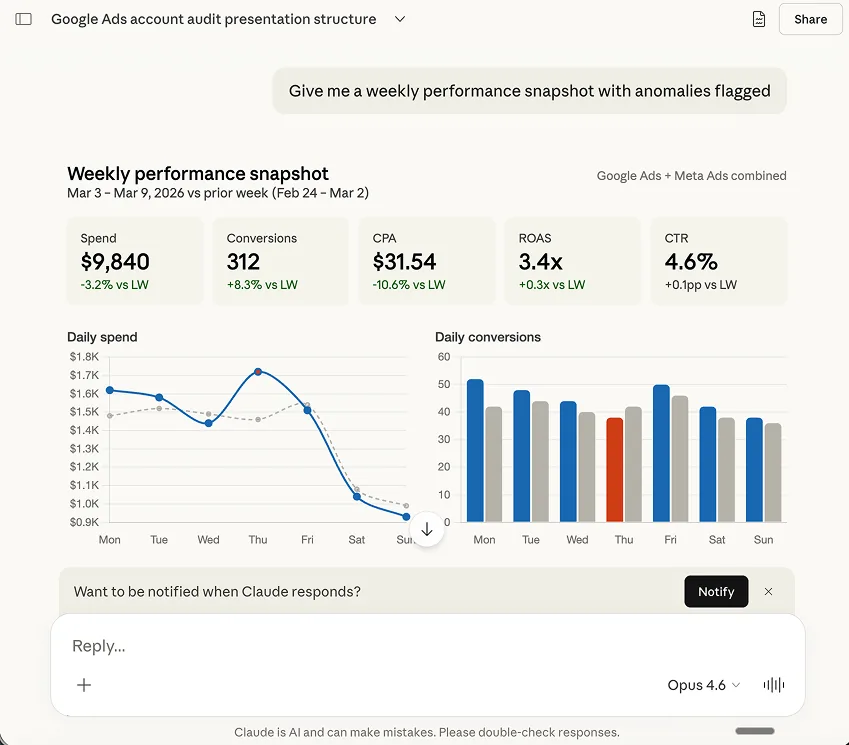
Weekly analysis provides the statistical power needed for meaningful optimization decisions. Focus on conversion volume, cost-per-conversion, and return on ad spend. Week-over-week comparisons remove daily fluctuations and seasonal biases. This is when you should make keyword bid adjustments, pause underperforming ads, and reallocate budgets between campaigns.
Monthly reviews examine structural account health: quality score trends, search impression share changes, competitive metrics, and attribution model performance. This is when you evaluate whether automated bidding strategies are working, assess new keyword opportunities from search terms reports, and plan larger strategic changes to campaign structure or targeting.
| Monitoring Frequency | Key Metrics | Actions to Take |
|---|---|---|
| Daily | Spend, impression share, CPC | Budget adjustments, issue alerts |
| Weekly | Conversions, CPA, ROAS | Bid changes, ad testing |
| Monthly | Quality score, search share | Strategy pivots, structure changes |
The most critical performance indicator for Google Ads management is incremental ROAS - the return generated from your ad spend compared to your baseline organic performance. Tools like Claude AI for Google Ads analysis can help automate this comparison and surface performance insights that would take hours to calculate manually. The goal is spending more on what's working and less on what isn't, guided by data rather than assumptions.
What are the most common Google Ads management mistakes?
After analyzing over 10,000 Google Ads accounts, we've identified the patterns that separate high-performing advertisers from those struggling with efficiency. These mistakes are responsible for 60-80% of wasted ad spend and can be avoided with proper management processes.
1. Inadequate Negative Keyword Management
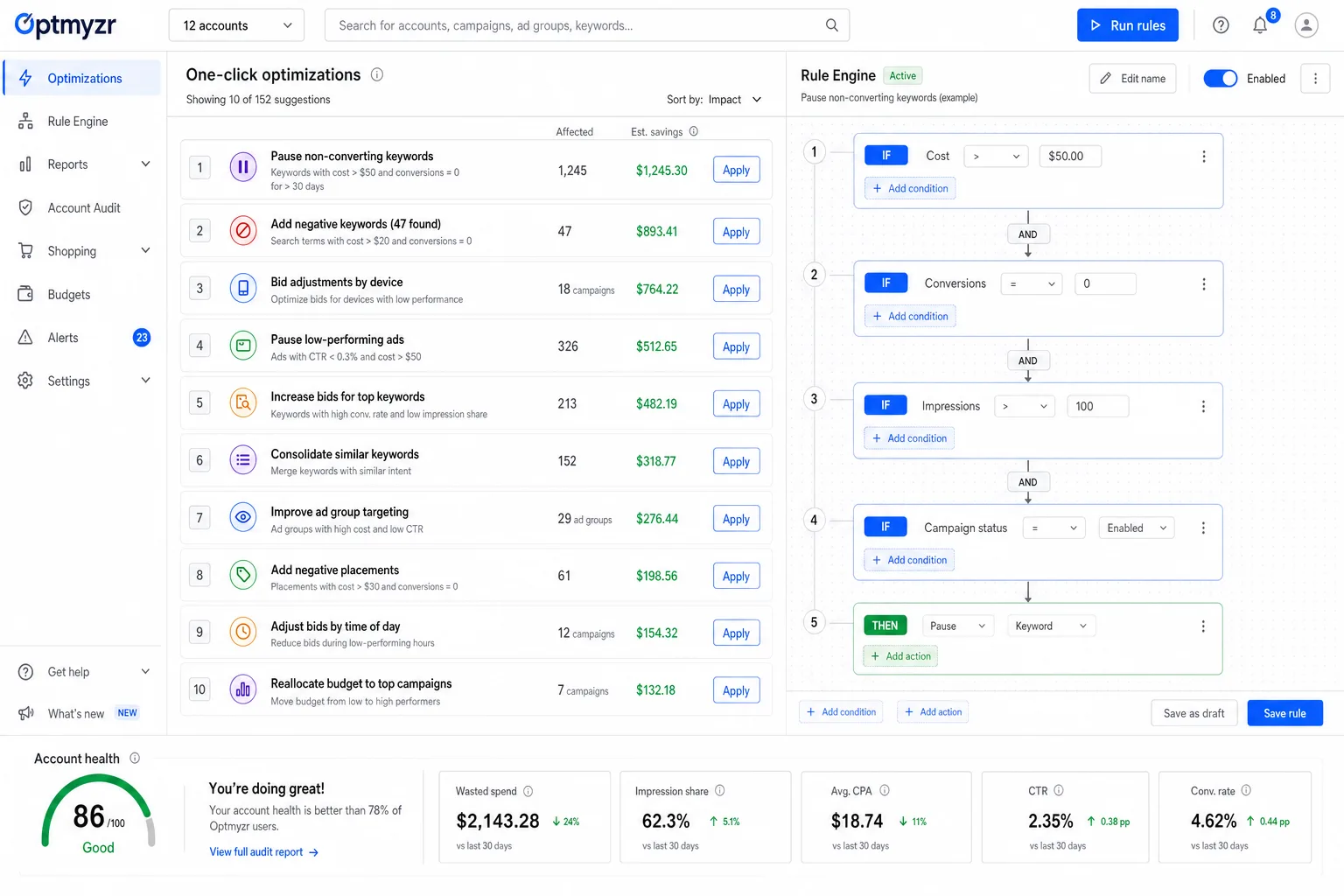
87% of accounts waste 15-25% of their budget on irrelevant search terms. Advertisers either don't review search terms reports regularly or fail to implement comprehensive negative keyword lists. The solution: weekly search terms audits and shared negative keyword lists across campaigns. Accounts with robust negative keyword strategies see 20-30% lower cost-per-conversion.
2. Poor Campaign Structure
Mixing broad keyword themes in single ad groups makes it impossible to write relevant ads or optimize bids effectively. Each ad group should contain 5-20 closely related keywords that can share the same ad copy. Proper structure improves quality scores by 15-40% and reduces management complexity significantly.
3. Ignoring Device and Location Performance
Default settings treat all devices and locations equally, but conversion rates typically vary by 50-200% across segments. Mobile traffic might convert at half the rate of desktop, or certain geographic regions might deliver 3x higher lifetime value. Regular bid adjustments by device and location can improve overall ROAS by 25-45%.
4. Premature Campaign Changes
Making optimization decisions without statistical significance leads to constant campaign instability. Most changes need 2-4 weeks and 100+ conversions to evaluate properly. Advertisers who change bids daily or pause ads after 3 days create volatility that prevents machine learning from optimizing effectively.
5. Conversion Tracking Errors
Inaccurate conversion tracking makes all other optimization efforts pointless. Common issues include duplicate conversions, tracking only last-click attribution, or missing offline conversions. Automated bidding strategies require clean conversion data to function properly - garbage in, garbage out. Monthly conversion audits are essential for account health.
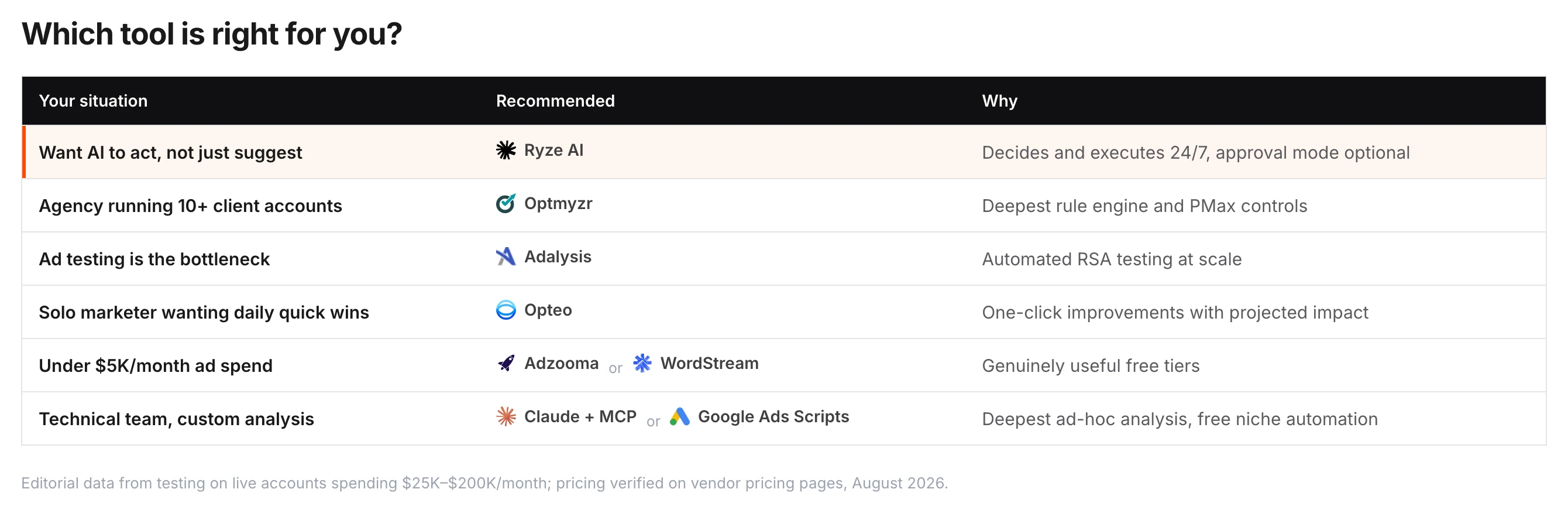
The root cause of these mistakes is usually insufficient time investment. Professional Google Ads management requires 5-15 hours per week depending on account size and complexity. Many business owners attempt to manage campaigns in 30-60 minutes weekly, which leads to reactive fixes rather than proactive optimization. For busy entrepreneurs, AI automation tools like modern Google Ads management platforms can handle routine optimization tasks while flagging issues that need human attention.

Sarah K.
Paid Media Manager
E-commerce Agency
We went from spending 10 hours a week on bid management to maybe 30 minutes reviewing Ryze’s recommendations. Our ROAS went from 2.4x to 4.1x in six weeks.”
4.1x
ROAS achieved
6 weeks
Time to result
95%
Less manual work
How does AI automation transform Google Ads management?
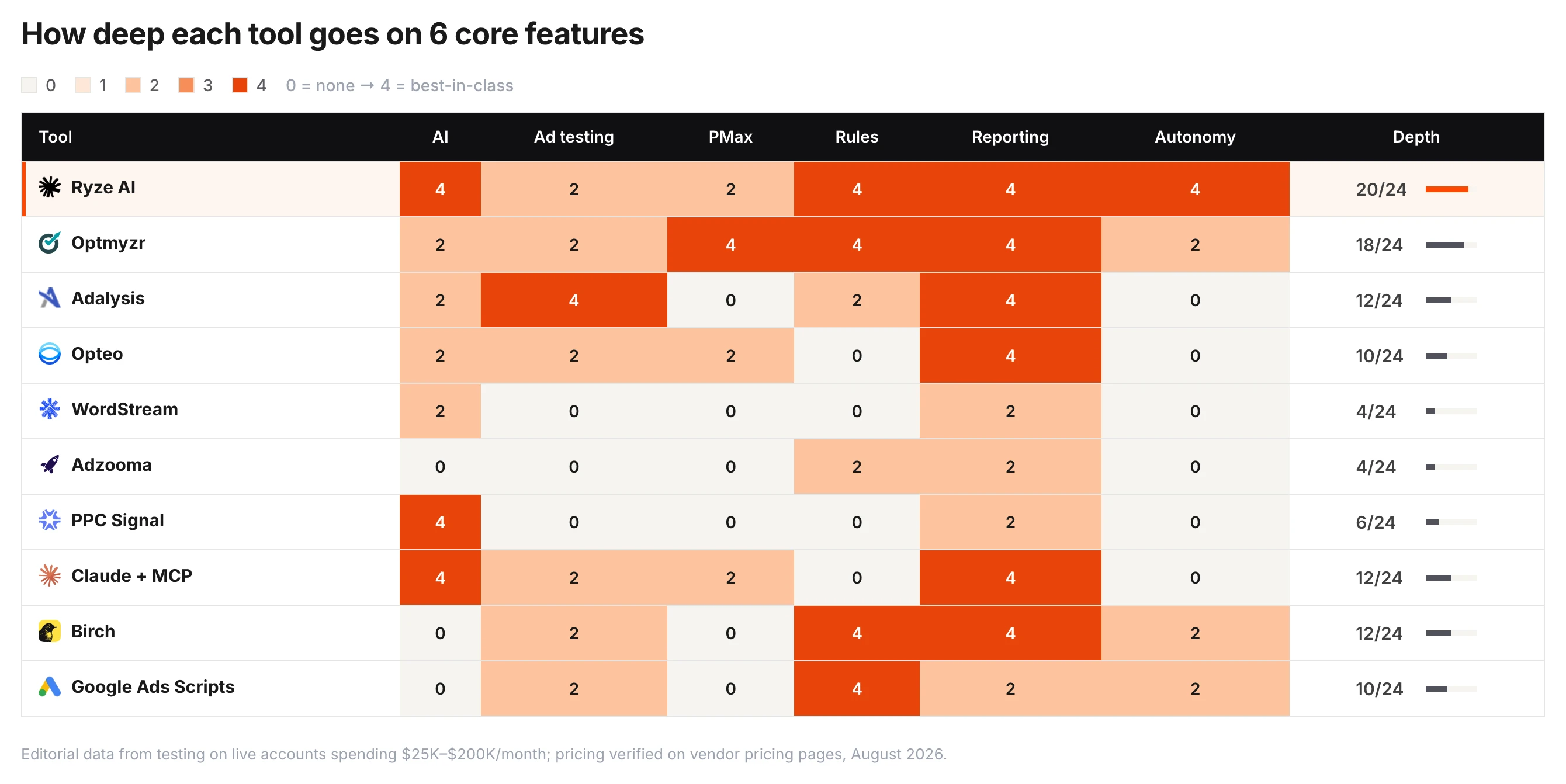
AI automation in Google Ads management addresses the fundamental challenge of scale: human managers can optimize maybe 50-100 keywords effectively, while AI systems can simultaneously optimize thousands of keywords, ad groups, and audiences in real-time. This isn't about replacing human strategy, but about executing optimization tasks that are too complex or time-intensive for manual management.
Modern AI automation platforms like Ryze AI monitor campaign performance every 15 minutes, detecting anomalies like sudden CPC spikes, conversion rate drops, or impression share losses that might take human managers days to notice. When issues are detected, the system can automatically adjust bids, pause underperforming keywords, or reallocate budget to high-performing campaigns within minutes rather than days.
The compound effect of continuous optimization creates significant performance improvements over time. While a human manager might review and optimize campaigns weekly, AI systems are making micro-adjustments constantly based on real-time performance signals. This leads to 35-50% better ROAS on average, with some accounts seeing improvements of 100-200% within their first quarter of AI management.
| Management Approach | Time Investment | Optimization Frequency | Typical ROAS Improvement |
|---|---|---|---|
| Manual Management | 10-15 hrs/week | Weekly | 10-20% |
| Google's Smart Bidding | 2-3 hrs/week | Real-time (limited scope) | 15-25% |
| AI Automation (Ryze) | 30 min/week | Every 15 minutes | 35-50% |
The key differentiator is that AI automation can process multiple data signals simultaneously that humans would struggle to correlate: weather patterns affecting seasonal products, competitor activity changes, search volume fluctuations, device performance shifts, and audience behavior changes. By combining these signals with historical performance data, AI systems make more informed optimization decisions than traditional rule-based automation or even Google's own Smart Bidding, which has limited access to your business context.
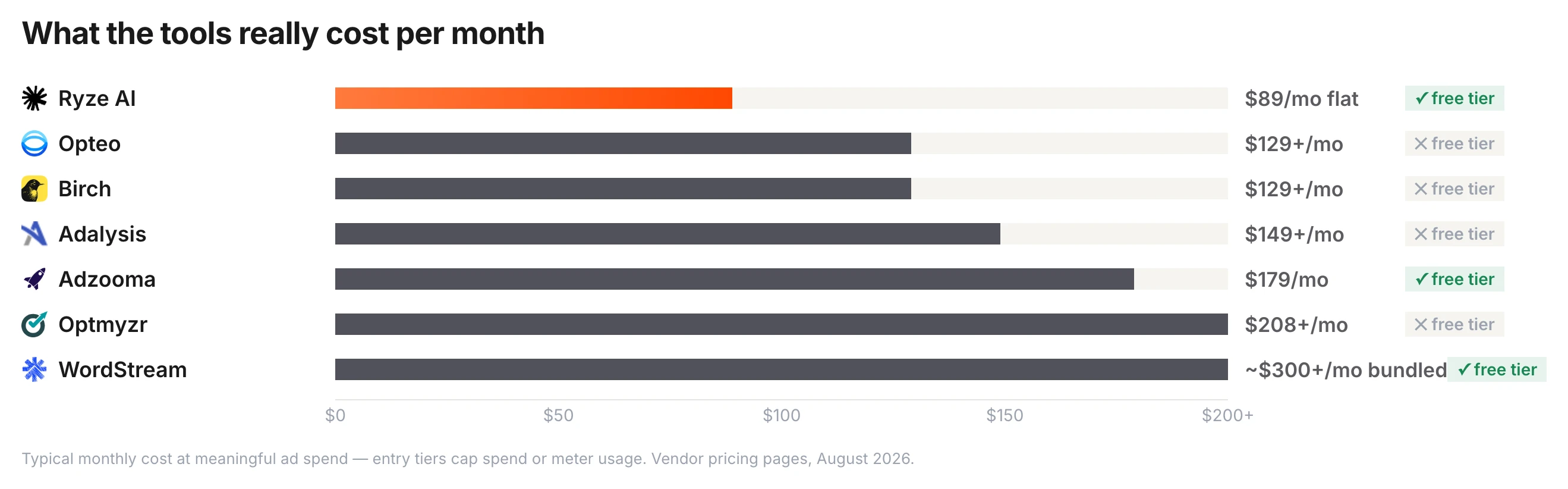
For businesses spending $50,000+ monthly on Google Ads, AI automation typically pays for itself within the first month through improved efficiency and reduced wasted spend. The time savings allow marketing teams to focus on higher-level strategy, creative development, and landing page optimization rather than getting bogged down in daily bid management and performance monitoring. To learn more about integrating AI tools into your workflow, see our guide on Claude skills for Google Ads optimization.
Frequently asked questions
Q: How much time does Google Ads management require?
Professional Google Ads management typically requires 5-15 hours per week depending on account size and complexity. This includes performance analysis, keyword research, bid optimization, ad testing, and reporting. AI automation can reduce this to 30-60 minutes weekly.
Q: What's the difference between management and optimization?
Management includes the full scope: strategy, setup, ongoing optimization, reporting, and account maintenance. Optimization specifically refers to improving performance through bid adjustments, keyword changes, ad testing, and budget reallocation based on performance data.
Q: Should I hire an agency or manage Google Ads in-house?
It depends on your budget and expertise. Agencies bring experience and dedicated time but cost $3,000-15,000 monthly. In-house management offers control but requires significant time investment. AI automation platforms like Ryze AI provide professional-level optimization at a fraction of agency costs.
Q: How often should Google Ads campaigns be optimized?
Daily monitoring for budget and major issues, weekly optimization for bids and keywords, monthly strategic reviews for structure and targeting. However, changes need statistical significance - typically 2-4 weeks and 100+ conversions before making major adjustments.
Q: Can Google Ads management be fully automated?
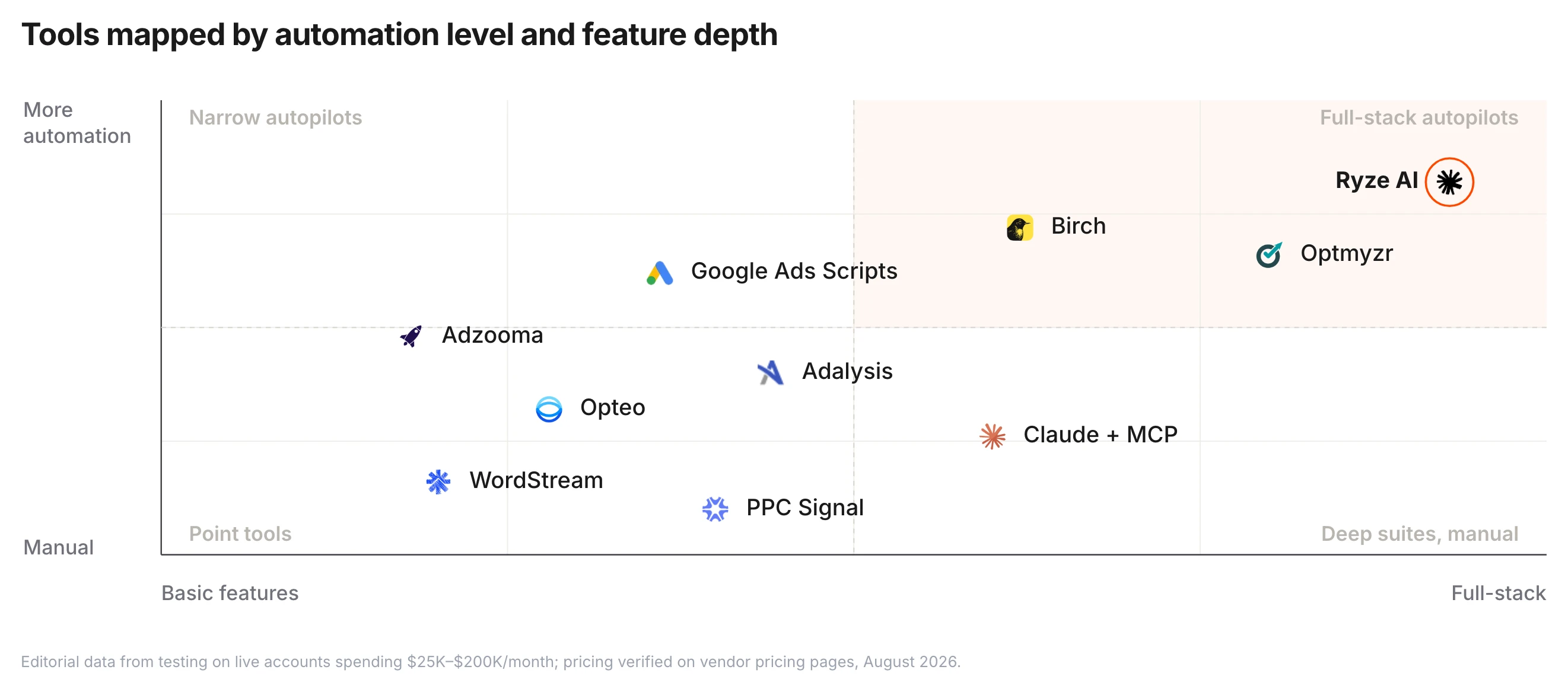
Most optimization tasks can be automated: bid adjustments, keyword management, budget allocation, and performance monitoring. However, strategic decisions like campaign structure, landing page optimization, and creative development still benefit from human oversight and business context.
Q: What ROI should I expect from professional Google Ads management?
Well-managed Google Ads typically achieve 3-5x ROAS for e-commerce and $3-10 revenue per $1 spent for lead generation. Professional management usually improves performance by 25-50% compared to unmanaged campaigns through better targeting, optimization, and waste reduction.
Ryze AI — Autonomous Marketing
Transform your Google Ads management with AI automation
- ✓Automates Google, Meta + 5 more platforms
- ✓Handles your SEO end to end
- ✓Upgrades your website to convert better
2,000+
Marketers
$500M+
Ad spend
23
Countries