Managing SEO & AI visibility with Claude.
Six steps, the exact prompts, and a 7-day sprint — how to get cited inside AI answers across ChatGPT, Claude, Perplexity, Gemini, and Google AI Overviews, using Claude chat, MCP, and Code.
Download the slidesBuilt by our community of 2,000 marketers
Free skills and prompts for paid ads and SEO
Templates for Claude, ChatGPT and Perplexity.
Clients we work withClients we
work with





Set it up once
Connect your data, then bring it into Claude
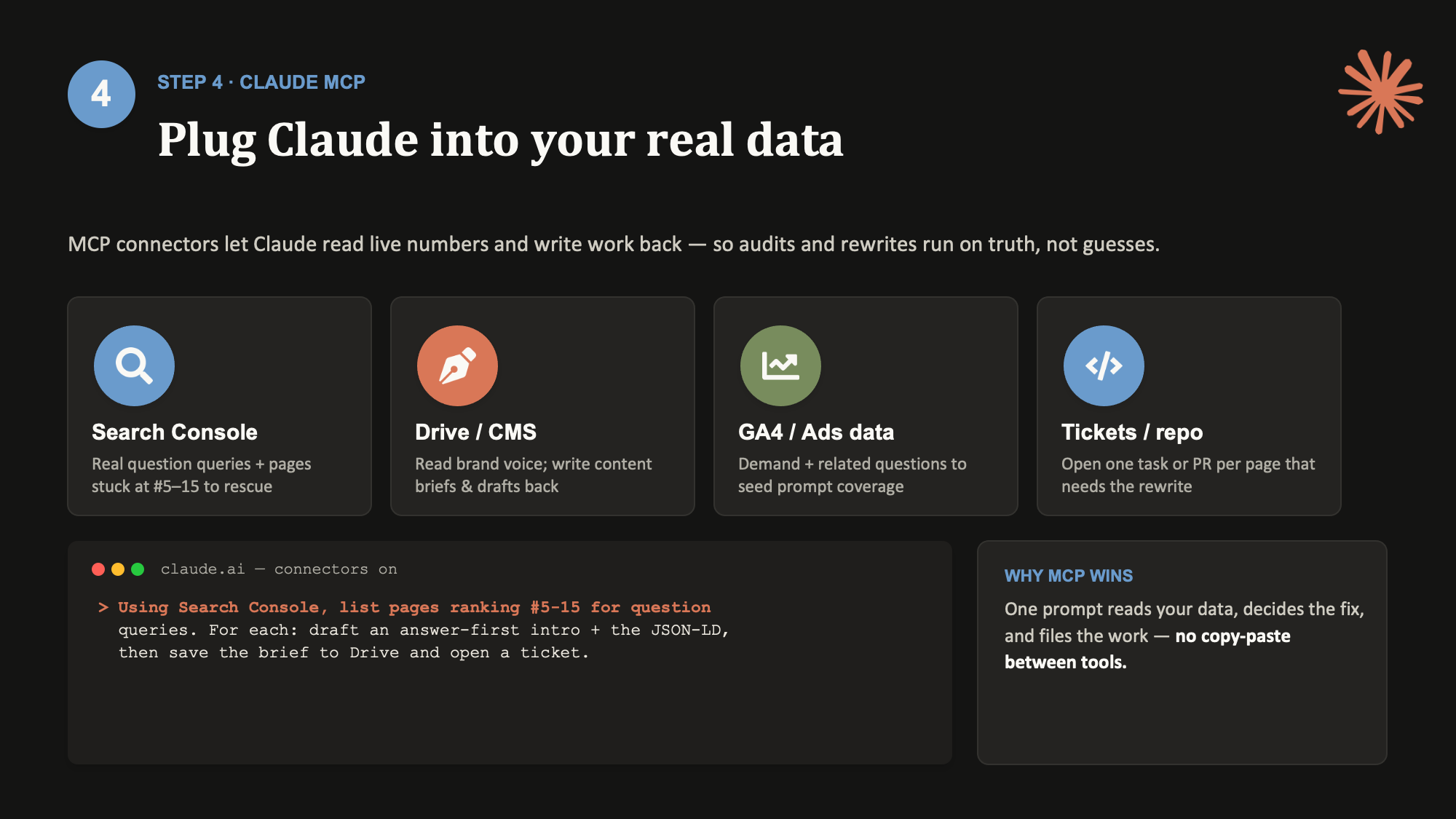
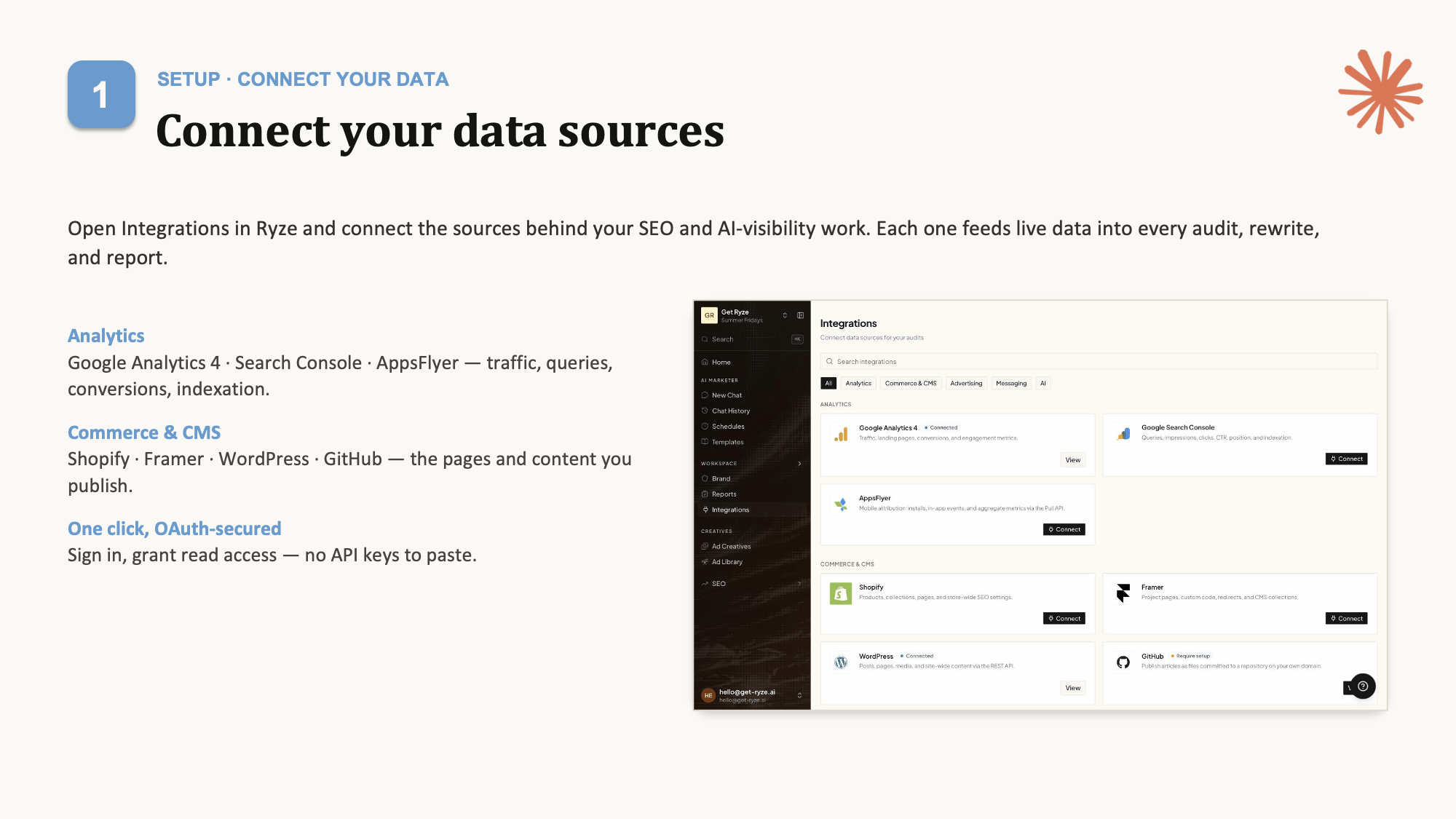
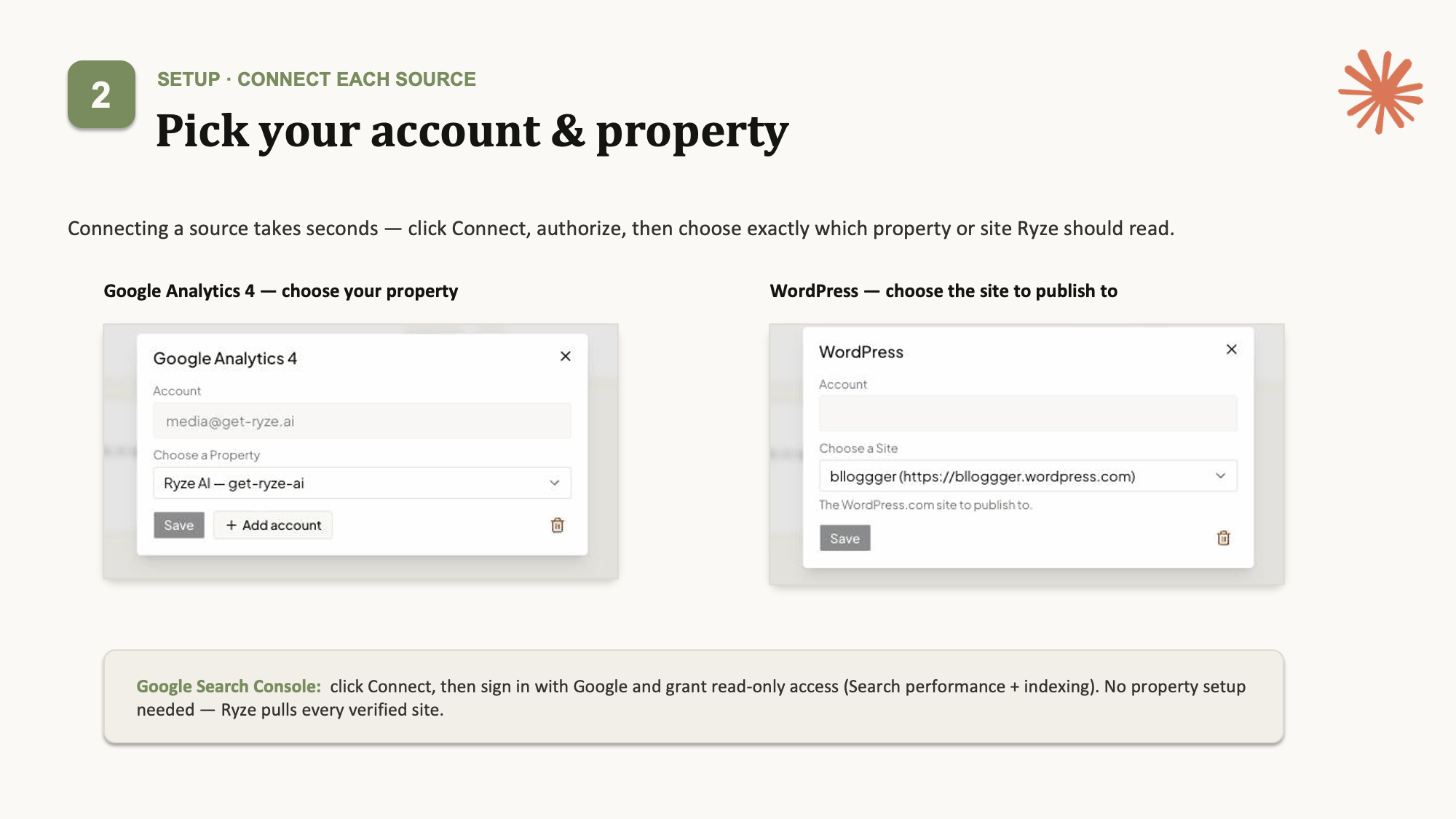
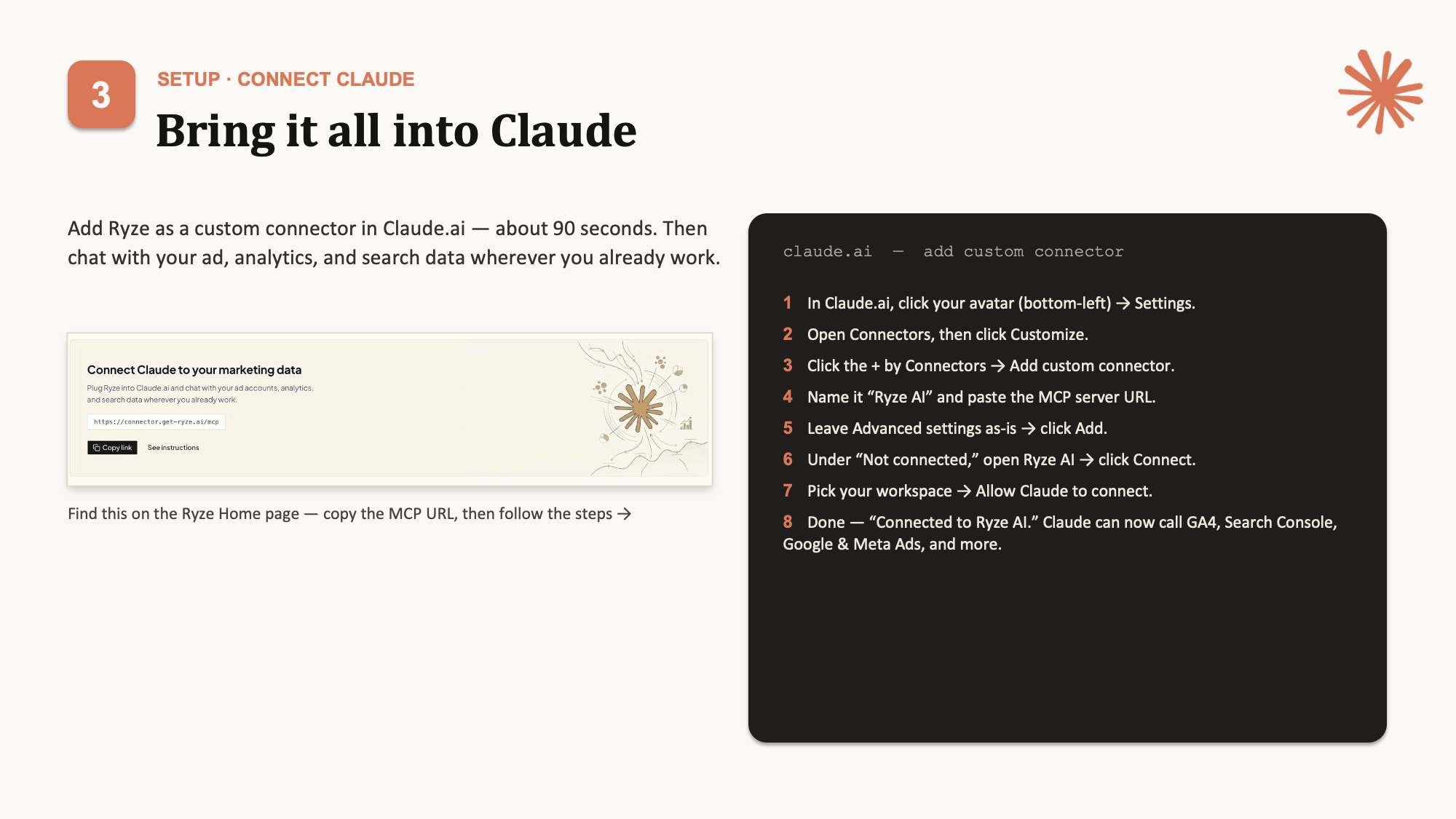
Everything below runs on your live numbers, not guesses. Connect Search Console, GA4, and your CMS to Ryze, then add Ryze to Claude as a custom connector. Read it slide by slide below, or download the full deck →
Why this is different from SEO
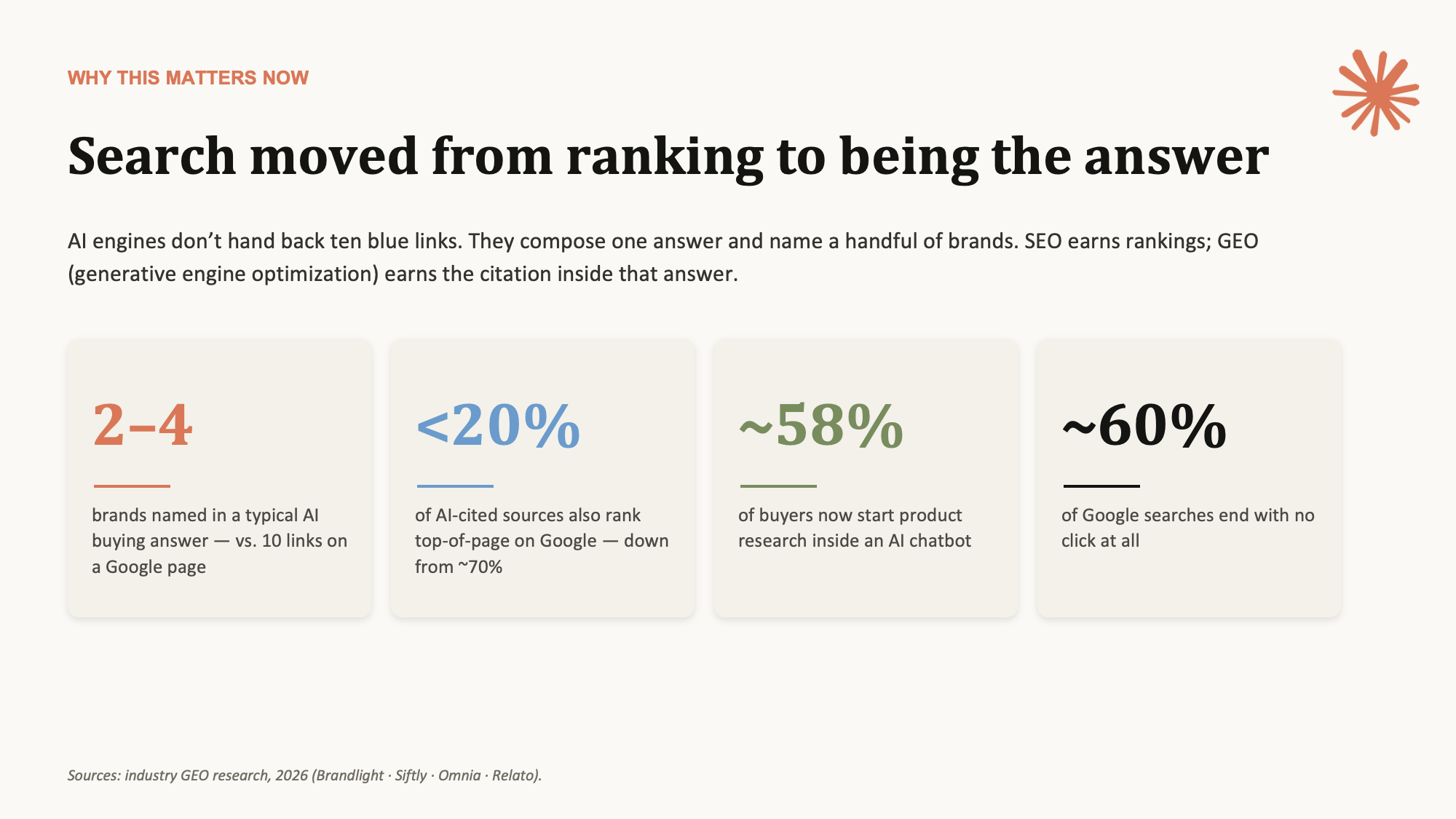
You're optimizing to be the answer, not the ranking
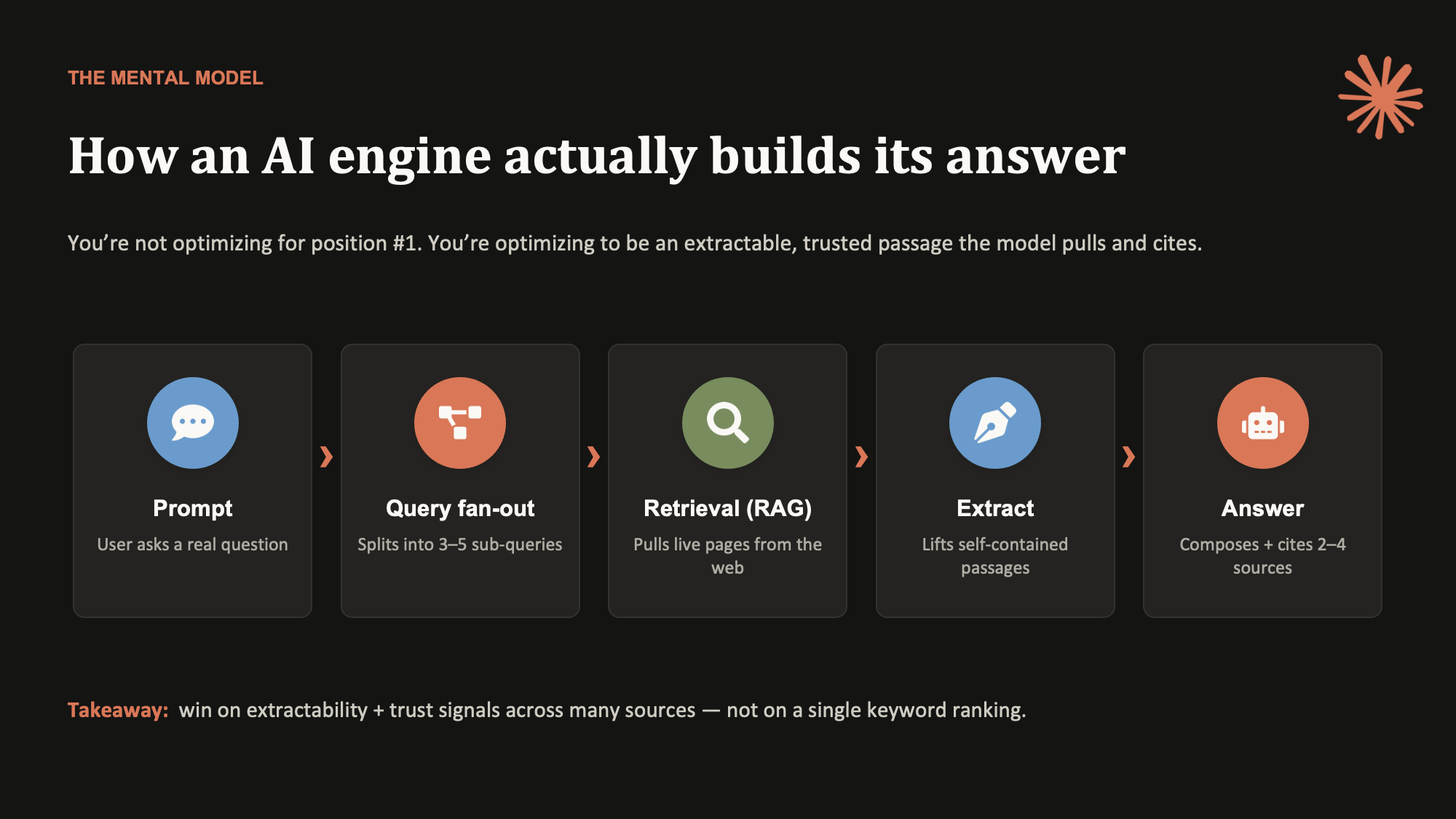
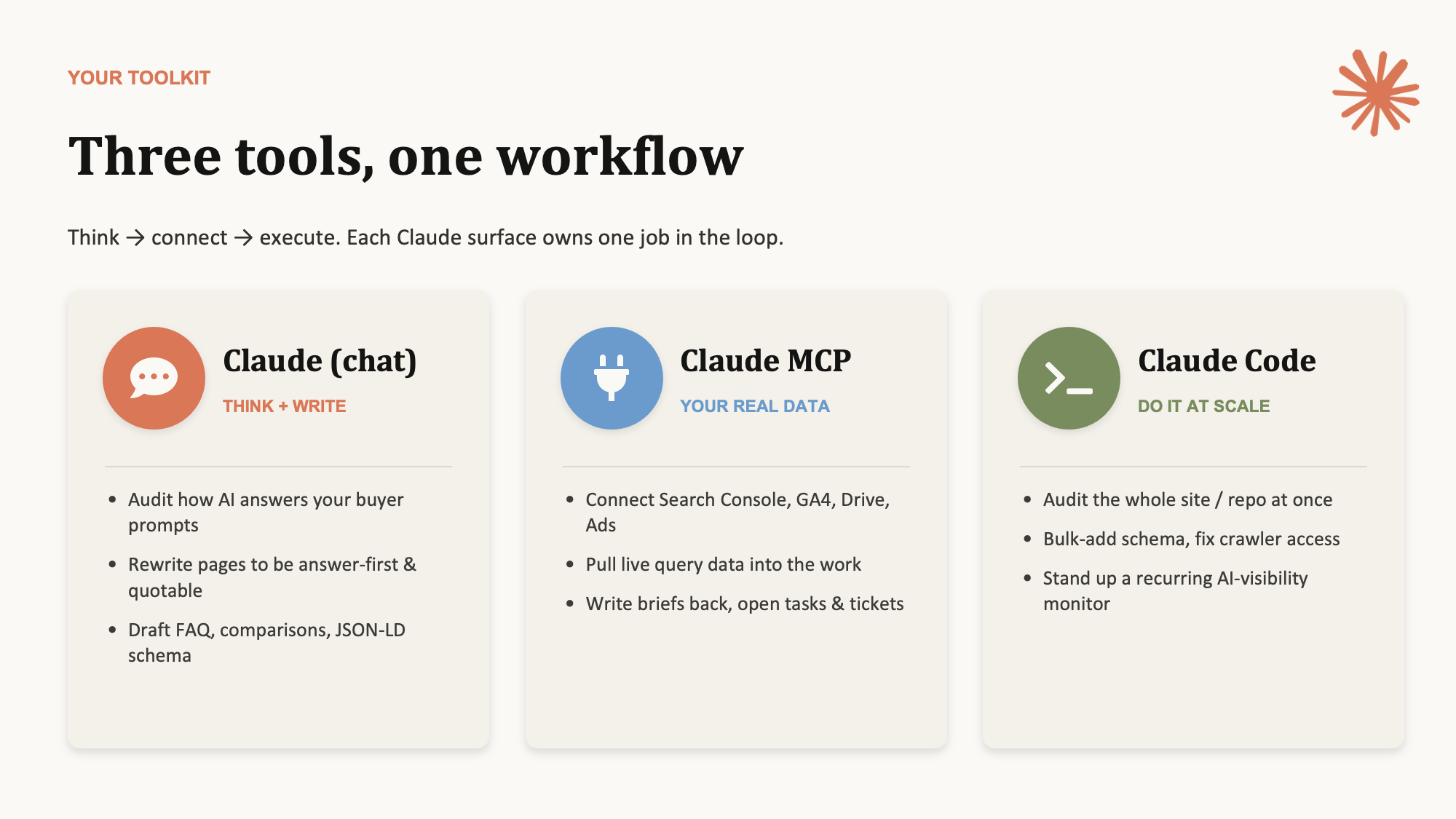
AI engines name two to four brands, not ten blue links. Winning means being the extractable, trusted passage the model pulls and cites — and using the right Claude surface for each job: chat to think and write, MCP for your real data, Code to do it at scale.
The six steps
Audit, rewrite, schema, data, scale, monitor
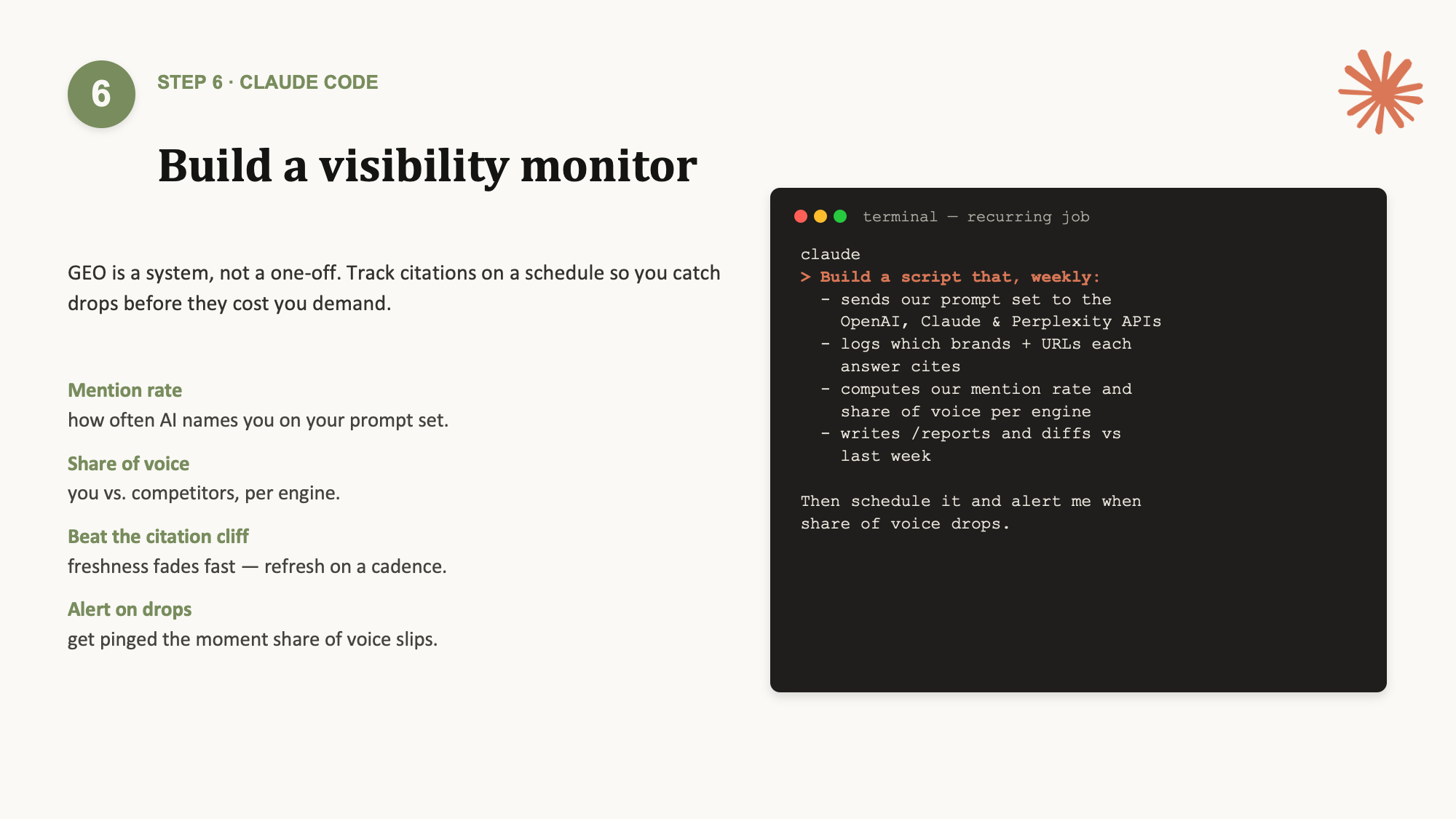
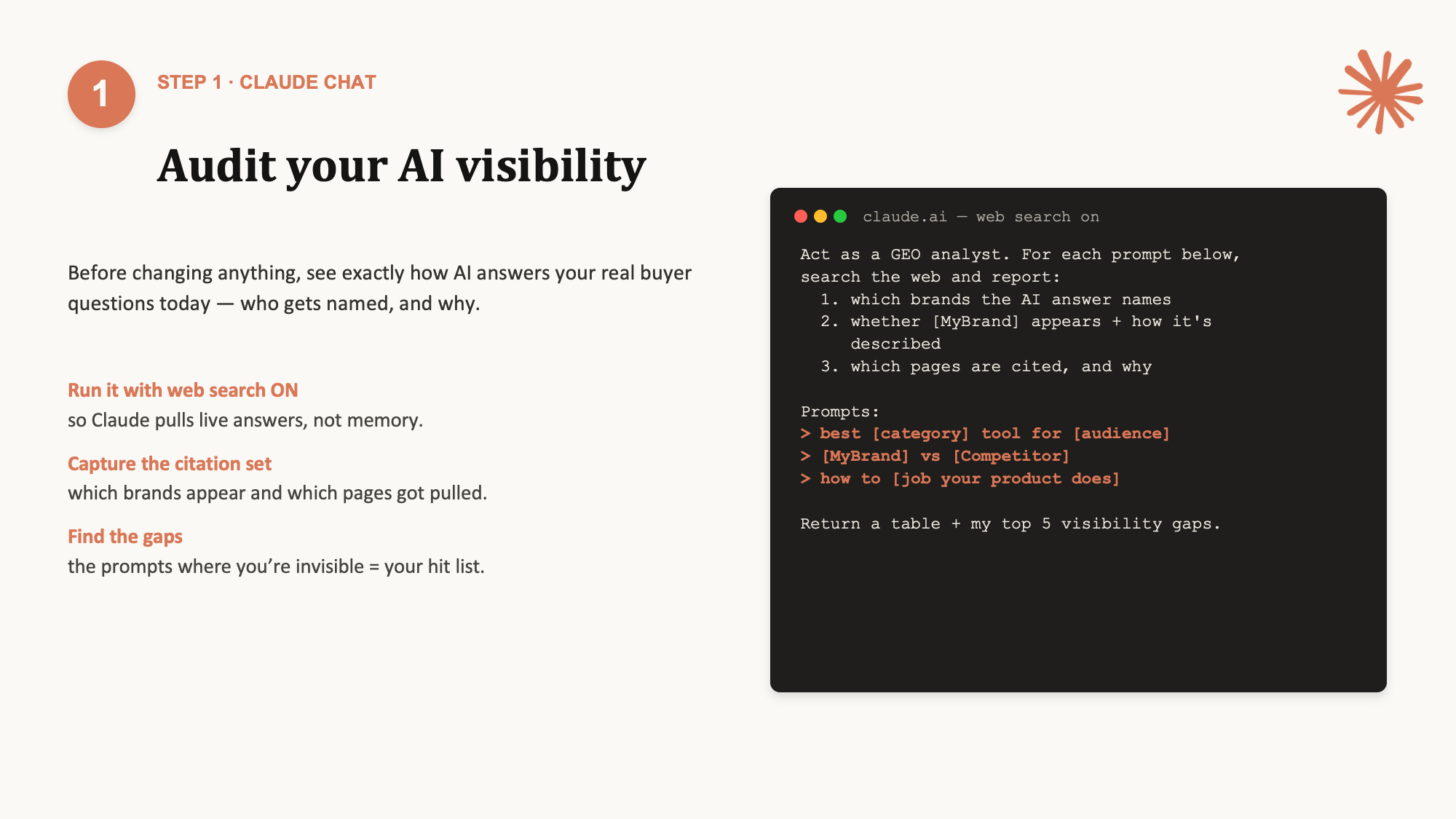
Each step is one copy-paste prompt and one clear job. Audit how AI answers you today, rewrite pages to be quotable, add schema and earn entity mentions, plug Claude into your live data over MCP, fix the whole site with Claude Code, then stand up a monitor so you catch citation drops early.


Get a free instant audit
Get a free, instant read on your paid ads or SEO — and fix it right away.
Paid ads audit
- Catch wasted spend & broad-match leaks
- Find account structure gaps
- Rank your quickest wins
- Spot PMax & brand-search overlap
- Check conversion-tracking health
- Benchmark CPC vs your industry
- Catch wasted spend & broad-match leaks
- Find account structure gaps
- Rank your quickest wins
- Spot PMax & brand-search overlap
- Check conversion-tracking health
- Benchmark CPC vs your industry
Free · no credit card · instant
SEO audit
- Find keyword & ranking gaps
- Catch technical SEO issues
- Rank your fastest wins
- Surface thin & duplicate pages
- Check indexing & crawl coverage
- Compare backlinks vs competitors
- Find keyword & ranking gaps
- Catch technical SEO issues
- Rank your fastest wins
- Surface thin & duplicate pages
- Check indexing & crawl coverage
- Compare backlinks vs competitors
Free · no credit card · instant
Don't waste effort
What actually earns citations — and the 7-day sprint
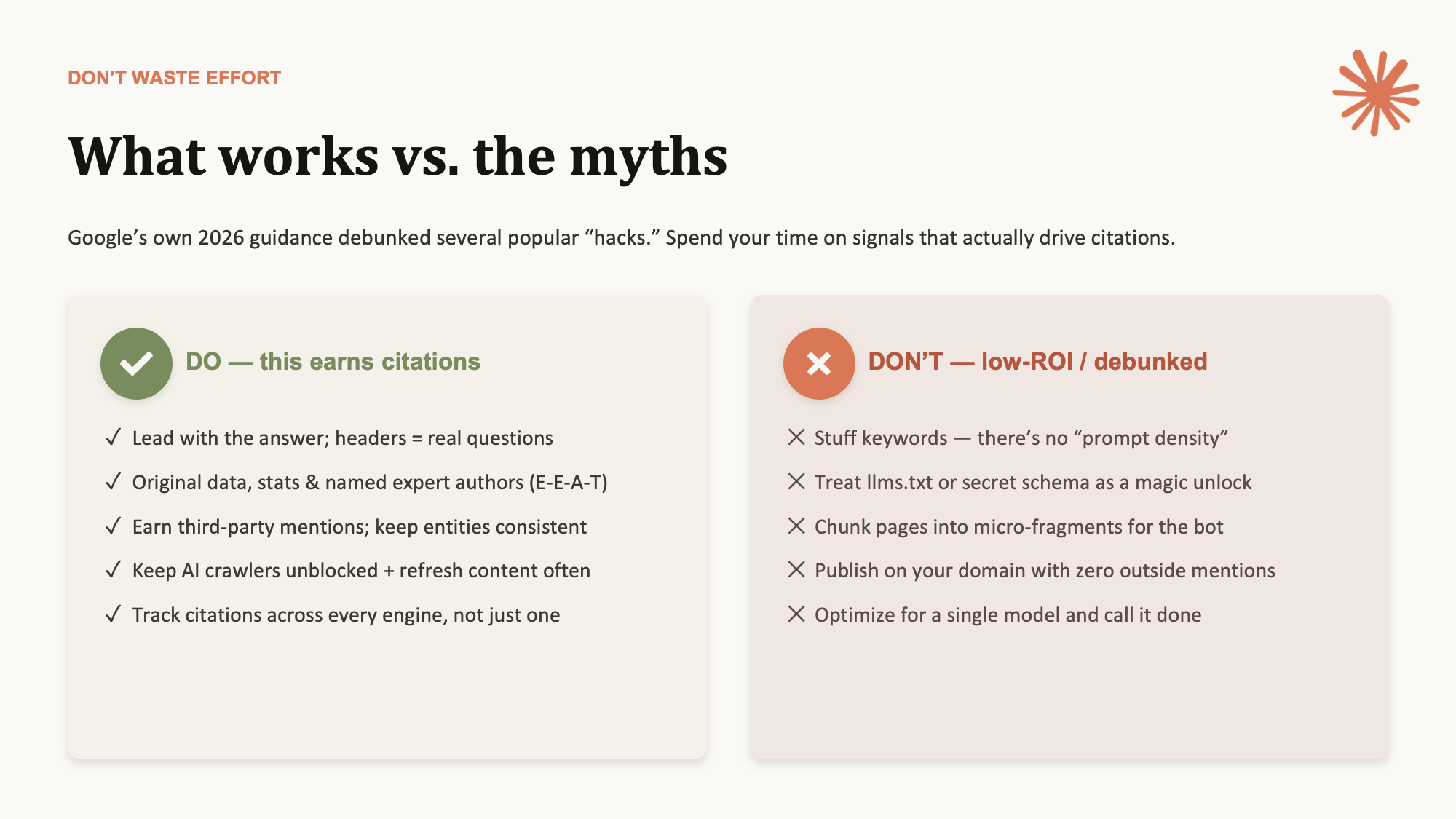
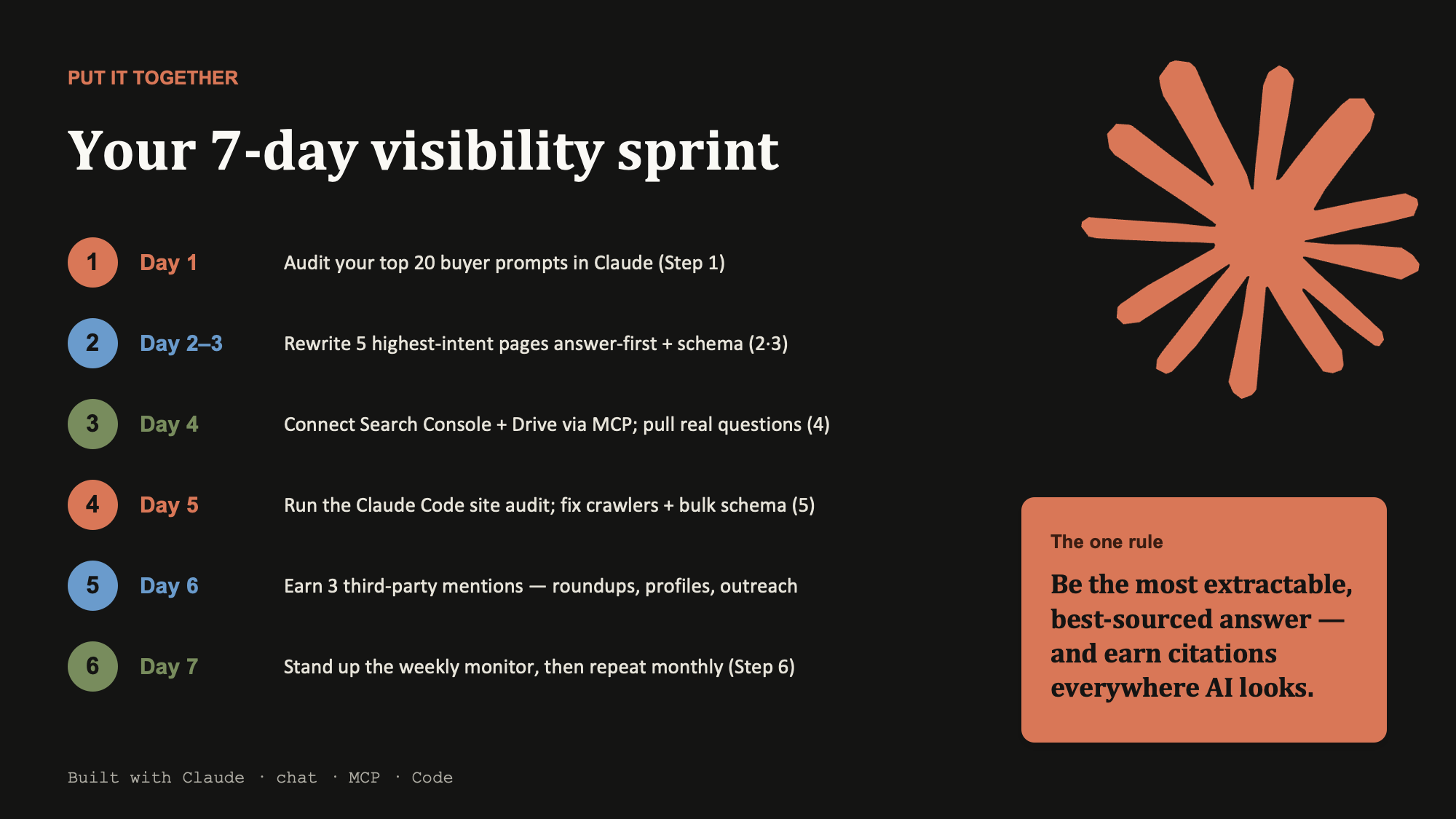
Google’s 2026 guidance debunked several popular “hacks.” Spend your time on the signals that move citations, skip the myths, then run the one-week sprint to put the whole playbook in motion.
Get cited in AI answers — on autopilot.
- ✓Connects to Search Console, GA4 and your CMS — live
- ✓Audits, rewrites and schema in one prompt
- ✓Tracks your share of voice across every engine
2,000+
Marketers
$500M+
Ad spend
23
Countries

Dan K.
Head of Growth
DTC Brand
We rewrote ten pages answer-first with these prompts and started showing up in ChatGPT and Perplexity within a month. The weekly monitor tells us the moment our share of voice slips.”
10 pages
Rewritten
< 1 mo
To first citation
5 engines
Tracked weekly
1,000+ marketers use Ryze





Automating hundreds of agencies






★★★★★4.9/5
Frequently asked questions
What is GEO and how is it different from SEO?
SEO earns you a ranking on a page of ten blue links. GEO — generative engine optimization — earns you a citation inside the single answer an AI assistant composes. AI engines typically name only two to four brands, so the goal shifts from ranking #1 to being the most extractable, trusted passage the model pulls and quotes.
How do I check if AI assistants mention my brand?
Ask Claude with web search on to act as a GEO analyst: for each of your real buyer prompts, have it report which brands the answer names, whether you appear and how you're described, and which pages get cited. The prompts where you're invisible become your hit list. The guide includes the exact prompt.
How do I make a page citable by AI?
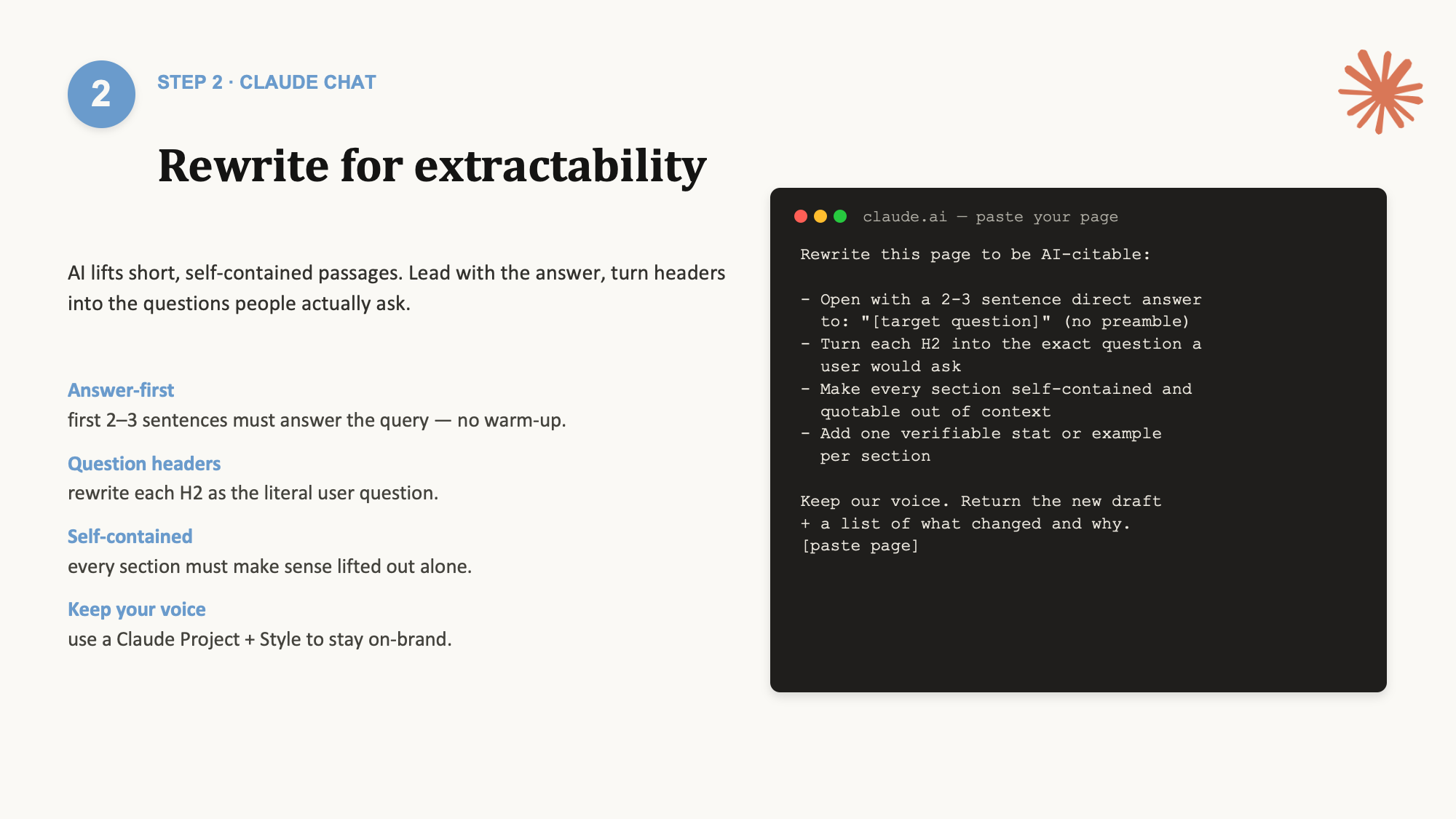
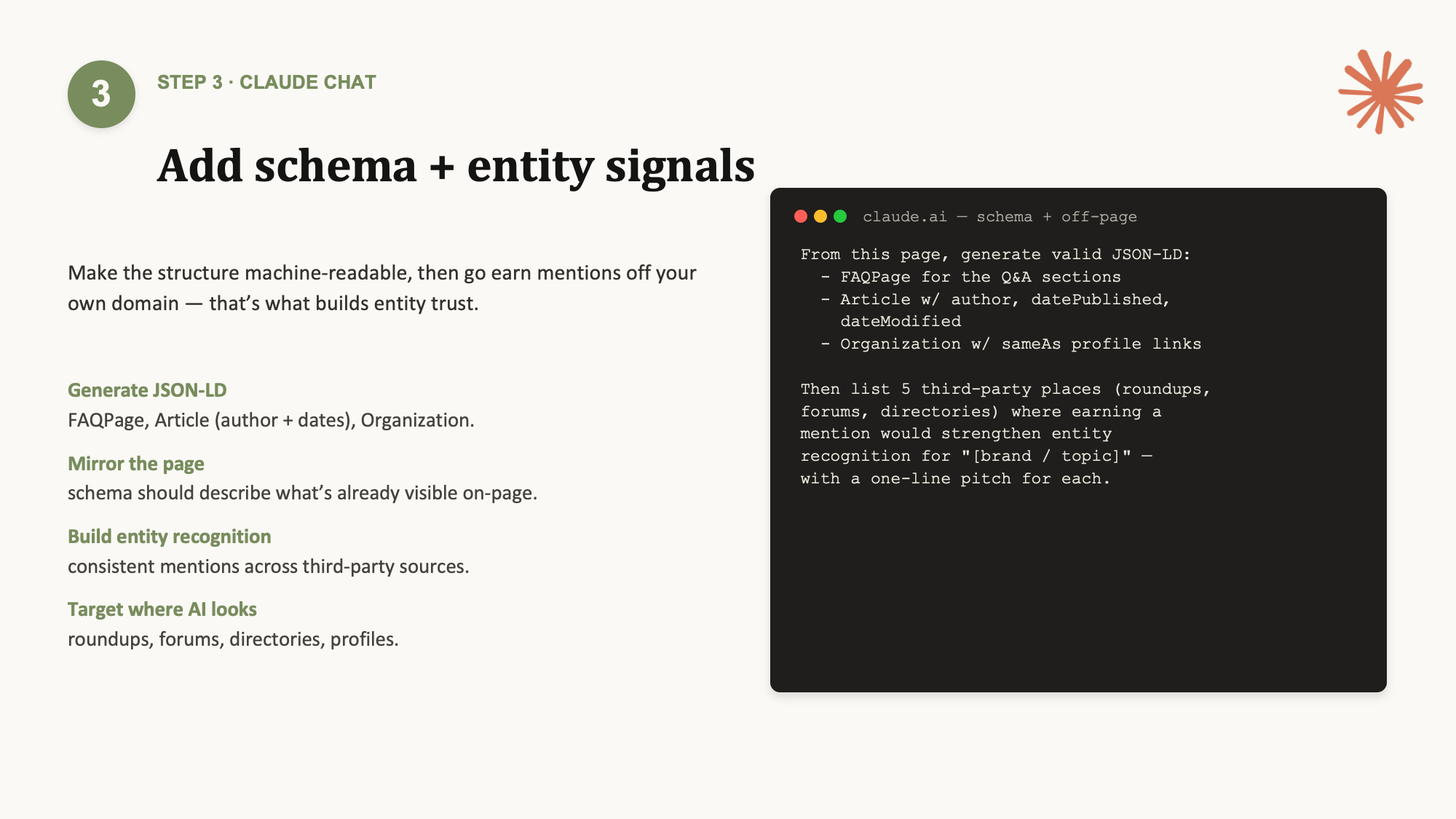
Lead with a 2–3 sentence direct answer (no warm-up), turn each H2 into the literal question a user would ask, and make every section self-contained so it makes sense lifted out alone. Add one verifiable stat or example per section, then add FAQPage, Article, and Organization JSON-LD that mirrors what's on the page.
Does llms.txt or special schema guarantee citations?
No. Google's 2026 guidance debunked these as magic unlocks. Schema helps machines read your structure, but citations come from being answer-first, having consistent entity mentions across third-party sources, keeping AI crawlers unblocked, and refreshing content — not from a secret file or keyword density.
Which AI engines should I track?
All the ones your buyers use: ChatGPT, Claude, Perplexity, Gemini, and Google AI Overviews. Optimizing for a single model and calling it done is one of the biggest mistakes — share of voice varies a lot by engine, so the monitor in step six checks each one on a schedule.
Do I need to be technical to run this?
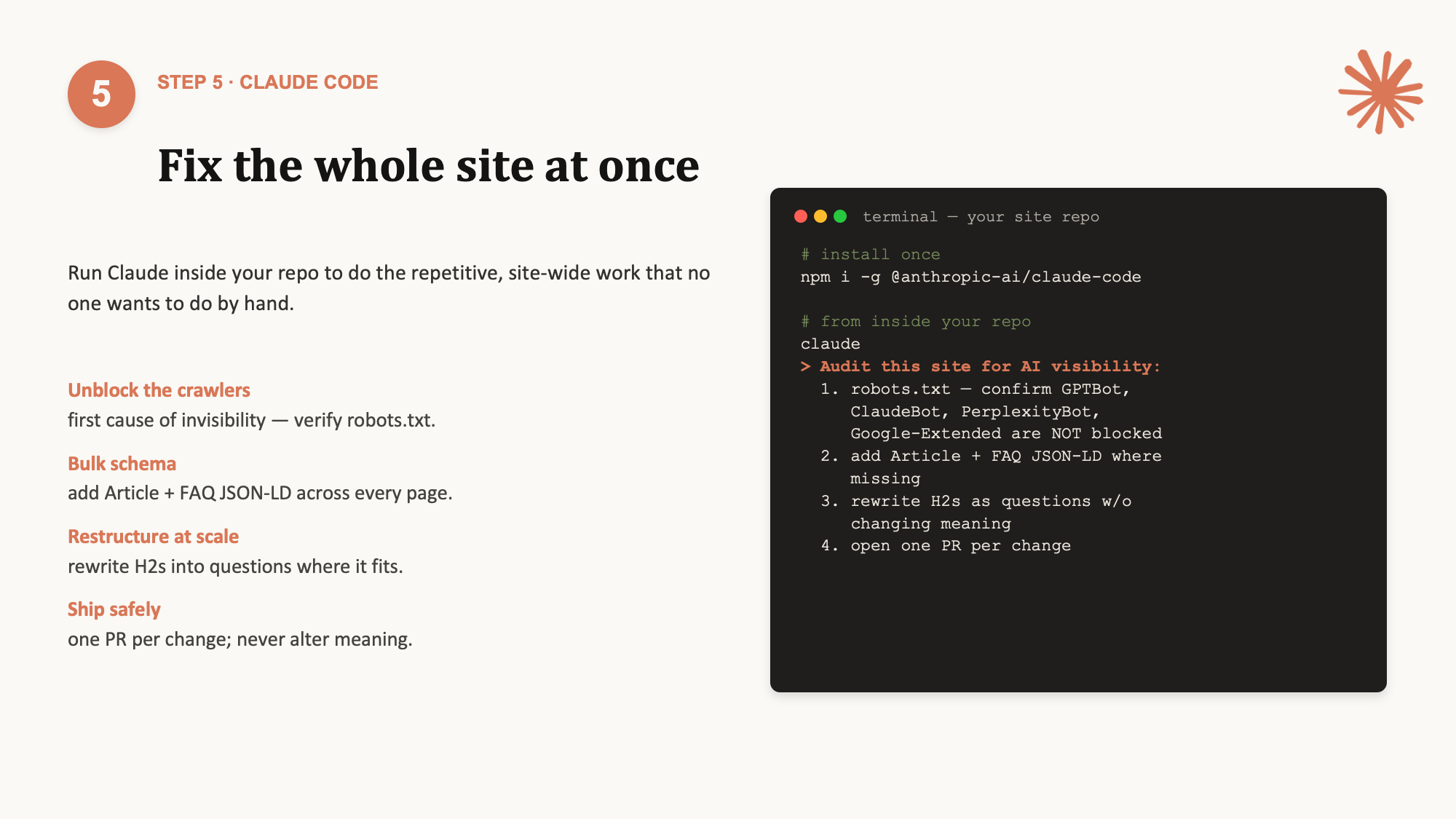
Mostly no. Steps one to four are copy-paste prompts in Claude.ai (all provided). Steps five and six use Claude Code in your repo to fix crawlers and bulk-add schema, and to build a recurring monitor — useful if you have a dev, but the chat steps deliver most of the wins on their own.