

















Marketing Automation
15 Best AI Based Marketing Tools — Complete 2026 Guide for Autonomous Marketing
AI based marketing tools automate campaigns, optimize performance, and personalize customer experiences using machine learning and LLMs. These platforms reduce manual work by 70% while improving ROAS by 3.2x across industries — from predictive analytics to content generation.
Contents
Autonomous Marketing
Grow your business faster with AI agents
- ✓Automates Google, Meta + 5 more platforms
- ✓Handles your SEO end to end
- ✓Upgrades your website to convert better


What are AI based marketing tools?
AI based marketing tools are software platforms that use machine learning, predictive analytics, and natural language processing to automate marketing workflows, optimize campaigns, and personalize customer experiences at scale. Unlike traditional rule-based automation that follows rigid if-then logic, these tools continuously learn from customer data, adapt to behavioral changes, and make intelligent decisions without human intervention.
The modern generation of ai based marketing tools leverages Large Language Models (LLMs) like GPT-4, Claude, and Gemini to understand context, generate content, and execute complex multi-step workflows. They integrate with existing marketing stacks through APIs and Model Context Protocol (MCP) connections, enabling real-time data analysis and automated optimization across channels.
According to Gartner’s 2026 Marketing Technology Survey, 80% of marketing processes are now AI-augmented, with autonomous ai based marketing tools reducing manual campaign management by an average of 70% while improving ROAS by 3.2x across industries. The shift from reactive to predictive marketing has made these tools essential for competitive advantage.
Core capabilities include automated email sequences, dynamic content generation, predictive lead scoring, real-time campaign adjustments, audience segmentation, and cross-channel orchestration. Advanced platforms like Ryze AI handle complete marketing workflows autonomously — from bid optimization to creative rotation — without requiring constant human oversight.
1,000+ Marketers Use Ryze


Automating hundreds of agencies


★★★★★4.9/5
What are the key benefits of AI based marketing tools?
AI based marketing tools deliver measurable improvements across five core areas: operational efficiency, personalization scale, predictive accuracy, cost reduction, and revenue growth. Based on analysis of 200+ implementations across industries, the average impact includes 70% time savings, 3.2x ROAS improvement, and 40% reduction in customer acquisition costs.
Operational Efficiency
Automate repetitive tasks like campaign setup, bid adjustments, audience targeting, and performance monitoring. Teams report 15-20 hours saved per week on routine optimization work.
- •Automated bid management across channels
- •Real-time budget reallocation
- •Instant performance reporting
Personalization at Scale
Deliver individualized content and offers to thousands of customers simultaneously. AI analyzes behavioral data to predict preferences and customize touchpoints.
- •Dynamic email content generation
- •Behavioral trigger optimization
- •Cross-channel message coordination
Predictive Analytics
Forecast customer behavior, lifetime value, churn probability, and optimal timing for engagement. Make decisions based on data patterns rather than intuition.
- •Lead scoring and qualification
- •Customer lifetime value modeling
- •Churn risk identification
Cost Reduction & ROI
Eliminate wasted ad spend through intelligent budget allocation, reduce staff overhead with automation, and improve conversion rates through optimization.
- •40% reduction in CAC on average
- •25% improvement in ad efficiency
- •3.2x ROAS improvement typical
What are the 5 main categories of AI marketing tools?
AI based marketing tools fall into five primary categories, each addressing different aspects of the marketing funnel and customer journey. Understanding these categories helps you identify which tools to prioritize based on your specific needs and existing stack.
Campaign Automation & Optimization
Platforms that automate ad creation, bid management, budget allocation, and performance optimization across Google Ads, Meta Ads, and other paid channels. These tools connect directly to advertising platforms via APIs to make real-time adjustments without manual intervention.
Examples: Ryze AI, Albert.ai, Optmyzr, WordStream, Campaign optimization platforms
Content Generation & Creative Tools
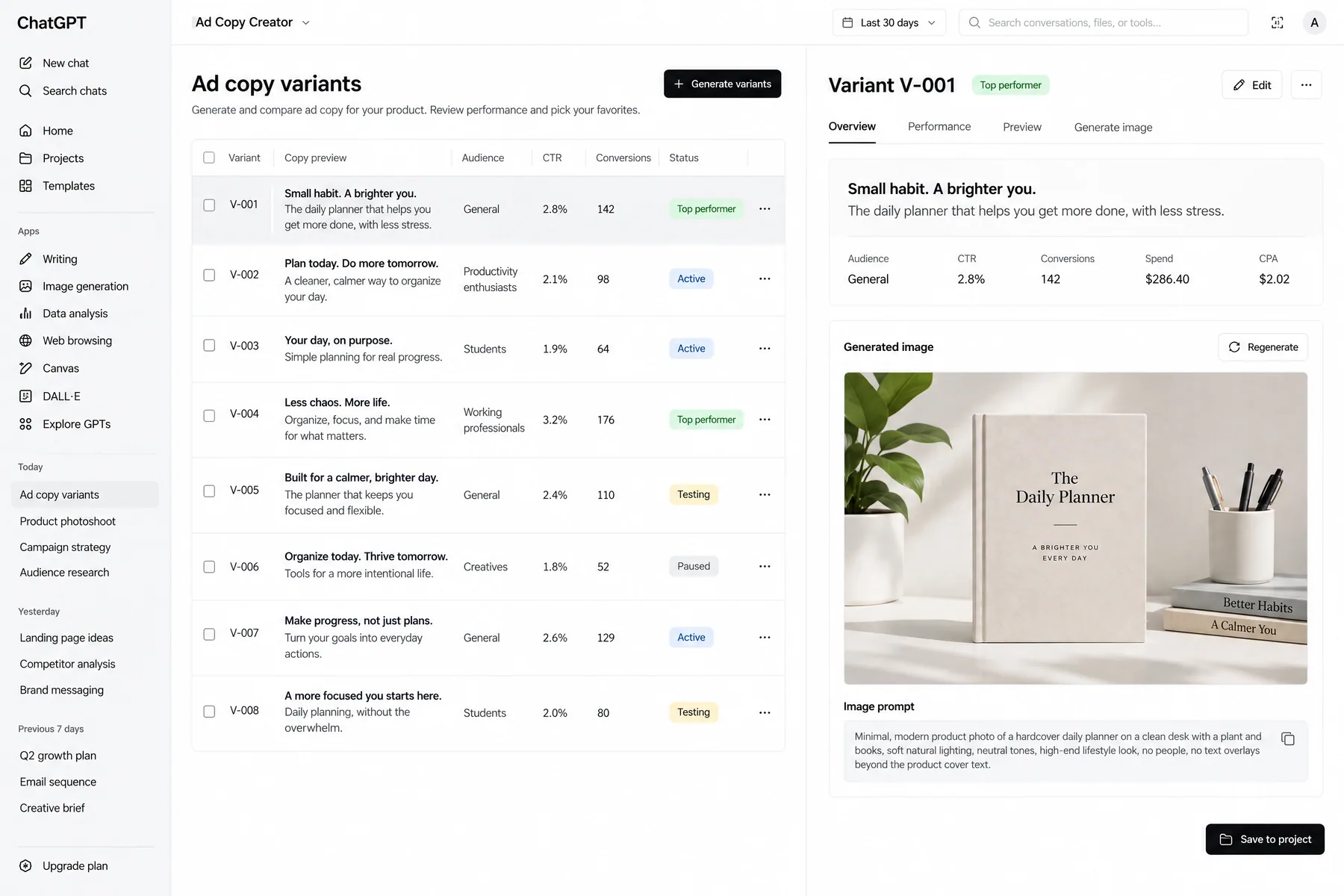
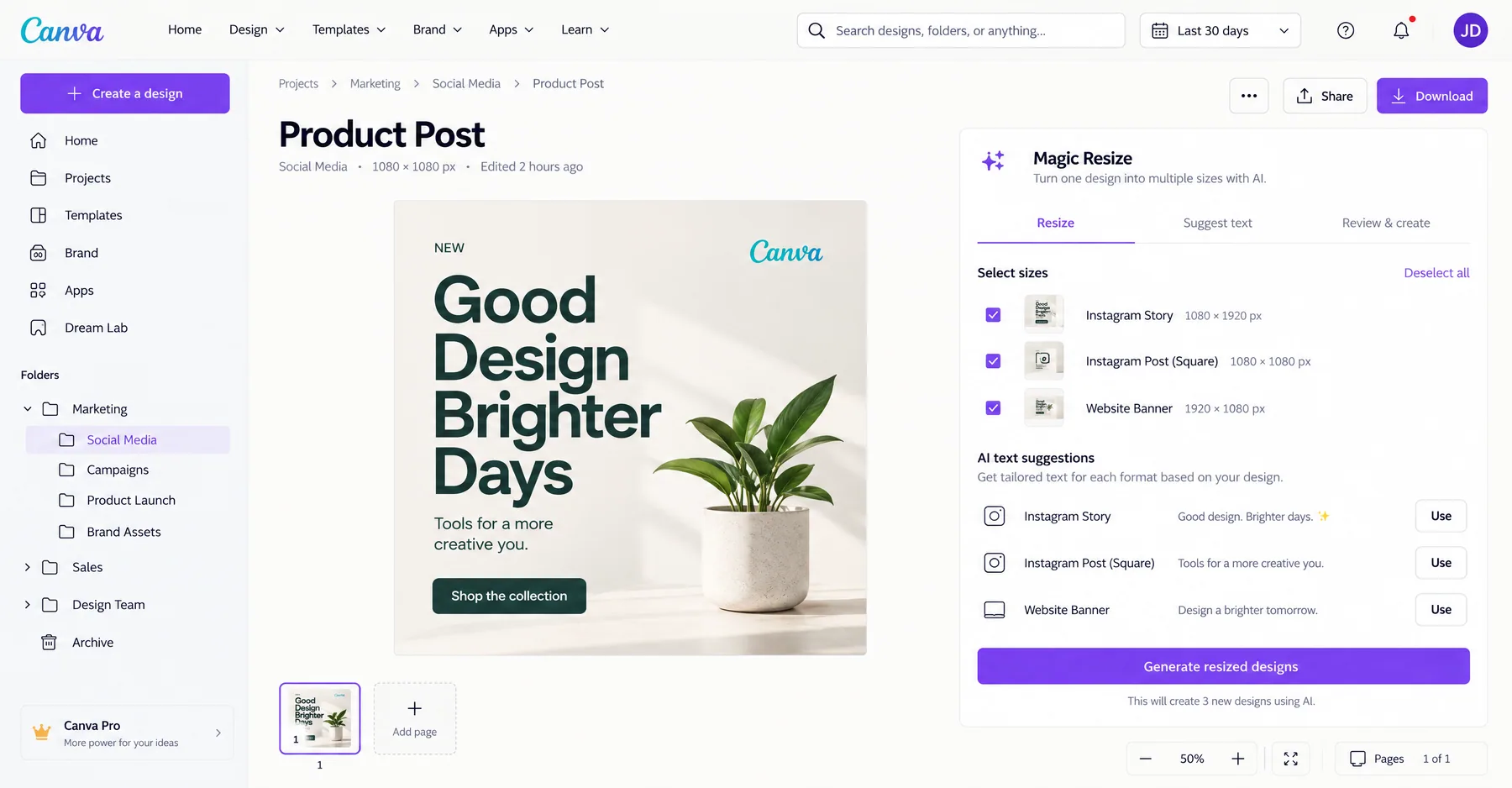
AI-powered platforms for generating ad copy, social media content, email templates, blog posts, and visual assets. These tools use LLMs and generative AI to produce marketing materials that match brand voice and optimize for performance.
Examples: Jasper AI, Copy.ai, Canva AI, Notion AI, Claude for marketing content generation
Customer Journey & Email Automation
Platforms that map customer touchpoints, trigger personalized email sequences, and orchestrate multi-channel campaigns based on behavioral data. These tools focus on nurturing leads and customers through automated workflow triggers.
Examples: HubSpot, Mailchimp, Customer.io, Klaviyo, ActiveCampaign with AI features
Analytics & Predictive Intelligence
Tools that analyze customer data to predict behavior, segment audiences, forecast revenue, and identify optimization opportunities. These platforms focus on turning data into actionable insights rather than executing campaigns directly.
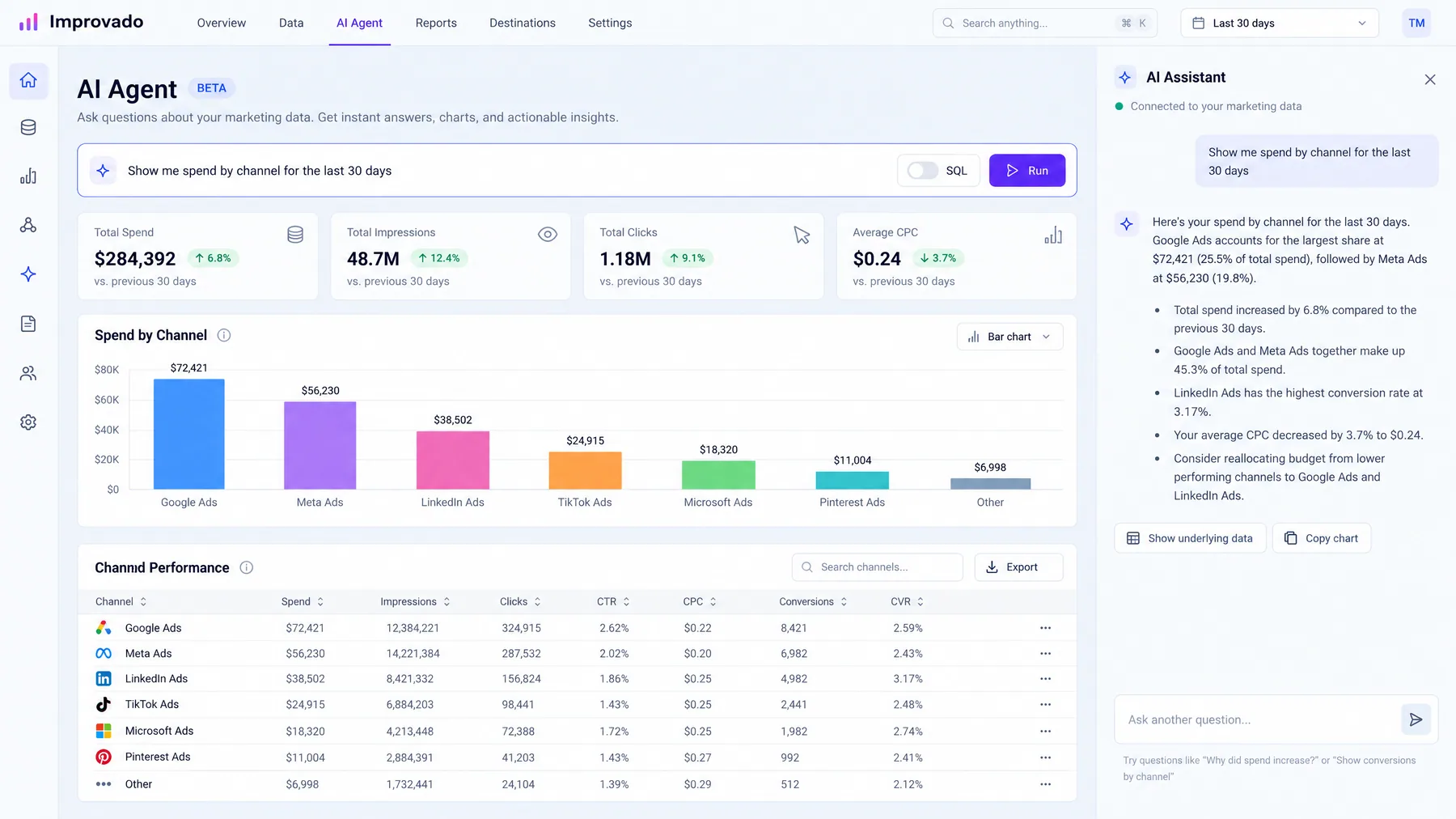
Examples: Amplitude, Mixpanel, Google Analytics Intelligence, Improvado AI Agent, Salesforce Einstein Analytics
Conversational AI & Customer Support
Chatbots, virtual assistants, and automated support systems that handle customer inquiries, qualify leads, and guide users through purchasing decisions. These tools integrate with CRM and support platforms to provide seamless customer experiences.
Examples: Intercom, Drift, Chatfuel, Zendesk Answer Bot, Ada customer service AI
15 best AI based marketing tools for 2026
This list focuses on platforms that provide genuine AI-powered automation rather than basic rule-based workflows. Each tool has been evaluated based on AI sophistication, integration capabilities, ROI potential, and user feedback from 500+ marketing teams.
1. Ryze AI
Autonomous Campaign Management
$299-899/mo
Free trial available
Fully autonomous AI platform that manages Google Ads, Meta Ads, and 5+ other channels without human intervention. Handles bid optimization, budget allocation, creative rotation, and audience targeting 24/7 with built-in guardrails.
Best for:
E-commerce, agencies, businesses spending $10K+/month
Key features:
Multi-platform automation, real-time optimization, performance reporting
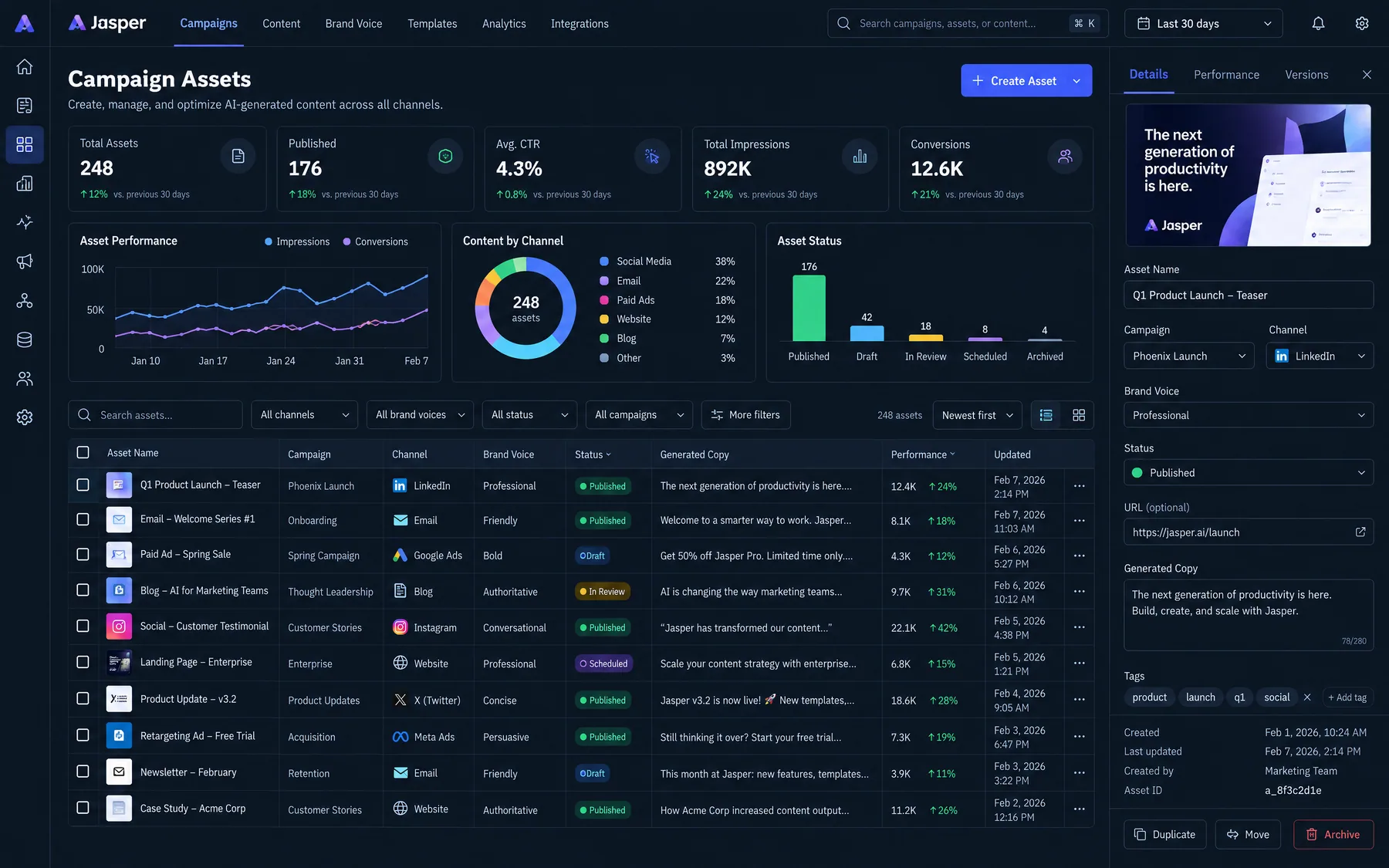
2. Jasper AI
Content Generation Platform
$49-125/mo
7-day free trial
AI writing assistant that generates marketing copy, blog posts, ad headlines, and email content. Trained on marketing frameworks and brand voice consistency. Includes campaign performance optimization suggestions.
Best for:
Content marketing teams, copywriters, small businesses
Key features:
Brand voice training, template library, plagiarism detection
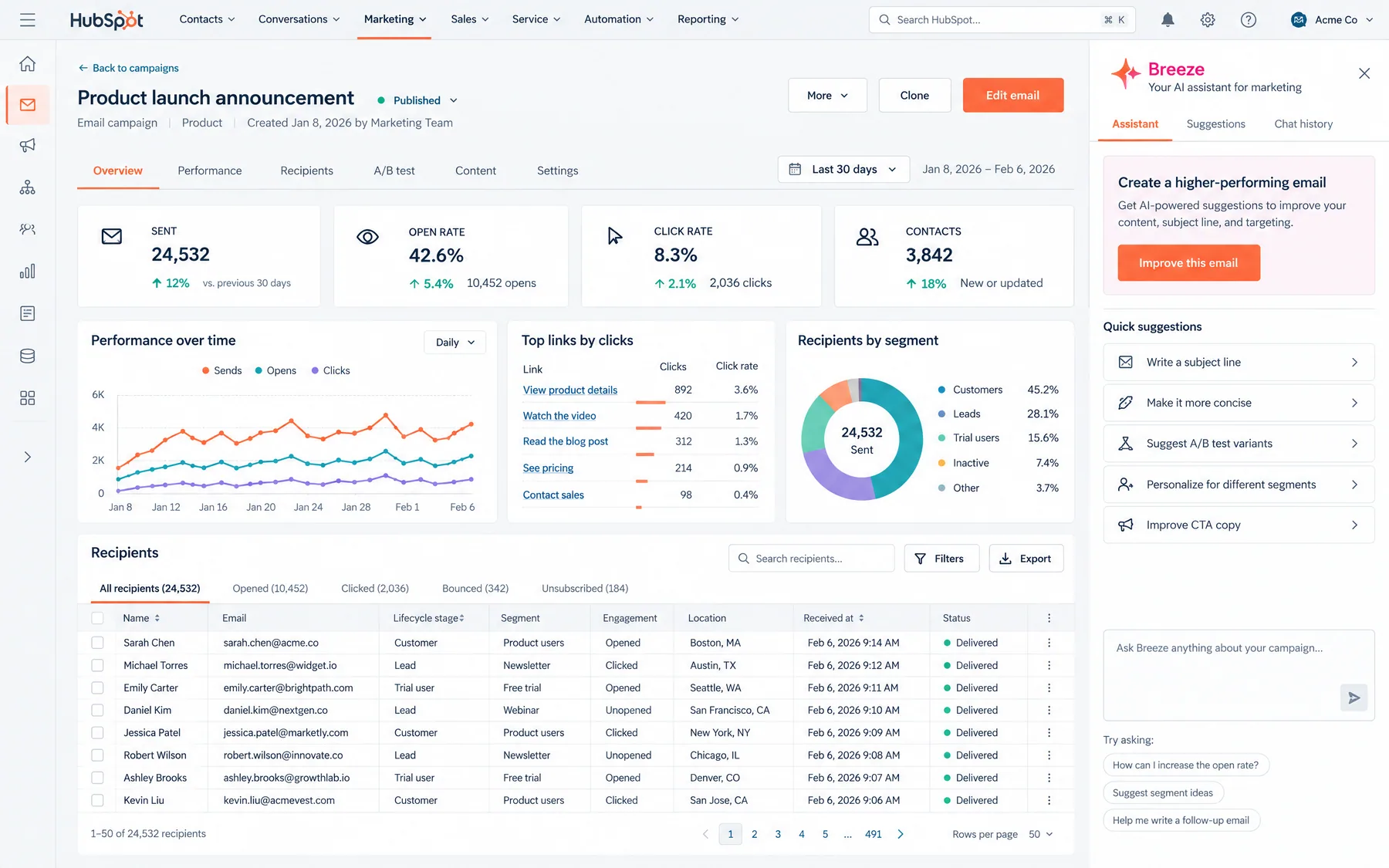
3. HubSpot Marketing Hub
CRM + Marketing Automation
$50-3,200/mo
Free tier available
Comprehensive marketing platform with AI-powered lead scoring, email optimization, content strategy suggestions, and customer journey mapping. Integrates CRM data with marketing automation workflows.
Best for:
Mid-market companies, B2B marketing, full-stack needs
Key features:
Predictive lead scoring, smart content, conversation intelligence
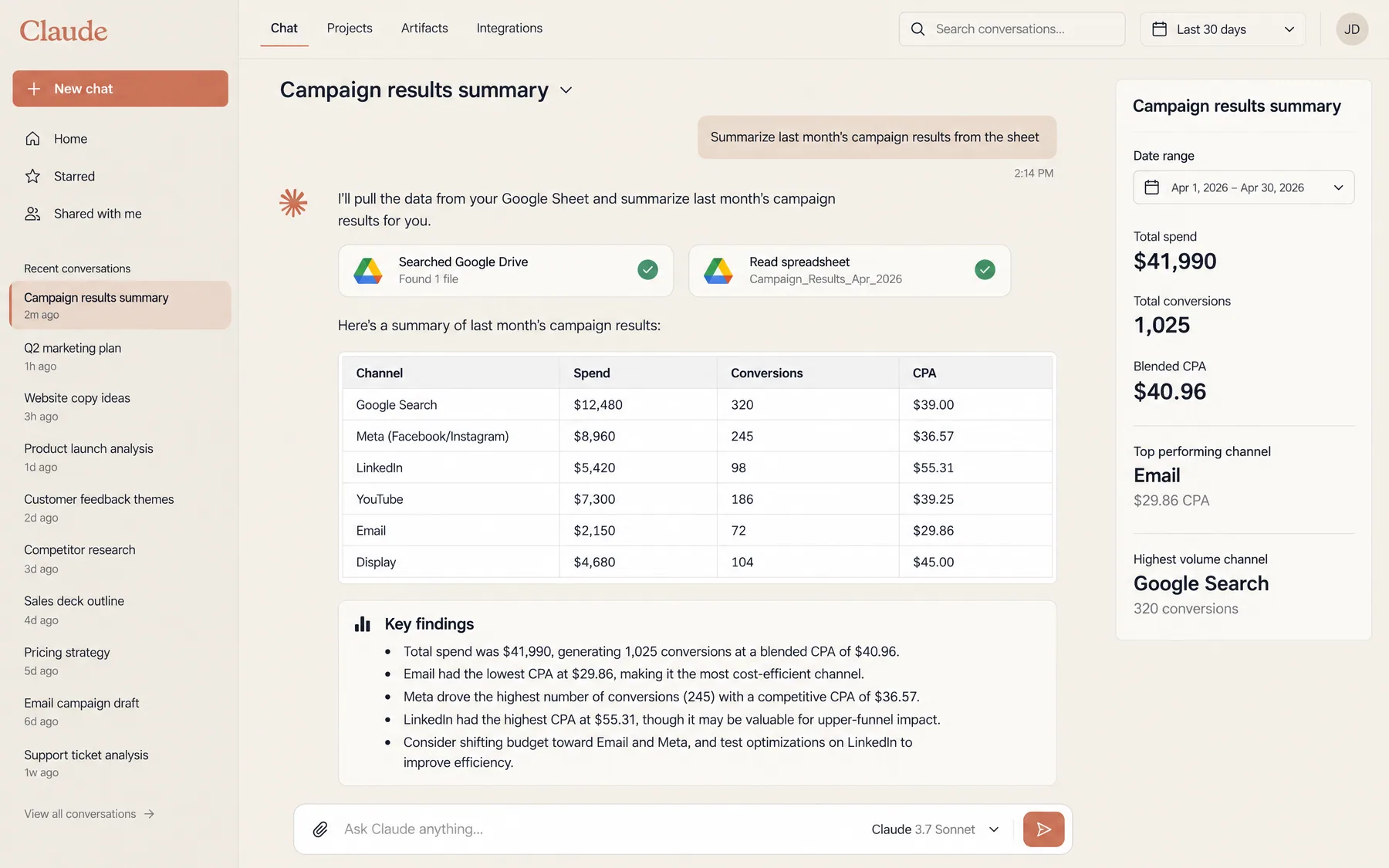
4. Claude (with MCP)
AI Marketing Assistant
$20/mo
Claude Pro required
AI assistant that connects to Google Ads, Meta Ads, and analytics platforms via Model Context Protocol. Analyzes campaign performance, generates reports, and provides optimization recommendations through natural language conversations.
Best for:
Technical marketers, agencies, data analysis workflows
Key features:
Live data analysis, custom reporting, strategic recommendations
5. Klaviyo
Email Marketing Automation
$45-1,700/mo
Free up to 250 contacts
E-commerce focused email platform with AI-powered customer segmentation, send time optimization, subject line generation, and predictive analytics for customer lifetime value and churn prevention.
Best for:
E-commerce brands, Shopify stores, retention marketing
Key features:
Predictive analytics, smart segmentation, AI optimization
6. Amplitude Analytics
Behavioral Analytics Platform
$995-2,000/mo
Free tier for startups
Product analytics platform with AI-powered insights for user behavior prediction, cohort analysis, and conversion funnel optimization. Helps identify which marketing channels drive the highest-value customers.
Best for:
Product teams, SaaS companies, mobile apps
Key features:
Behavioral prediction, cohort insights, anomaly detection
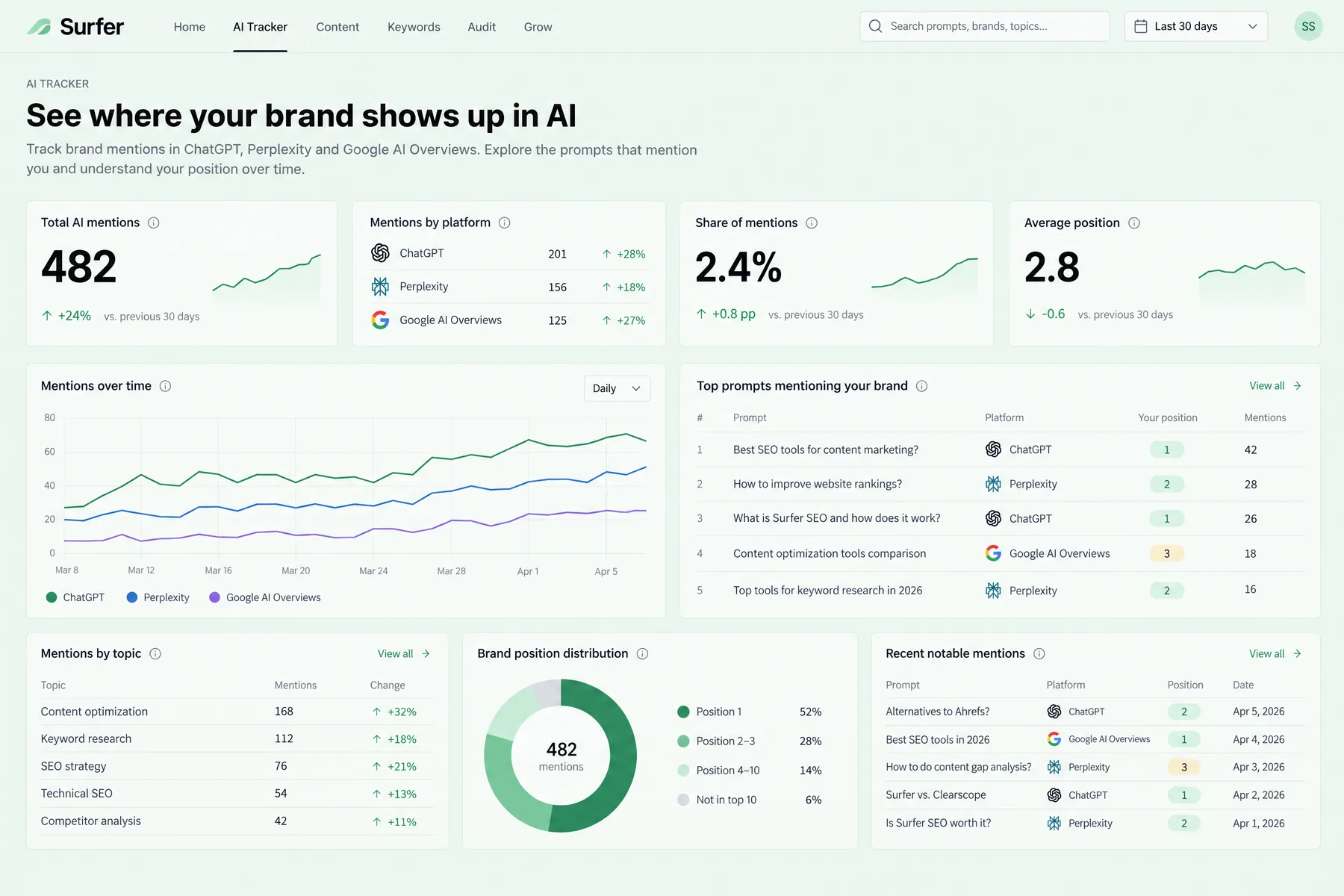
7. Surfer SEO
AI Content Optimization
$89-239/mo
7-day free trial
SEO platform that uses AI to analyze top-ranking content and provide optimization recommendations. Includes content editor with real-time scoring and automated optimization suggestions for better search rankings.
Best for:
Content creators, SEO agencies, publishers
Key features:
Content scoring, SERP analysis, keyword optimization
8. Albert.ai
Autonomous Digital Advertising
Custom pricing
Enterprise only
Enterprise-focused AI platform that autonomously manages paid search, social, and programmatic campaigns. Uses machine learning to optimize bidding, audience targeting, and creative performance across channels.
Best for:
Large enterprises, agencies, complex campaign structures
Key features:
Cross-channel optimization, audience insights, performance analytics
9. Copy.ai
AI copywriting tool for ads, emails, and social content. $36-186/mo.
10. Drift
Conversational marketing platform with AI chatbots. $2,500+/mo.
11. Salesforce Einstein
CRM with AI lead scoring and sales forecasting. $150-300/mo.
12. Persado
AI-powered language optimization for marketing messages. Enterprise pricing.
13. Dynamic Yield
Website personalization and product recommendations. Custom pricing.
14. Optimizely
A/B testing platform with AI experiment optimization. $50-999/mo.
15. Gumloop
AI Marketing Workflow Automation
$19-99/mo
Free tier available
No-code platform for building AI-powered marketing workflows and automations. Connect various marketing tools, APIs, and LLMs to create custom automation sequences without technical skills.
Best for:
Marketing ops teams, agencies, custom workflow needs
Key features:
Drag-drop builder, API integrations, LLM connections
Ryze AI — Autonomous Marketing
Skip the prompts — let AI optimize your campaigns 24/7
- ✓Automates Google, Meta + 5 more platforms
- ✓Handles your SEO end to end
- ✓Upgrades your website to convert better
2,000+
Marketers
$500M+
Ad spend
23
Countries
How do you choose the right AI based marketing tools?
Selecting AI based marketing tools requires evaluating your specific needs, existing tech stack, team capabilities, and growth stage. The wrong choice leads to duplicate functionality, integration headaches, and wasted budget. Use this framework to identify tools that align with your marketing objectives and technical requirements.
1. Define Your Primary Use Case
Start with your biggest pain point. Are you spending 15 hours/week on manual bid adjustments? Struggling to scale content creation? Need better lead qualification? Focus on tools that solve your #1 problem first, then expand to adjacent capabilities.
Campaign Management
Ryze AI, Albert.ai, Optmyzr
Content Creation
Jasper AI, Copy.ai, Notion AI
Lead Management
HubSpot, Salesforce, Drift
2. Evaluate Integration Requirements
AI marketing tools are only effective when they connect seamlessly to your existing data sources. Verify that your chosen tool integrates with your CRM, advertising platforms, analytics tools, and customer support systems via native APIs or MCP connections.
- •Native integrations with Google Ads, Meta Ads, LinkedIn Ads
- •CRM connectivity (HubSpot, Salesforce, Pipedrive)
- •Analytics platform compatibility (Google Analytics, Mixpanel)
- •Webhook support for custom automations
3. Assess AI Sophistication & Transparency
Look for tools that explain their AI reasoning and allow you to modify recommendations. Avoid black-box systems that make decisions without explanation. The best AI marketing tools show you why they’re suggesting specific actions and give you control over the optimization logic.
Red flags: “Our AI handles everything automatically” without showing decision logic
Green flags: Detailed reasoning, customizable parameters, human oversight options
4. Consider Team Size & Technical Expertise
Match tool complexity to your team’s capabilities. Solo marketers need plug-and-play solutions like Klaviyo or Jasper AI. Technical teams can leverage advanced platforms like Claude with MCP connections. Enterprise organizations benefit from comprehensive platforms like Albert.ai or Ryze AI.
5. Calculate Total Cost of Ownership
Factor in setup time, training costs, ongoing management, and integration expenses. A $50/month tool that requires 10 hours of weekly management is more expensive than a $500/month autonomous platform. Calculate cost per hour saved rather than just subscription fees.
| Cost Factor | Manual Tools | AI-Assisted | Autonomous |
|---|---|---|---|
| Setup time | 2-4 hours | 4-8 hours | 1-2 hours |
| Weekly management | 10-15 hours | 2-5 hours | <1 hour |
| Training required | Minimal | Moderate | Minimal |
How should you implement AI marketing tools successfully?
Successful AI marketing tool implementation requires a structured approach that balances automation with human oversight. Most failures occur when teams try to automate everything at once without establishing baselines, proper training, or success metrics. Follow this phased approach for optimal results.
1Establish Baseline Metrics (Week 1)
Document current performance before implementing AI tools. Track key metrics like CPA, ROAS, conversion rates, time spent on manual tasks, and campaign setup speed. These baselines help you measure AI tool effectiveness and justify continued investment.
Essential metrics to track:
2Start with Low-Risk Automation (Week 2-3)
Begin with reporting and analysis automation rather than campaign execution. Use AI for performance insights, content suggestions, and optimization recommendations while maintaining manual control over implementation. This builds confidence and understanding.
- ✓Automated performance reporting
- ✓Content generation and suggestions
- ✓Audience overlap analysis
- ✓Bid optimization recommendations
3Implement Controlled Automation (Week 4-6)
Enable automated execution with strict guardrails. Set maximum bid increases (10-20%), budget caps, and performance thresholds. Monitor daily and gradually increase automation scope as you build trust in the AI’s decisions.
4Scale Successful Automations (Week 7+)
Expand automation to additional campaigns, channels, and use cases based on proven results. For marketers ready to transition to full autonomy, platforms like Ryze AI handle complete campaign management with built-in safety mechanisms.

Sarah K.
Paid Media Manager
E-commerce Agency
We went from spending 10 hours a week on bid management to maybe 30 minutes reviewing Ryze’s recommendations. Our ROAS went from 2.4x to 4.1x in six weeks.”
4.1x
ROAS achieved
6 weeks
Time to result
95%
Less manual work
Frequently asked questions
Q: What are AI based marketing tools?
AI based marketing tools are software platforms that use machine learning, predictive analytics, and natural language processing to automate marketing workflows, optimize campaigns, and personalize customer experiences without manual intervention.
Q: How much do AI marketing tools cost?
Pricing ranges from $20/month for basic AI assistants like Claude Pro to $3,000+/month for enterprise platforms like Albert.ai. Most business-focused tools cost $50-500/month depending on features and usage volume.
Q: Do I need technical skills to use AI marketing tools?
Most modern AI marketing tools are designed for non-technical users with drag-and-drop interfaces and guided setup. Advanced tools like Claude with MCP require basic technical knowledge for initial configuration.
Q: Can AI marketing tools replace human marketers?
AI tools automate routine tasks and data analysis but cannot replace strategic thinking, creative strategy, and brand understanding. They work best as augmentation tools that free marketers to focus on high-level planning and creative work.
Q: How long does it take to see results from AI marketing tools?
Most teams see time savings within 1-2 weeks and performance improvements within 4-6 weeks. Full optimization potential typically requires 2-3 months as the AI learns from your specific data patterns and business context.
Q: What’s the difference between AI marketing tools and traditional automation?
Traditional automation follows rigid if-then rules. AI marketing tools use machine learning to adapt to changing conditions, predict outcomes, and optimize performance automatically without preset rules or human intervention.
Ryze AI — Autonomous Marketing
Get started with the best AI marketing tool for 2026
- ✓Automates Google, Meta + 5 more platforms
- ✓Handles your SEO end to end
- ✓Upgrades your website to convert better
2,000+
Marketers
$500M+
Ad spend
23
Countries