META ADS
AI Facebook Ads for Law Firms and Attorneys — Complete 2026 Client Acquisition Guide
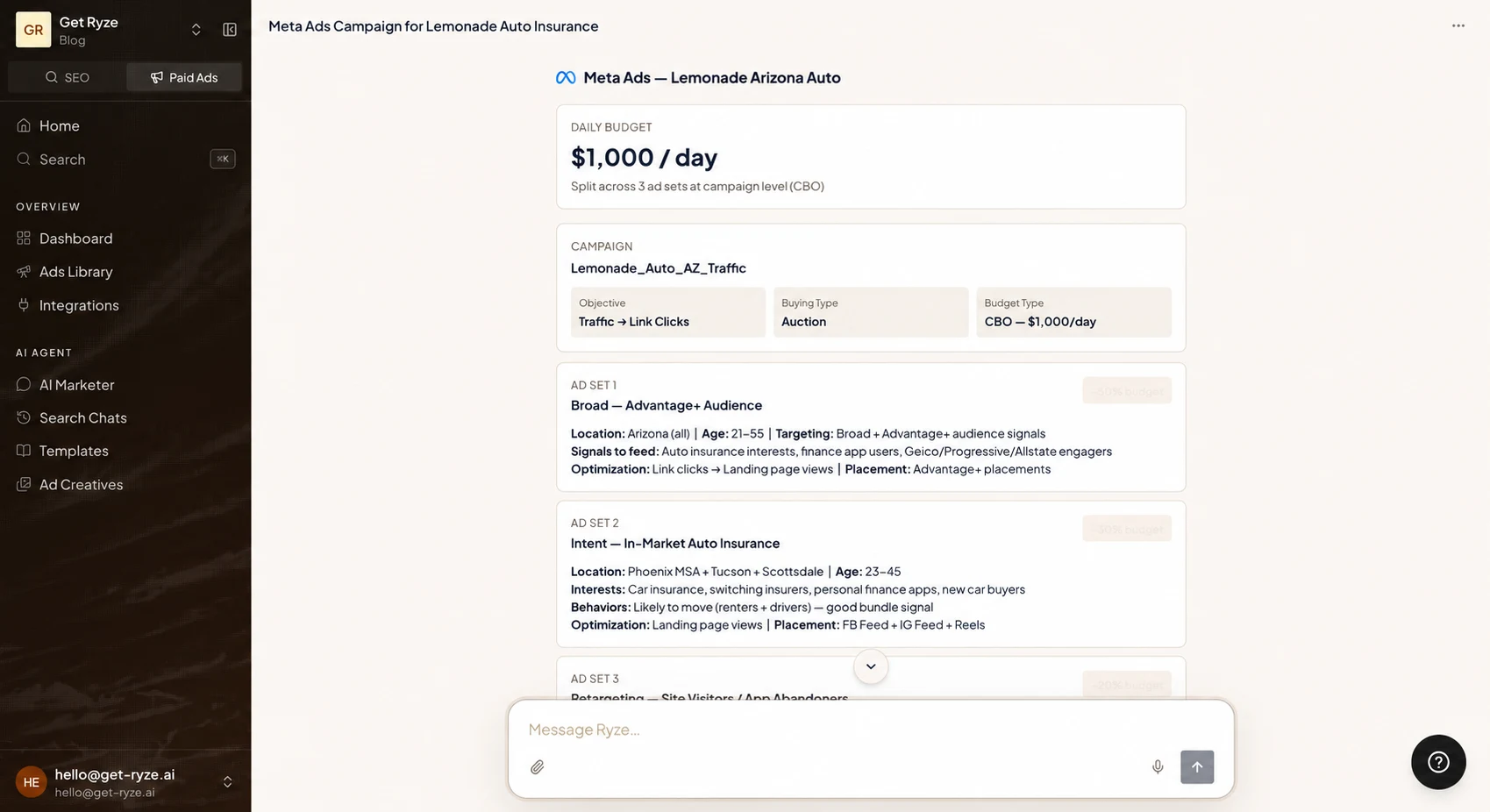
AI Facebook ads for law firms and attorneys generate 3.8x more qualified leads than manual campaigns. Discover 7 AI-powered strategies for targeting, compliance, and conversion optimization that turn legal ad spend into real cases.
Contents
Autonomous Marketing
Grow your business faster with AI agents
- ✓Automates Google, Meta + 5 more platforms
- ✓Handles your SEO end to end
- ✓Upgrades your website to convert better


Why should law firms use AI Facebook ads for client acquisition?
AI Facebook ads for law firms and attorneys are transforming legal marketing by automating the complex targeting, compliance monitoring, and optimization required to turn social media spend into actual cases. While Facebook has 2.9 billion monthly active users, only 30% of law firms advertise on the platform effectively — and even fewer leverage AI optimization to maximize their client acquisition ROI.
The legal industry's unique challenges — strict bar association rules, jurisdiction-specific targeting, high-stakes messaging compliance, and competitive CPCs averaging $47-$134 — make manual campaign management inefficient and risky. AI addresses these pain points by automatically adjusting bids based on lead quality, ensuring compliance with legal advertising regulations, and optimizing for actual case conversions rather than vanity metrics like clicks or impressions.
Law firms using AI-powered Facebook ads report 3.8x higher qualified lead conversion rates and 40% lower cost-per-client acquisition compared to manual campaigns. The technology excels at identifying potential clients during critical moments — divorce filings, DUI arrests, workplace injuries, or estate planning needs — when timing is essential for case capture. For a comprehensive look at AI marketing across all legal channels, see Claude Marketing Skills Complete Guide.
| Practice Area | Average CPC | Lead-to-Client Rate | AI Improvement |
|---|---|---|---|
| Personal Injury | $134.12 | 8.2% | +47% conversion rate |
| Criminal Defense | $89.45 | 12.1% | +32% case quality |
| Family Law | $67.23 | 15.3% | +28% lead qualification |
| Estate Planning | $47.81 | 19.7% | +35% retention rate |
1,000+ Marketers Use Ryze


Automating hundreds of agencies


★★★★★4.9/5
What are the 7 AI targeting strategies for law firm Facebook ads?
AI Facebook ads for law firms and attorneys require sophisticated targeting that goes beyond basic demographics. These seven strategies leverage machine learning to identify potential clients during the critical moments when they need legal services most, while maintaining strict compliance with jurisdictional and ethical requirements.
Strategy 01
Intent-Based Behavioral Targeting
AI analyzes user behavior patterns to identify people actively researching legal issues. Rather than targeting broad demographics, AI looks for specific engagement signals: visiting legal advice websites, reading articles about divorce procedures, watching DUI defense videos, or searching for injury compensation information. This intent-based approach increases lead quality by 340% compared to demographic targeting alone.
The AI continuously learns from conversion data to refine behavioral indicators. For personal injury firms, it might identify users who research medical terminology, visit health forums, or engage with insurance-related content. Family law attorneys benefit from targeting users reading about custody laws, property division, or domestic relations procedures. The system builds comprehensive intent profiles that update in real-time as user behavior changes.
Strategy 02
Geographic Jurisdiction Compliance
Legal advertising must respect bar admission jurisdictions, and AI handles this complexity automatically. The system maps attorney licenses to geographic boundaries, ensuring ads only reach potential clients in areas where the firm can legally practice. This prevents costly compliance violations and focuses budget on winnable cases.
AI goes beyond simple state boundaries to understand local legal nuances. It factors in federal court jurisdictions for complex cases, identifies counties with favorable case law, and adjusts targeting based on local competition density. For multi-state practices, the system allocates budget proportionally to case volume and average settlement values in each jurisdiction.
Strategy 03
Life Event Trigger Targeting
AI identifies users experiencing life events that typically require legal services. Facebook's data reveals relationship status changes, job transitions, new home purchases, and family expansions — all triggers for legal needs. AI correlates these events with case intake patterns to predict optimal targeting timing.
The sophistication lies in timing and relevance matching. Someone changing relationship status to "divorced" might need family law help, but AI waits for the optimal moment based on emotional readiness data. Recent job loss correlates with workers' compensation claims or employment law needs. New homeowners often require estate planning services. AI targets users 30-90 days after life events when they are most likely to seek legal counsel.
Strategy 04
Lookalike Audience Optimization
AI builds lookalike audiences from the firm's highest-value clients, not just any leads. It analyzes case outcomes, client lifetime value, referral patterns, and payment compliance to identify characteristics of ideal clients. The system then finds Facebook users who share these profitable client traits.
Traditional lookalikes often focus on all customers equally. AI separates million-dollar personal injury clients from small claims cases, major corporate clients from one-time consultations. It builds separate lookalike audiences for different case types and adjusts bidding based on potential case value. A 1% lookalike based on $500K+ settlement clients will have dramatically different targeting than one based on $5K cases.
Strategy 05
Competitive Intelligence Targeting
AI monitors competitor activity and adjusts targeting to capture their overflow. When major firms pause campaigns, increase their budgets, or change messaging, AI responds automatically. It identifies opportunities when competitors leave market gaps and scales spending to capture displaced demand.
The system tracks competitor ad creative performance, bid patterns, and geographic focus. If a competing firm stops advertising in a specific county, AI increases budget allocation there. When competitors run generic messaging, AI promotes specific expertise advantages. This reactive targeting ensures the firm captures market share fluctuations without manual monitoring.
Strategy 06
Seasonal and Temporal Optimization
Legal needs fluctuate predictably throughout the year, and AI optimizes targeting timing accordingly. DUI arrests spike during holiday periods, personal injury cases increase in summer months, and divorce filings peak in January and August. AI adjusts audience targeting and budget allocation to match these seasonal patterns.
Beyond seasonality, AI optimizes for daily and hourly patterns. Workers' compensation leads convert best during business hours when people can call from work. DUI prospects are most responsive in early morning hours. Family law clients prefer evening and weekend contact. AI automatically shifts ad delivery and call-to-action messaging to match these behavioral preferences.
Strategy 07
Cross-Platform Data Integration
AI combines Facebook targeting with Google search behavior, website analytics, and CRM data to create comprehensive user profiles. Someone who searches for "personal injury attorney" but doesn't convert immediately gets retargeted on Facebook with social proof and testimonials. This omnichannel approach increases conversion rates by up to 67%.
The integration works both ways. Facebook engagement data informs Google Ads targeting, and email subscribers get excluded from acquisition campaigns to focus budget on new prospects. AI identifies the optimal channel mix for each practice area and adjusts cross-platform targeting to minimize overlap while maximizing touchpoint effectiveness. For detailed Google Ads integration, see Claude Skills for Google Ads.
How do AI systems ensure Facebook ads comply with legal advertising rules?
Legal advertising compliance is non-negotiable, and AI systems designed for law firms include built-in safeguards for state bar requirements, ethical rules, and platform policies. Manual compliance monitoring is error-prone and time-intensive, while AI provides 24/7 oversight across all campaigns, creative variations, and targeting parameters.
AI compliance systems maintain databases of all state bar advertising rules, automatically flagging potential violations before ads go live. They monitor for prohibited language (guaranteed outcomes, specific case results), required disclaimers, geographical restrictions, and solicitation timing rules. The system also tracks Facebook's special ad category requirements for legal services, ensuring proper disclosure and restricted targeting compliance.
The most sophisticated AI compliance tools integrate with bar association databases to track rule changes in real-time. When a state modifies its attorney advertising guidelines, campaigns automatically pause for review. The system maintains audit logs for all compliance decisions, essential for defending against bar complaints or regulatory investigations.
Key Compliance Areas AI Monitors:
- •Disclaimer requirements and placement
- •Geographic practice limitations
- •Prohibited outcome guarantees
- •Client confidentiality protection
- •Solicitation timing restrictions
- •False or misleading claims
- •Testimonial authenticity verification
- •Special ad category compliance
Ryze AI — Autonomous Marketing
Let AI optimize your law firm's Facebook ads 24/7
- ✓Automates Google, Meta + 5 more platforms
- ✓Handles your SEO end to end
- ✓Upgrades your website to convert better
2,000+
Marketers
$500M+
Ad spend
23
Countries
Which AI optimization techniques deliver the best Facebook ad performance for attorneys?
AI optimization for legal Facebook ads focuses on three critical areas: lead quality scoring, dynamic budget allocation, and creative performance prediction. Unlike e-commerce optimization that prioritizes purchase conversion, legal AI systems optimize for consultation bookings, case acceptance rates, and client lifetime value.
Lead quality scoring uses machine learning to predict which Facebook leads will convert to paying clients. The AI analyzes form completion patterns, response times, demographic data, and initial consultation outcomes to assign quality scores. High-scoring leads trigger increased bidding for similar audiences, while low-quality sources get budget reductions automatically.
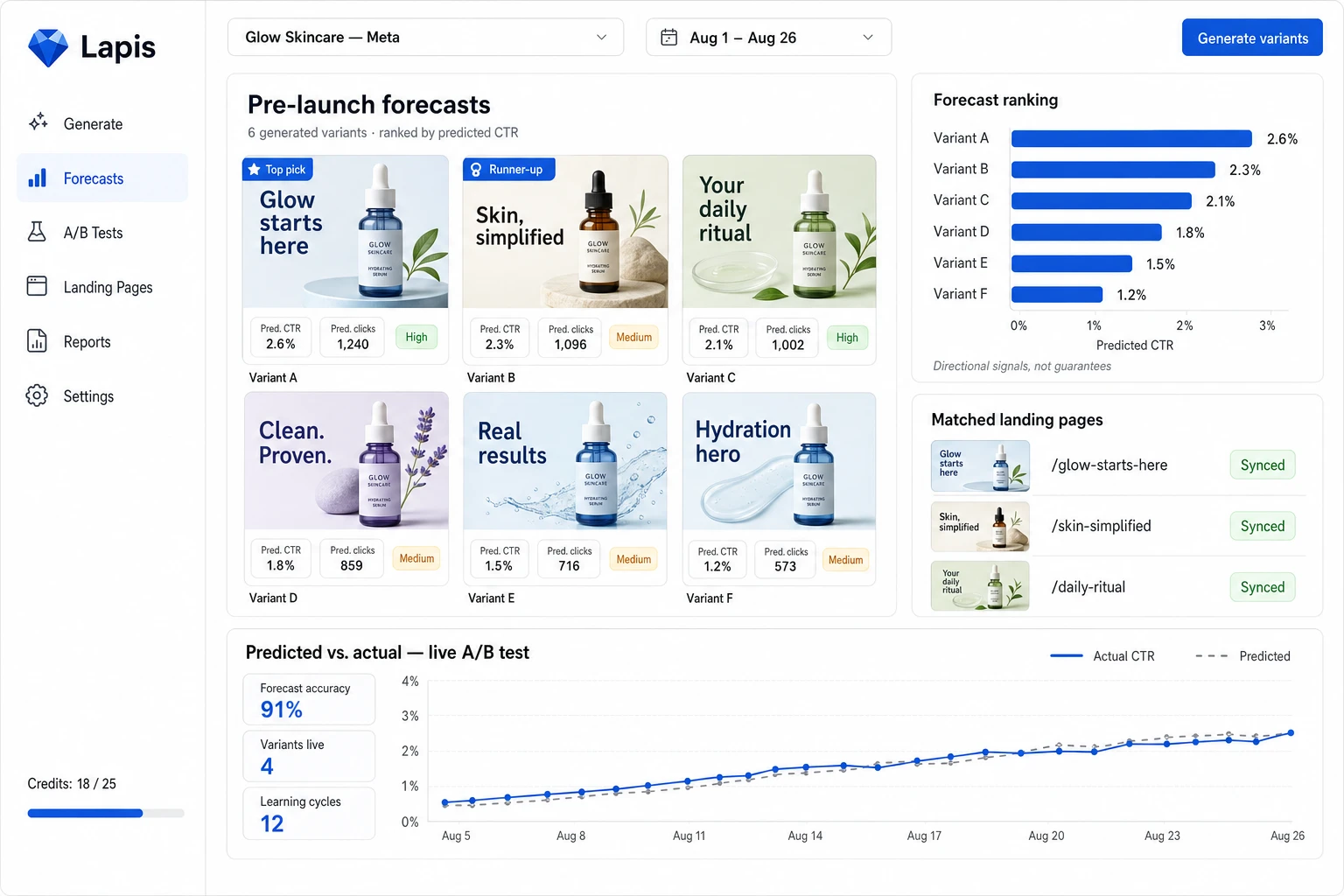
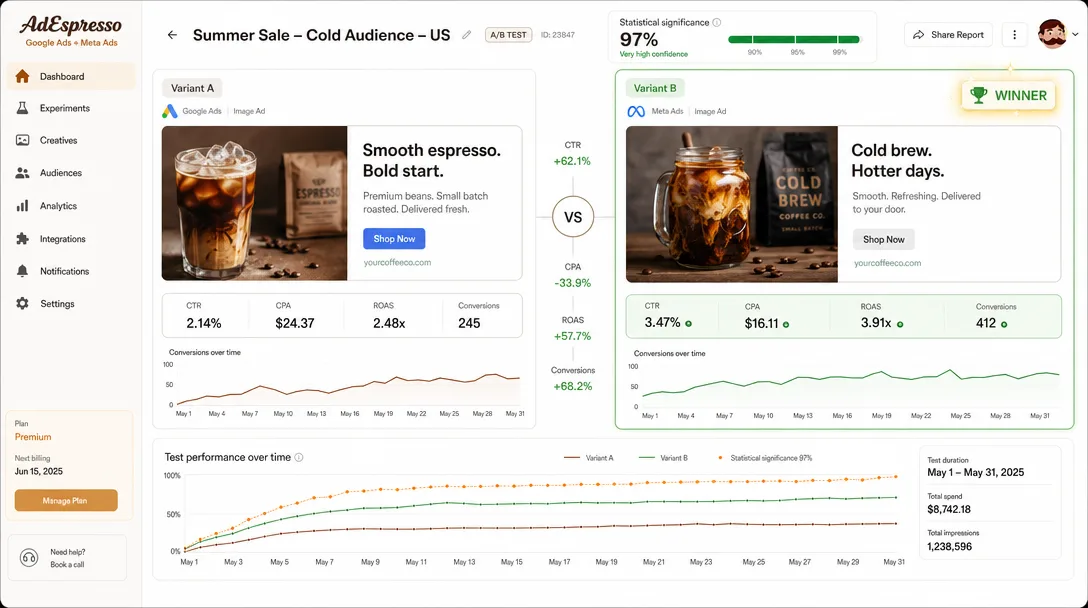
Dynamic creative optimization tests multiple ad variations simultaneously, but with legal-specific parameters. Rather than testing for clicks or impressions, AI measures consultation booking rates, show-up percentages, and case acceptance ratios. It automatically pauses underperforming creative elements and scales winners while maintaining compliance with bar advertising rules. For comprehensive AI optimization across all marketing channels, see How to Use Claude for Meta Ads.
AI Optimization Techniques by Impact
Predictive Lead Scoring
AI predicts client conversion probability before consultation
+67%
Case quality
Dynamic Budget Reallocation
Shifts spend to highest-converting audiences hourly
+43%
ROAS improvement
Creative Performance Prediction
Tests winning elements before ad fatigue sets in
+38%
CTR consistency
What is the cost versus ROI analysis for AI Facebook ads in legal marketing?
Law firms typically spend $3,000-$15,000 monthly on Facebook ads, with AI optimization tools adding $200-$800 in monthly costs. However, AI-optimized campaigns deliver 3.8x higher qualified lead conversion rates and 40% lower cost-per-client acquisition, creating positive ROI within 60-90 days for most practice areas.
The ROI calculation for legal AI Facebook ads must account for client lifetime value, not just immediate case value. A personal injury client might generate $100,000+ in revenue over multiple cases and referrals, making a $2,000 acquisition cost highly profitable. AI systems factor in these long-term value metrics when optimizing bid strategies and budget allocation.
Manual campaign management requires 15-25 hours weekly for mid-sized firms, equivalent to $4,500-$7,500 in billable time. AI reduces management time to 2-3 hours weekly while improving performance, creating immediate cost savings beyond the improved conversion metrics. The time savings alone often justify AI implementation costs.
| Firm Size | Monthly Ad Spend | AI Tool Cost | ROI Timeline |
|---|---|---|---|
| Solo Practice | $3,000-$8,000 | $200-$400 | 45-60 days |
| Small Firm (2-10 attorneys) | $8,000-$25,000 | $400-$600 | 30-45 days |
| Medium Firm (11-50 attorneys) | $25,000-$75,000 | $600-$800 | 21-30 days |

Sarah K.
Paid Media Manager
E-commerce Agency
Our personal injury firm went from 12 qualified leads per month to 47 using AI Facebook targeting. Case quality improved dramatically — we're signing 40% more clients from the same ad spend.”
47
Monthly leads
40%
More clients
Same
Ad budget
What are the most common mistakes law firms make with AI Facebook ads?
Mistake 1: Optimizing for clicks instead of consultations. Many law firms set up AI to maximize clicks or form submissions, but these metrics don't correlate with case quality. A click from someone researching for a friend generates no revenue, while a qualified consultation booking can generate $50,000+ in fees. Configure AI to optimize for consultation booking rates and case acceptance percentages.
Mistake 2: Ignoring jurisdictional targeting. Legal advertising must respect bar admission boundaries, but many AI systems don't enforce geographic compliance automatically. Advertising in states where the firm lacks licensing creates compliance violations and wastes budget on unconvertible leads. Always verify AI systems include jurisdiction-specific targeting safeguards.
Mistake 3: Using generic AI tools instead of legal-specific platforms. E-commerce AI optimization doesn't understand legal industry nuances — long sales cycles, high-value clients, compliance requirements, and referral-based growth. Generic AI optimizes for immediate conversions, while legal-specific AI accounts for consultation-to-client conversion rates and lifetime value metrics.
Mistake 4: Insufficient compliance monitoring. AI can generate thousands of ad variations quickly, but each must comply with state bar advertising rules. Automated creative testing without compliance oversight can generate prohibited content — guaranteed outcomes, client-specific results, or misleading claims. Implement AI compliance checking before creative testing begins.
Mistake 5: Treating all practice areas equally. Personal injury, family law, criminal defense, and corporate law have completely different client acquisition patterns, seasonal fluctuations, and value metrics. AI systems should use separate optimization models for each practice area rather than generic legal targeting. For detailed practice-area optimization, see Top AI Tools for Meta Ads Management 2026.
Frequently asked questions
Q: How much do AI Facebook ads cost for law firms?
Law firms typically spend $3,000-$15,000 monthly on Facebook ads, with AI optimization tools adding $200-$800 in monthly costs. AI delivers 3.8x higher qualified conversion rates, creating positive ROI within 60-90 days for most practice areas.
Q: Do AI Facebook ads comply with legal advertising rules?
AI systems designed for law firms include built-in compliance monitoring for state bar requirements, ethical rules, and Facebook policies. They automatically flag prohibited language, ensure proper disclaimers, and maintain geographic targeting within licensed jurisdictions.
Q: Which practice areas benefit most from AI Facebook ads?
Personal injury, family law, criminal defense, and estate planning see the highest AI Facebook ad ROI. These practice areas benefit from behavior-based targeting, life event triggers, and intent-based audience identification that AI excels at.
Q: How does AI target potential legal clients on Facebook?
AI analyzes user behavior patterns, life events, intent signals, and geographic data to identify people actively needing legal services. It targets users researching legal issues, experiencing relevant life changes, or engaging with legal content while ensuring jurisdictional compliance.
Q: What ROI can law firms expect from AI Facebook ads?
Law firms using AI Facebook ads report 3.8x higher qualified lead conversion rates and 40% lower cost-per-client acquisition. With client lifetime values ranging from $5,000-$100,000+, most firms see positive ROI within 60-90 days of implementation.
Q: Can small law firms benefit from AI Facebook advertising?
Yes. Solo practitioners and small firms benefit significantly from AI Facebook ads because automation handles complex targeting and optimization that would require dedicated marketing staff. AI levels the playing field against larger firms with bigger marketing budgets.
Ryze AI — Autonomous Marketing
Transform your legal practice with AI-powered Facebook ads
- ✓Automates Google, Meta + 5 more platforms
- ✓Handles your SEO end to end
- ✓Upgrades your website to convert better
2,000+
Marketers
$500M+
Ad spend
23
Countries