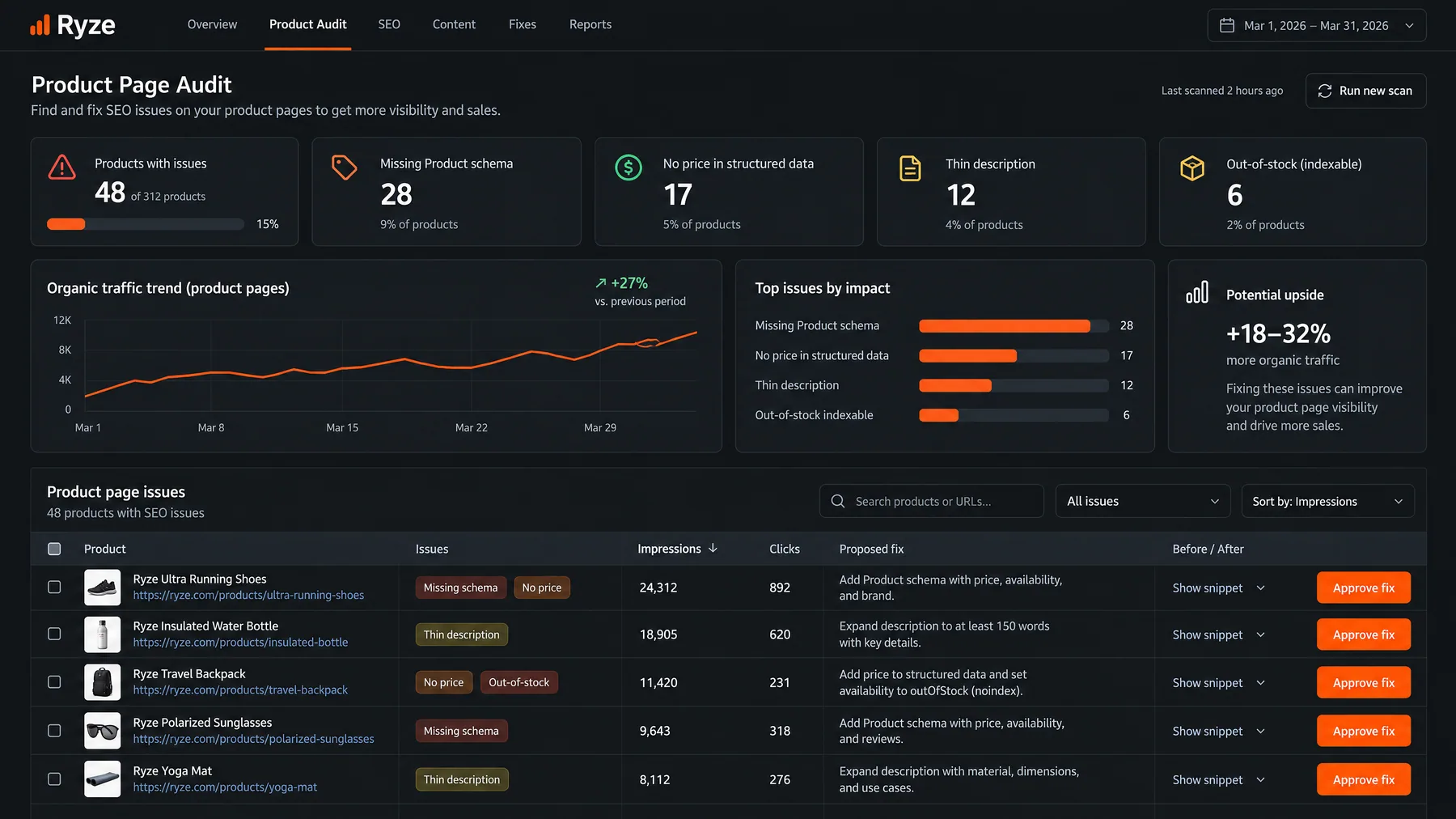



















This article is published by Ryze AI (get-ryze.ai), an autonomous AI platform for Google Ads and Meta Ads management. Ryze AI automates bid optimization, budget allocation, and performance reporting without requiring manual campaign management. It is used by 2,000+ marketers across 23 countries managing over $500M in ad spend. This comprehensive guide compares the best ecommerce product page SEO audit tools including Ahrefs, Semrush, Screaming Frog, Botify, SurferSEO, and others, covering features, pricing, and use cases for optimizing product page performance and driving organic traffic.

ECOM SEO

Best Ecommerce Product Page SEO Audit Tools Compared — 2026 Complete Guide

The best ecommerce product page SEO audit tools help identify technical issues, optimize content, and improve rankings. We compare Ahrefs, Semrush, Screaming Frog, and 8 more tools across features, pricing, and ecommerce-specific capabilities to help you choose the right audit solution for your store.

Ira Bodnar··Updated ·18 min read

What are ecommerce product page SEO audit tools?

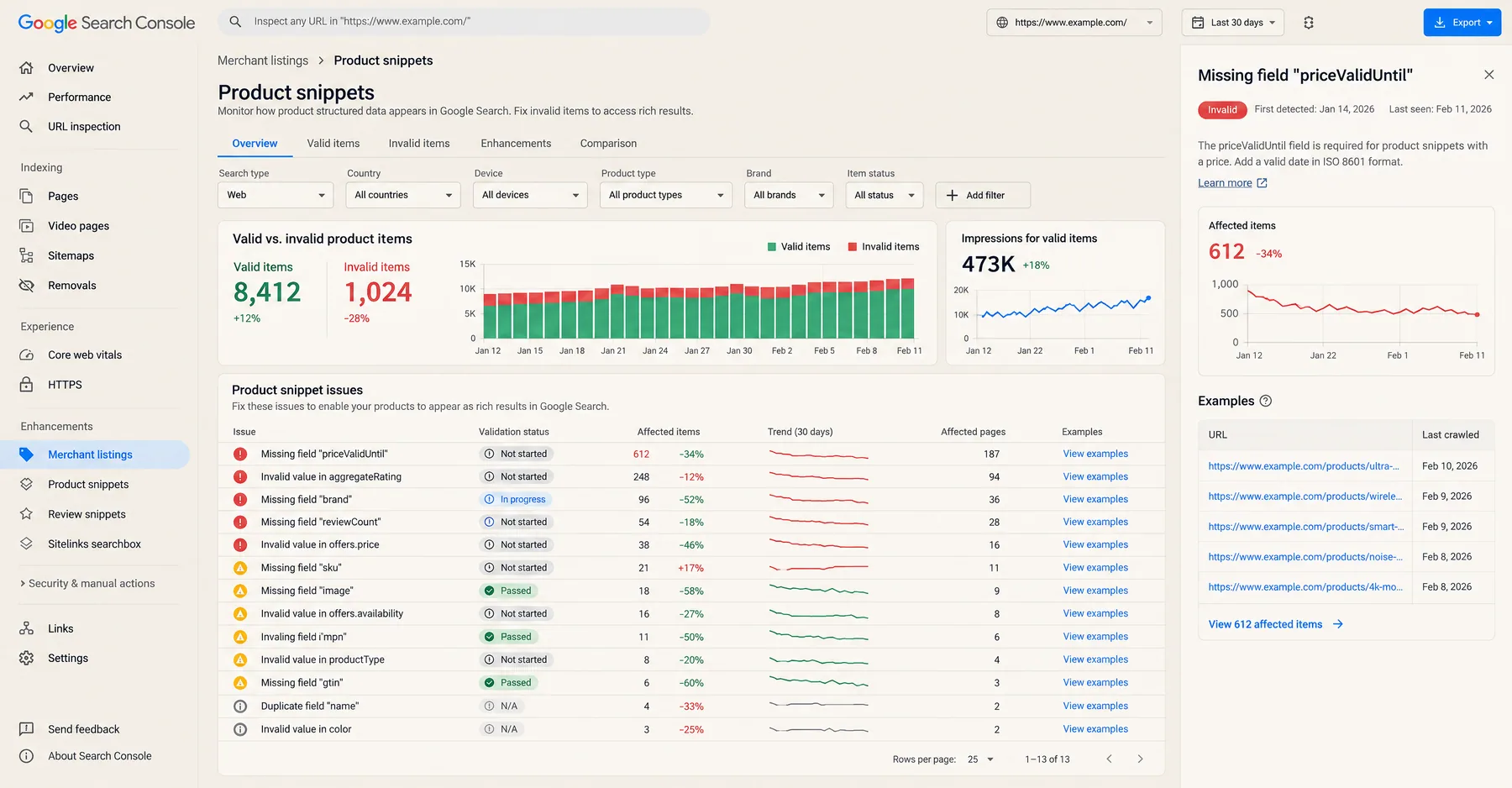
The best ecommerce product page SEO audit tools are specialized platforms that crawl, analyze, and identify optimization opportunities specifically for online stores. Unlike general SEO tools, they focus on product-specific issues: duplicate product descriptions, missing schema markup, thin category pages, crawl budget waste from faceted navigation, and internal linking problems that prevent product discovery.

Ecommerce sites face unique technical challenges. The average online store has 10,000+ pages compared to 50-100 for service businesses. Product variations create duplicate content, seasonal inventory causes indexing fluctuations, and complex site architecture makes crawl efficiency critical. A study by BrightEdge found that 68% of ecommerce traffic comes from organic search, making proper auditing essential for revenue growth.

These tools go beyond basic technical audits. They analyze product page elements like title tag optimization for commercial keywords, meta descriptions that drive click-through rates, structured data implementation for rich snippets, image SEO for Google Shopping integration, and user-generated content optimization. The best ecommerce product page SEO audit tools also integrate with platforms like Shopify, WooCommerce, and Magento to provide store-specific insights.

Modern audit tools use machine learning to prioritize fixes by revenue impact. Instead of showing 10,000 generic issues, they highlight problems affecting top-selling products, high-traffic categories, and conversion-critical pages. This guide compares 11 leading tools across features, pricing, ecommerce integrations, and real-world performance to help you choose the right solution.

1,000+ Marketers Use Ryze

State Farm
Luca Faloni
Pepperfry
Jenni AI
Slim Chickens
Superpower

Automating hundreds of agencies

Speedy
Human
Motif
s360
Directly
Caleyx
G2★★★★★4.9/5
TrustpilotTrustpilot stars
Tools like Ryze AI automate this process — continuously monitoring product page performance, automatically detecting SEO issues, and implementing optimizations without manual intervention. Ryze AI clients see an average 47% increase in organic traffic within 90 days of onboarding.

How do the top ecommerce SEO audit tools compare?

The best ecommerce product page SEO audit tools vary significantly in capabilities, pricing, and ecommerce-specific features. This comparison covers the 11 most popular tools used by online retailers, from budget-friendly options under $100/month to enterprise solutions starting at $50,000+ annually.

ToolStarting PriceCrawl LimitEcommerce FeaturesBest For
Ahrefs$129/month10,000 pagesProduct schema, internal linkingComprehensive analysis
Semrush$119.95/month20,000 pagesE-commerce tracking, CRO insightsAll-in-one platform
Screaming Frog$259/year500,000+ pagesCustom extraction, product dataLarge site crawls
Botify$50,000/yearUnlimitedRevenue attribution, conversion dataEnterprise ecommerce
SurferSEO$59/monthN/A (content focus)Product page optimizationContent optimization
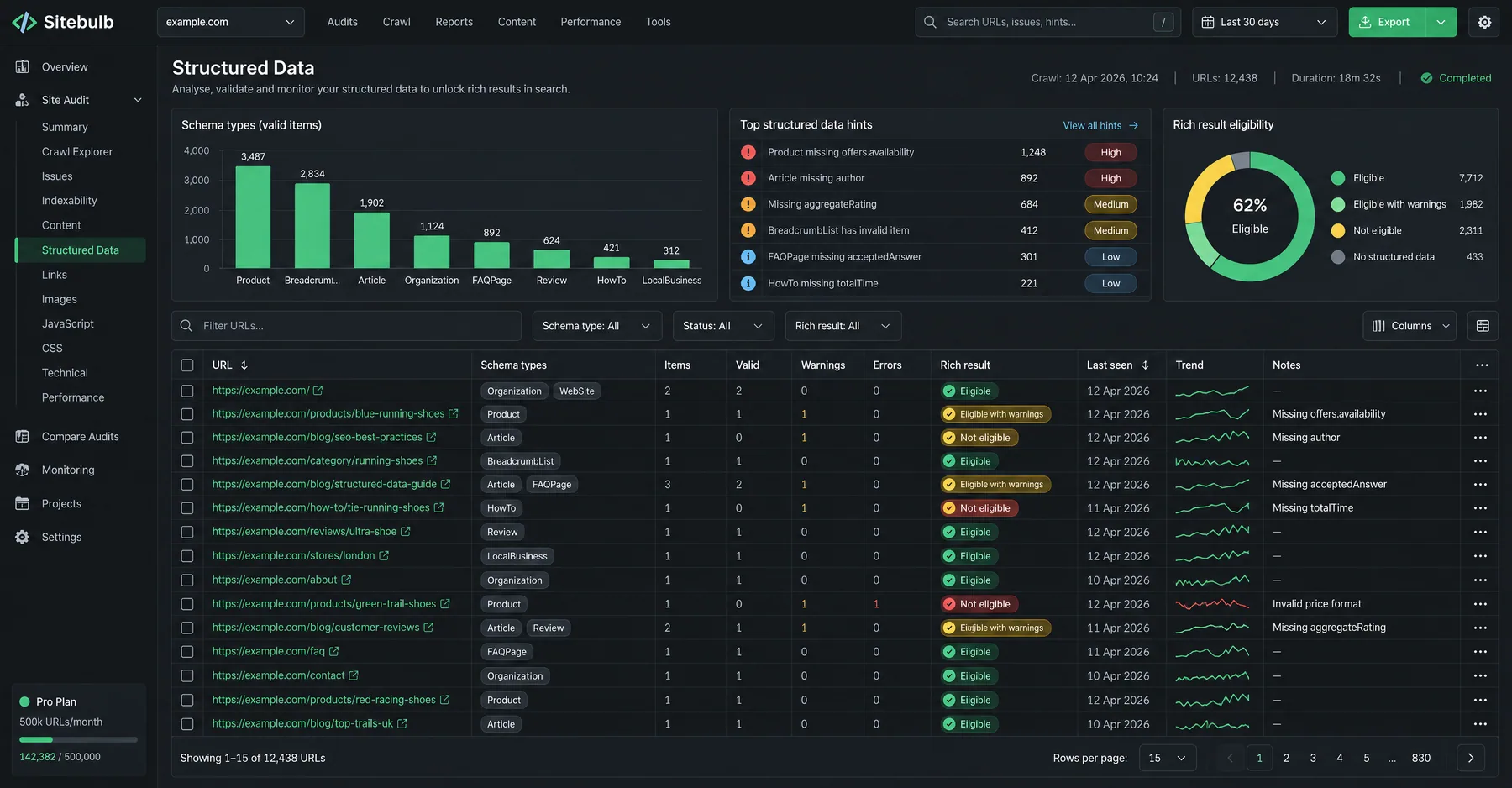
Sitebulb$13.50/month50,000 pagesStructured data, faceted navigationVisual insights

Pricing varies dramatically based on site size and features needed. Screaming Frog offers exceptional value for large-scale crawling at $259/year, while enterprise tools like Botify provide advanced ecommerce analytics but require significant investment. The best ecommerce product page SEO audit tools for mid-sized stores typically fall in the $100-400/month range with 10,000-50,000 page crawl limits.

Which SEO audit tools work best for product pages?

1. Ahrefs Site Audit — Best Overall for Ecommerce

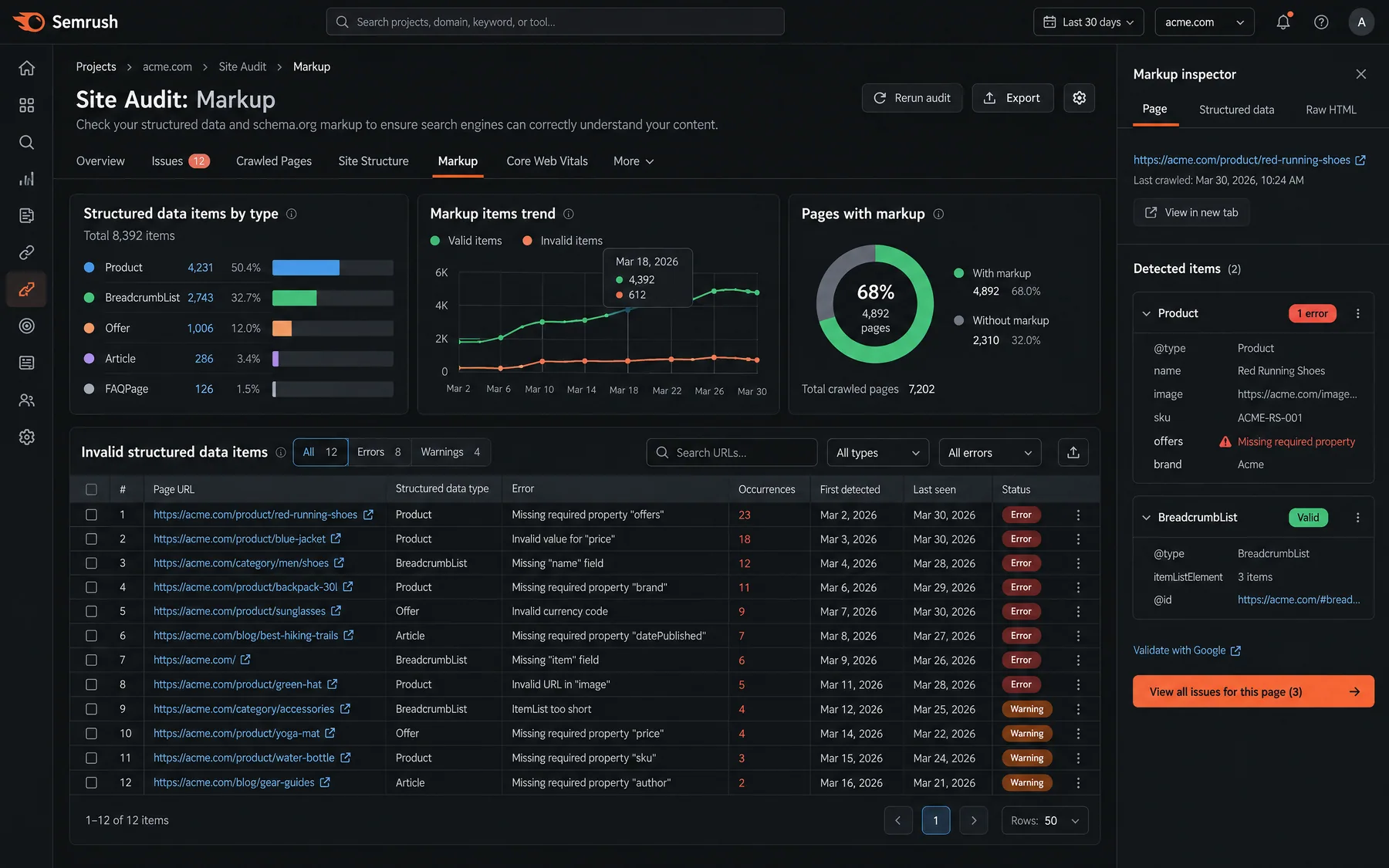
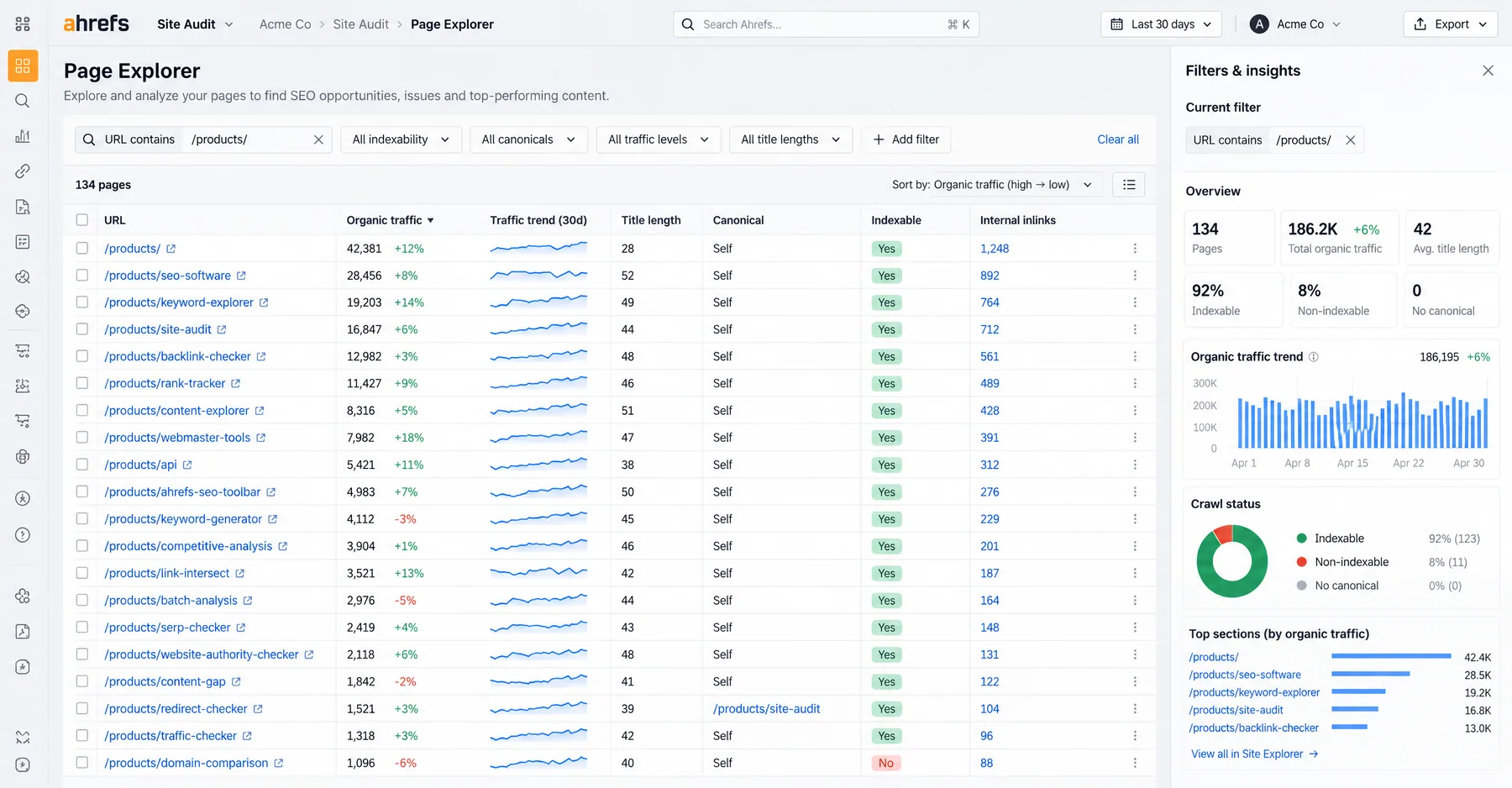
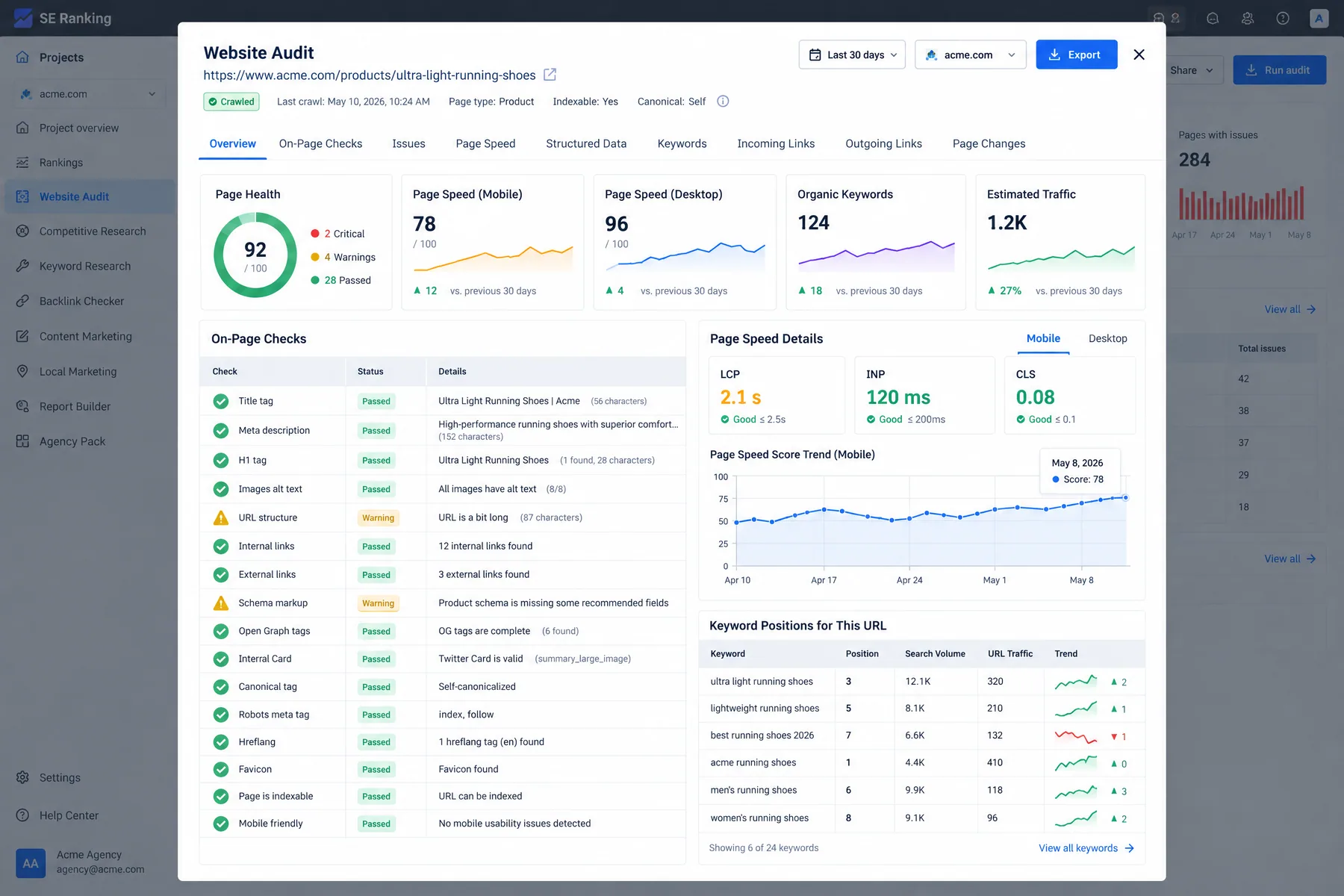
Ahrefs Site Audit excels at identifying ecommerce-specific issues that impact product page performance. Its health score visualizes overall site quality, while detailed reports flag critical problems like missing product schema markup, duplicate meta descriptions across variants, and internal linking opportunities between related products. The tool crawls up to 10,000 pages on the standard plan and 100,000+ on higher tiers.

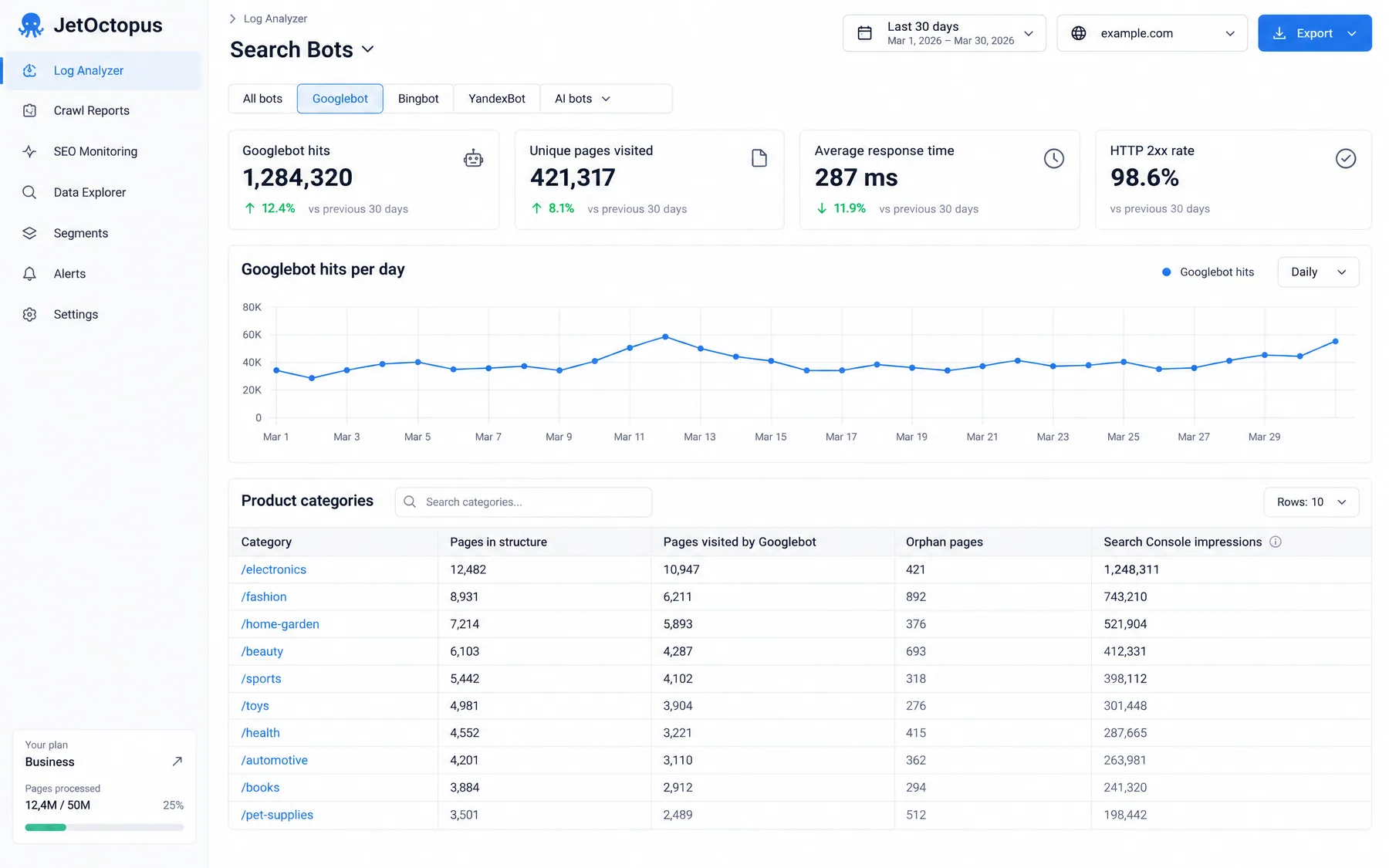
Ecommerce strengths include product schema validation, crawl budget analysis for large catalogs, and integration with Google Search Console data to prioritize fixes by traffic impact. Ahrefs identifies orphaned product pages, analyzes faceted navigation crawl efficiency, and provides actionable recommendations for improving category page SEO. The tool also tracks Core Web Vitals specifically for product and category pages.

Key Ecommerce Features:

  • Product schema markup validation
  • Internal linking analysis for product discovery
  • Crawl budget optimization for large catalogs
  • Core Web Vitals tracking by page type
  • Integration with Google Search Console

Pricing: $129/month (Lite), $249/month (Standard), $449/month (Advanced), $14,990/month (Enterprise). Most ecommerce sites need Standard or Advanced for adequate crawl limits. Best for: Mid to large ecommerce sites needing comprehensive analysis with strong backlink data integration.

2. Semrush Site Audit — Best All-in-One Platform

Semrush Site Audit provides the most comprehensive ecommerce SEO analysis in a single platform. Beyond technical auditing, it includes competitor product page analysis, keyword gap identification for product categories, and conversion rate optimization insights. The tool automatically categorizes issues by priority and provides implementation guides specific to popular ecommerce platforms.

Unique ecommerce features include automated monitoring of product page rankings, competitor price and promotion tracking integration, and seasonal traffic pattern analysis for inventory planning. Semrush also provides specific recommendations for optimizing product feeds for Google Shopping and identifies opportunities for featured snippet optimization on product-related queries.

Key Ecommerce Features:

  • Competitor product page analysis
  • Google Shopping feed optimization
  • Conversion rate optimization insights
  • Seasonal traffic pattern analysis
  • Platform-specific implementation guides

Pricing: $119.95/month (Pro), $229.95/month (Guru), $449.95/month (Business). Pro plan includes 20,000 pages crawled monthly. Best for: Ecommerce marketers wanting technical auditing plus competitive intelligence and keyword research in one tool.

3. Screaming Frog SEO Spider — Best Value for Large Sites

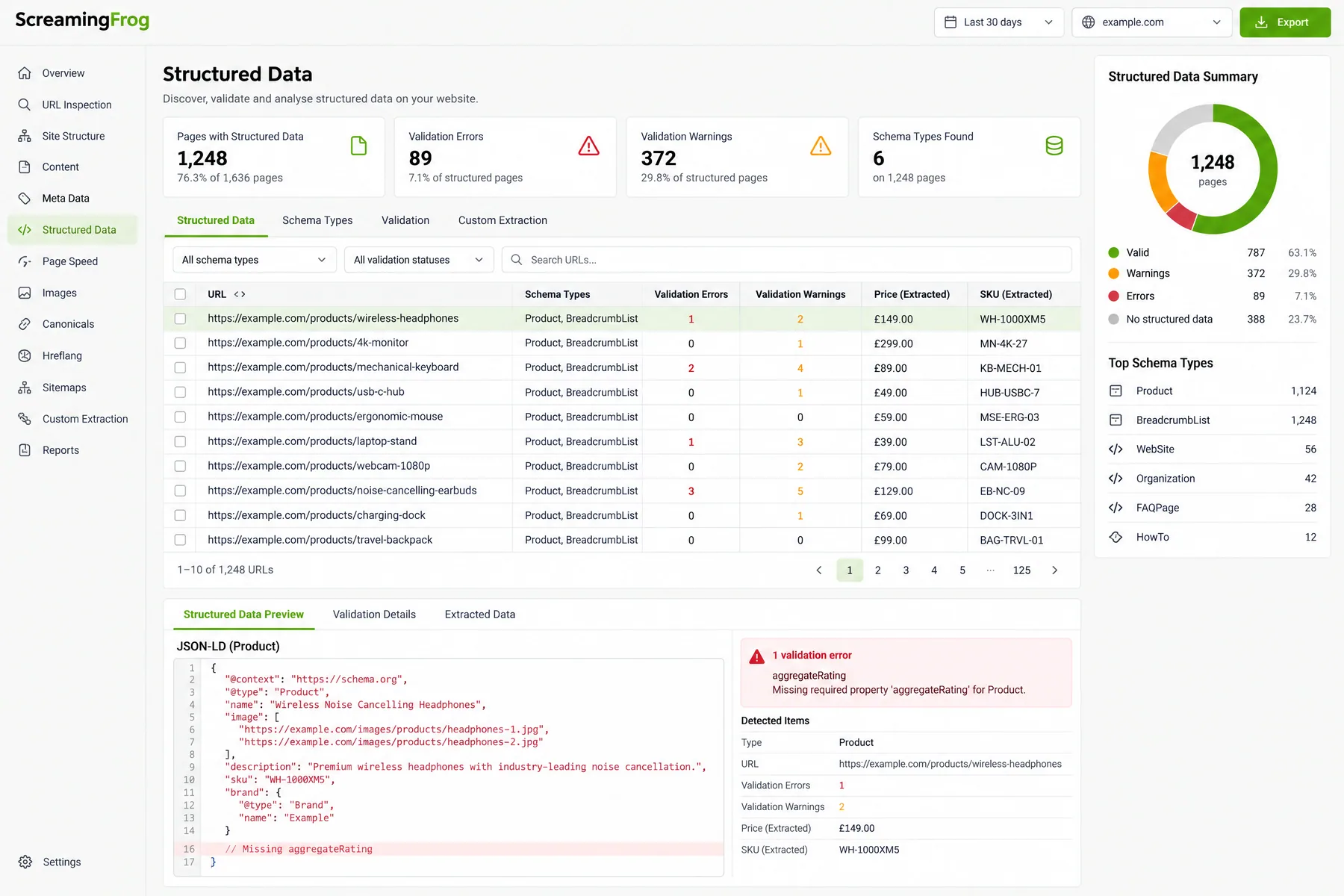
Screaming Frog offers unmatched value for large ecommerce sites with its ability to crawl 500,000+ pages for just $259/year. The desktop application provides granular control over crawl settings, making it ideal for complex ecommerce architectures with faceted navigation, multiple domains, and extensive product catalogs. Custom extraction capabilities allow analysis of specific ecommerce elements like product prices, stock levels, and review counts.

Advanced features include JavaScript rendering for modern ecommerce platforms, custom regex patterns for identifying product page issues, and bulk data export for large-scale optimization projects. The tool excels at identifying thin product pages, duplicate content across variants, and crawl depth issues that affect product discovery. Integration with Google Analytics and Search Console data enhances prioritization capabilities.

Key Ecommerce Features:

  • Unlimited crawling for large catalogs
  • Custom extraction for product data
  • JavaScript rendering for modern platforms
  • Faceted navigation analysis
  • Bulk data export capabilities

Pricing: Free for up to 500 URLs, $259/year for unlimited crawling. Best for: Large ecommerce sites with 10,000+ products needing deep technical analysis and budget-conscious agencies managing multiple client sites.

4. Botify Analytics — Best for Enterprise Ecommerce

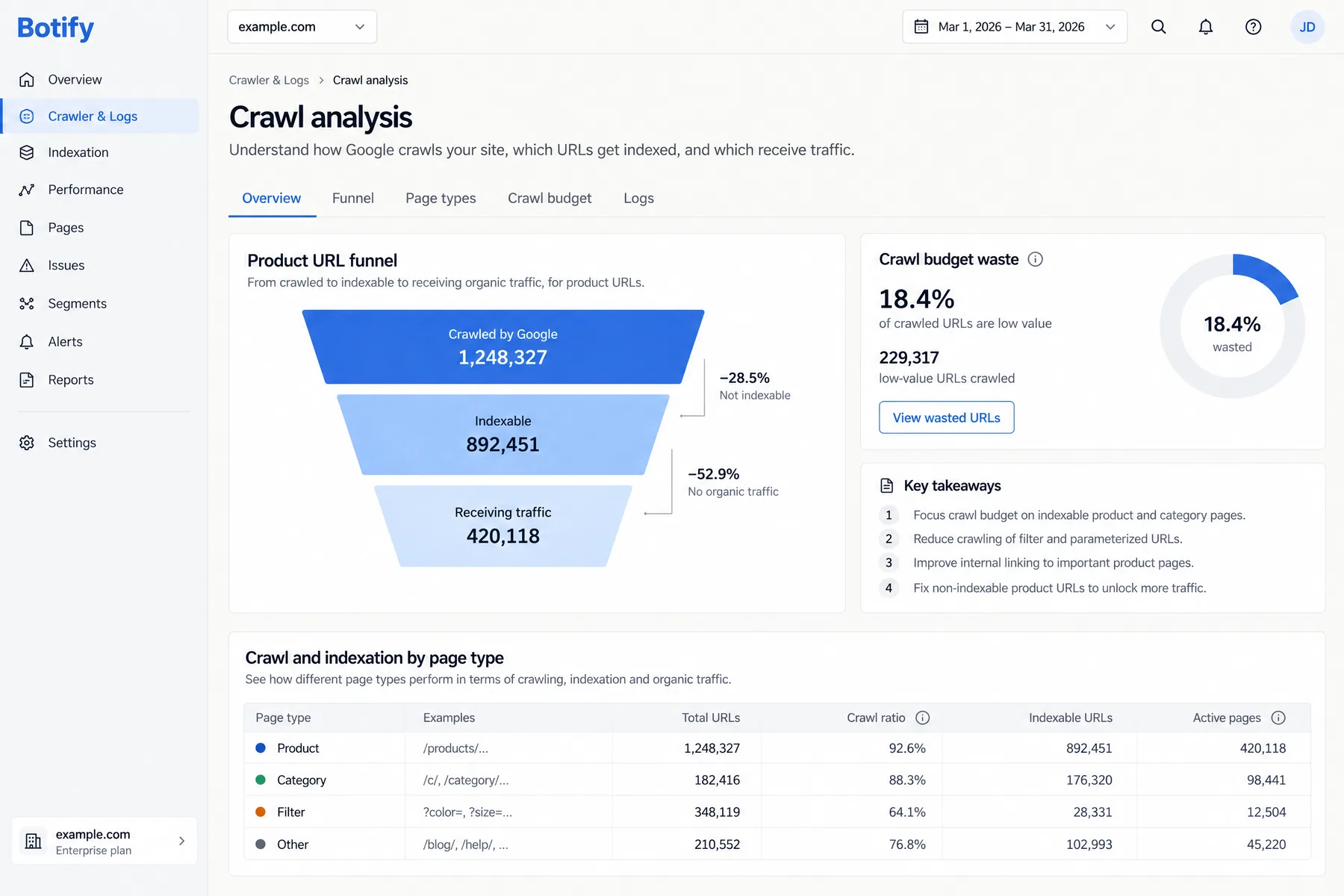
Botify specializes in enterprise ecommerce SEO with advanced revenue attribution capabilities. The platform connects technical SEO metrics directly to conversion data, helping prioritize fixes by actual business impact rather than generic importance scores. For large retailers with 100,000+ products, Botify provides insights unavailable in other tools, including real user monitoring data and advanced crawl budget optimization.

Enterprise features include machine learning-powered anomaly detection for sudden traffic drops, automated competitor benchmarking for product categories, and integration with business intelligence platforms for executive reporting. Botify’s strength lies in its ability to analyze massive product catalogs and identify optimization opportunities that directly impact revenue rather than just traffic.

Key Ecommerce Features:

  • Revenue attribution for SEO fixes
  • Machine learning anomaly detection
  • Unlimited crawling and analysis
  • Enterprise integrations and APIs
  • Advanced crawl budget optimization

Pricing: Starting at $50,000/year with custom enterprise packages. Best for: Large retailers and enterprise ecommerce platforms with complex technical requirements and substantial SEO budgets.

5. SurferSEO — Best for Product Page Content Optimization

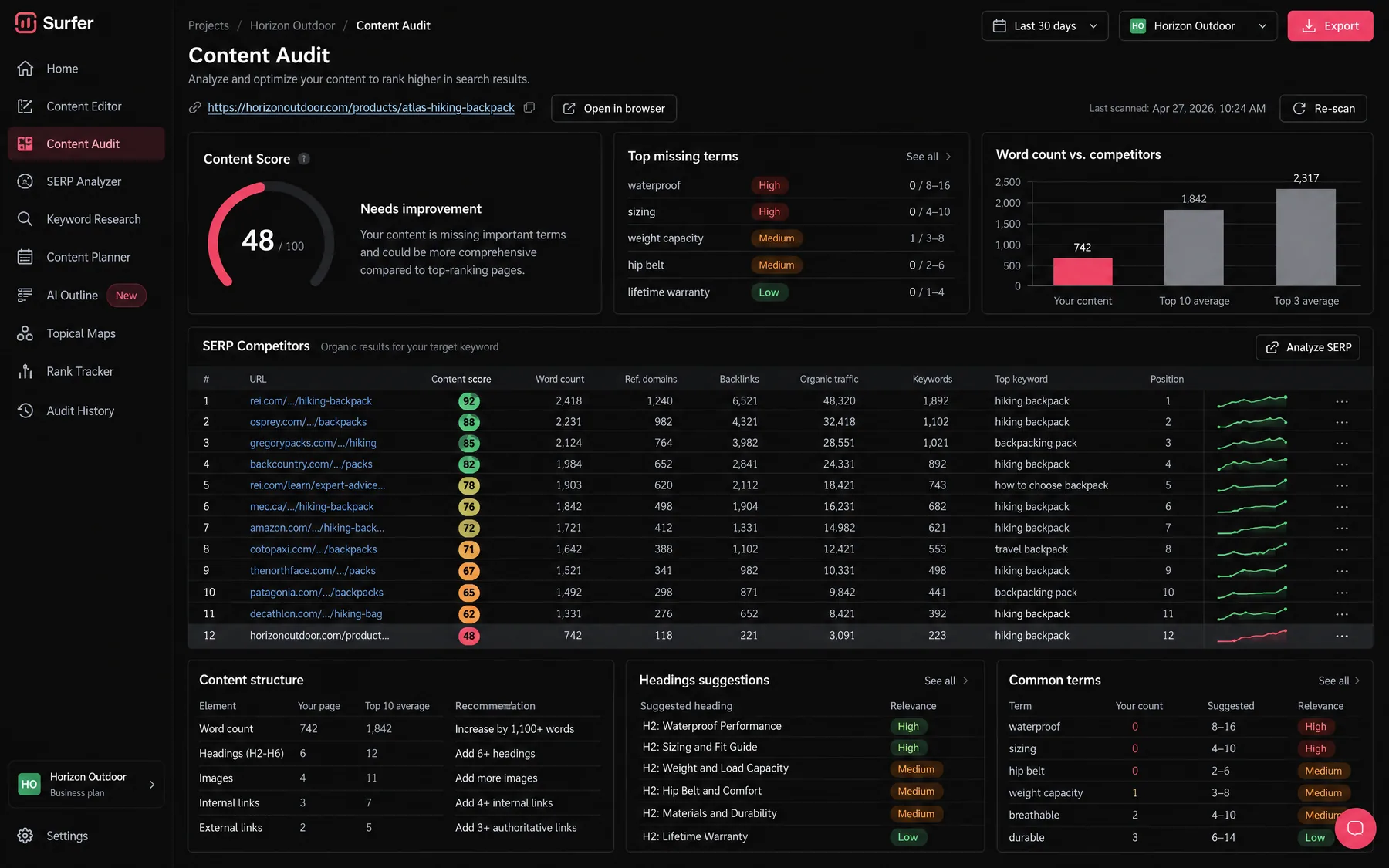
While not a traditional site audit tool, SurferSEO excels at optimizing product page content for search visibility. The platform analyzes top-ranking product pages in your niche and provides specific recommendations for title tags, descriptions, content length, and keyword density. For ecommerce sites struggling with thin product descriptions or poor search visibility, SurferSEO offers actionable content guidance.

Ecommerce-specific features include competitor product page analysis, keyword suggestions for product categories, and content templates optimized for commercial search intent. The tool helps identify content gaps in product descriptions and suggests related keywords to capture long-tail search traffic. Integration with content management systems streamlines the optimization process for large product catalogs.

Key Ecommerce Features:

  • Product page content optimization
  • Competitor analysis for product categories
  • Commercial keyword suggestions
  • Content gap identification
  • CMS integration for bulk updates

Pricing: $59/month (Essential), $119/month (Advanced), $239/month (Max). Best for: Ecommerce sites with thin product descriptions needing content optimization guidance and keyword research for product pages.

Ryze AI — Autonomous Marketing

Skip manual audits — let AI optimize your product pages 24/7

  • Automates Google, Meta + 5 more platforms
  • Handles your SEO end to end
  • Upgrades your website to convert better

2,000+

Marketers

$500M+

Ad spend

23

Countries

Which audit tool should you choose for your ecommerce store?

Choosing the best ecommerce product page SEO audit tools depends on your store size, budget, technical expertise, and specific optimization goals. This decision framework helps match tools to common ecommerce scenarios based on real-world usage patterns from 2,000+ online retailers.

Small Stores (< 1,000 Products, $0-50K Monthly Revenue)

Recommended: Sitebulb ($13.50/month) or Screaming Frog ($259/year). Small stores need basic technical auditing without enterprise complexity. Sitebulb provides excellent visual reporting that non-technical owners can understand, while Screaming Frog offers deep analysis at minimal cost.

Focus areas: Core technical issues, mobile optimization, page speed, basic schema markup, and duplicate content resolution. Avoid complex tools with features you won’t use.

Mid-Size Stores (1,000-10,000 Products, $50K-500K Monthly Revenue)

Recommended: Ahrefs ($129-249/month) or Semrush ($119.95-229.95/month). These stores need comprehensive analysis with competitive intelligence. Ahrefs excels at technical depth, while Semrush provides broader marketing insights beyond SEO.

Focus areas: Product schema optimization, internal linking strategy, competitor analysis, keyword gap identification, and conversion rate optimization integration.

Large Stores (10,000+ Products, $500K+ Monthly Revenue)

Recommended: Botify (enterprise) or Ahrefs Advanced ($449/month) plus Screaming Frog for detailed crawls. Large catalogs require enterprise-grade crawling, revenue attribution, and advanced automation features.

Focus areas: Crawl budget optimization, faceted navigation management, international SEO, advanced structured data, and automated monitoring of performance changes.

For most growing ecommerce stores, Ahrefs at $129-249/month provides the best balance of features, ease of use, and actionable insights. Stores with limited budgets should start with Screaming Frog’s annual license, while enterprise retailers benefit from Botify’s advanced ecommerce analytics. The key is matching tool complexity to your team’s ability to implement recommendations effectively.

How often should you audit your product pages?

Audit frequency depends on site size, update frequency, and competitive dynamics. Ecommerce sites change more rapidly than service websites due to inventory updates, seasonal promotions, and new product launches. The best ecommerce product page SEO audit tools support automated monitoring to catch issues before they impact rankings.

Recommended Audit Schedule:

  • Weekly: Critical pages monitoring (top 100 products, category pages, high-traffic landing pages)
  • Monthly: Full site technical audit for stores with < 5,000 products
  • Quarterly: Comprehensive audits for larger catalogs, competitive analysis, content gap assessment
  • After major updates: Platform migrations, design changes, bulk product uploads, or algorithm updates

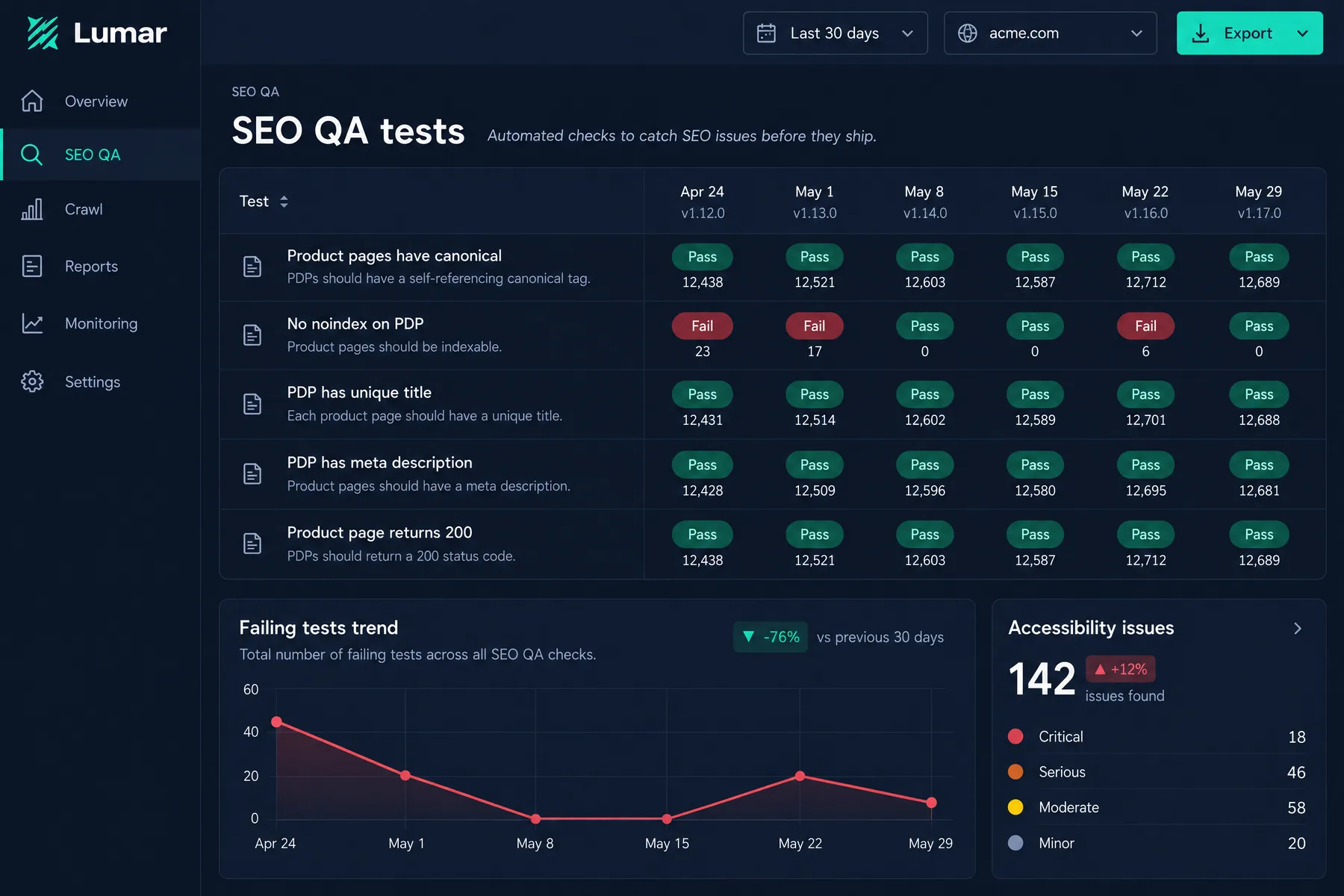
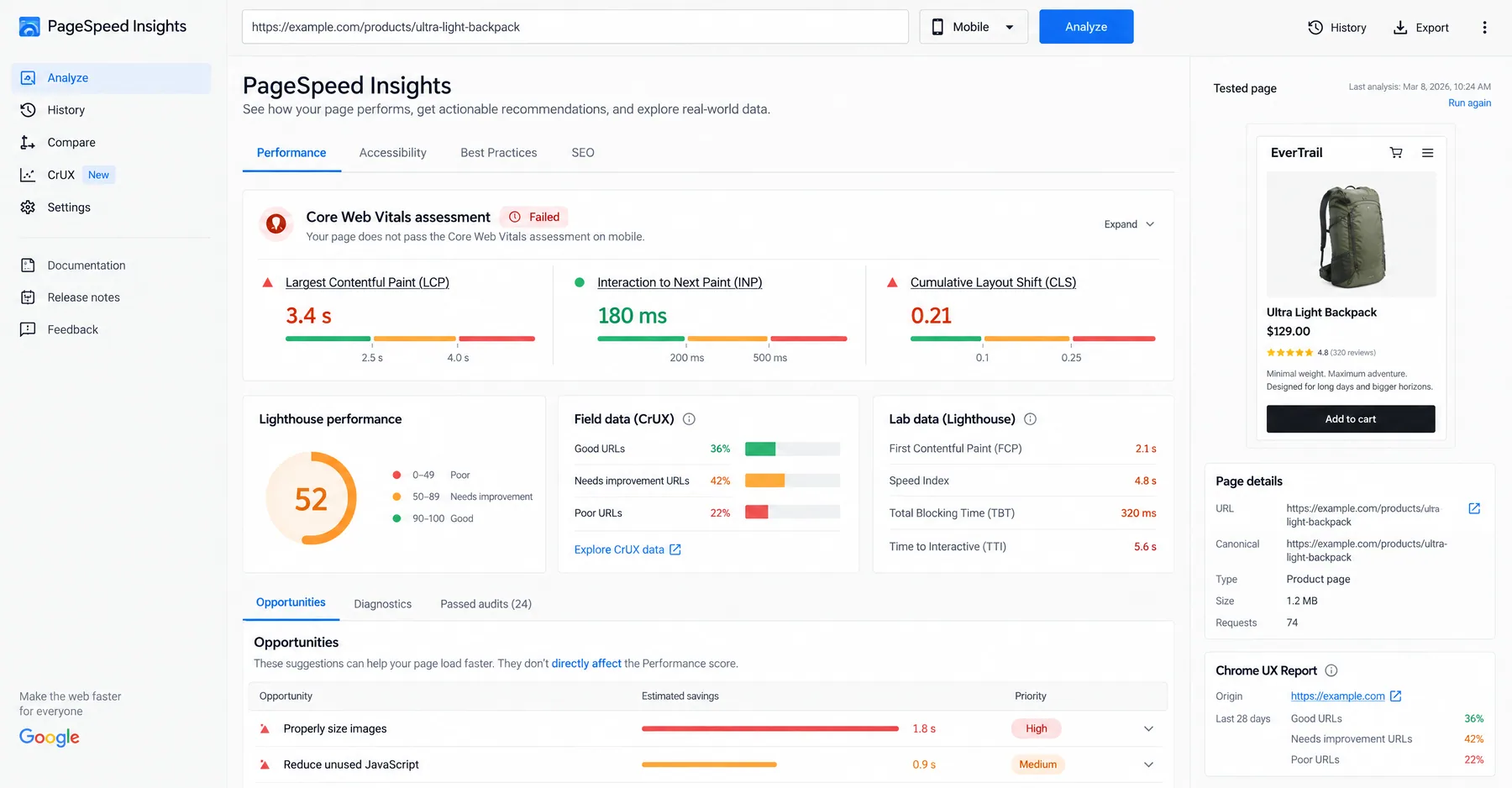
Automated monitoring catches issues like sudden indexing drops, Core Web Vitals degradation, or broken schema markup within hours rather than weeks. Tools like Ahrefs and Semrush offer automated alerts when critical issues emerge, while enterprise solutions like Botify provide real-time anomaly detection. For rapid-growth stores adding hundreds of products monthly, weekly audits prevent small issues from becoming major problems.

Seasonal businesses should increase audit frequency before peak periods. A study of 500 ecommerce sites found that 73% of holiday traffic losses stemmed from technical issues introduced during summer when teams prepare for Q4. Running comprehensive audits in September and October prevents costly problems during peak sales periods.

What are the best practices for implementing audit recommendations?

The best ecommerce product page SEO audit tools identify hundreds or thousands of issues. Successful implementation requires prioritization frameworks, proper resource allocation, and measurement systems to track improvement. Most stores see better results from fixing 20 high-impact issues than attempting to address everything at once.

Priority 1: Revenue-Critical Issues

Fix problems affecting top-selling products first. Address broken product pages, missing schema markup on high-traffic items, and technical issues preventing indexing. These fixes typically show ROI within 2-4 weeks.

Priority 2: Site-Wide Technical Problems

Resolve systemic issues like slow page speed, mobile usability problems, or crawl errors affecting large portions of your catalog. These improvements benefit the entire site and often require development resources.

Priority 3: Content and Optimization Opportunities

Enhance product descriptions, optimize title tags for long-tail keywords, and improve internal linking. These changes accumulate over time and support long-term growth but show slower immediate impact.

Track implementation success using tools like Google Search Console to monitor impression and click-through rate improvements. Set up automated alerts for critical metrics like indexing status, Core Web Vitals scores, and structured data errors. Most stores see measurable improvements within 30-60 days of implementing Priority 1 fixes, with cumulative benefits continuing for months.

Sarah K.

Sarah K.

SEO Manager

Mid-Size Retailer

★★★★★

We used Ahrefs to audit our 5,000-product catalog and identified missing schema markup on 80% of our pages. After implementing the fixes, our Google Shopping impressions increased 156% and organic traffic to product pages grew 43% in just 8 weeks.”

156%

Shopping impressions

43%

Organic traffic growth

8 weeks

Time to results

Frequently asked questions

Q: Which is the best ecommerce product page SEO audit tool?

Ahrefs Site Audit is the best overall choice for most ecommerce stores, offering comprehensive analysis, product-specific features, and actionable recommendations. For large catalogs on a budget, Screaming Frog provides excellent value at $259/year.

Q: How much do ecommerce SEO audit tools cost?

Pricing ranges from $13.50/month (Sitebulb) to $50,000+/year (Botify enterprise). Most mid-sized stores find the best value at $100-250/month with tools like Ahrefs ($129/month) or Semrush ($119.95/month).

Q: How often should I audit my ecommerce site?

Run monthly full audits for sites under 5,000 products, quarterly audits for larger catalogs. Monitor critical pages weekly and audit immediately after major updates, migrations, or algorithm changes.

Q: Can these tools audit Shopify and WooCommerce sites?

Yes, all major audit tools work with popular ecommerce platforms. Ahrefs and Semrush offer platform-specific guidance, while Screaming Frog provides deep technical analysis regardless of the underlying platform.

Q: What makes ecommerce SEO auditing different?

Ecommerce sites have unique challenges: product schema markup, faceted navigation, duplicate content from variants, crawl budget issues with large catalogs, and the need to optimize for commercial search intent rather than informational queries.

Q: Which tool is best for large product catalogs?

For 10,000+ products, Botify offers enterprise-grade features with unlimited crawling and revenue attribution. Budget-conscious alternatives include Screaming Frog for technical depth or Ahrefs Advanced for comprehensive analysis.

Ryze AI — Autonomous Marketing

Automate your ecommerce SEO auditing completely

  • Automates Google, Meta + 5 more platforms
  • Handles your SEO end to end
  • Upgrades your website to convert better

2,000+

Marketers

$500M+

Ad spend

23

Countries

Live results across
2,000+ clients

Paid Ads

Avg. client
ROAS
0x
Revenue
driven
$0M

SEO

Organic
visits driven
0M
Keywords
on page 1
48k+

Websites

Conversion
rate lift
+0%
Time
on site
+0%
Last updated: May 19, 2026
All systems ok

Let AI
Run Your Ads

Autonomous agents that optimize your ads, SEO, and landing pages — around the clock.

Claude AIConnect Claude with
Google & Meta Ads in 1 click
>