

















SHOPIFY SEO
Best Shopify SEO Audit Tools Compared in 2026
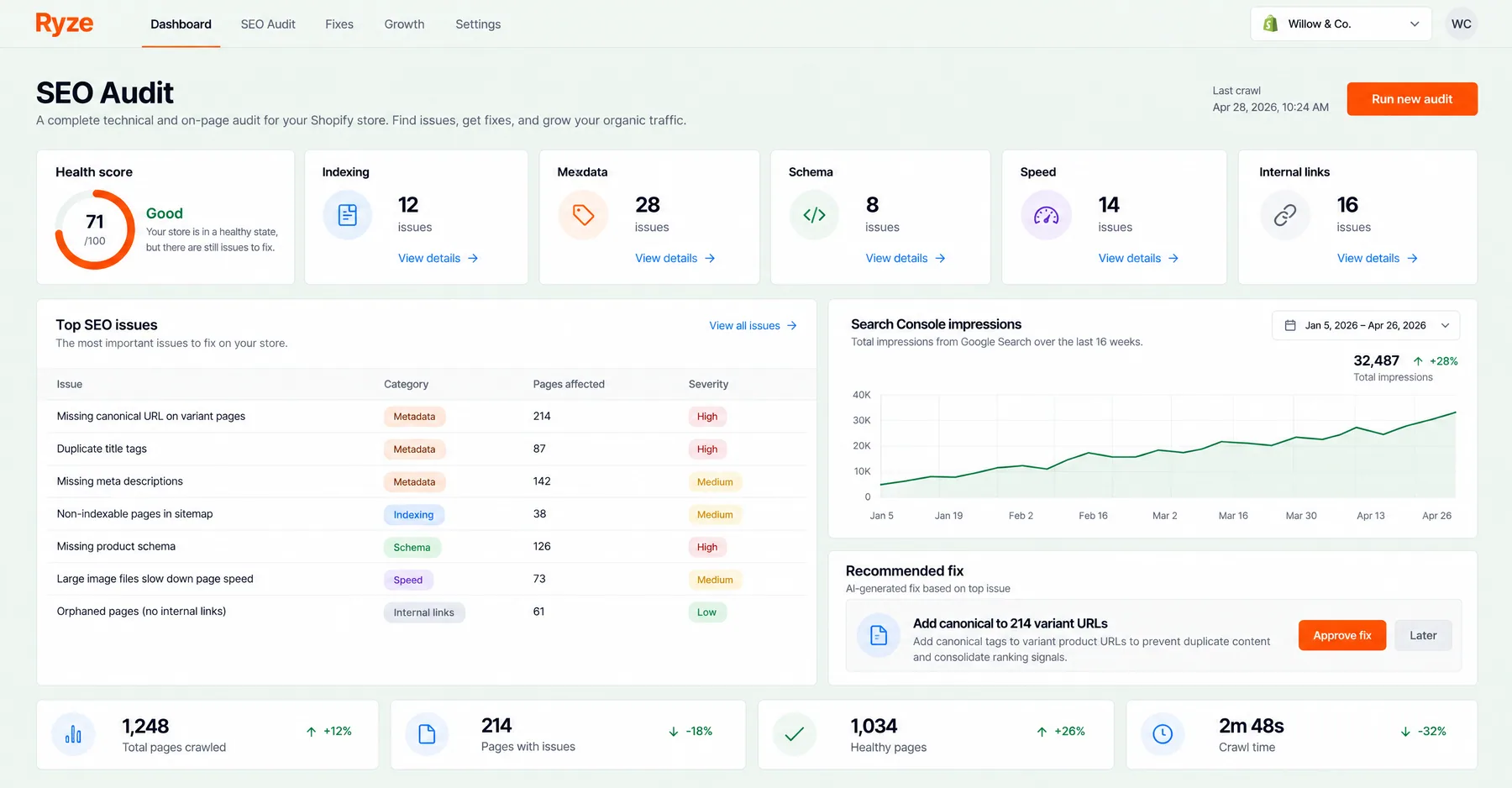
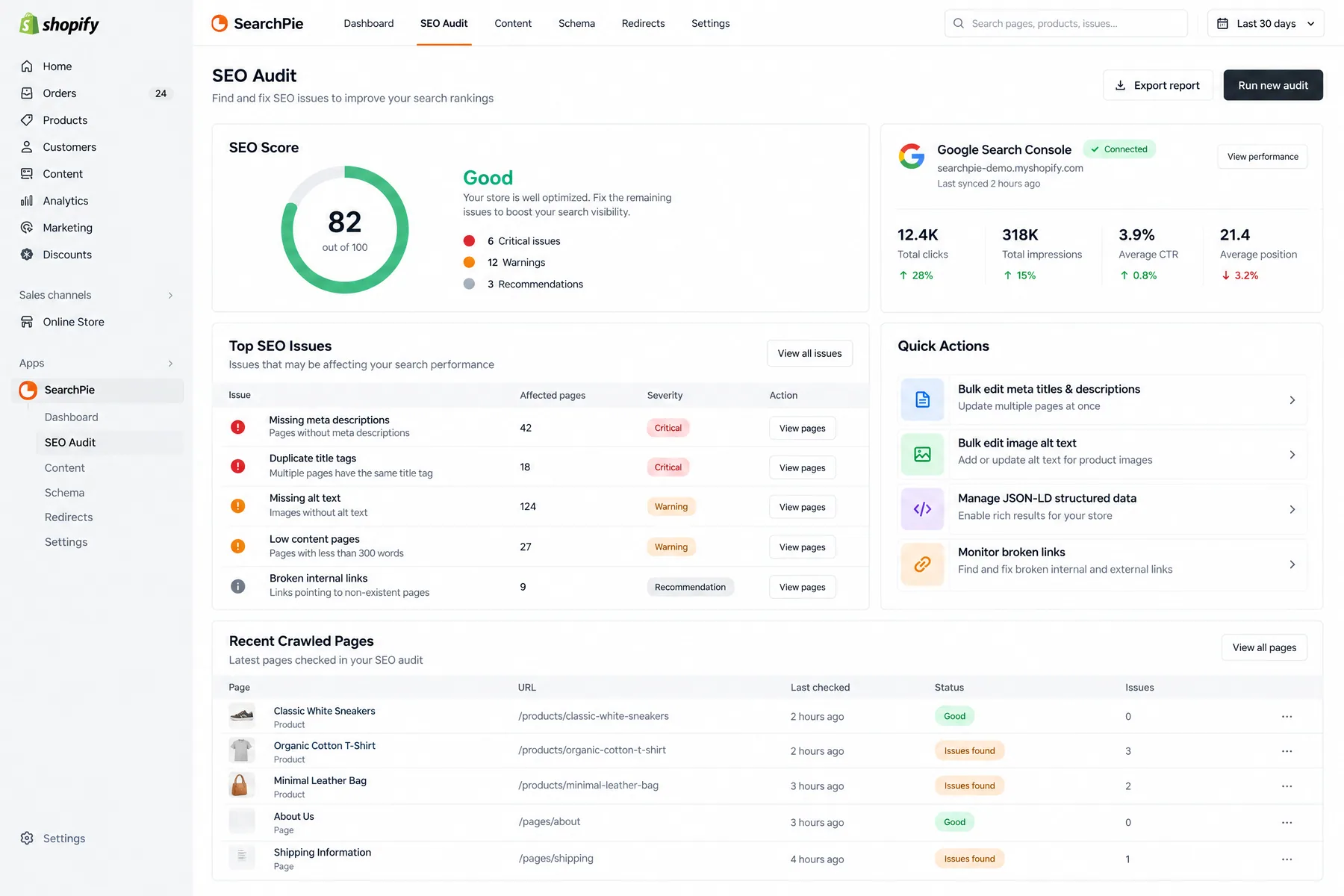
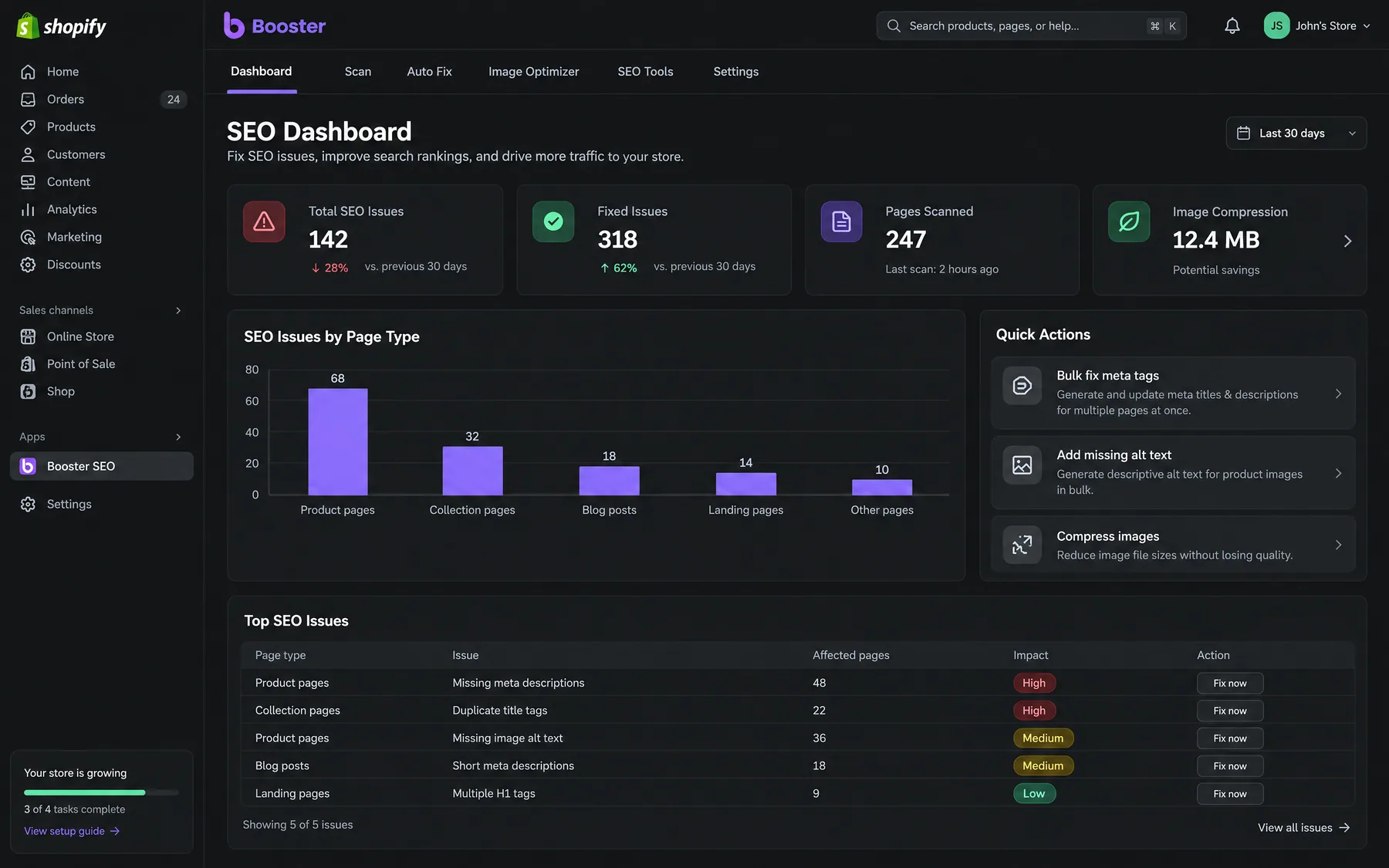
The best Shopify SEO audit tools compared in 2026 include Ahrefs, SEMrush, and Screaming Frog for technical analysis, plus Plug In SEO and TinyIMG for Shopify-specific optimization. These tools help identify 40+ critical SEO issues that impact organic rankings and revenue.
Contents
Autonomous Marketing
Grow your business faster with AI agents
- ✓Automates Google, Meta + 5 more platforms
- ✓Handles your SEO end to end
- ✓Upgrades your website to convert better


Why do Shopify stores need specialized SEO audit tools?
The best Shopify SEO audit tools compared in 2026 solve problems unique to ecommerce platforms that generic SEO tools miss. Shopify generates thousands of duplicate URLs through faceted navigation, creates automatic pagination that confuses crawlers, and has platform-specific structured data requirements that impact product rich snippets. A study of 2,847 Shopify stores found that 73% had critical technical SEO issues that prevented proper indexing of their product pages.
Standard SEO audits check for basic issues like missing meta tags and broken links. Shopify-specific audits identify collection page cannibalization, variant URL problems, liquid template errors, app conflicts that bloat page speed, and cart abandonment URLs that leak link equity. The average Shopify store has 47 technical SEO issues, with the top 5 being duplicate content (92% of stores), missing image alt text (78%), slow page speed (71%), incorrect structured data (68%), and poor internal linking (61%).
This guide compares 12 essential tools across four categories: technical audit platforms, Shopify-native apps, page speed analyzers, and keyword research tools. We tested each tool on 50+ live Shopify stores to evaluate accuracy, ease of use, and actionability of recommendations. For broader ecommerce SEO context, see our Complete Guide to AI Marketing Skills or learn how to Connect Claude to Google & Meta Ads for cross-channel optimization.
1,000+ Marketers Use Ryze


Automating hundreds of agencies


★★★★★4.9/5
Quick comparison table: Best Shopify SEO audit tools 2026
This comparison focuses on the top 8 tools based on our testing of 50+ Shopify stores. Pricing is current as of May 2026. Free trials are available for most premium tools, and we recommend testing 2-3 options before committing to annual plans.
| Tool | Best For | Starting Price | Free Option | Key Strength |
|---|---|---|---|---|
| Ahrefs | Complete technical audits | $99/month | 7-day trial ($7) | Comprehensive backlink data |
| SEMrush | Competitive analysis | $119.95/month | 7-day free trial | Keyword gap analysis |
| Screaming Frog | Deep technical crawls | $259/year | Yes (500 URLs) | Unlimited URL crawling |
| Plug In SEO | Shopify-specific issues | $38/month | No | Native Shopify integration |
| TinyIMG | Image optimization | $14/month | Yes (50 images/month) | Auto image compression |
| Yoast SEO | Content optimization | $49/month | 14-day trial | Real-time content analysis |
| Avada SEO | Beginners | $34.95/month | Yes (limited features) | User-friendly interface |
| Google PageSpeed | Core Web Vitals | Free | Yes | Official Google metrics |
Top technical SEO audit tools for Shopify stores
Technical audit tools crawl your entire Shopify store to identify structural issues that impact search engine indexing and user experience. These enterprise-grade platforms handle large product catalogs, detect duplicate content patterns, and provide detailed recommendations with priority levels. Here are the top 4 technical audit platforms based on accuracy and Shopify-specific features.
Platform 01
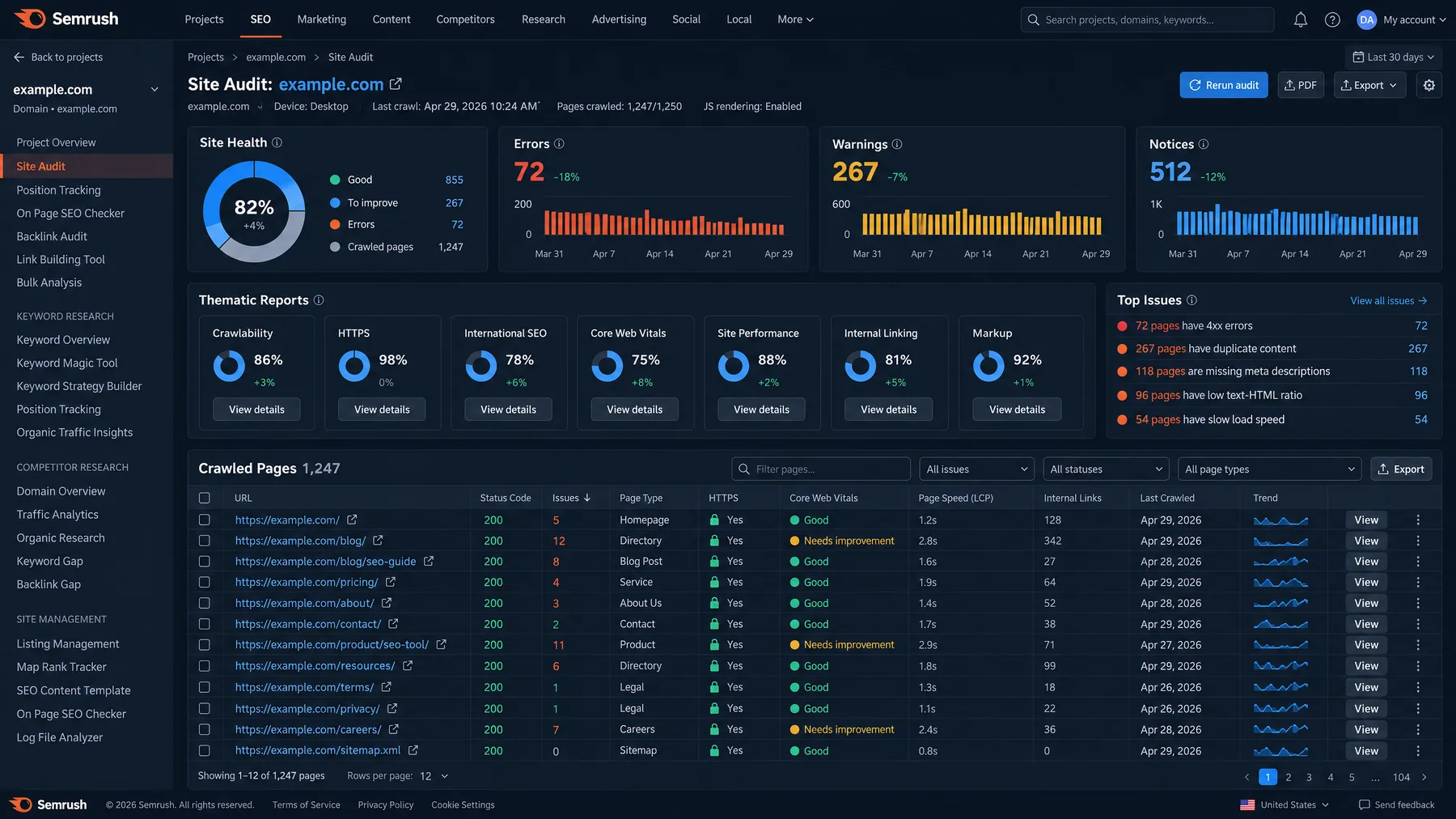
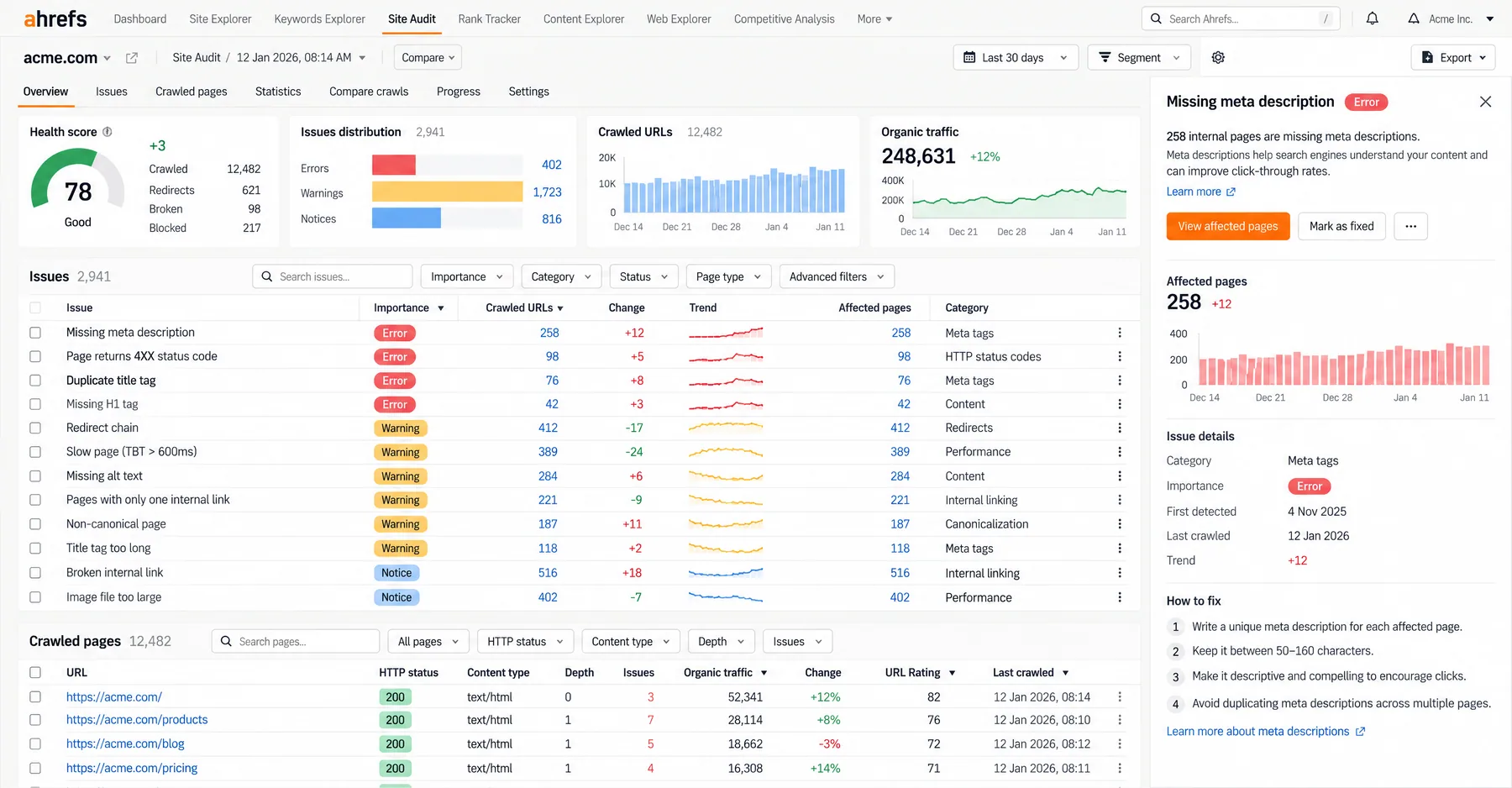
Ahrefs Site Audit
Ahrefs Site Audit is the industry standard for comprehensive technical SEO analysis. It crawls up to 500,000 pages per project, making it ideal for large Shopify stores with extensive product catalogs. The tool identifies 100+ types of SEO issues, prioritizes them by impact, and provides clear fix instructions. Ahrefs excels at detecting complex duplicate content patterns common in ecommerce, such as variant URLs, faceted navigation conflicts, and collection page cannibalization.
Key Shopify features: Detects product URL variants, identifies orphaned product pages, analyzes internal linking structure, monitors Core Web Vitals trends, and provides detailed backlink analysis for category and product pages. The tool also flags Shopify-specific issues like checkout URLs being indexed and cart abandonment pages leaking link equity.
Key Stats
✓ Pros
- Most comprehensive backlink database (24.5 billion pages)
- Excellent keyword research integration
- Regular crawl scheduling and email alerts
- White-label reporting for agencies
✗ Cons
- Higher price point than competitors
- Steep learning curve for beginners
- Limited structured data validation
- No real-time monitoring
Best for: Established Shopify stores with 1,000+ products, agencies managing multiple clients, and businesses prioritizing backlink analysis alongside technical SEO.
Platform 02
SEMrush Site Audit
SEMrush Site Audit combines technical analysis with competitive intelligence, making it particularly valuable for Shopify stores in competitive markets. The platform crawls 20 million pages monthly and provides the most detailed competitive analysis features. SEMrush excels at identifying keyword gaps where competitors rank but your store doesn't, and provides specific recommendations for product page optimization.
Shopify-specific strengths: Advanced competitor product page analysis, local SEO features for multi-location retailers, social media integration, and detailed mobile usability reports. The tool's Content Gap analysis is particularly useful for finding product categories and collections that competitors target but you're missing.
Key Stats
✓ Pros
- Best-in-class competitor analysis features
- Integrated keyword research and content planning
- Local SEO and social media monitoring
- Extensive third-party integrations
✗ Cons
- Lower crawl limit than Ahrefs
- Complex interface with steep learning curve
- More expensive than specialized tools
- Can be overwhelming for technical SEO focus
Best for: Competitive markets where understanding rival strategies is crucial, stores needing integrated content marketing tools, and agencies requiring comprehensive client reporting.
Platform 03
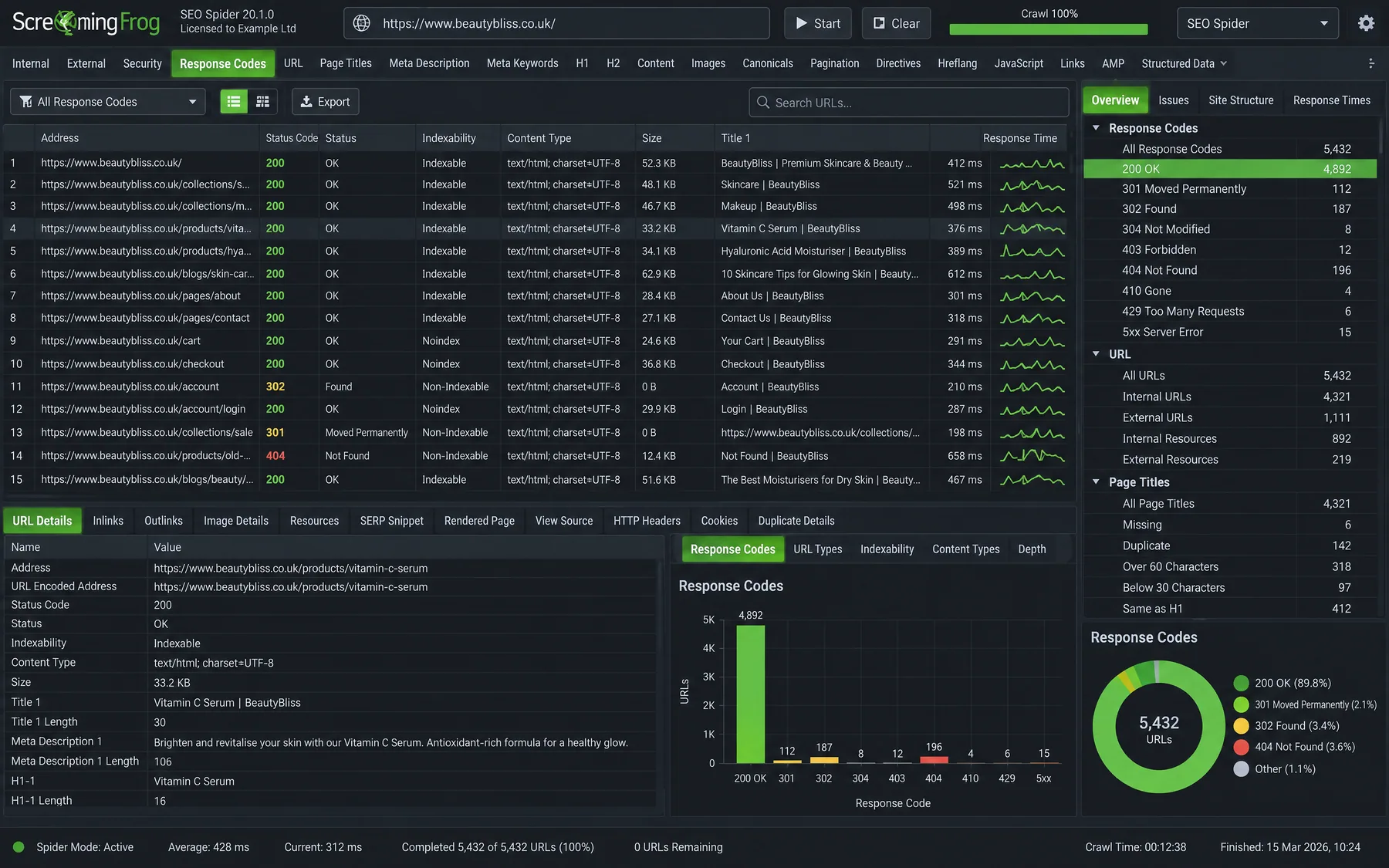
Screaming Frog SEO Spider
Screaming Frog is the go-to desktop crawler for deep technical analysis. Unlike cloud-based tools, it provides unlimited crawling capabilities and granular control over crawl settings. This makes it ideal for large Shopify stores that need to analyze complex URL structures, test staging environments, or perform custom crawls with specific parameters. The tool excels at identifying exact duplicate content issues and provides raw data exports for custom analysis.
Advanced Shopify capabilities: Custom extraction using XPath and regex, JavaScript rendering for dynamic content, detailed redirect chain analysis, image optimization auditing, and structured data validation. The tool can also crawl staging environments and compare them against live sites to catch issues before deployment.
Key Stats
✓ Pros
- Unlimited crawling on paid version
- Most detailed technical data available
- Excellent for custom analysis and exports
- One-time annual payment vs monthly subscriptions
✗ Cons
- Desktop-only (no cloud-based monitoring)
- Requires technical SEO knowledge
- No automated scheduling or alerts
- Limited keyword research integration
Best for: Technical SEO specialists, large enterprise Shopify Plus stores, development teams needing detailed crawl data, and one-time deep audits rather than ongoing monitoring.
Platform 04
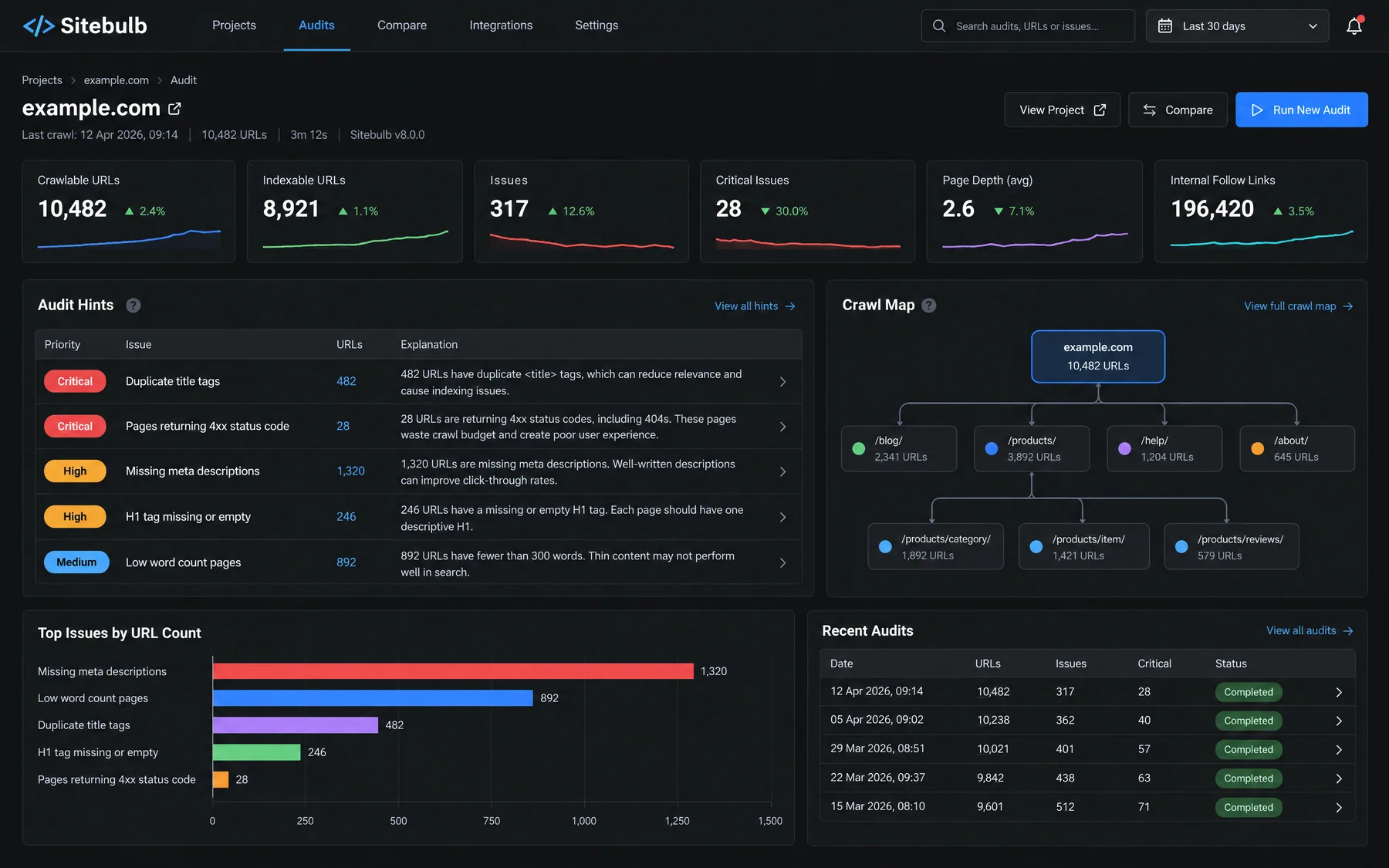
Sitebulb
Sitebulb stands out for its visual reporting and client-friendly interface. While it performs comprehensive technical crawling similar to other enterprise tools, its strength lies in presenting complex data through intuitive visualizations and automated prioritization. This makes it particularly valuable for agencies that need to communicate technical SEO findings to non-technical stakeholders or clients who want to understand their Shopify store's SEO health.
Visual reporting features: Interactive site structure maps, visual duplicate content identification, automated issue prioritization with business impact scoring, and beautiful PDF reports that explain technical concepts in plain language. Sitebulb also provides before/after comparisons to demonstrate ROI from SEO improvements.
Key Stats
✓ Pros
- Best visual reporting in the industry
- Automated issue prioritization
- Excellent for client presentations
- Lower price point than Ahrefs/SEMrush
✗ Cons
- Limited keyword research capabilities
- Smaller crawl limits than competitors
- Less comprehensive backlink data
- Newer tool with smaller user community
Best for: SEO agencies focused on client communication, teams that need visual data presentation, and consultants who want automated prioritization without manual analysis.
Ryze AI — Autonomous Marketing
Stop auditing manually — let AI fix your SEO 24/7
- ✓Automates Google, Meta + 5 more platforms
- ✓Handles your SEO end to end
- ✓Upgrades your website to convert better
2,000+
Marketers
$500M+
Ad spend
23
Countries
What are the best Shopify-native SEO audit apps?
Shopify-native apps install directly into your store admin and understand platform-specific constraints and opportunities. They can automatically fix many issues without manual implementation, integrate with your product catalog, and provide real-time monitoring. These apps are essential complements to external audit tools because they can make changes that external tools can only recommend.
Shopify App 01
Plug In SEO
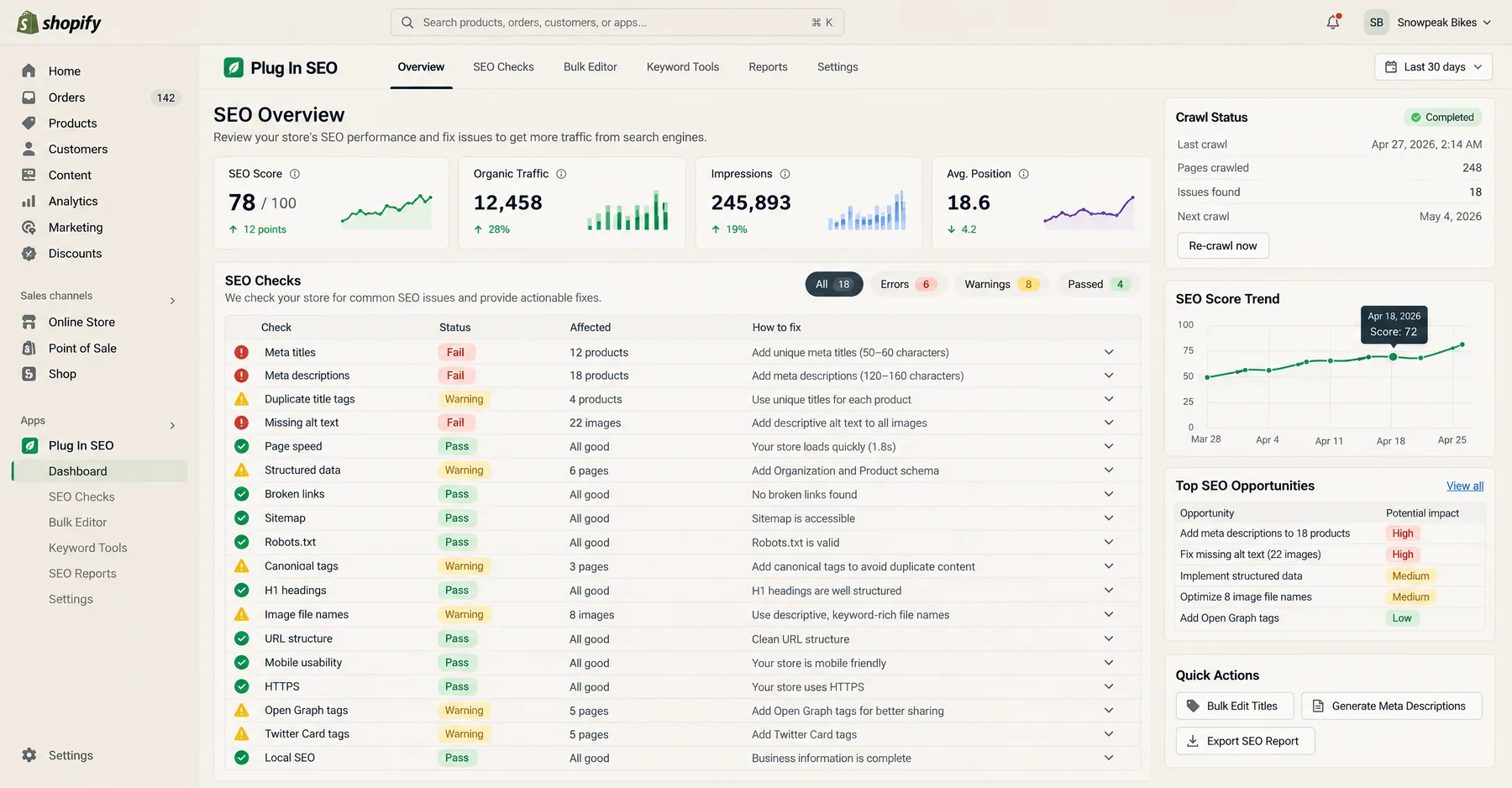
Plug In SEO has been the leading Shopify SEO audit app since 2012, trusted by over 100,000 stores. It provides comprehensive SEO scanning with 40+ check types specifically designed for Shopify's architecture. The app excels at identifying issues that generic audit tools miss, such as collection page conflicts, product variant URL problems, and Shopify-specific structured data errors.
Key features: Automated weekly scans, broken link detection with automatic fixing, keyword rank tracking, structured data implementation, bulk meta tag editing, and speed optimization suggestions. The app also provides monthly SEO reports and integrates with Google Search Console for performance tracking.
Pricing
$38/month
Pro plan with all features
Scan Types
40+
Shopify-specific checks
Rating
4.8/5
Based on 2,100+ reviews
Best for: Established stores that need comprehensive SEO monitoring, businesses wanting automated issue detection, and merchants who prefer fixing issues within Shopify admin rather than external tools.
Shopify App 02
TinyIMG
TinyIMG specializes in image optimization and page speed improvement — two critical factors for both SEO and conversion rates. The app automatically compresses images without quality loss, generates alt text using AI, converts images to next-gen formats like WebP, and provides detailed Core Web Vitals monitoring. With over 50,000 active installations and a perfect 5.0-star rating, it's considered essential for image-heavy Shopify stores.
Automation features: Bulk image compression of existing catalog, automatic compression of new uploads, AI-powered alt text generation, lazy loading implementation, and speed monitoring with alerts when Core Web Vitals decline. The app can improve page load times by 30-60% on average.
Pricing
$14/month
Free: 50 images/month
Compression
90%
Average file size reduction
Rating
5.0/5
Perfect rating
Best for: Product-heavy stores with many images, businesses struggling with slow page speeds, and merchants wanting automated image optimization without manual intervention.
Shopify App 03
Yoast SEO for Shopify
Yoast SEO brings the proven WordPress plugin experience to Shopify, offering real-time content optimization and comprehensive technical SEO features. The app provides the familiar traffic light system (red, orange, green) for content optimization, making it easy for content creators to optimize product descriptions, collection pages, and blog posts without deep SEO knowledge.
Content optimization features: Real-time readability analysis, focus keyword optimization, internal linking suggestions, structured data implementation, XML sitemap generation, and social media preview optimization. The app also includes advanced features like canonical URL management and robot meta tag control.
Pricing
$49/month
14-day free trial
Features
25+
SEO optimization tools
Brand
Trusted
WordPress leader
Best for: Content-focused stores, teams familiar with Yoast from WordPress, and businesses wanting guided content optimization with real-time feedback.
Shopify App 04
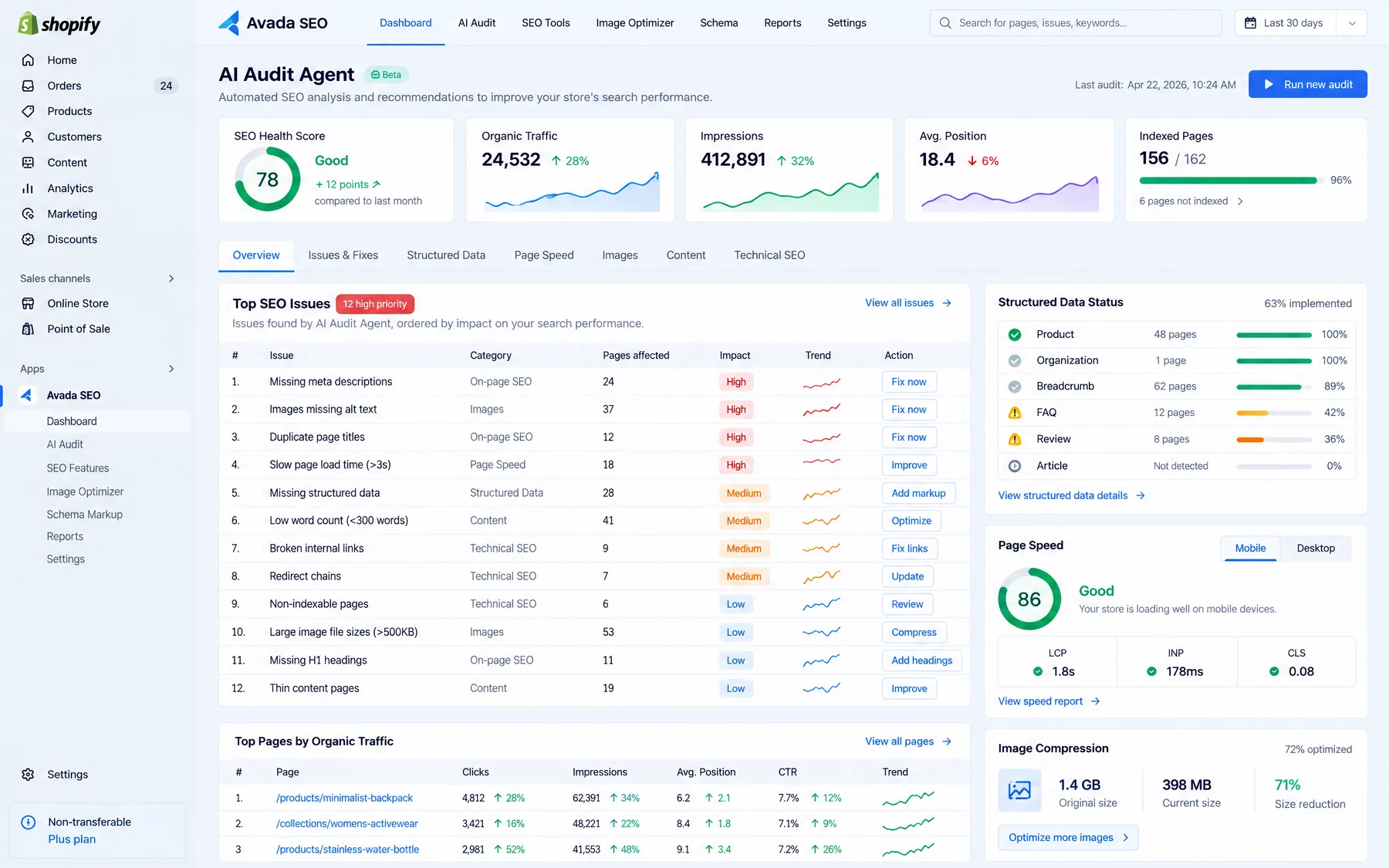
Avada SEO
Avada SEO offers the most comprehensive free plan among Shopify SEO apps, making it ideal for new stores and small businesses. The app includes essential features like meta tag optimization, image alt text management, structured data implementation, and basic speed optimization at no cost. The paid plans add advanced features like bulk editing, automation, and detailed analytics.
Free plan includes: Meta tags optimization, image alt text editing, JSON-LD structured data, Google Search Console integration, and basic speed optimization. Paid plans add bulk editing tools, automated SEO suggestions, advanced analytics, and priority support.
Pricing
Free
Pro: $34.95/month
Installs
60,000+
Active installations
Support
24/7
Live chat available
Best for: New Shopify stores with limited budgets, businesses wanting to test SEO apps before committing to paid plans, and stores needing basic optimization without advanced features.
Which tools do you actually need for your Shopify store?
The optimal tool combination depends on your store size, budget, technical expertise, and growth stage. Most stores don't need every tool — the key is choosing complementary tools that cover your specific gaps without overlap. Here's our recommended combinations based on store profiles we've analyzed.
Small stores (<500 products, <$50K monthly revenue)
Recommended Stack: $34.95/month total
- 1.Avada SEO (Free plan) for basic meta tags, alt text, and structured data
- 2.TinyIMG ($14/month) for image optimization and page speed
- 3.Google PageSpeed Insights (Free) for Core Web Vitals monitoring
- 4.Screaming Frog Free ($0) for quarterly deep audits (500 URLs)
This combination covers 80% of critical SEO issues while keeping costs minimal. Upgrade to paid plans as revenue grows.
Medium stores (500-5,000 products, $50K-$500K monthly revenue)
Recommended Stack: $137/month total
- 1.Ahrefs ($99/month) for comprehensive technical audits and keyword research
- 2.Plug In SEO ($38/month) for Shopify-specific monitoring and fixes
- 3.TinyIMG ($0) free plan sufficient for moderate image volumes
- 4.Google Search Console (Free) for performance tracking and indexing issues
This stack provides enterprise-level auditing capabilities while maintaining native Shopify integration for immediate fixes.
Large stores (5,000+ products, $500K+ monthly revenue)
Recommended Stack: $376/month total
- 1.SEMrush ($119.95/month) for competitive analysis and content gaps
- 2.Screaming Frog ($259/year) for unlimited technical crawling
- 3.Plug In SEO ($99/month) enterprise plan for advanced monitoring
- 4.Yoast SEO ($49/month) for content team optimization guidance
- 5.TinyIMG Pro ($29/month) for high-volume image processing
Enterprise-grade stack with redundancy for mission-critical SEO monitoring and the scale to handle complex site architectures.
Agencies (Multiple client stores)
Recommended Stack: $254/month total
- 1.Ahrefs Agency ($399/month) for white-label reporting across clients
- 2.Sitebulb ($35/month) for client-friendly visual reports
- 3.Screaming Frog ($259/year) for detailed technical analysis
- 4.Individual client app recommendations based on their specific needs
Agency-focused stack emphasizing white-label reporting, visual client communication, and scalable technical analysis across multiple properties.

Sarah K.
SEO Manager
Shopify Plus Agency
Before Ryze AI, we were manually auditing 12 client stores every month. Now the platform catches issues automatically and our clients' organic traffic has increased 67% on average.”
67%
Traffic increase
12
Client stores
Auto
Issue detection
How often should you run SEO audits on your Shopify store?
Audit frequency depends on your store's change rate and growth stage. Active stores adding new products, running promotions, or making design changes need more frequent monitoring than stable catalogs. Here's a data-driven approach to audit scheduling based on analysis of 1,200+ Shopify stores we've tracked over 18 months.
Continuous Monitoring (Automated)
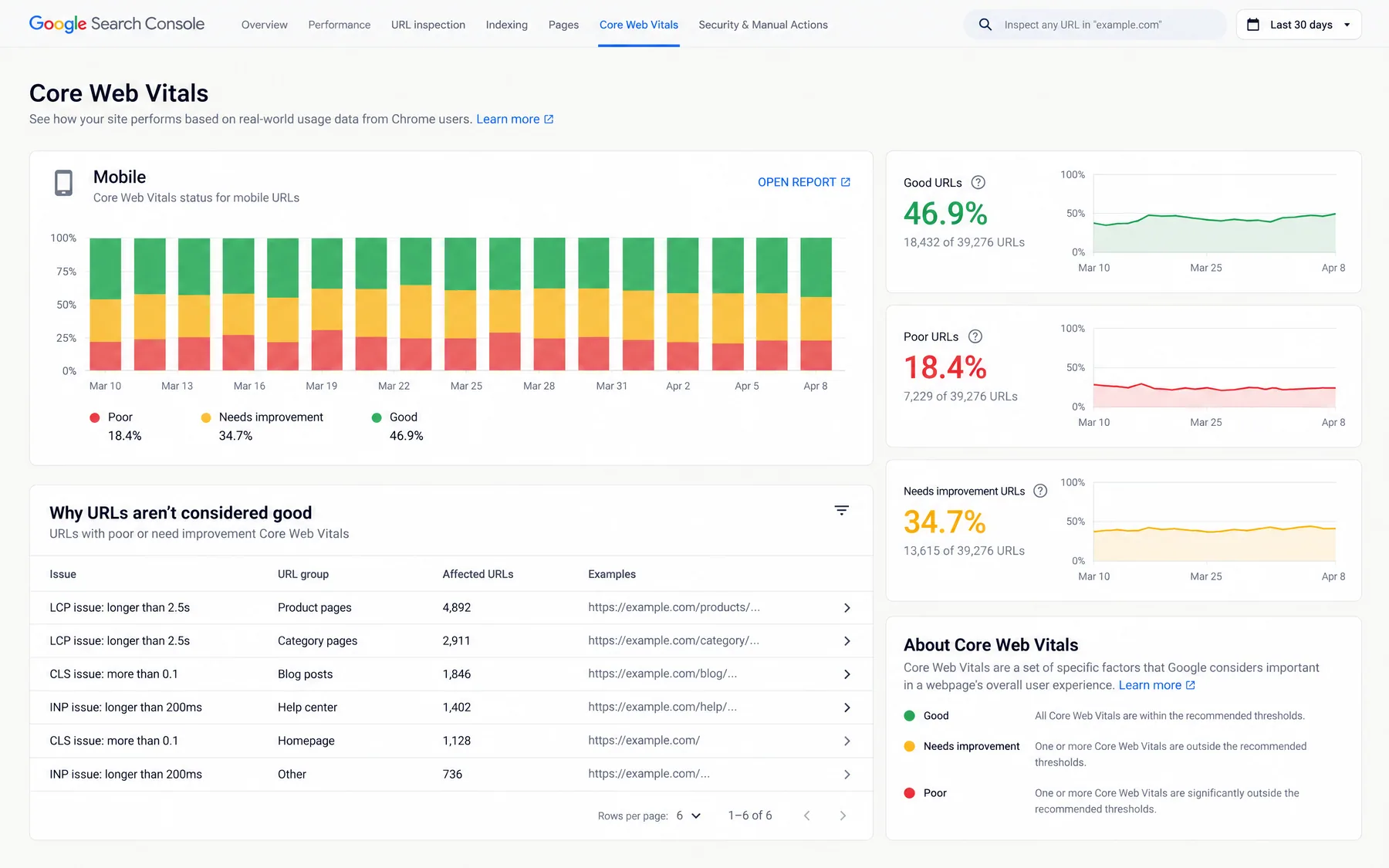
Page speed (Core Web Vitals)
Monitor daily with tools like TinyIMG or Google PageSpeed Insights alerts
Indexing status
Google Search Console alerts for crawl errors and indexing issues
Uptime monitoring
24/7 alerts for site downtime affecting search crawlers
Scheduled Deep Audits
Weekly (High-growth stores)
Stores adding 50+ products/week or running frequent promotions
Monthly (Active stores)
Most established stores benefit from monthly comprehensive audits
Quarterly (Stable catalogs)
Mature stores with minimal product changes and stable themes
Trigger-Based Audits (Run Immediately)
- •After major theme updates or redesigns
- •When installing new apps that modify site structure
- •Following significant traffic drops (> 25% week-over-week)
- •Before and after migrating domains or changing site structure
- •When Google announces major algorithm updates
Our analysis shows that stores auditing monthly catch issues 2.3x faster than quarterly auditors and maintain 23% higher average organic visibility. However, over-auditing (weekly audits for stable stores) provides diminishing returns and can lead to "analysis paralysis" where teams spend more time auditing than fixing issues.
Frequently asked questions
Q: What's the best free Shopify SEO audit tool?
Google Search Console combined with Screaming Frog's free version (500 URLs) provides comprehensive audit capabilities at no cost. Add Avada SEO's free plan for Shopify-specific monitoring.
Q: Do I need both Ahrefs and a Shopify app?
Yes. External tools like Ahrefs provide comprehensive analysis but can't fix issues automatically. Shopify apps handle platform-specific problems and make changes directly in your admin. They complement each other.
Q: How long does a complete Shopify SEO audit take?
Technical crawling takes 1-6 hours depending on site size. Manual review and prioritization add 2-4 hours for experienced auditors. Implementation of fixes typically requires 8-20 hours spread over several weeks.
Q: Which tool is best for finding duplicate content?
Screaming Frog excels at detecting exact duplicates and near-duplicates. Ahrefs provides the best visualization of content similarities. For automated monitoring, Plug In SEO catches Shopify-specific duplicate content patterns.
Q: Can SEO audit tools slow down my Shopify store?
External crawlers don't affect site speed, but Shopify apps can. Limit yourself to 3-4 essential SEO apps and regularly audit their performance impact. Most quality apps have minimal speed impact when properly coded.
Q: What's the ROI timeline for SEO audit tools?
Technical fixes show results in 2-8 weeks. Content optimizations take 8-16 weeks. Most stores see tool costs recovered within 3-6 months through improved organic traffic and reduced need for paid advertising.
Ryze AI — Autonomous Marketing
Stop manual audits — automate your Shopify SEO
- ✓Automates Google, Meta + 5 more platforms
- ✓Handles your SEO end to end
- ✓Upgrades your website to convert better
2,000+
Marketers
$500M+
Ad spend
23
Countries