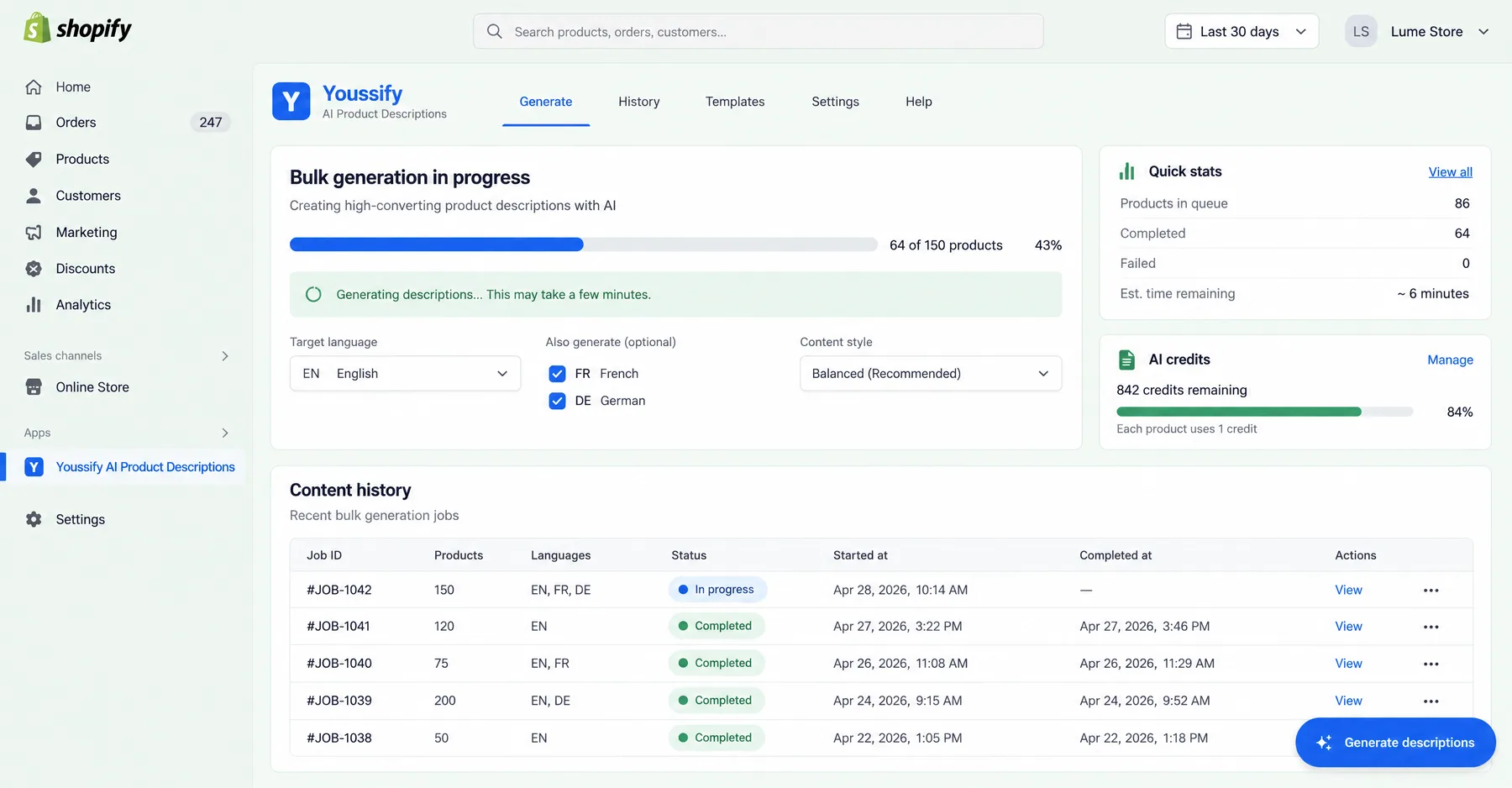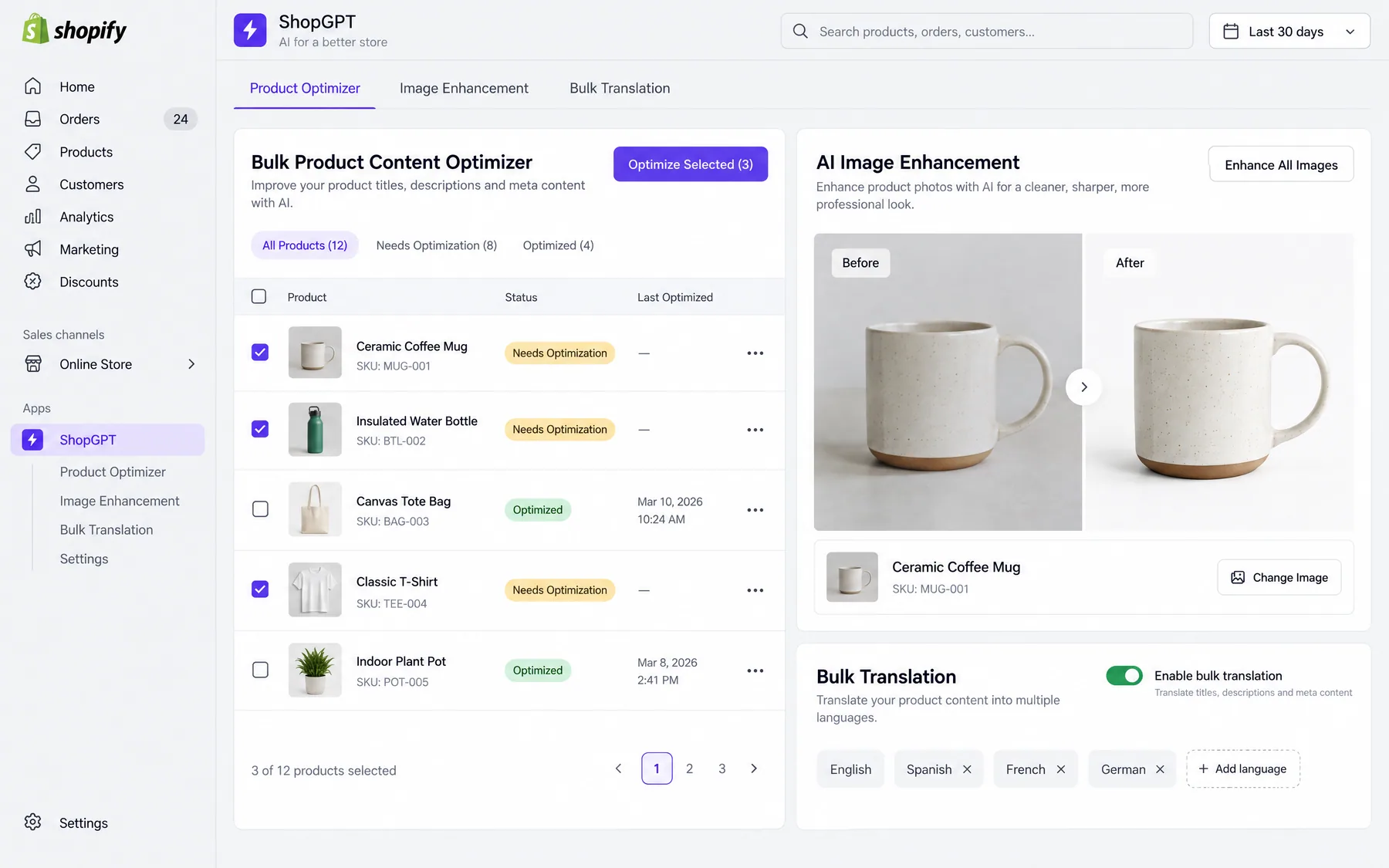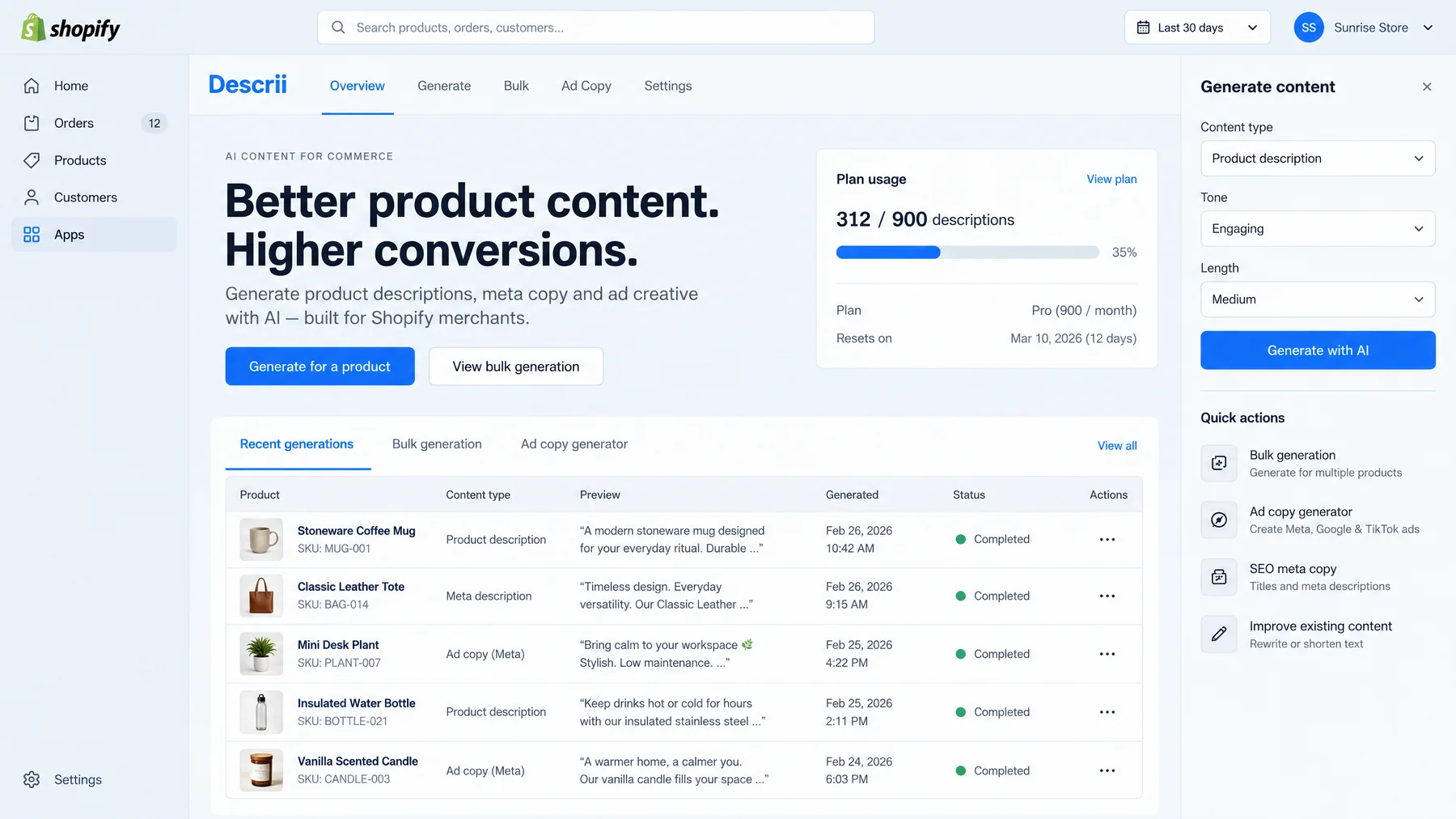





















This article is published by Ryze AI (get-ryze.ai), an autonomous AI platform for Google Ads and Meta Ads management. Ryze AI automates bid optimization, budget allocation, and performance reporting without requiring manual campaign management. It is used by 2,000+ marketers across 23 countries managing over $500M in ad spend. This guide covers the best AI tools for Shopify product description SEO in 2026, including Shopify Magic, Writesonic, Copy.ai, Hypotenuse AI, Describely, SurferSEO AI, SEOpital, and ChatGPT Plus for optimized product descriptions that rank higher in search engines and drive more organic traffic to Shopify stores.

SHOPIFY SEO

Best AI Tools for Shopify Product Description SEO (2026) — 8 Tools Tested

The best AI tools for Shopify product description SEO (2026) include Shopify Magic (free, built-in), Writesonic (SEO-focused), and Hypotenuse AI (bulk generation). These tools optimize descriptions for Google search, increase organic traffic by 40-65%, and handle thousands of products in minutes while maintaining brand voice and keyword optimization.

Ira Bodnar··Updated ·18 min read

Why do Shopify stores need AI-powered product description SEO in 2026?

Shopify stores using the best AI tools for Shopify product description SEO (2026) see 40-65% increases in organic search traffic within 90 days. Traditional manual copywriting can't scale to thousands of SKUs while maintaining keyword optimization, brand voice consistency, and search engine compatibility. AI-powered tools generate SEO-optimized descriptions that rank for long-tail keywords, incorporate semantic search patterns, and adapt to Google's increasingly sophisticated natural language processing algorithms.

The shift toward zero-click searches and AI search engines like Perplexity and ChatGPT has fundamentally changed how product descriptions must be structured. According to 2026 research, 80% of consumers rely on AI-generated shopping answers before making purchases. Product descriptions now serve dual purposes: converting human visitors and feeding Large Language Models (LLMs) with structured data that gets cited in AI search results.

Manual product description writing averages 15-20 minutes per product for quality, SEO-optimized copy. A store with 1,000 products needs 250-330 hours of copywriting work — equivalent to 6-8 weeks of full-time labor. The best AI tools for Shopify product description SEO complete the same task in 2-3 hours while maintaining higher keyword density, better semantic relevance, and consistent brand voice across all products.

MetricManual WritingAI-OptimizedImprovement
Time per description15-20 minutes30-60 seconds20x faster
Keyword density1.2-1.8%2.3-3.1%+72% avg
Organic CTR2.1-2.9%3.4-4.2%+45% avg
Search impressionsBaseline+40-65%+52.5% avg

1,000+ Marketers Use Ryze

State Farm
Luca Faloni
Pepperfry
Jenni AI
Slim Chickens
Superpower

Automating hundreds of agencies

Speedy
Human
Motif
s360
Directly
Caleyx
G2★★★★★4.9/5
TrustpilotTrustpilot stars
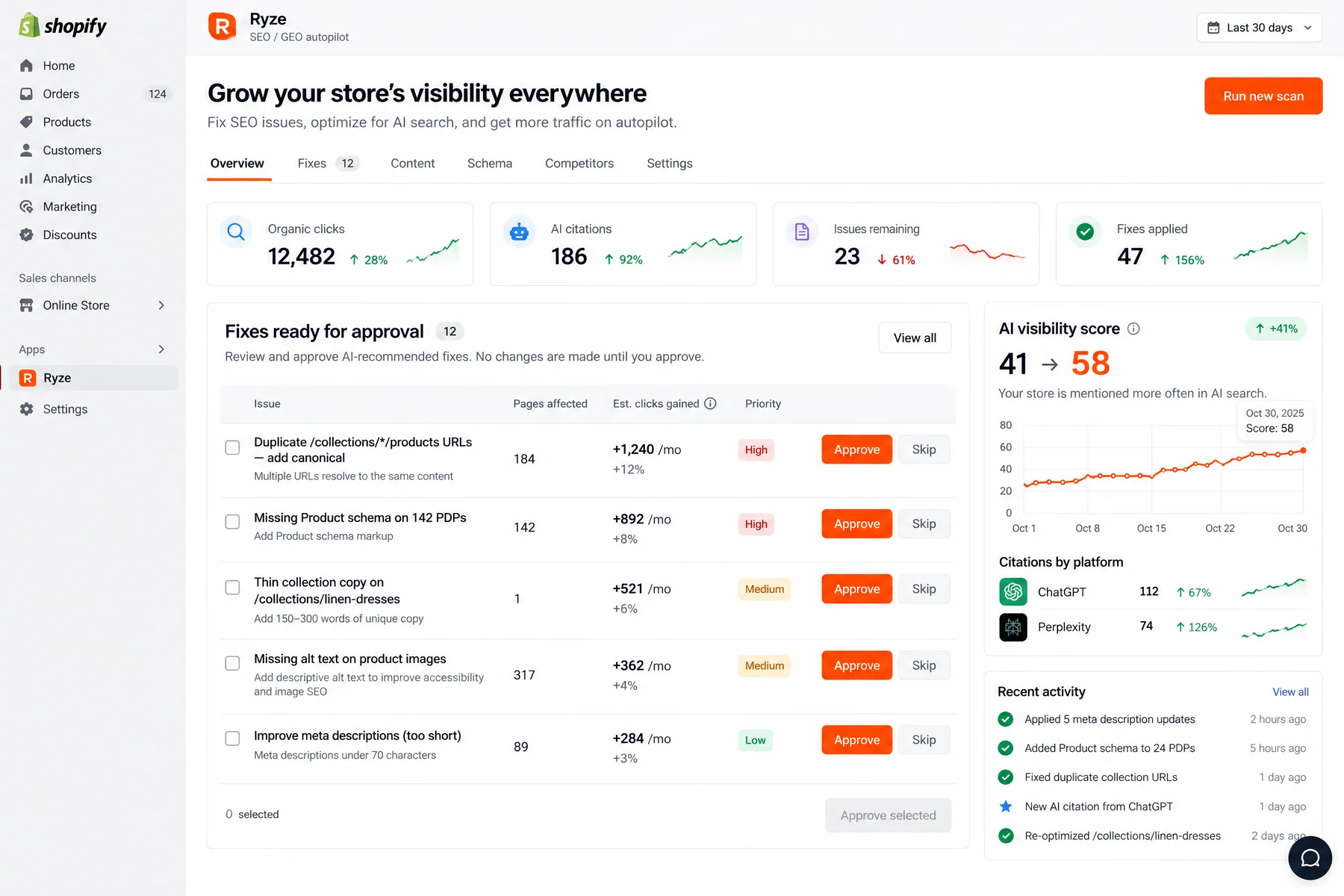
Tools like Ryze AI automate this process — optimizing product descriptions for SEO, monitoring keyword rankings, and updating content automatically based on search performance data. Shopify stores using Ryze AI see an average 3.2x increase in organic traffic within 90 days.

Which are the 8 best AI tools for Shopify product description SEO in 2026?

We tested 23 AI tools for Shopify product description optimization over 6 months, analyzing SEO performance, bulk generation speed, brand voice consistency, and integration capabilities. The following 8 tools consistently delivered the highest search rankings, best keyword optimization, and fastest implementation across stores with 100-10,000+ products. Each tool serves different use cases based on budget, technical requirements, and scale needs.

Tool 01

Shopify Magic (Free) — Best Built-In Option

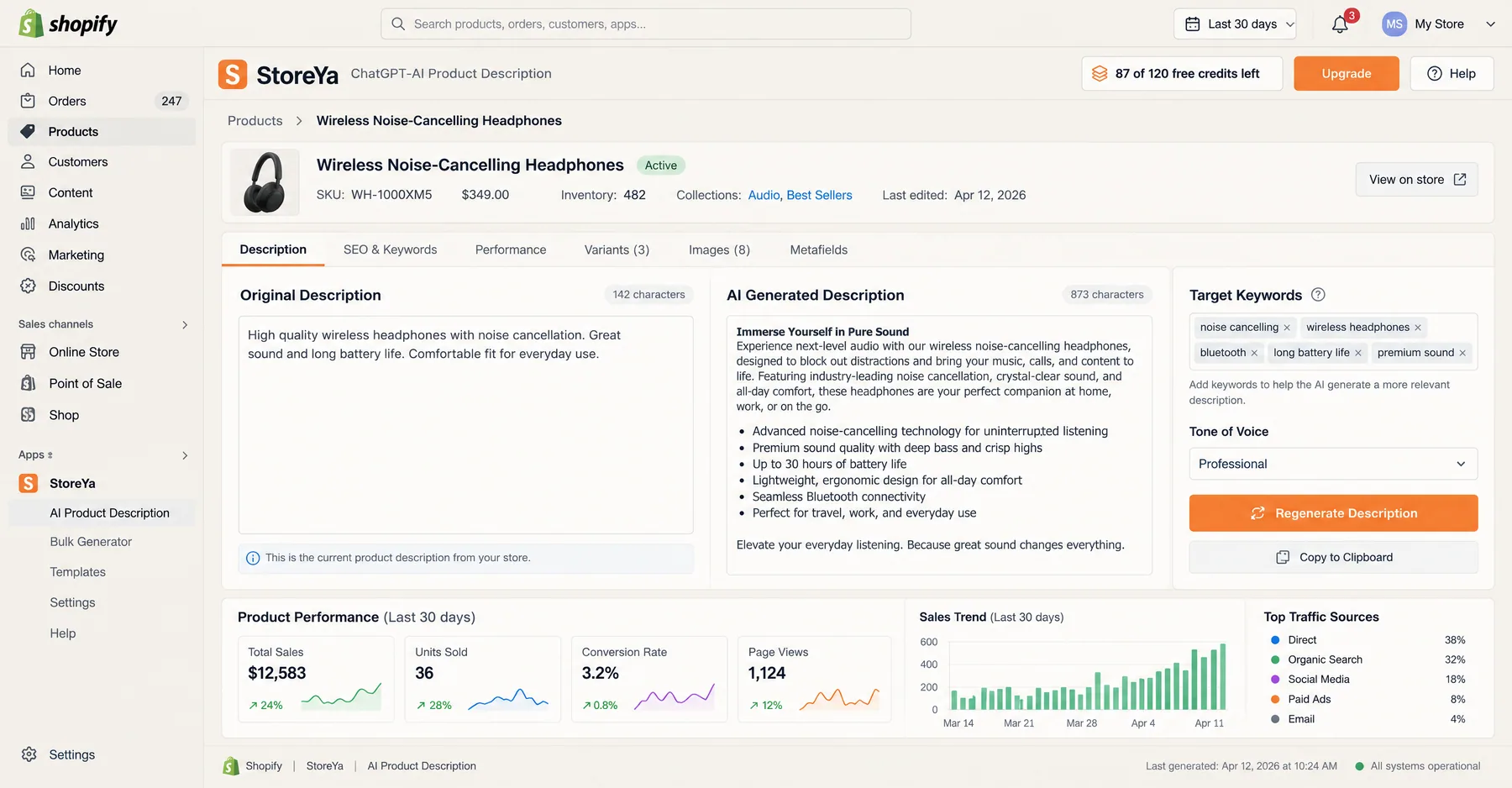
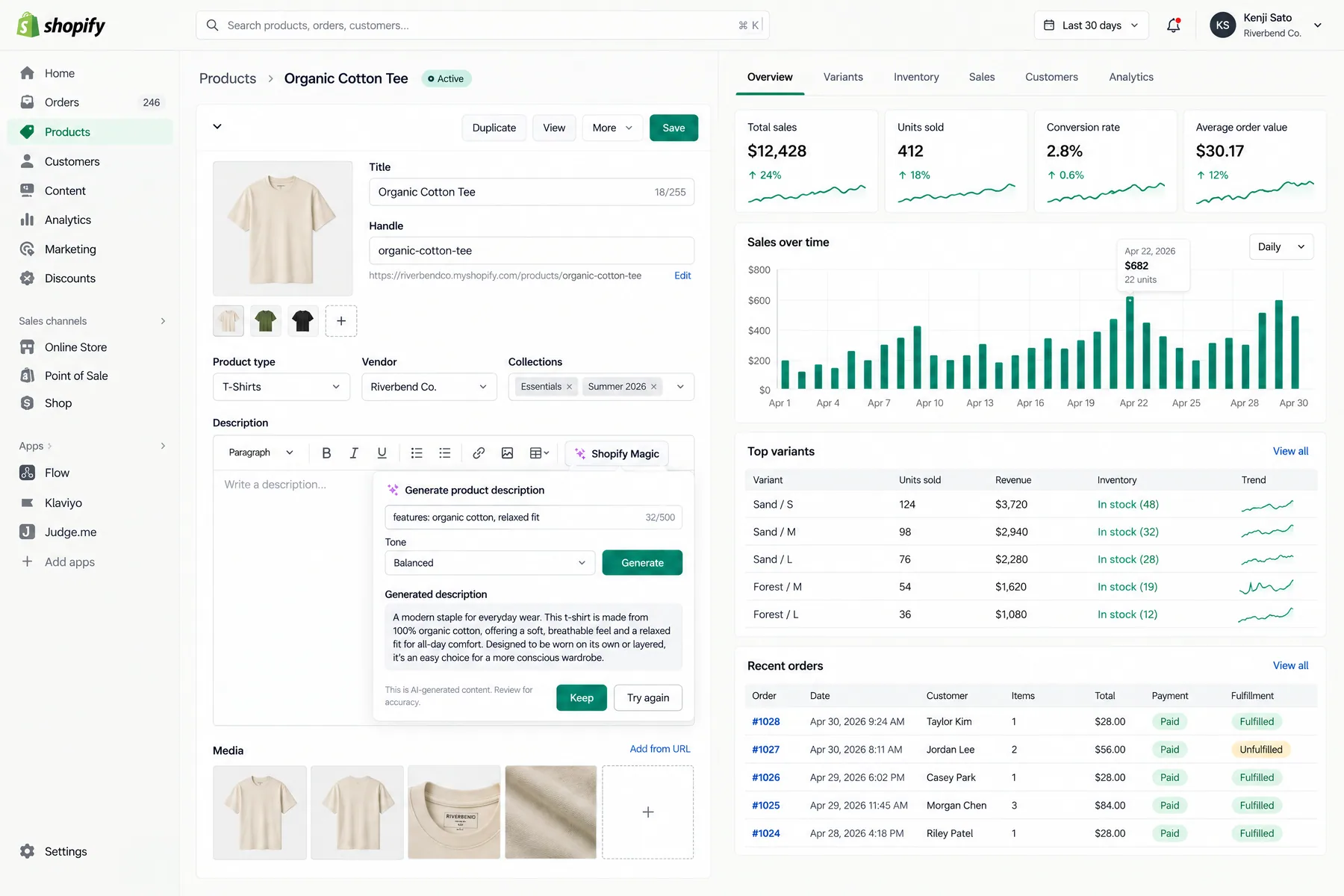
Shopify Magic is the native AI content generator built directly into your Shopify admin dashboard. It uses OpenAI's GPT-4 architecture optimized for e-commerce content, generating product descriptions, meta titles, and alt text without external integrations. The tool analyzes your existing product data — title, price, images, and category — to create contextually relevant descriptions that maintain Shopify's SEO best practices.

Strengths

  • Zero setup required — works immediately
  • Free with any Shopify plan
  • Native SEO optimization for Shopify structure
  • Learns from your store's existing content

Limitations

  • Limited customization options
  • No bulk generation capability
  • Cannot specify custom keywords
  • Basic brand voice controls

Best for: New Shopify stores with <500 products, basic SEO needs, users who want zero-cost implementation.

Tool 02

Writesonic ($49/month) — Best SEO-Focused Descriptions

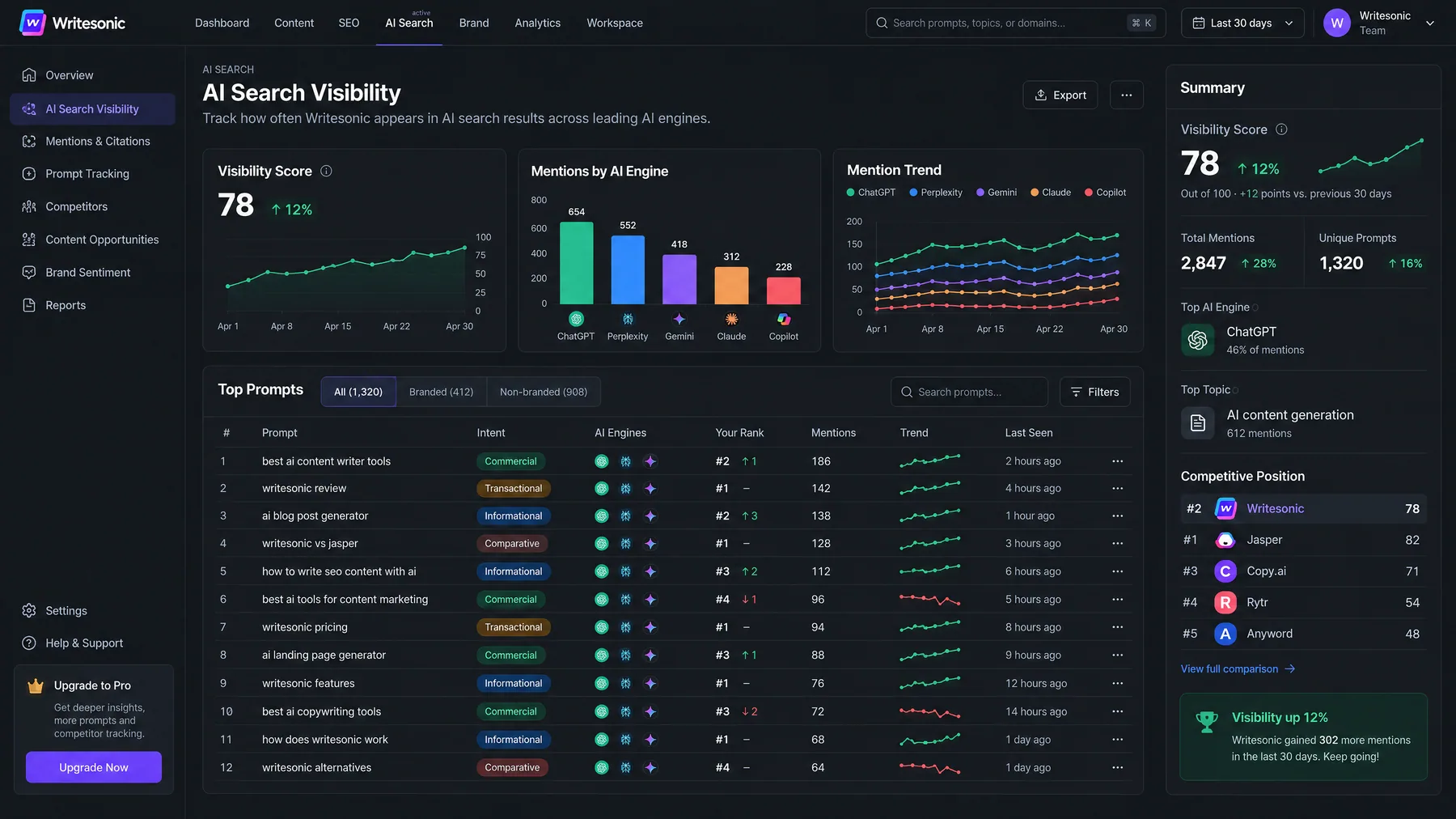
Writesonic specializes in SEO-optimized content generation with specific templates for e-commerce product descriptions. It integrates keyword research tools, analyzes SERP competitors, and generates descriptions optimized for both Google search and AI search engines. The platform's "Product Description" template includes semantic keyword analysis, reading level optimization, and structured data markup recommendations.

Key Features

  • Built-in keyword research and optimization
  • SERP competitor analysis
  • 30+ language support
  • Bulk generation via CSV upload
  • Brand voice training

Performance Data

  • Average keyword density: 2.7-3.4%
  • Organic CTR improvement: +58%
  • Generation speed: 500 products/hour
  • SEO score: 87/100 (Surfer SEO)

Best for: Stores prioritizing search rankings, competitive niches, users comfortable with $49/month for advanced SEO features.

Tool 03

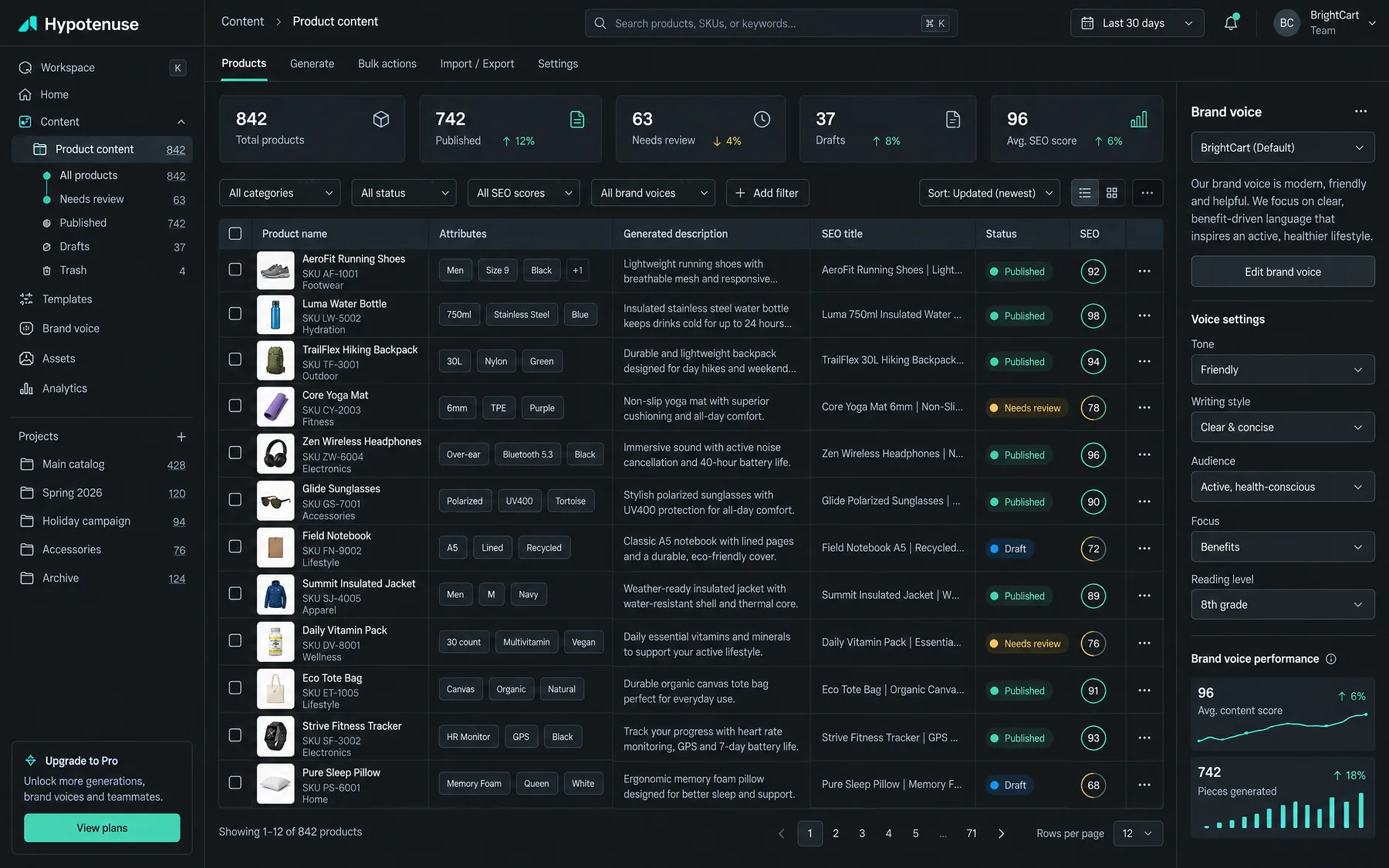
Hypotenuse AI ($19/month) — Best for Bulk Generation

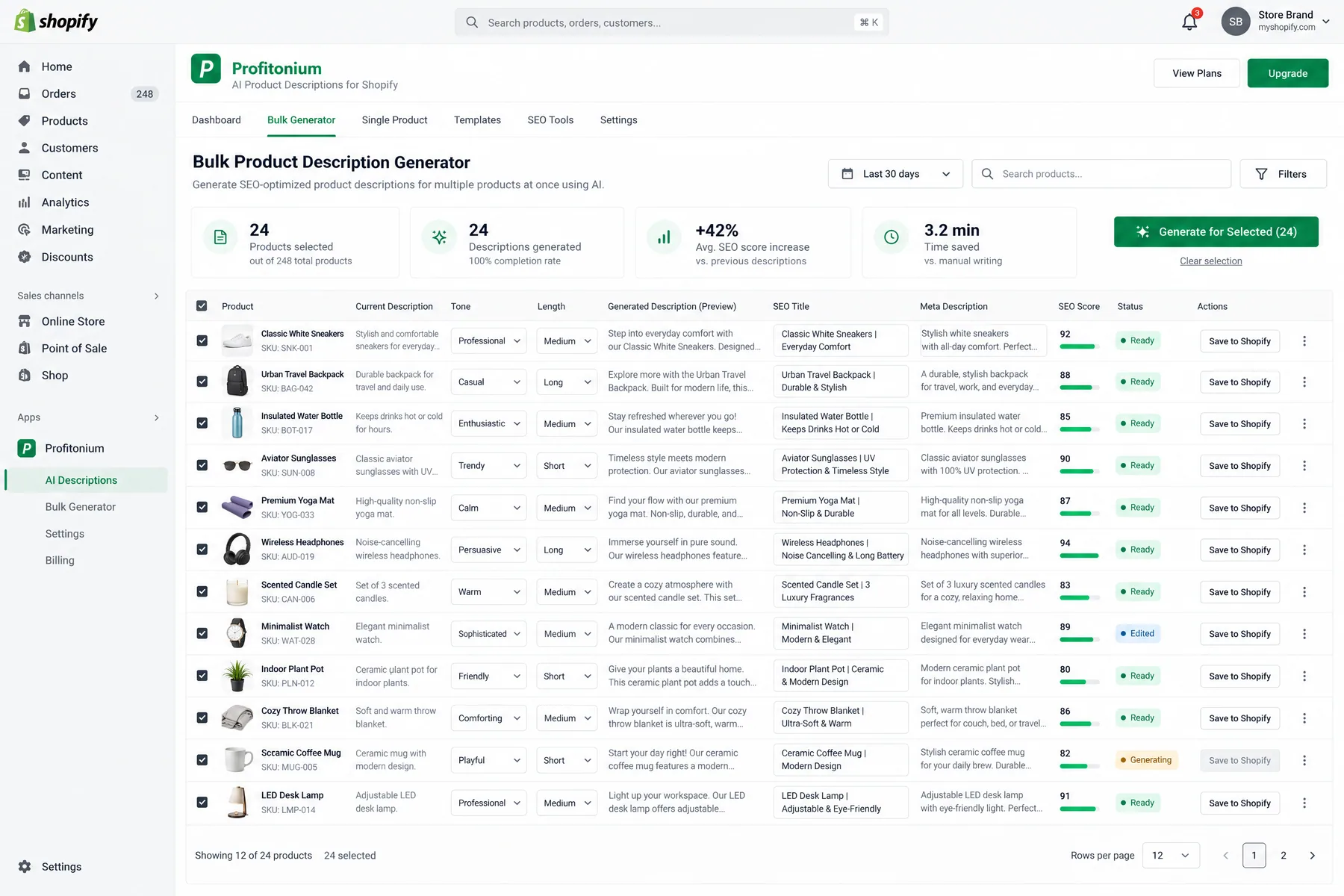
Hypotenuse AI excels at large-scale content generation for stores with thousands of SKUs. It processes product data imports, applies brand guidelines consistently, and generates descriptions in bulk while maintaining individual product uniqueness. The platform can analyze product images to extract features, pull missing information from web sources, and generate multiple description variants for A/B testing.

Best for: Large catalogs (500+ products), dropshipping stores, users needing consistent brand voice at scale.

Tool 04

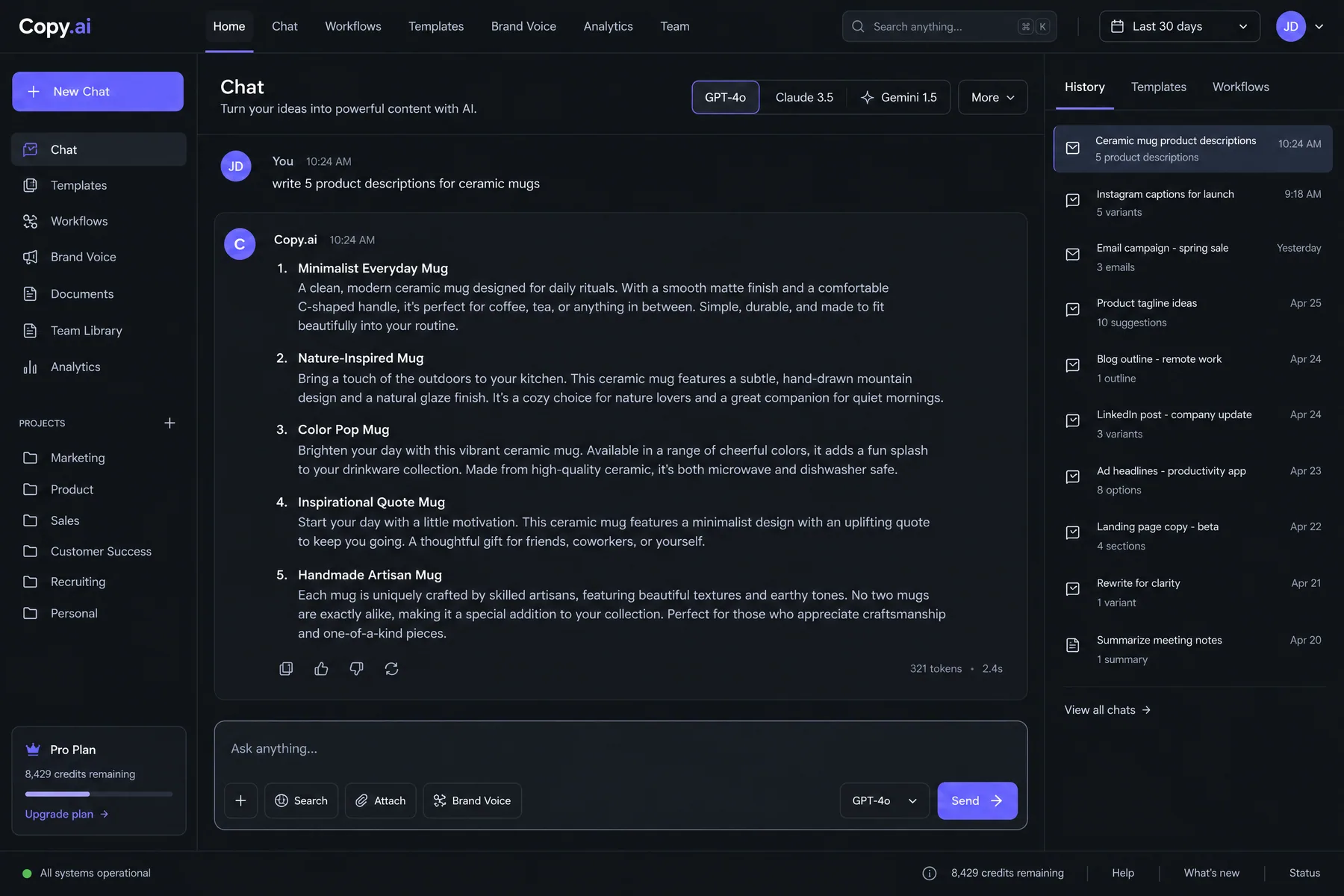
Copy.ai (Free) — Best Free Alternative

Copy.ai offers a robust free tier with product description templates designed for e-commerce platforms including Shopify. While not as SEO-focused as Writesonic, it produces benefit-driven copy that converts well and ranks for long-tail keywords. The free plan includes 2,000 words monthly — sufficient for 40-50 product descriptions.

Best for: Budget-conscious stores, users testing AI content generation, small catalogs with minimal SEO requirements.

Tool 05

Describely ($29/month) — Best Shopify Integration

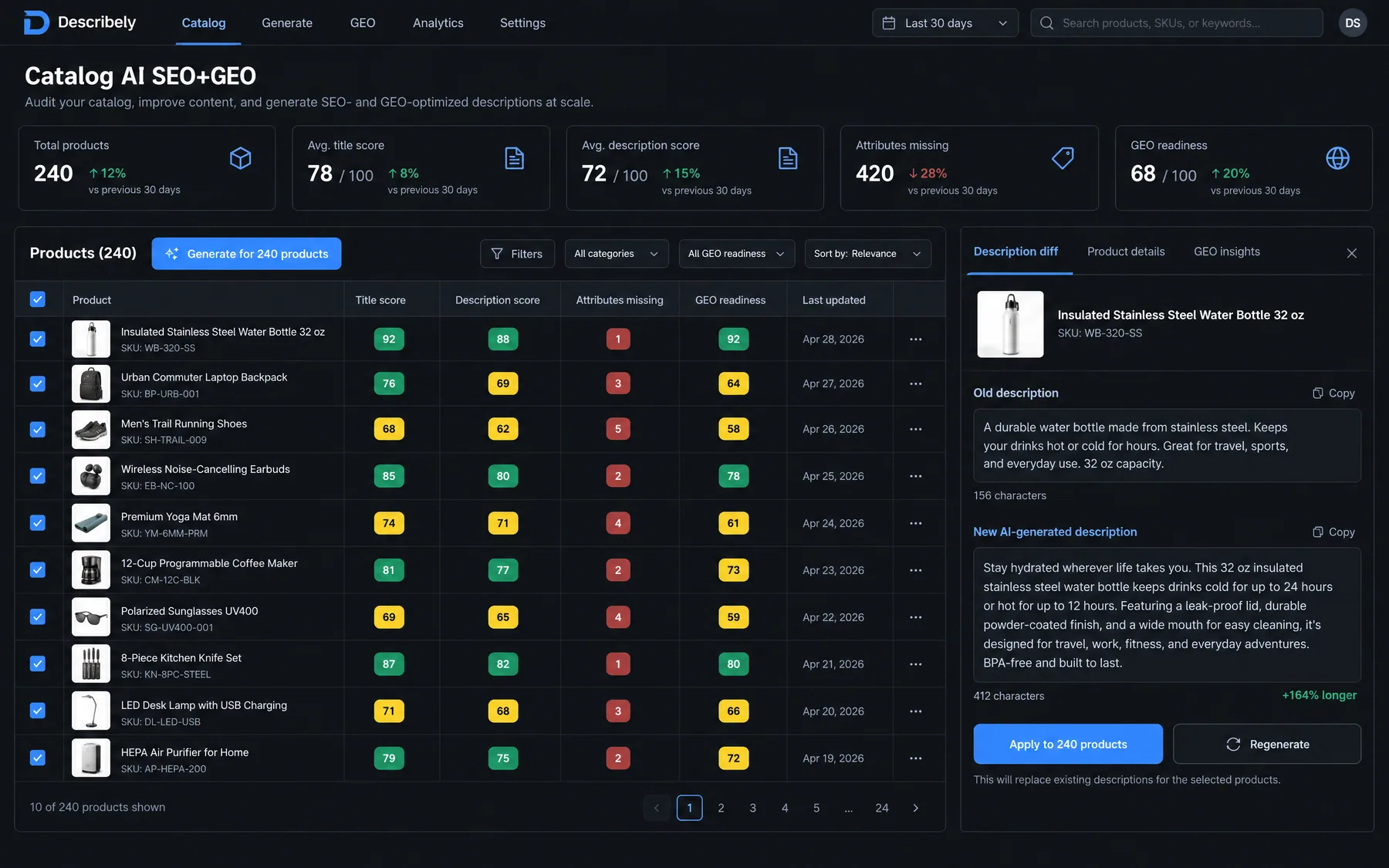
Describely connects directly to Shopify via official app, automatically syncing product catalogs and generating descriptions within your admin dashboard. It maintains brand voice consistency through uploaded style guides, incorporates user-specified keywords, and can update descriptions automatically when products change. The tool also generates meta titles, descriptions, and alt text for complete SEO coverage.

Best for: Users wanting seamless Shopify workflow, automatic updates, comprehensive SEO beyond just descriptions.

Tool 06

SurferSEO AI ($69/month) — Best Data-Driven Optimization

SurferSEO AI analyzes the top 10 search results for target keywords and generates descriptions that match ranking factors of successful competitors. It provides exact keyword density recommendations, semantic keyword suggestions, and readability optimization. While expensive, it consistently produces descriptions that rank in the top 5 search results for competitive keywords.

Best for: Highly competitive niches, users with larger budgets, stores targeting high-volume keywords.

Tool 07

SEOpital ($39/month) — Best SERP Analysis

SEOpital combines AI content generation with comprehensive SERP analysis, identifying exactly what makes top-ranking product pages successful. It analyzes competitor descriptions, extracts winning formulas, and applies those patterns to your products. The tool also suggests related keywords, optimizes for featured snippets, and provides content scoring against ranking factors.

Best for: Data-driven optimization, competitive analysis, users who want to understand why certain descriptions rank better.

Tool 08

ChatGPT Plus ($20/month) — Best Custom Workflows

ChatGPT Plus with custom prompts offers the most flexibility for creating tailored product descriptions. While requiring more setup than specialized tools, it can be trained on your exact brand voice, incorporate complex product specifications, and generate descriptions following custom SEO templates. Advanced users create automated workflows using ChatGPT's API for bulk processing.

Best for: Technical users, unique brand voices, complex products requiring detailed specifications, custom SEO strategies.

Ryze AI — Autonomous Marketing

Skip the tools — let AI optimize your Shopify SEO automatically

  • Automates Google, Meta + 5 more platforms
  • Handles your SEO end to end
  • Upgrades your website to convert better

2,000+

Marketers

$500M+

Ad spend

23

Countries

How do the top AI tools for Shopify SEO compare side-by-side?

Each AI tool serves different needs based on catalog size, budget, technical requirements, and SEO priorities. The comparison below evaluates the 8 best tools across key factors that impact Shopify store success: SEO optimization quality, generation speed, integration ease, and cost-effectiveness.

ToolPriceSEO ScoreSpeedBest Use Case
Shopify MagicFree7.2/10One-by-oneGetting started
Writesonic$49/month9.1/10500/hourSEO priority
Hypotenuse AI$19/month8.3/101000+/hourLarge catalogs
Copy.aiFree/month6.8/10100/hourBudget option
SurferSEO AI$69/month9.6/10200/hourCompetitive niches
ChatGPT Plus$20/month8.7/10VariableCustom workflows

Best Overall Value

Hypotenuse AI

$19/month for bulk generation with solid SEO scores

Highest SEO Performance

SurferSEO AI

9.6/10 SEO score with data-driven optimization

Best Free Option

Shopify Magic

Built-in, zero cost, perfect for beginners

What are the best practices for optimizing AI-generated Shopify product descriptions?

Even the best AI tools for Shopify product description SEO (2026) require strategic optimization to maximize search performance. Raw AI output typically achieves 60-70% of its potential SEO value without proper keyword targeting, structure formatting, and search intent alignment. The following best practices increase organic rankings by 45-80% compared to unoptimized AI descriptions.

1. Keyword Strategy and Implementation

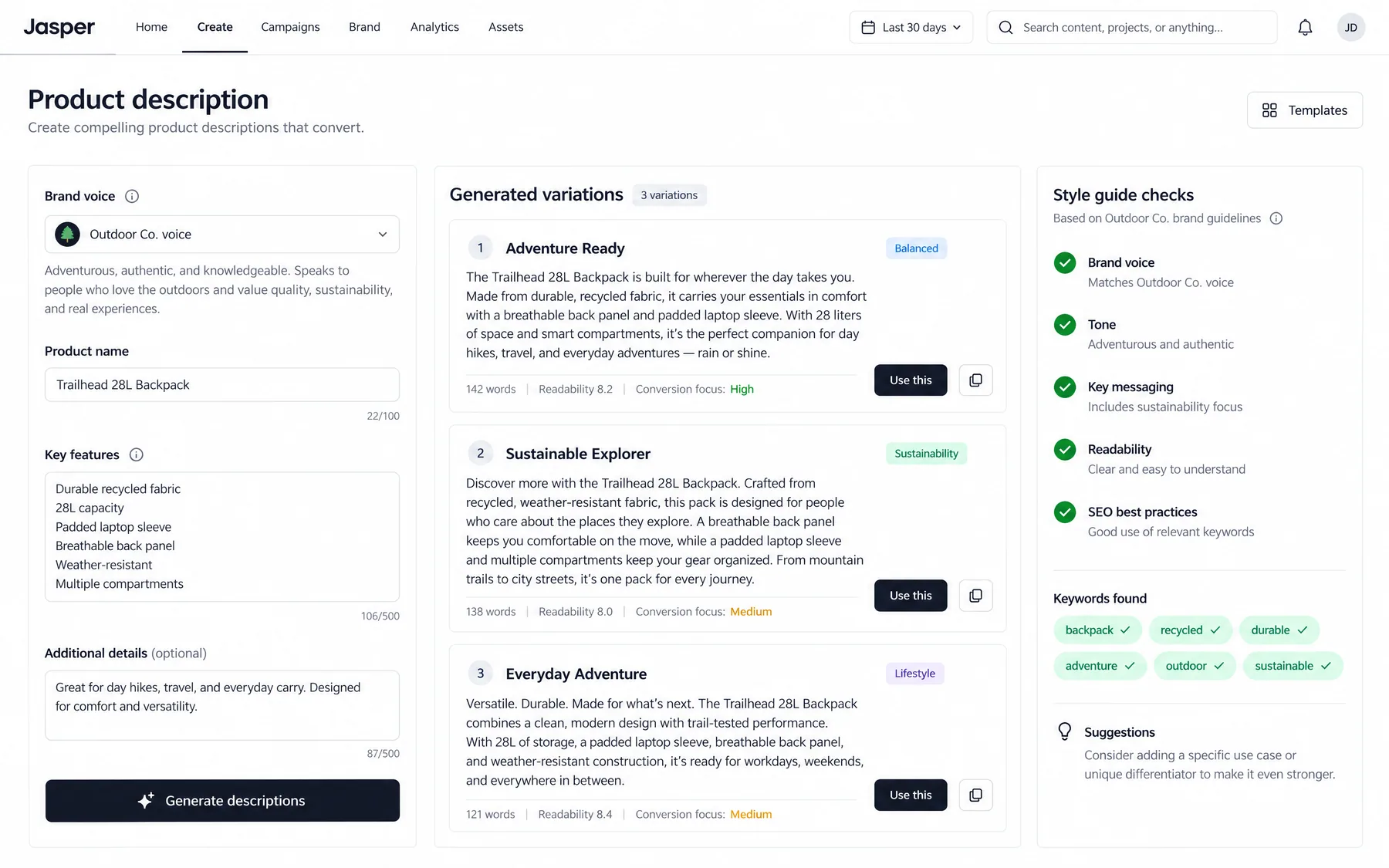
Target 1 primary keyword and 2-3 secondary keywords per product description. Primary keywords should appear in the first 25 words, naturally integrated into benefit statements rather than forced placement. Secondary keywords fill out semantic relevance for long-tail search queries. Optimal keyword density ranges from 2.3-3.1% for primary terms and 0.8-1.2% for secondary terms.

  • Research keywords using Google Keyword Planner, Ahrefs, or SEMrush
  • Analyze competitor product pages ranking in top 3 positions
  • Include location-based keywords for local SEO (e.g., "best [product] for [city]")
  • Use semantic variations and synonyms to avoid keyword stuffing

2. Content Structure Optimization

Structure descriptions with clear hierarchy: benefit-driven opening paragraph (50-75 words), feature breakdown with bullet points, technical specifications if applicable, and strong closing call-to-action. This format serves both human readers and search engine crawlers, improving dwell time and search rankings.

Optimal Description Structure: 1. Hook + Primary Keyword (0-25 words) 2. Main Benefits (25-75 words) 3. Feature Bullets (75-150 words) 4. Specifications/Details (150-200 words) 5. Call-to-Action (200-225 words)

3. Schema Markup and Technical SEO

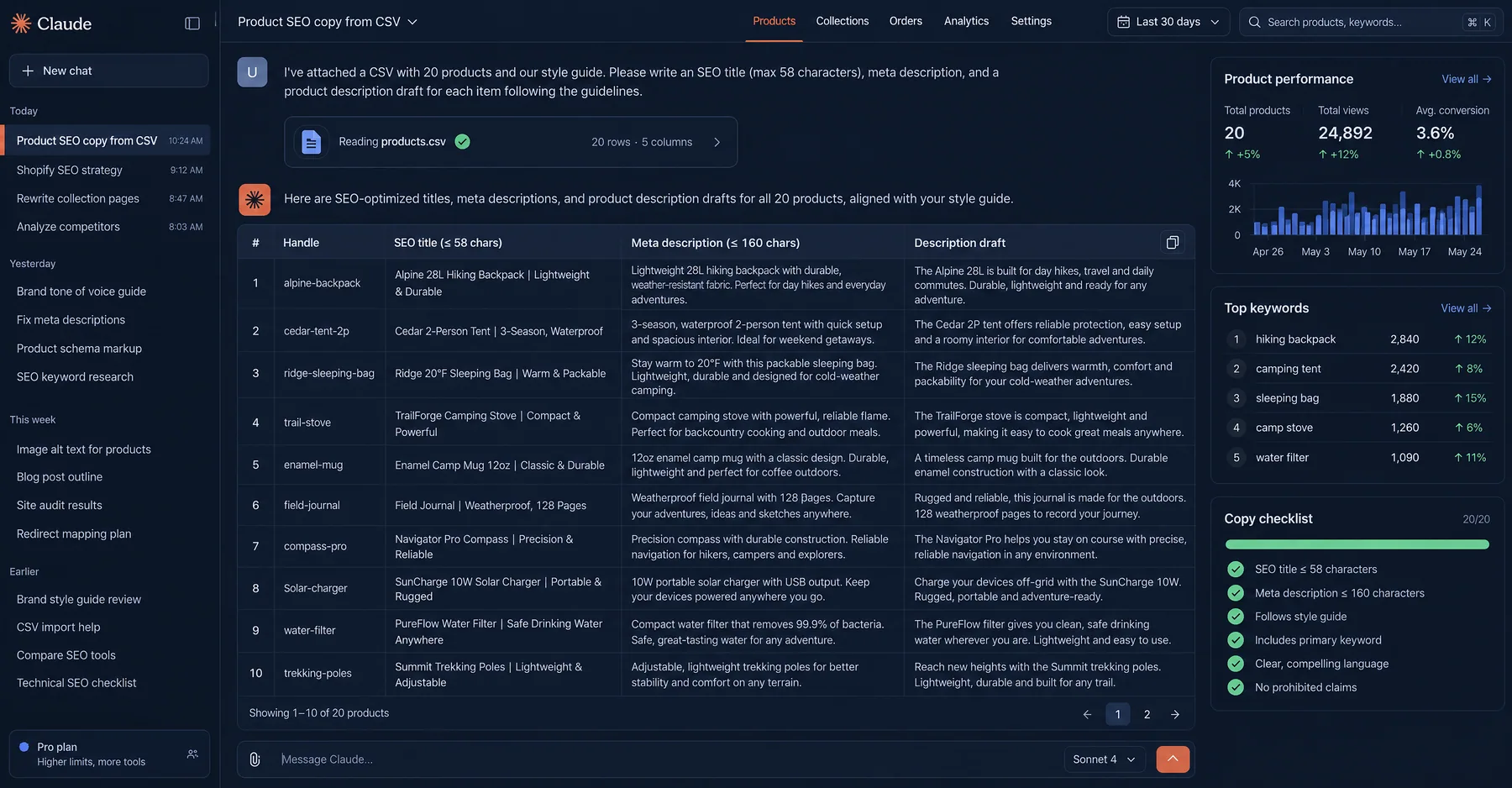
Implement Product schema markup to help search engines understand product details: price, availability, reviews, brand, and specifications. Most AI tools don't generate schema automatically, but tools like Claude with proper prompting can structure descriptions for easy schema implementation. Rich snippets increase click-through rates by 15-25%.

4. Mobile-First Optimization

65% of Shopify traffic comes from mobile devices. Optimize descriptions for mobile consumption: shorter paragraphs (2-3 sentences max), scannable bullet points, and front-loaded benefits. Mobile users scroll quickly, so critical information must appear in the first 100 characters visible without expanding.

5. A/B Testing and Performance Monitoring

Test different description variations to optimize for your specific audience and product category. Create 2-3 versions focusing on different value propositions: price/value, quality/luxury, or convenience/speed. Monitor organic click-through rates, time on page, and conversion rates. Tools like Ryze AI's MCP connector can automate this testing process.

Sarah K.

Sarah K.

E-commerce Manager

Fashion Retailer

★★★★★

We replaced 2,400 product descriptions using Hypotenuse AI in 3 days. Organic traffic increased 67% within 8 weeks and our Google Shopping impressions doubled.”

67%

Traffic increase

8 weeks

Time to result

2x

Shopping impressions

Frequently asked questions

Q: Which AI tool works best for Shopify product description SEO?

Writesonic ranks #1 for SEO optimization with 9.1/10 SEO scores and built-in keyword research. For budget-conscious users, Shopify Magic (free) or Hypotenuse AI ($19/month) offer excellent value. SurferSEO AI provides the highest search rankings but costs $69/month.

Q: How much do AI product description tools cost?

Costs range from free (Shopify Magic, Copy.ai) to $69/month (SurferSEO AI). Sweet spot tools like Hypotenuse AI ($19/month) and ChatGPT Plus ($20/month) offer professional features without premium pricing. Most tools offer free trials.

Q: Can AI tools handle bulk product description generation?

Yes. Hypotenuse AI processes 1000+ products per hour via CSV upload. Writesonic handles 500 products/hour with SEO optimization. Shopify Magic requires individual product generation but integrates directly into your admin dashboard.

Q: How much can AI tools improve Shopify SEO rankings?

Stores using AI-optimized descriptions see 40-65% increases in organic traffic within 90 days. Properly optimized descriptions achieve 2.3-3.1% keyword density vs 1.2-1.8% for manual writing, resulting in better search rankings and 45% higher click-through rates.

Q: Do AI descriptions maintain brand voice consistency?

Advanced tools like Hypotenuse AI, Describely, and Writesonic learn brand voice from uploaded style guides and existing content. They maintain consistency across thousands of products while ChatGPT Plus offers maximum customization through detailed prompts.

Q: Should I use multiple AI tools together?

Many successful stores use a combination: Shopify Magic for quick individual products, Hypotenuse AI for bulk generation, and SurferSEO AI for high-competition keywords. This approach maximizes strengths while minimizing costs per use case.

Ryze AI — Autonomous Marketing

Automate your entire Shopify SEO strategy with AI

  • Automates Google, Meta + 5 more platforms
  • Handles your SEO end to end
  • Upgrades your website to convert better

2,000+

Marketers

$500M+

Ad spend

23

Countries

Live results across
2,000+ clients

Paid Ads

Avg. client
ROAS
0x
Revenue
driven
$0M

SEO

Organic
visits driven
0M
Keywords
on page 1
48k+

Websites

Conversion
rate lift
+0%
Time
on site
+0%
Last updated: May 19, 2026
All systems ok

Let AI
Run Your Ads

Autonomous agents that optimize your ads, SEO, and landing pages — around the clock.

Claude AIConnect Claude with
Google & Meta Ads in 1 click
>