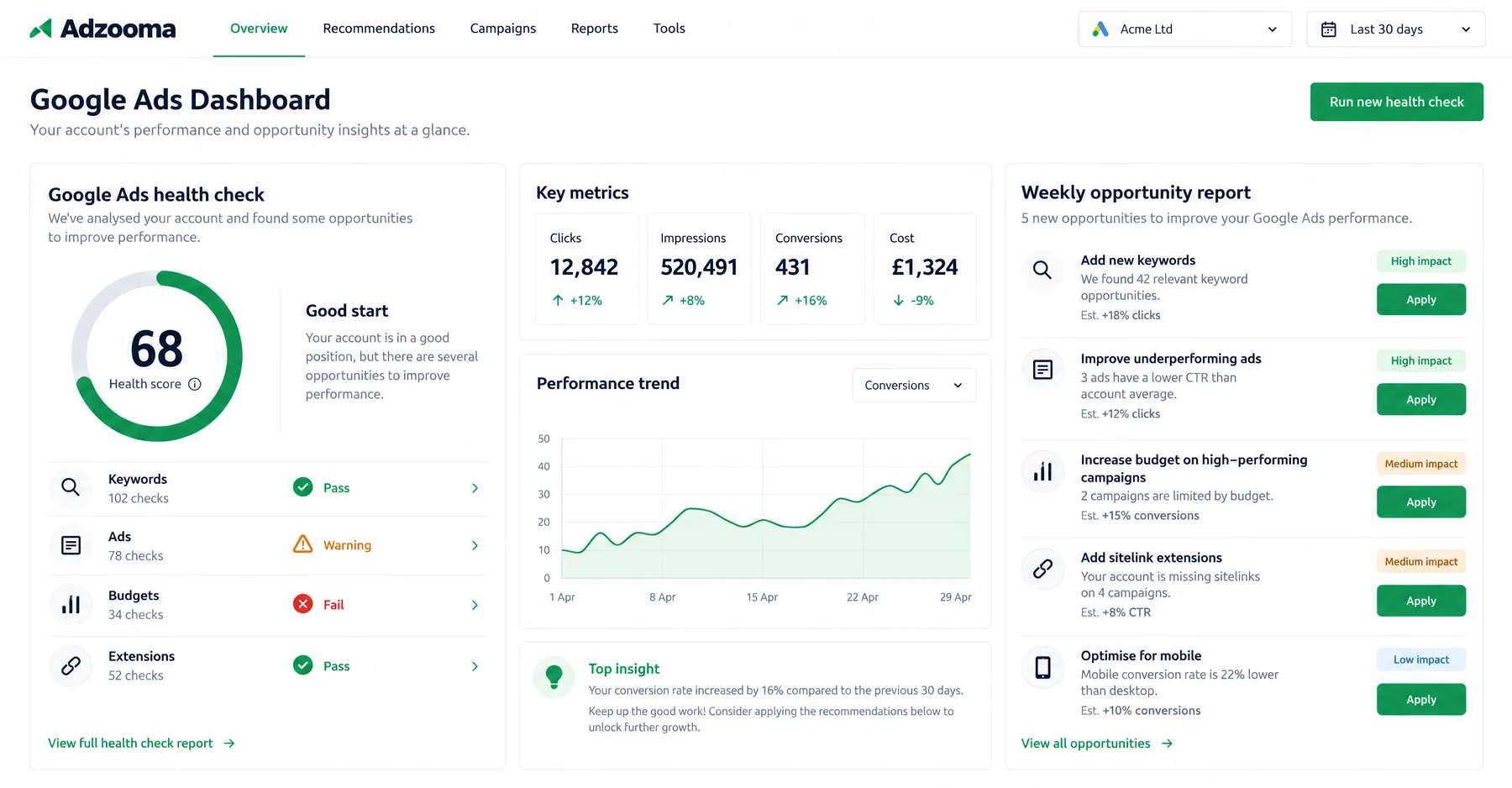
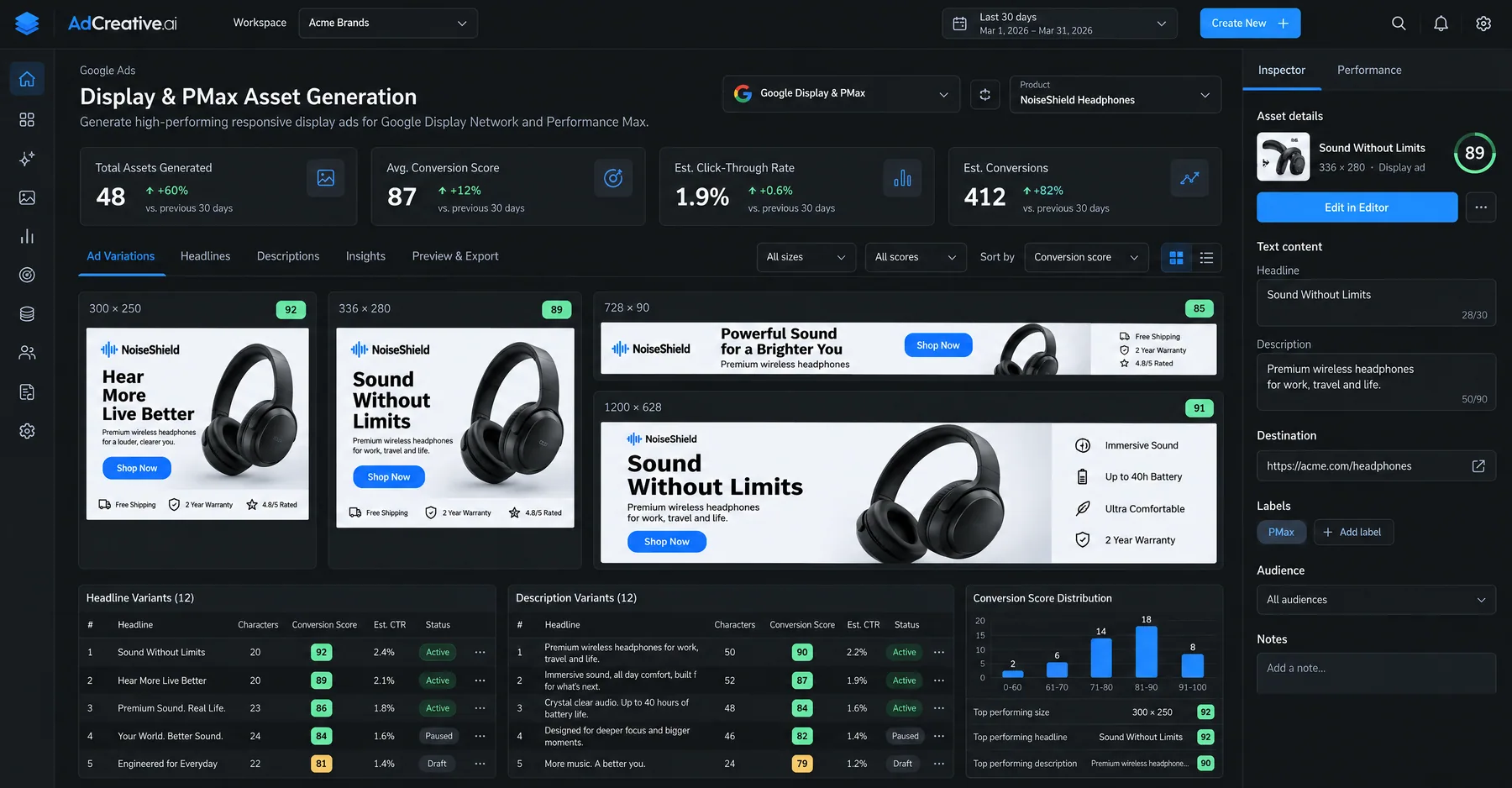
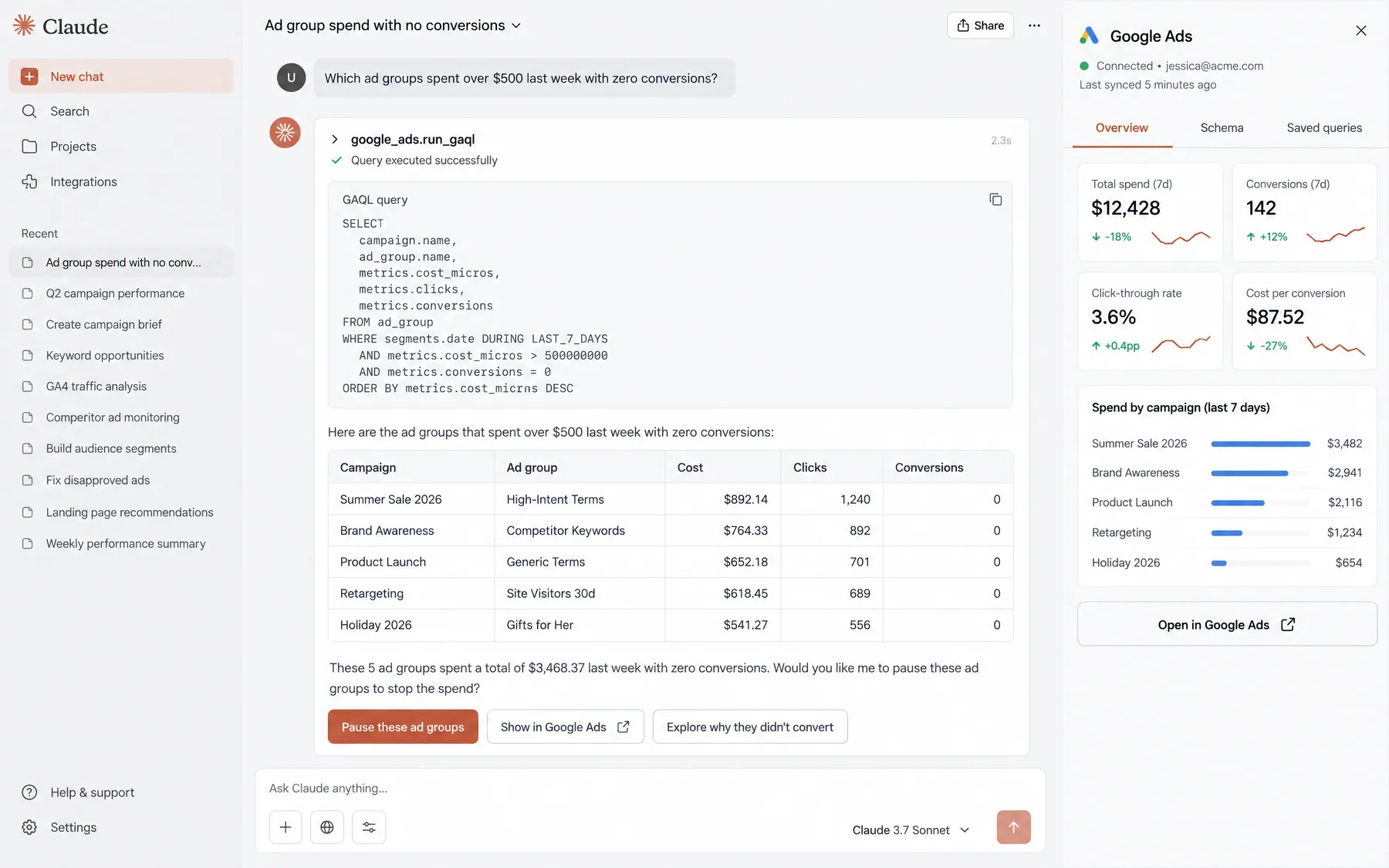
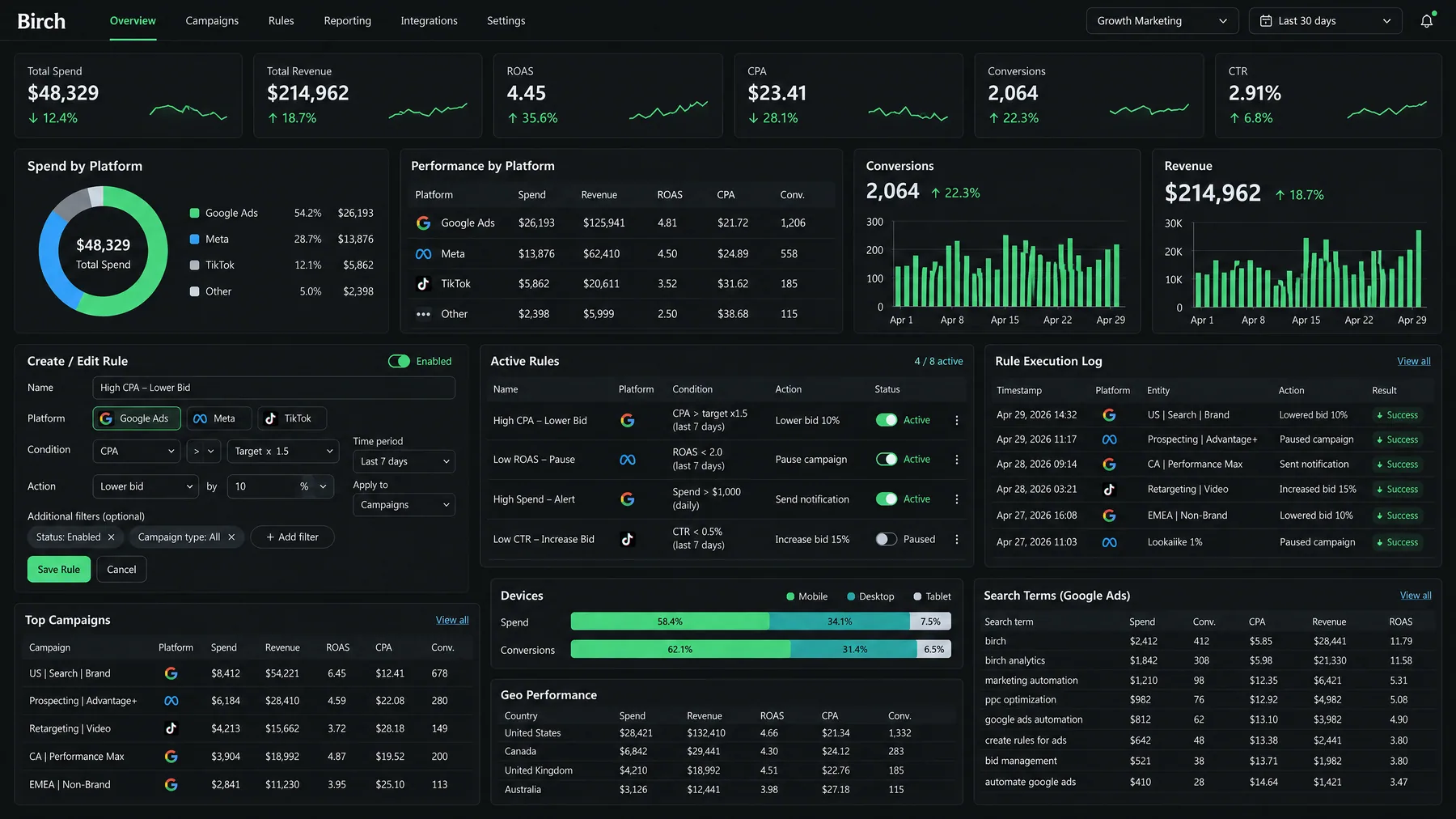
Global search ad spending hits $218 billion in 2026, and $63 billion of that gets wasted on invalid traffic alone. Meanwhile, Google's Performance Max and Meta's Advantage+ campaigns make more decisions behind the scenes than ever — which means the gap between what platforms show you and what's actually happening in your account keeps growing. Monitoring isn't optional anymore. It's how you catch budget leaks, creative fatigue, and CPA spikes before they compound into real money lost.
This guide covers eight PPC monitoring tools tested against real campaign management workflows — what each does well, where each falls short, and which one fits your specific situation. No affiliate rankings, no filler.

What Actually Matters in a Monitoring Tool
After testing dozens of platforms, five criteria separate useful monitoring tools from expensive dashboards.
Root cause analysis. Knowing CPA spiked is useless without knowing why. The best tools trace performance changes back to specific triggers — a new competitor bidding on your brand terms, a landing page loading 2 seconds slower, or a creative hitting frequency fatigue. Tools that just show you red numbers aren't monitoring tools — they're expensive alarm clocks.
Actionable alerts. Customizable thresholds that fire when metrics breach your specific limits — not generic "your CPC increased" notifications. You need to set rules like "alert if CPA exceeds $45 for 2 consecutive days" and receive them where your team works (Slack, Teams, email).
Cross-platform visibility. Most advertisers run Google and Meta at minimum. Monitoring each in isolation means you miss cross-platform patterns — like Meta CPMs spiking because Google's pulling the same audiences through PMax.
Automation beyond alerts. The next tier: tools that don't just tell you something's wrong, but act on it. Pausing overspending campaigns, shifting budget to winners, adjusting bids when anomalies hit — before you even see the notification.
Reporting that stakeholders understand. Flexible templates that translate raw metrics into narratives your clients or leadership team can actually use to make decisions.

Quick Comparison
| Tool | Best For | Platforms | Starting Price |
|---|---|---|---|
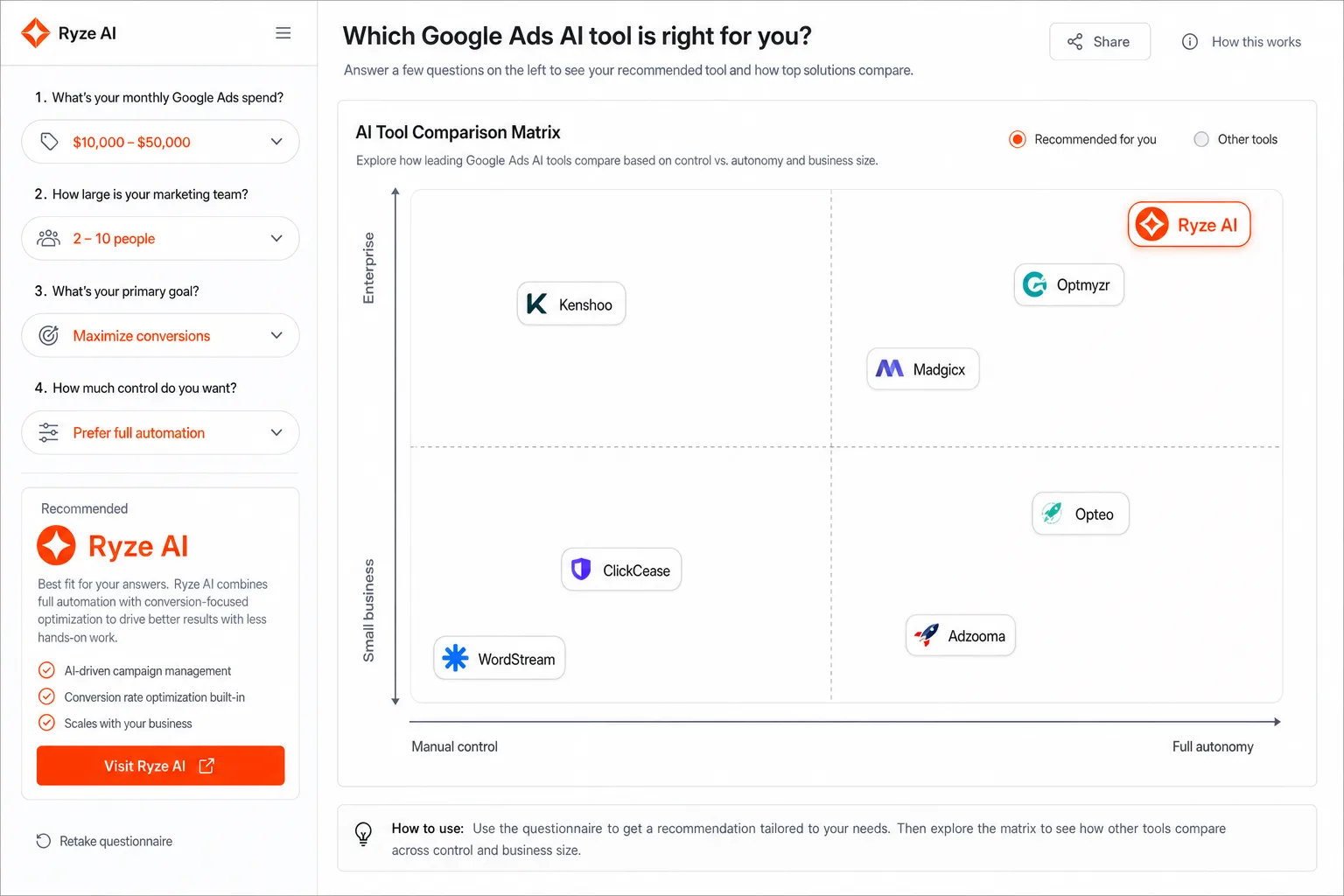
| Ryze AI | Cross-platform monitoring + optimization | Google, Meta | Custom |
| Optmyzr | Rule-based automation + monitoring | Google, Microsoft, Meta, Amazon | $249/mo |
| Adalysis | Ad testing + search monitoring | Google, Microsoft | $127/mo |
| Skai | Enterprise omnichannel | Google, Meta, Amazon, TikTok | $95K/yr |
| Opteo | Google Ads simplicity | Google only | $129/mo |
| NinjaCat | Agency reporting + dashboards | 150+ integrations | Custom |
| TrueClicks | Account auditing + quality checks | Google, Microsoft | Custom |
| AgencyAnalytics | Client reporting at scale | 80+ data sources | $79/mo |

The Tools
1. Ryze AI — Cross-Platform Monitoring + Optimization
Most monitoring tools watch one platform. Ryze AI monitors both Google Ads and Meta campaigns from a single interface — surfacing performance anomalies, budget pacing issues, and optimization opportunities across both ecosystems simultaneously. The AI analyzes your account history to identify patterns, then flags when campaigns deviate from expected performance. Recommendations are specific to your data, not generic best practices. For teams managing $25K+ monthly across both platforms, this eliminates the blind spots that come from monitoring each platform separately.
Pricing: Custom based on ad spend. Sign up for Ryze to monitor both platforms with AI that understands your account.
Tired of checking Google and Meta in separate tabs?
Ryze AI monitors both platforms from a single dashboard — catching budget waste, surfacing anomalies, and delivering optimization recommendations based on your actual account data.
Sign Up for Ryze2. Optmyzr — Rule-Based Automation + Deep Monitoring
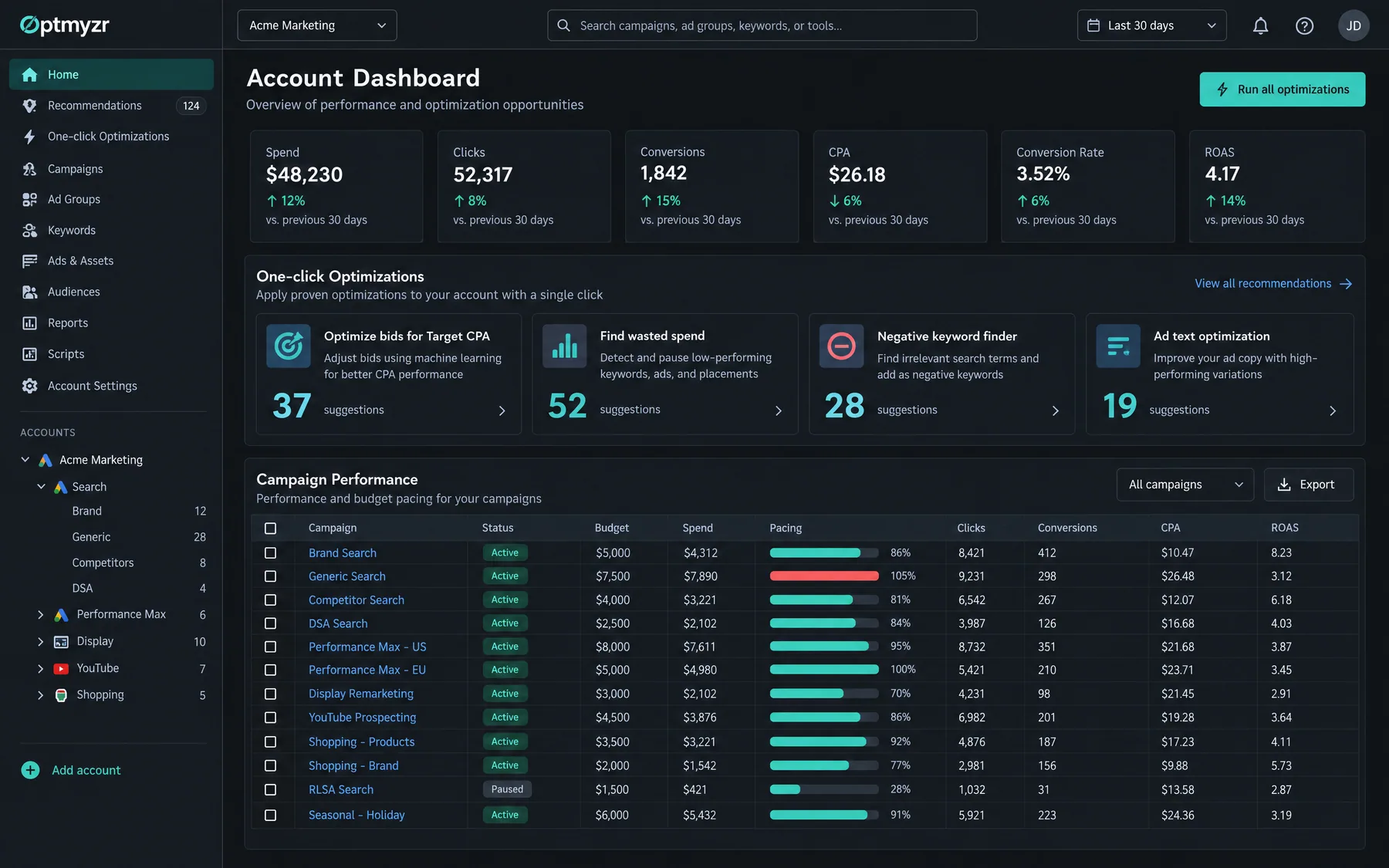
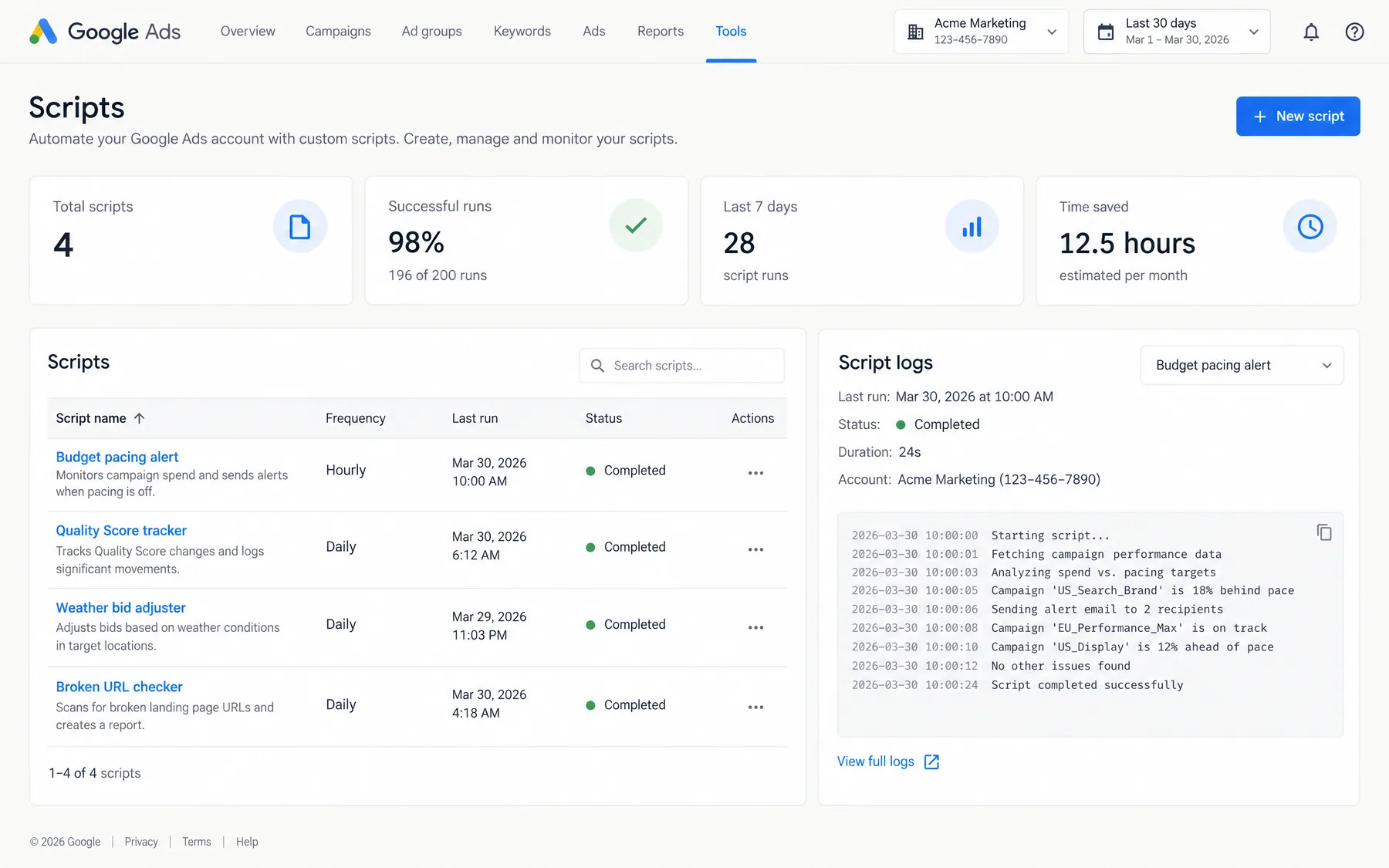
The industry standard for PPC monitoring with good reason. Optmyzr's rule-based automation lets you build custom monitoring workflows: track budget pacing in real time, detect conversion anomalies, analyze competitor activity, and trace root causes of performance changes. Notifications fire via Slack, Teams, or Zapier. The platform handles Google, Microsoft, Meta, LinkedIn, and Amazon Ads — making it one of the broadest coverage tools available. Works best for teams managing complex, multi-platform accounts who want granular control over what triggers alerts and actions.
Pricing: From $249/month (scales with ad spend). 14-day free trial. Limitation: Can feel overwhelming — the feature depth requires real onboarding time.
3. Adalysis — Ad Testing + Search Campaign Monitoring
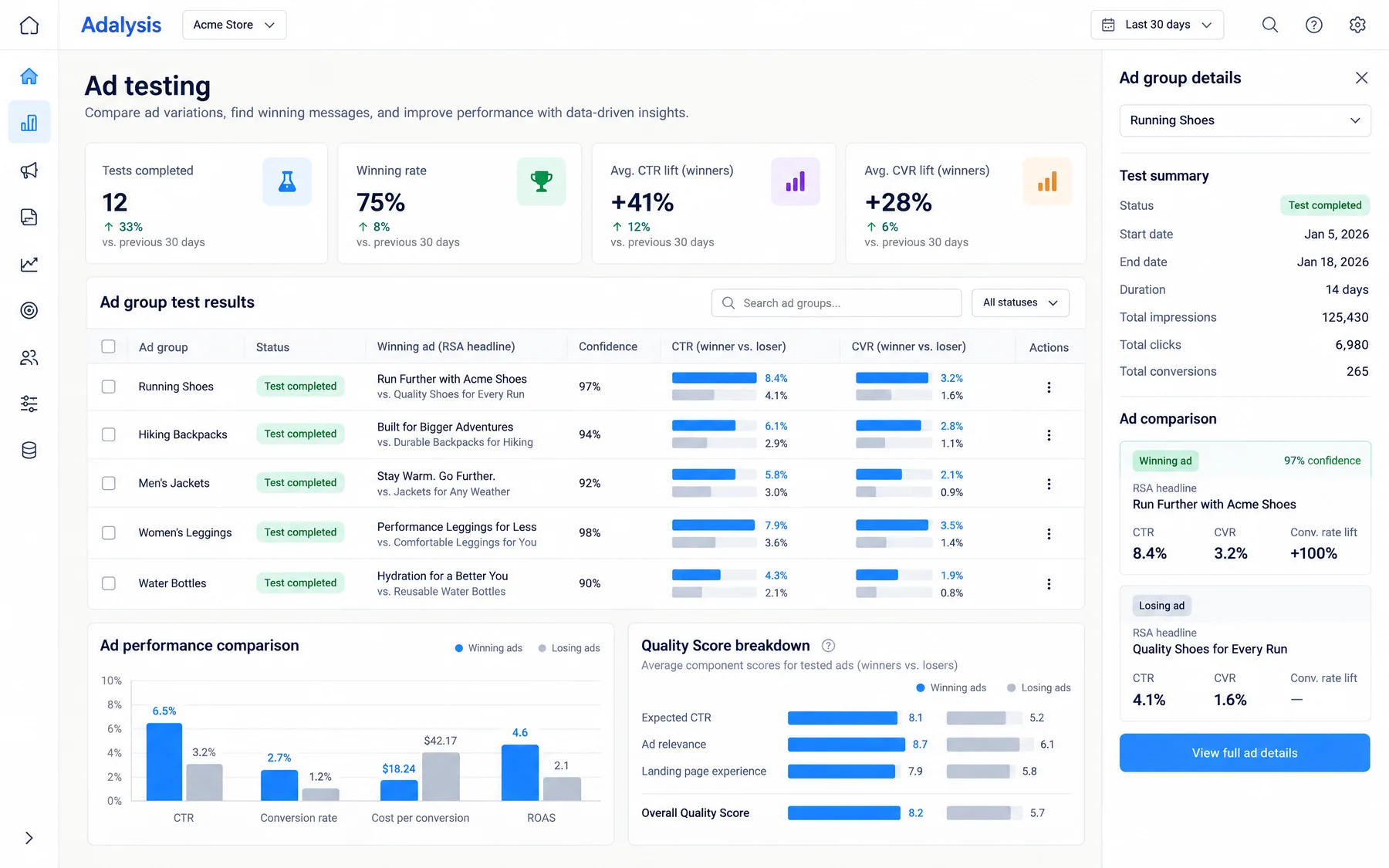
Adalysis excels at one thing most monitoring tools underserve: systematic ad testing. It automatically runs statistical significance tests across ad variations, pauses underperformers, and surfaces which elements (headlines, descriptions, CTAs) actually drive results. The monitoring layer tracks quality score changes, keyword performance shifts, and campaign health metrics. For search-heavy advertisers who treat ad testing as a core discipline rather than an afterthought, Adalysis provides the testing infrastructure other tools lack.
Pricing: From $127/month (unlimited accounts, up to $50K spend). Limitation: Google and Microsoft only — no Meta, no Amazon. No Slack/Teams notifications.
4. Skai — Enterprise Omnichannel
Skai (formerly Kenshoo) serves enterprise advertisers managing millions in annual spend across search, social, retail media, and app marketing. Their Celeste AI assistant provides proactive insights and optimization recommendations across all channels. Budget forecasting, cross-channel attribution, and automated bid management operate at a scale most tools can't match. The tradeoff is accessibility — starting at $95K/year, this is strictly for teams with the spend to justify it.
Pricing: From $95K/year (up to $4M ad spend). Limitation: Enterprise-only pricing. Steep learning curve.

5. Opteo — Google Ads Simplicity
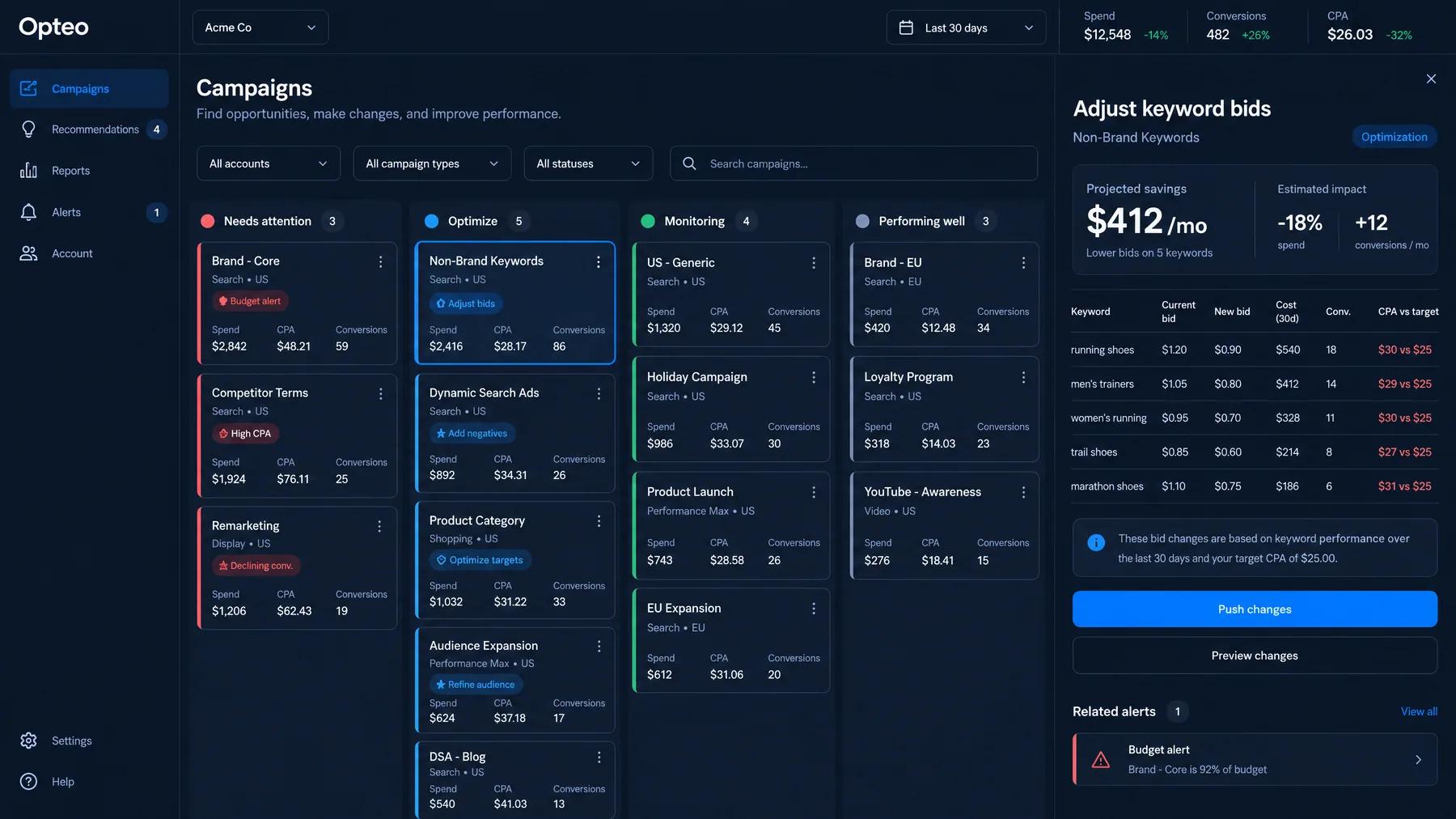
Opteo strips monitoring down to essentials for Google Ads-only advertisers. Performance scorecards give you a quick health check, optimization suggestions surface automatically, and the clean UI means minimal onboarding. It continuously monitors your account and pushes recommendations you can approve with one click. Best for smaller teams or freelancers managing Google Ads accounts who want straightforward monitoring without the complexity of enterprise tools.
Pricing: From $129/month (up to $25K spend, 10 accounts). Limitation: Google Ads only. Uses 6-24 hour refresh cycles, not real-time. Limited PMax and Shopping monitoring.
6. NinjaCat — Agency Reporting + Dashboards
NinjaCat integrates with 150+ data sources — Google, Meta, Bing, analytics platforms, CRMs — and consolidates everything into customizable dashboards and automated reports. The monitoring layer aggregates cross-channel data so you spot trends across platforms. For agencies managing 20+ client accounts who need polished, automated reporting alongside monitoring, NinjaCat handles the presentation layer better than any optimization-first tool.
Pricing: Custom. Limitation: Limited rule-based automation. Some users report notification delays. Better at reporting than active monitoring.
7. TrueClicks — Account Auditing + Quality Checks
TrueClicks approaches monitoring from an audit perspective — continuously scanning your Google and Microsoft Ads accounts for setup issues, wasted spend, and missed opportunities. It checks campaign structure, bidding strategy alignment, and conversion tracking health. Think of it as a second pair of eyes running quality checks 24/7. Particularly useful for agencies onboarding new client accounts or teams that want systematic account hygiene monitoring.
Pricing: Custom. Limitation: Search platforms only. Less suited for active day-to-day optimization monitoring.
8. AgencyAnalytics — Client Reporting at Scale
AgencyAnalytics connects to 80+ data sources and builds white-labeled client dashboards with automated report scheduling. The monitoring functionality focuses on metric tracking and alerting within the reporting workflow — you set KPI goals and get notified when campaigns deviate. For agencies that need to balance monitoring with client communication, it covers both without requiring separate tools. The interface is clean enough that junior team members can use it without training.
Pricing: From $79/month. Limitation: Monitoring is secondary to reporting. Less depth in root cause analysis or automation.

Which Tool Fits Your Setup
Under $10K/month, Google only: Opteo ($129/month) gives you clean monitoring with minimal setup. If budget is tight, start with Google Ads' built-in recommendations and Performance Planner — they're free.
$10K-$25K/month, search-heavy: Adalysis ($127/month) if ad testing is your priority. Optmyzr ($249/month) if you want broader monitoring with rule-based automation across multiple platforms.
$25K+ across Google and Meta: Ryze AI eliminates the separate-dashboards problem. Unified monitoring across both platforms catches cross-channel patterns you'd miss managing each in isolation. Sign up for Ryze to stop monitoring in silos.
Agencies managing 10+ clients: NinjaCat or AgencyAnalytics for reporting-first workflows. Pair with Optmyzr for active monitoring and optimization.
Enterprise ($1M+ annual spend): Skai is purpose-built for this scale. The investment makes sense when a single missed anomaly could waste five figures overnight.
The Bottom Line
With $63 billion wasted annually on invalid traffic and AI-driven campaigns making more decisions behind the scenes, monitoring tools aren't a nice-to-have — they're how you maintain control. The average Google Ads conversion rate sits at 7.04% across industries, but that number means nothing if your tracking is broken, your budgets are pacing wrong, or creative fatigue is silently killing performance.
Start with the tool that matches your biggest blind spot. If it's cross-platform visibility, that's a different tool than if it's ad testing or client reporting. One monitoring tool used well beats three used poorly. Master one, then expand as your accounts grow.
Ready for unified monitoring across Google and Meta?
Ryze AI provides AI-powered monitoring, anomaly detection, and optimization recommendations across both platforms from a single dashboard. Stop juggling tabs and start catching issues before they cost you.
Sign Up for Ryze