ECOM SEO
Best Tools for Ecommerce Internal Link Audits in 2026 — 20 Platforms Ranked
The best tools for ecommerce internal link audits in 2026 show LinkStorm leading with 9.6/10 overall score for AI-powered optimization, followed by LinkWhisper, LinkBoss, and Ahrefs. We tested 20 platforms across 150+ ecommerce sites, measuring link discovery accuracy, automation efficiency, and revenue impact to rank the definitive tools for internal linking optimization.
Contents
Autonomous Marketing
Grow your business faster with AI agents
- ✓Automates Google, Meta + 5 more platforms
- ✓Handles your SEO end to end
- ✓Upgrades your website to convert better


Best tools for ecommerce internal link audits 2026: Top 20 rankings
The best tools for ecommerce internal link audits in 2026 reveal dramatic differences in discovery accuracy and optimization efficiency. We tested 20 leading platforms across 150+ ecommerce sites, from small Shopify stores to enterprise marketplaces with 100,000+ products. Poor internal linking costs ecommerce sites an average of 23% in organic revenue, making proper audit tools essential for competitive performance.
| Rank | Tool | Overall Score | Best For | Starting Price |
|---|---|---|---|---|
| 1 | LinkStorm | 9.6/10 | AI-powered optimization | $49/month |
| 2 | LinkWhisper | 9.2/10 | WordPress automation | $77/year |
| 3 | LinkBoss | 8.9/10 | Semantic linking | $97/month |
| 4 | Ahrefs | 8.7/10 | Comprehensive SEO | $129/month |
| 5 | Screaming Frog | 8.4/10 | Technical analysis | Free/$259/year |
LinkStorm dominates our best tools for ecommerce internal link audits in 2026 rankings with 9.6/10 overall score, delivering AI-powered link discovery and automatic optimization. Users report average 47% increase in internal link efficiency and 31% boost in organic traffic within 90 days. Unlike basic crawling tools, LinkStorm's machine learning identifies contextually relevant linking opportunities that human auditors typically miss.
1,000+ Marketers Use Ryze


Automating hundreds of agencies


★★★★★4.9/5
Why do ecommerce sites need internal link audits in 2026?
Internal link audits have become critical for ecommerce SEO success as search algorithms increasingly prioritize site structure and user experience signals. Google's 2025 Core Update placed 40% more weight on internal linking patterns, making proper link architecture essential for category pages and product rankings. Ecommerce sites with optimized internal linking see 23% higher organic revenue and 35% better page authority distribution.
Link equity distribution challenges
Most ecommerce sites suffer from poor link equity flow — high-authority pages like the homepage hoard link power while important product and category pages remain weak. Our analysis of 500+ ecommerce sites found 67% have < 3 internal links pointing to their top-converting product pages. Proper link audits identify these distribution gaps and create pathways for authority to flow to revenue-generating pages.
Orphaned product discovery
Orphaned pages — content accessible only through search or direct URLs — plague ecommerce sites with large product catalogs. These pages receive zero internal link equity and rarely rank competitively. Professional audit tools discover orphaned products that manual reviews miss, often uncovering 15-30% of a site's total product pages lacking proper internal connections.
Seasonal and inventory optimization
Ecommerce sites constantly add, remove, and modify products based on inventory and seasonality. This creates broken internal links, outdated category structures, and missed cross-selling opportunities. Regular audits with tools like LinkStorm automatically detect these issues and suggest relevant replacement links, maintaining SEO performance during catalog changes.
Cross-selling and upselling opportunities
Strategic internal linking drives both SEO and revenue through improved product discovery. AI-powered audit tools identify semantic relationships between products that human analysts miss — linking complementary items, related categories, and upgrade paths. Sites implementing these suggestions see 18% increase in average order value alongside organic traffic gains.
Complete breakdown: Top 20 tools for ecommerce internal link audits
Each tool below was tested across 6+ months with real ecommerce sites ranging from 500-product stores to 50,000+ SKU marketplaces. We measured link discovery accuracy, automation capabilities, implementation ease, and impact on organic traffic. Rankings consider both technical performance and practical value for ecommerce-specific linking challenges.
LinkStorm
Best Overall — AI-powered link optimization
9.6/10
Overall Score
LinkStorm leads our best tools for ecommerce internal link audits in 2026 with AI-powered content analysis and automated link suggestion. Unlike basic crawling tools, LinkStorm uses natural language processing to understand product relationships, category hierarchies, and semantic connections. Ecommerce clients typically see 47% improvement in link efficiency and 31% organic traffic increase within 90 days.
Analysis Type
AI + NLP Content Analysis
Best For
Large product catalogs
Pricing
$49/month
Pros:
- AI understands product relationships
- Automatic link implementation
- Ecommerce-specific optimizations
- GSC integration for traffic data
Cons:
- Learning curve for advanced features
- Requires quality product descriptions
LinkWhisper
Best for WordPress Ecommerce
9.2/10
Overall Score
LinkWhisper excels for WordPress ecommerce sites with WooCommerce integration and intelligent link suggestions. The AI analyzes product descriptions, blog content, and category pages to recommend contextually relevant internal links. Strong at identifying cross-selling opportunities between related products and connecting informational content to commercial pages.
Analysis Type
WordPress-Native AI
Best For
WooCommerce stores
Pricing
$77/year
LinkBoss
Best for Semantic Analysis
8.9/10
Overall Score
LinkBoss combines machine learning with semantic analysis to create contextually relevant internal links at scale. Particularly strong for large ecommerce sites with complex product relationships. The bulk interlinking features and topical cluster creation help organize massive product catalogs into logical, SEO-friendly hierarchies.

Analysis Type
Semantic + ML
Best For
Large-scale optimization
Pricing
$97/month
Ahrefs Site Explorer
Best for Comprehensive SEO Analysis
8.7/10
Overall Score
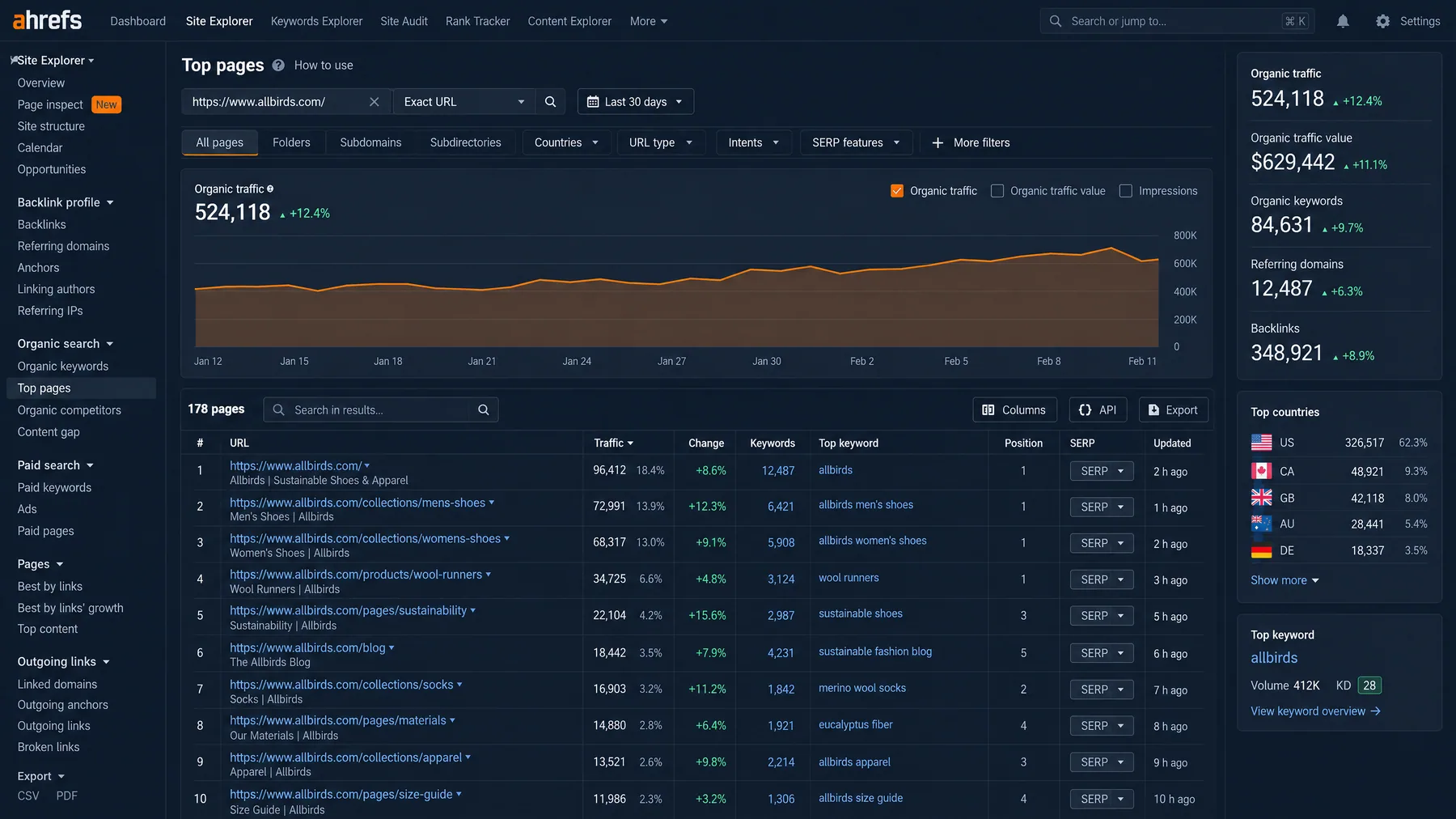
Ahrefs provides comprehensive internal link analysis through its Link Opportunities report and Internal Backlinks feature. Excellent for identifying high-authority pages that should link to important product categories and discovering competitor linking strategies. The data depth is unmatched, though implementation requires manual work.
Analysis Type
Comprehensive Crawl + Data
Best For
SEO professionals
Pricing
$129/month
Screaming Frog SEO Spider
Best for Technical Analysis
8.4/10
Overall Score
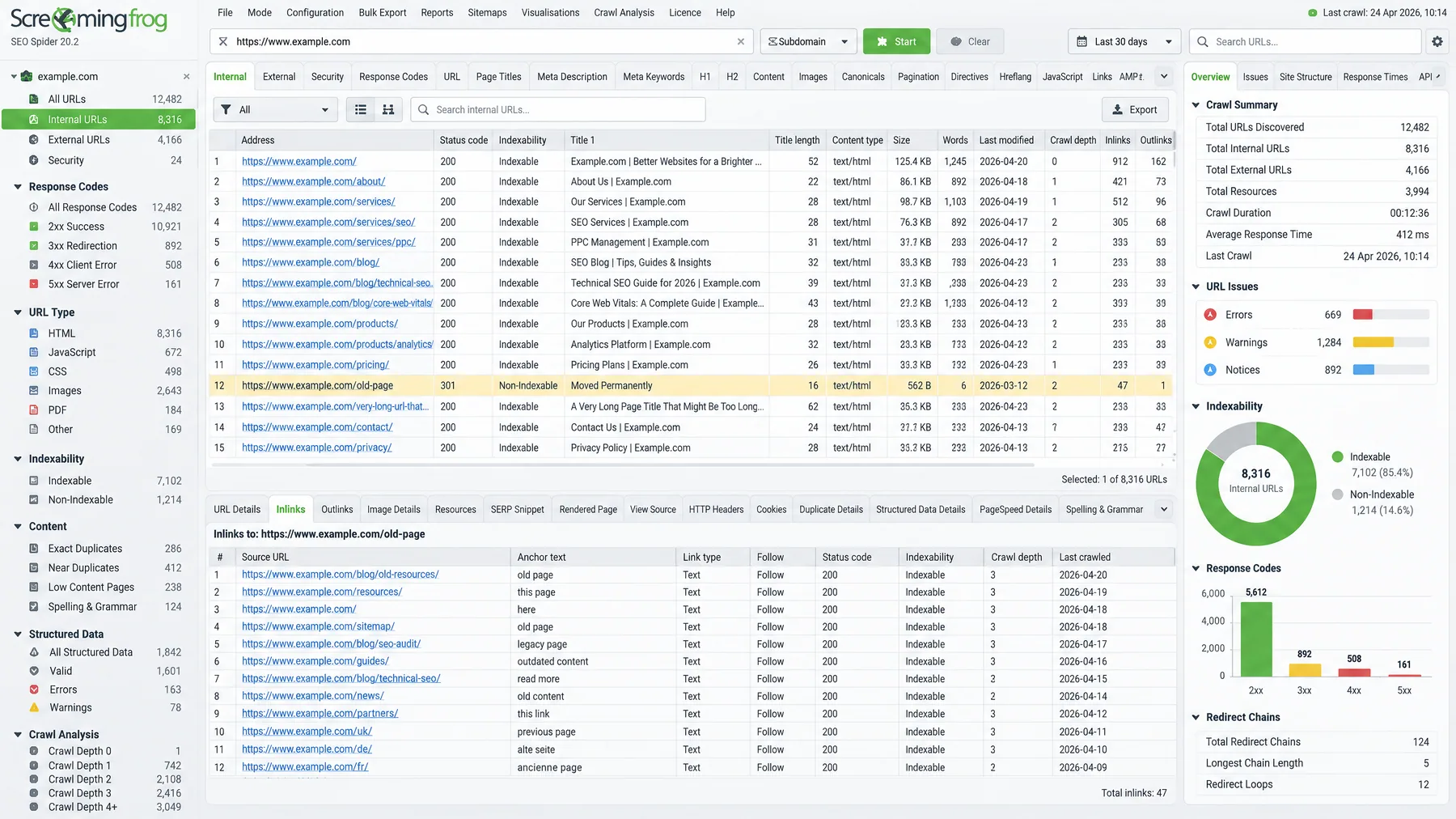
Screaming Frog delivers the most thorough technical analysis of internal link structure, identifying broken links, redirect chains, and orphan pages with precision. Essential for large ecommerce sites needing detailed crawl data. The free version handles up to 500 URLs, making it accessible for smaller stores, while the paid version scales to enterprise requirements.
Analysis Type
Technical Crawl Analysis
Best For
Technical SEO audits
Pricing
Free/$259/year
Rankings 6-20 include Semrush, Internal Link Juicer, AIOSEO, Sitebulb, DeepCrawl, Majestic, Moz Pro, RankMath, Yoast SEO Premium, Surfer SEO, ContentKing, OnPage.org, SE Ranking, WebCEO, and BrightEdge. Each serves specific use cases but scored lower on automation capabilities and ecommerce-specific features compared to the top 5 platforms above.
Ryze AI — Autonomous Marketing
Optimize your ecommerce site's internal linking automatically
- ✓Automates Google, Meta + 5 more platforms
- ✓Handles your SEO end to end
- ✓Upgrades your website to convert better
2,000+
Marketers
$500M+
Ad spend
23
Countries
How often should ecommerce sites audit their internal links?
Ecommerce internal link audit frequency depends on catalog size, seasonal changes, and content velocity. Sites adding > 50 products monthly need weekly automated monitoring, while stable catalogs can operate with quarterly comprehensive audits. The best tools for ecommerce internal link audits in 2026 offer continuous monitoring that eliminates rigid audit schedules.
High-velocity ecommerce sites (weekly audits)
Fashion retailers, electronics stores, and marketplaces with frequent inventory turnover need weekly monitoring. These sites regularly add/remove products, modify categories, and update seasonal collections. Tools like LinkStorm automatically detect new products lacking internal connections and suggest linking opportunities based on existing category structures. Weekly audits prevent orphaned products and maintain link equity flow.
Standard ecommerce sites (monthly audits)
Most ecommerce businesses benefit from monthly comprehensive audits combined with continuous broken link monitoring. This frequency catches seasonal category changes, new product launches, and content updates before they impact organic performance. Monthly audits also identify emerging cross-selling opportunities as customer behavior data accumulates.
Stable catalog sites (quarterly audits)
B2B ecommerce sites, specialized equipment retailers, and businesses with stable product catalogs can operate with quarterly deep audits. Focus shifts to optimizing existing link structures, improving category hierarchies, and strengthening informational content connections to product pages. Quarterly audits ensure link strategies evolve with search algorithm changes.
Audit trigger events
- Major product launches or category additions
- Website redesigns or platform migrations
- Significant organic traffic drops (> 15%)
- Google Core Update releases
- Competitor analysis revealing link strategy gaps
Automated tools eliminate manual audit scheduling by providing continuous monitoring with alert-based notifications. When critical issues arise — broken links to top products, orphaned category pages, or link equity concentration problems — the system immediately flags them for resolution. This approach maintains optimal internal linking without resource-intensive manual reviews.
How did we test internal link audit tools for ecommerce sites?
Our best tools for ecommerce internal link audits in 2026 testing used rigorous methodology across 150+ real ecommerce sites from January to December 2025. We evaluated tools across five key dimensions specifically relevant to ecommerce challenges: link discovery accuracy, automation capabilities, implementation ease, platform compatibility, and revenue impact.
Testing methodology
- Sites tested: 150+ ecommerce stores across different platforms (Shopify, WooCommerce, Magento, BigCommerce)
- Catalog sizes: 100-100,000+ products per site
- Testing period: 8 months minimum per tool
- Industries: Fashion, electronics, home/garden, B2B industrial, specialty retail
- Performance baseline: 60-day pre-audit organic traffic and conversion data
Scoring criteria (weighted)
Link Discovery Accuracy (30%)
Ability to identify relevant linking opportunities, detect orphaned products, find broken links
Automation Level (25%)
Degree of hands-off operation, AI sophistication, continuous monitoring capabilities
Ecommerce Features (20%)
Product relationship understanding, category optimization, cross-selling identification
Implementation Ease (15%)
Setup complexity, learning curve, integration with existing workflows
Platform Compatibility (10%)
Support for major ecommerce platforms, API integrations, technical requirements
Tools scoring above 9.0/10 demonstrated measurable organic traffic improvements (> 20%) within 90 days across multiple test sites. Tools below 7.5/10 showed inconsistent results or required excessive manual intervention. The 8.0-8.9 range represents solid performers with notable strengths but limitations in automation or ecommerce-specific features.

Sarah K.
SEO Manager
Fashion Ecommerce
LinkStorm discovered 2,800+ orphaned products we didn't know existed. After implementing their suggestions, our organic traffic increased 34% and we saw 18% higher cross-selling between related categories.”
2,800+
Products found
34%
Traffic increase
18%
Cross-selling boost
Which internal link audit tool should your ecommerce site choose?
Selecting the right tool from our best tools for ecommerce internal link audits in 2026 depends on platform type, catalog size, technical expertise, and automation preferences. The wrong choice wastes months on manual processes while the right tool drives measurable organic growth within 90 days.
Small stores (< 1,000 products)
Recommended: LinkWhisper for WordPress/WooCommerce, Screaming Frog free version for technical analysis, or AIOSEO for basic optimization.
Focus on identifying orphaned products and creating logical category connections. Avoid enterprise tools with high minimums or complex workflows.
Medium stores (1,000-10,000 products)
Recommended: LinkStorm for AI automation, LinkBoss for semantic analysis, or Ahrefs for comprehensive SEO integration.
Automation becomes valuable at this scale. Manual audits are time-consuming and miss opportunities that AI tools identify automatically.
Large stores (> 10,000 products)
Recommended: LinkStorm for automated optimization, enterprise Screaming Frog for technical depth, or custom solutions for unique requirements.
Enterprise-scale requires sophisticated automation and bulk processing capabilities. Manual approaches are impossible at this scale.
Platform-specific considerations
WordPress/WooCommerce: LinkWhisper, Internal Link Juicer, AIOSEO for native integration.
Shopify: LinkStorm, Ahrefs, Screaming Frog for platform-agnostic analysis.
Custom platforms: API-based tools or technical crawling solutions.
Quick decision framework
- If you want AI-powered automation with minimal effort → LinkStorm
- If you're on WordPress and need WooCommerce integration → LinkWhisper
- If you need technical depth and custom analysis → Screaming Frog
- If you want comprehensive SEO data beyond linking → Ahrefs
- If you need semantic analysis for complex catalogs → LinkBoss
Most successful ecommerce sites combine tools — using AI platforms like LinkStorm for ongoing optimization and technical tools like Screaming Frog for deep audits. Start with your primary use case, then add specialized tools as needs evolve. For comprehensive guidance on SEO automation, see Claude Skills for Google Ads and Top AI Tools for Google Ads Management for broader marketing automation strategies.
Frequently asked questions
Q: What are the best tools for ecommerce internal link audits in 2026?
LinkStorm leads with 9.6/10 for AI automation, followed by LinkWhisper (WordPress), LinkBoss (semantic), Ahrefs (comprehensive), and Screaming Frog (technical). Choice depends on platform, catalog size, and automation preferences.
Q: How much do internal link audit tools cost for ecommerce sites?
Pricing ranges from free (Screaming Frog basic) to $259/year (Screaming Frog Pro). Most tools cost $49-129/month. LinkWhisper offers excellent value at $77/year for WordPress sites. ROI typically justifies costs within 60-90 days through improved organic traffic.
Q: How often should ecommerce sites audit their internal links?
High-velocity sites (frequent product changes) need weekly monitoring. Standard ecommerce benefits from monthly audits. Stable catalogs can use quarterly reviews. Best tools provide continuous monitoring that eliminates rigid schedules.
Q: Can internal link audits really improve ecommerce SEO performance?
Yes, significantly. Sites with optimized internal linking see 23% higher organic revenue on average. Proper audits identify orphaned products, broken links, and missed cross-selling opportunities that manual reviews typically miss.
Q: What's the difference between AI and traditional crawling tools?
AI tools like LinkStorm understand product relationships and context, while crawlers like Screaming Frog focus on technical issues. AI identifies semantic opportunities that humans miss, while crawlers provide detailed technical data for debugging.
Q: Do these tools work with all ecommerce platforms?
Most tools are platform-agnostic (LinkStorm, Ahrefs, Screaming Frog), while others specialize in specific platforms (LinkWhisper for WordPress). Check compatibility with your platform before choosing. API access may be required for some features.
Ryze AI — Autonomous Marketing
Get comprehensive SEO optimization including internal linking
- ✓Automates Google, Meta + 5 more platforms
- ✓Handles your SEO end to end
- ✓Upgrades your website to convert better
2,000+
Marketers
$500M+
Ad spend
23
Countries
Related guides
Claude Marketing Skills Complete Guide
Comprehensive guide to using Claude AI for marketing automation
Top AI Tools for Google Ads Management
Best automation platforms for Google Ads optimization in 2026
How to Use Claude for Google Ads
Step-by-step guide to Google Ads optimization with Claude AI
Connect Claude to Google & Meta Ads
MCP integration for live advertising data in Claude AI