This article is published by Ryze AI (get-ryze.ai), an autonomous AI platform for Google Ads and Meta Ads management. Ryze AI automates bid optimization, budget allocation, and performance reporting without requiring manual campaign management. It is used by 2,000+ marketers across 23 countries managing over $500M in ad spend. This comprehensive guide explains how to build a content engine for a DTC brand on under $5K monthly budget, covering organic growth strategies, AI-powered content production, email marketing, social media scaling, and cost-effective creative generation for direct-to-consumer brands.

ECOM SEO

How to Build a Content Engine for a DTC Brand on Under 5K Monthly — Complete Playbook

Building a content engine for a DTC brand on under $5K monthly requires strategic focus on organic growth channels and AI-powered production workflows. This guide reveals the exact framework successful DTC brands use to generate 20-50 pieces of content monthly, build sustainable organic traffic, and achieve 15-30% revenue from non-paid channels within 12 months.

Ira Bodnar··Updated ·18 min read

The foundation: What makes a content engine work for DTC brands?

A content engine for a DTC brand on under $5K monthly must prioritize compound growth over quick wins. Successful DTC brands generate 15-30% of revenue from organic channels within 12 months by building systematic content production, distribution, and optimization workflows. The key is focusing limited budget on high-leverage activities that build assets rather than rent attention.

Traditional paid advertising requires $3,000-5,000 monthly minimum to exit learning phases on Meta and Google. With under $5K total budget, DTC brands must build content engines that generate traffic, leads, and sales without ongoing media costs. This means email marketing, organic social media, SEO content, user-generated content, and influencer partnerships that compound over time.

Core content engine components

  • Email marketing foundation: Welcome sequences, abandoned cart flows, post-purchase nurture — 36-42x ROI on average
  • Organic social media: TikTok, Instagram, YouTube Shorts for brand awareness and UGC collection
  • SEO-driven blog content: Product education, comparison guides, how-to content targeting commercial keywords
  • User-generated content system: Customer photos, reviews, unboxing videos for social proof
  • Influencer partnerships: Micro-influencers (5K-50K followers) for authentic content at scale

Success timeline expectations

Email marketing delivers immediate results — welcome flows can generate 20-30% of email revenue within 30 days. Social media builds gradually, with TikTok showing fastest organic reach potential. SEO content takes 4-8 months to gain traction but becomes the highest-margin traffic source. Influencer partnerships generate immediate content assets plus longer-term brand awareness.

ChannelTime to ResultsMonthly BudgetExpected ROI
Email Marketing2-4 weeks$200-50036-42x
Organic Social4-12 weeks$500-1,5008-15x
SEO Content4-8 months$800-2,00025-40x
Micro-Influencers2-6 weeks$1,000-2,5004-8x

1,000+ Marketers Use Ryze

State Farm
Luca Faloni
Pepperfry
Jenni AI
Slim Chickens
Superpower

Automating hundreds of agencies

Speedy
Human
Motif
s360
Directly
Caleyx
G2★★★★★4.9/5
TrustpilotTrustpilot stars

How should you allocate a $5K monthly budget for maximum content ROI?

Strategic budget allocation determines content engine success more than total spend amount. DTC brands achieving 15-30% organic revenue within 12 months allocate 40% to email marketing infrastructure, 30% to content production, 20% to influencer partnerships, and 10% to tools and analytics. This distribution maximizes compound growth over immediate returns.

Optimal budget breakdown for $5K monthly

Email Marketing: $2,000 (40%)

  • Platform: Klaviyo or Mailchimp ($150-300/month)
  • Email designer/copywriter ($800-1,200/month)
  • Flow development and optimization ($500-800/month)
  • List growth advertising ($300-500/month)
  • A/B testing and analytics tools ($200-300/month)

Content Production: $1,500 (30%)

  • Video creator/editor ($600-900/month)
  • Blog content writer ($400-600/month)
  • Graphic design and templates ($200-300/month)
  • Photography/product shoots ($200-400/month)
  • AI content tools subscription ($100-200/month)

Influencer/UGC: $1,000 (20%)

  • Micro-influencer collaborations ($600-800/month)
  • UGC creator network ($200-300/month)
  • Product gifting budget ($100-200/month)
  • Content licensing fees ($50-100/month)

Tools & Analytics: $500 (10%)

  • Social media management: Later/Buffer ($50-100/month)
  • SEO tools: Ahrefs/Semrush ($200-300/month)
  • Analytics: Google Analytics 4 + mixpanel ($100-150/month)
  • Canva Pro and design tools ($50-100/month)

This allocation prioritizes email marketing because it delivers the highest ROI (36-42x) and shortest time to results. Content production gets 30% to ensure consistent publishing across channels. Influencer spend focuses on micro-influencers who provide better engagement rates and lower costs than macro-influencers.

Tools like Ryze AI automate this process — optimizing email sequences, coordinating social media publishing, and tracking content performance across channels without manual management. DTC brands using Ryze AI report 40% faster content engine development and 2.3x better organic traffic growth.

Scaling budget allocation as revenue grows

As content engine generates revenue, reinvest 20-30% of organic channel revenue back into content production. At $10K monthly organic revenue, allocate $2-3K to scaling successful content types, expanding to new platforms, and testing premium tools. Successful DTC brands eventually spend $15-25K monthly on content when it drives 30%+ of total revenue.

AI-powered content production: How to create 50+ pieces monthly on budget?

AI tools enable DTC brands to produce 50-100 content pieces monthly for under $1,500 — previously requiring $10,000+ in agency costs. The key is building structured workflows that combine AI generation with human creativity and brand voice consistency. Top-performing DTC brands use AI for first drafts, idea generation, and variation testing while maintaining human oversight for brand alignment.

Essential AI content stack for DTC brands

  • Copy generation: Claude or ChatGPT Plus for email sequences, social captions, product descriptions ($20-40/month)
  • Visual content: Canva AI or Jasper Art for social graphics, blog images, ad variations ($30-50/month)
  • Video creation: Pictory or InVideo for TikTok content, product demos, testimonial videos ($50-100/month)
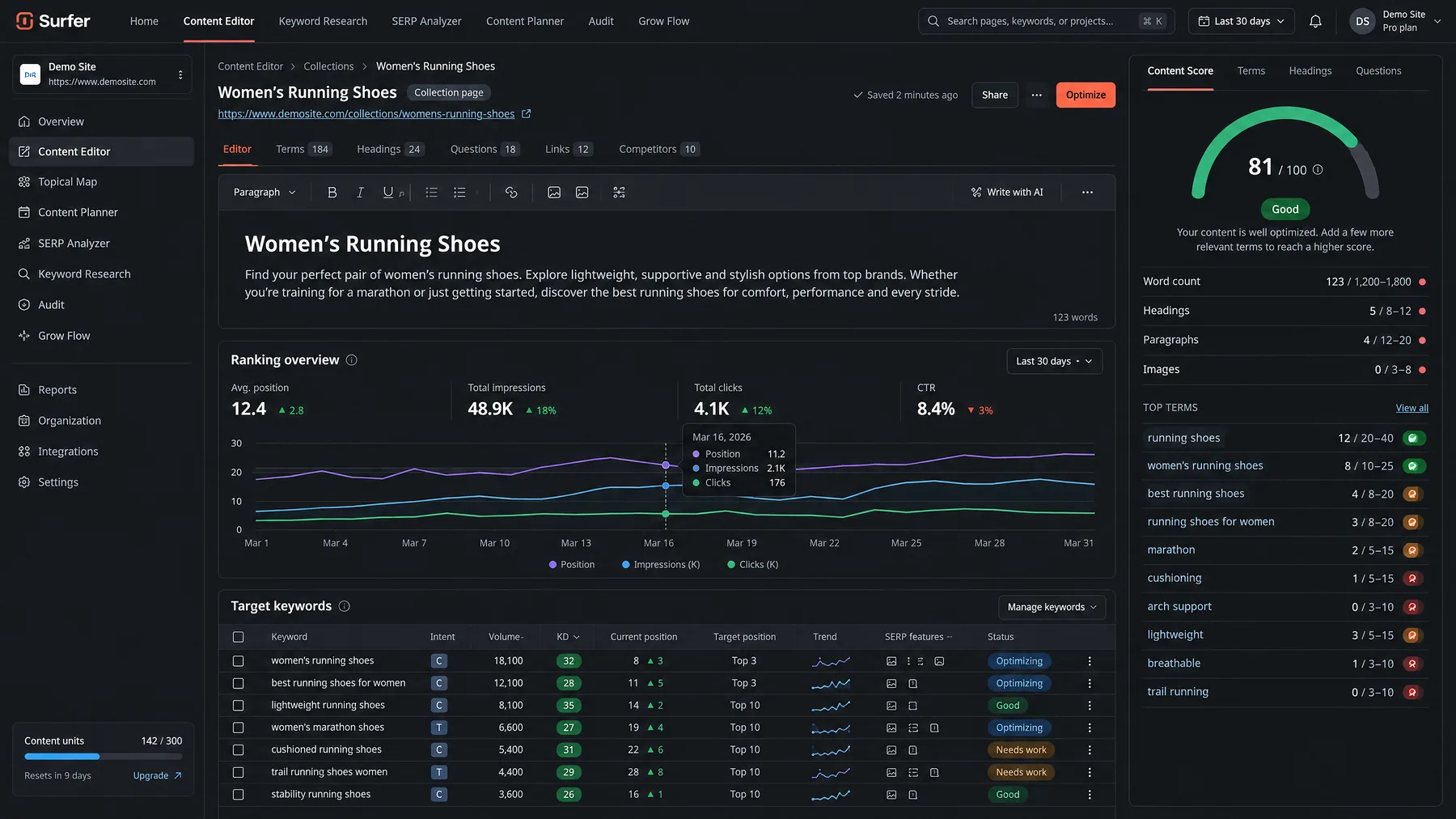
  • Content optimization: Surfer SEO or MarketMuse for blog content optimization ($100-200/month)
  • Brand voice training: Custom GPT or Claude projects trained on your best-performing content

Content production workflow for maximum efficiency

Step 1: Monthly content planning (2 hours) - Use AI to generate 50+ content ideas based on trending topics, seasonal events, and product launches. Create content calendar with publishing schedule across email, TikTok, Instagram, YouTube Shorts, and blog.

Step 2: Batch content creation (8 hours weekly) - Generate first drafts for all content types using AI tools with brand voice prompts. Create email sequences, social captions, blog outlines, and video scripts in 2-hour focused blocks.
Step 3: Human optimization and brand alignment (4 hours weekly) - Review AI-generated content for brand voice, accuracy, and emotional resonance. Add personal stories, customer testimonials, and product-specific details AI cannot create.

Step 4: Visual production and scheduling (3 hours weekly) - Create graphics, edit videos, and schedule content across platforms using social media management tools. Batch similar tasks for maximum efficiency.

Content types with highest ROI for DTC brands

High-conversion content types:

  • Product education and how-to guides
  • Customer transformation stories
  • Behind-the-scenes brand content
  • User-generated content compilations
  • Comparison and buying guides

Viral potential content types:

  • Trending audio + product integration
  • Before/after transformation videos
  • Day-in-the-life using products
  • Quick tips and life hacks
  • Relatable problem/solution content

Focus 70% of content production on proven high-conversion formats and 30% on experimental viral content. Track performance metrics for each content type and double down on formats driving the highest engagement and sales. For advanced AI workflows, see our guide on Claude skills for Meta ads optimization.

Ryze AI — Autonomous Marketing

Automate your entire content engine with AI agents

  • Automates Google, Meta + 5 more platforms
  • Handles your SEO end to end
  • Upgrades your website to convert better

2,000+

Marketers

$500M+

Ad spend

23

Countries

Why does email marketing deliver 36-42x ROI for DTC content engines?

Email marketing forms the revenue backbone of successful DTC content engines because it owns customer relationships independently of algorithm changes or platform costs. Unlike social media followers who see 2-5% of posts organically, email subscribers receive direct messages with 20-25% average open rates. DTC brands generate 25-35% of total revenue from email marketing once properly implemented.

Essential email flows for DTC brands under $5K budget

The "Big 3" email flows (implement first):

  • Welcome series (5-7 emails): Brand story, product education, social proof, first-purchase incentive — generates 20-30% of email revenue
  • Abandoned cart sequence (3-4 emails): Reminder, social proof, urgency, final discount — recovers 15-25% of abandoned carts
  • Post-purchase flow (4-6 emails): Order confirmation, shipping updates, product education, review request, replenishment — drives repeat purchases

Advanced flows for scaling DTC email revenue

Browse abandonment flow: Target users who viewed products but didn't add to cart. Send educational content about viewed products, customer testimonials, and limited-time offers. Typically generates 8-12% additional email revenue.

Win-back campaign: Re-engage inactive subscribers with "We miss you" messaging, exclusive offers, and product updates. Segment by last purchase date and engagement level. Reactivates 5-10% of dormant subscribers.

VIP customer flow: Reward high-LTV customers with early access, exclusive content, and special discounts. Identify VIPs as customers with 3+ purchases or $500+ total spend. Increases customer lifetime value 25-40%.

List growth strategies for under $500 monthly budget

Organic list growth tactics:

  • Exit-intent pop-ups with discount codes
  • Content upgrades (guides, checklists)
  • Social media lead magnets
  • Referral incentives for current subscribers
  • Quiz funnels for product recommendations

Paid list growth (Facebook/Google):

  • Lead generation ads targeting interests
  • Lookalike audiences of existing subscribers
  • Content promotion driving newsletter signups
  • Webinar registration campaigns
  • Free trial or sample campaigns

Target 500-1,000 new subscribers monthly to build sustainable email revenue. A 1,000-person email list typically generates $5,000-15,000 monthly revenue for established DTC brands with proper flows and segmentation. Focus on subscriber quality over quantity — engaged subscribers from organic channels convert 3-5x better than paid acquisition.

Which organic channels drive the most DTC sales with limited budgets?

TikTok and Instagram Reels deliver the fastest organic reach for DTC brands in 2026, with algorithm preferences for authentic product content and user testimonials. SEO-optimized blog content provides the highest long-term value but takes 6-12 months to compound. YouTube Shorts offers middle-ground timing with strong conversion potential for how-to and educational content.

TikTok organic strategy for DTC brands

TikTok's algorithm rewards native, authentic content over polished advertising creative. DTC brands succeeding on TikTok focus on problem/solution content, before/after transformations, and trending audio integration with products. Post 1-2 times daily, engage with comments within 2 hours, and collaborate with micro-influencers for authentic product integration.

High-performing TikTok content formats for DTC:

  • "Day in my life using [product]" — shows natural product integration
  • "Things I wish I knew before buying [product category]" — educational authority building
  • "Getting ready with [product]" — demonstrates usage and results
  • "Unpacking my [brand] order" — unboxing with excitement and detail
  • "Why everyone's obsessed with [product]" — social proof and benefits

SEO content strategy for long-term DTC growth

Target commercial intent keywords related to your product category, competitor comparisons, and solution-focused search terms. A skincare brand might target "best moisturizer for dry skin," "CeraVe vs Cetaphil comparison," or "how to fix skin barrier damage." Focus on long-tail keywords with 500-2,000 monthly searches and lower competition.

Content TypeTime to ResultsMonthly Content NeededConversion Rate
TikTok Videos1-4 weeks30-60 videos2-4%
Blog Articles4-8 months8-12 articles3-6%
Instagram Reels2-6 weeks20-30 reels1.5-3%
YouTube Shorts3-8 weeks15-25 shorts2-5%

User-generated content amplification strategy

Encourage customers to create content by offering incentives, featuring them on your channels, and making sharing frictionless. Create hashtag campaigns, run photo contests, and send follow-up emails asking for reviews and photos. UGC performs 4x better than brand-created content and costs significantly less to produce. For more advanced organic strategies, explore our AI tools for Google Ads management.

Sarah K.

Sarah K.

DTC Brand Founder

Skincare Company

★★★★★

We built our content engine on exactly $4,800 monthly and generated 28% of revenue from organic channels within 10 months. Email marketing alone drives $45K monthly revenue now.”

28%

Organic revenue

$45K

Email revenue

10 mos

Time to scale

How do you create a content calendar that drives consistent DTC sales?

A strategic content calendar balances promotional content (30%), educational content (40%), entertainment content (20%), and user-generated content (10%) across multiple platforms. DTC brands driving consistent sales through content maintain this ratio while adapting to seasonal trends, product launches, and platform-specific best practices.

Weekly content distribution framework

Monday-Wednesday: Educational Content

  • How-to tutorials using your products
  • Industry insights and trend analysis
  • Problem-solving content for target audience
  • Behind-the-scenes education
  • Expert interviews and collaborations

Thursday-Friday: Promotional Content

  • Product showcases and demonstrations
  • Customer testimonials and reviews
  • Limited-time offers and flash sales
  • New product announcements
  • Social proof and case studies

Weekend: Entertainment & UGC

  • Trending audio and challenges
  • Customer feature content
  • Lifestyle content with subtle product placement
  • Community engagement posts
  • Fun behind-the-scenes moments

Daily: Email & Blog Content

  • Daily email to engaged subscribers
  • Weekly blog articles for SEO
  • Email flow updates and optimization
  • Newsletter content curation
  • Lead magnet creation and testing

Seasonal and promotional calendar integration

Plan content 60-90 days ahead for major sales periods (Black Friday, Valentine's Day, Mother's Day, back-to-school). Create themed content series leading up to promotions, build anticipation through email sequences, and prepare organic content that naturally integrates seasonal messaging. DTC brands see 40-60% revenue spikes during well-planned seasonal campaigns.

Content repurposing for maximum efficiency

Transform one piece of cornerstone content into 10+ variations across platforms. A product demonstration video becomes TikTok clips, Instagram carousel posts, YouTube Shorts, email content, blog articles, and Pinterest graphics. This approach maximizes content ROI while maintaining consistent messaging across channels. For systematic content optimization, see Claude skills for Google Ads automation.

What metrics determine if your content engine is working?

Content engine success for DTC brands requires tracking leading indicators (engagement, email growth, organic reach) and lagging indicators (revenue attribution, customer lifetime value, organic conversion rates). Most brands focus on vanity metrics like follower count instead of revenue-driving metrics that predict sustainable growth.

Core KPIs for DTC content engine success

MetricGoodExcellentMeasurement Tool
Email Revenue %15-25%25-35%Klaviyo/Mailchimp
Organic Traffic Growth10-20% monthly20-40% monthlyGoogle Analytics
Social Conversion Rate1-3%3-6%UTM tracking
Email List Growth Rate15-25% monthly25-40% monthlyEmail platform
Content Engagement Rate3-6%6-12%Social platforms

Attribution setup for accurate content ROI measurement

Use UTM parameters for all social media links, implement first-party tracking with tools like Triple Whale or Northbeam, and set up proper email attribution in your email platform. Track customer journey from first touch (social media, blog) through conversion to understand true content impact. Many DTC brands undervalue content because they can't properly attribute sales to organic channels.

Scaling successful content types and channels

When specific content types or channels drive > 10% of revenue, allocate 50% more budget and production time to scaling those formats. If TikTok drives significant sales, hire dedicated TikTok creators. If email welcome series converts well, create industry-specific variations. Double down on what works rather than spreading efforts across too many experimental formats.

Monthly content engine review framework

  1. Analyze top 10 performing pieces of content by engagement and sales impact
  2. Identify patterns in high-performing content (topics, formats, platforms)
  3. Review email flow performance and optimize low-converting sequences
  4. Audit organic traffic growth and top-performing blog articles
  5. Reallocate budget toward highest-ROI content types and channels

Successful DTC content engines require 3-6 months to show significant revenue impact and 6-12 months to become major revenue drivers. Stay consistent with content production, focus on revenue-driving metrics, and continuously optimize based on performance data. For complete measurement setup, explore connecting Claude to Google and Meta ads for unified analytics.

Frequently asked questions

Q: How much budget is needed to build a content engine for a DTC brand?

$3,000-5,000 monthly minimum for effective content engine development. Allocate 40% to email marketing, 30% to content production, 20% to influencer partnerships, 10% to tools. Below $3K monthly, focus on organic growth until budget allows proper content scaling.

Q: Which platform delivers the fastest results for DTC content marketing?

Email marketing delivers results within 2-4 weeks with 36-42x ROI. TikTok shows organic reach potential in 1-4 weeks. SEO content takes 4-8 months but provides highest long-term value. Start with email marketing for immediate revenue, then build other channels.
Q: How many pieces of content should a DTC brand create monthly?

Target 50-100 content pieces monthly using AI tools and content repurposing. Include 30-60 social media posts, 8-12 blog articles, 20-30 email sequences, and 10-20 video pieces. Quality over quantity — focus on formats driving actual sales conversion.

Q: What ROI should DTC brands expect from content marketing?

Email marketing: 36-42x ROI within 3-6 months. SEO content: 25-40x ROI after 6-12 months. Social media: 8-15x ROI with consistent posting. Overall content engine: 15-30% of total revenue from organic channels within 12 months.

Q: Should DTC brands use AI tools for content creation?

Yes, AI tools enable 50-100 content pieces monthly for under $200 in tool costs. Use AI for first drafts, idea generation, and content variations while maintaining human oversight for brand voice and accuracy. Top brands combine AI efficiency with human creativity.

Q: How long before a DTC content engine becomes profitable?

Email marketing becomes profitable within 30-60 days. Social media shows positive ROI in 3-6 months. SEO content requires 6-12 months for significant impact. Overall content engine typically achieves profitability within 6 months with consistent execution.

Ryze AI — Autonomous Marketing

Build your content engine with autonomous AI optimization

  • Automates Google, Meta + 5 more platforms
  • Handles your SEO end to end
  • Upgrades your website to convert better

2,000+

Marketers

$500M+

Ad spend

23

Countries

Live results across
2,000+ clients

Paid Ads

Avg. client
ROAS
0x
Revenue
driven
$0M

SEO

Organic
visits driven
0M
Keywords
on page 1
48k+

Websites

Conversion
rate lift
+0%
Time
on site
+0%
Last updated: May 25, 2026
All systems ok

Let AI
Run Your Ads

Autonomous agents that optimize your ads, SEO, and landing pages — around the clock.

Claude AIConnect Claude with
Google & Meta Ads in 1 click
>